Napoleon Bonaparte spent much of his career redrawing the map of Europe. His final address was a volcanic island in the South Atlantic, 1,200 miles from the African mainland, where the British had arranged for the map to be of little further use to him.
Saint Helena was chosen for its extraordinary isolation. A tiny British territory surrounded by thousands of miles of ocean, it offered little prospect of escape for an emperor who'd already managed to return from exile once.
More than two centuries later, getting there still requires some determination. Although the island now has an airport, flights are limited, and the vast majority of cruise itineraries steer well clear of this lonely corner of the Atlantic.
Those that do stop reveal an extraordinary destination. Beyond Napoleon's former residence are dramatic volcanic landscapes, rare wildlife, historic streets and a community whose relationship with the sea stretches back centuries.
And, rather wonderfully, you can now visit the place Napoleon couldn't leave by arriving aboard a cruise ship.
Why was Napoleon exiled to Saint Helena?
Following his defeat at Waterloo in June 1815, Napoleon surrendered to the British. Having previously escaped from Elba, an island in the Mediterranean, he wasn't going to be offered somewhere quite so convenient a second time.
Instead, he was sent to Saint Helena, a British possession approximately 1,200 miles west of Africa and 1,800 miles east of South America.
The island measures just 47 square miles, with towering cliffs surrounding an interior of steep valleys and volcanic hills. Even today, its population numbers only around 4,400 people.
Napoleon arrived in October 1815 and initially stayed at the Briars Pavilion before moving to Longwood House, where he spent the remainder of his life.
His circumstances were considerably more comfortable than those of an ordinary prisoner, but he resented his confinement, the damp climate and the restrictions imposed by the British governor, Sir Hudson Lowe.
He died at Longwood on 5 May 1821, aged 51, after almost six years on the island.
Today, three locations associated with his exile are preserved as the French Domains of Saint Helena, properties belonging to the French state despite their location within British territory.
It's an unusual arrangement, although perhaps a fitting one for a man whose relationship with international borders was rarely straightforward.
Visiting Longwood House and Napoleon's tomb
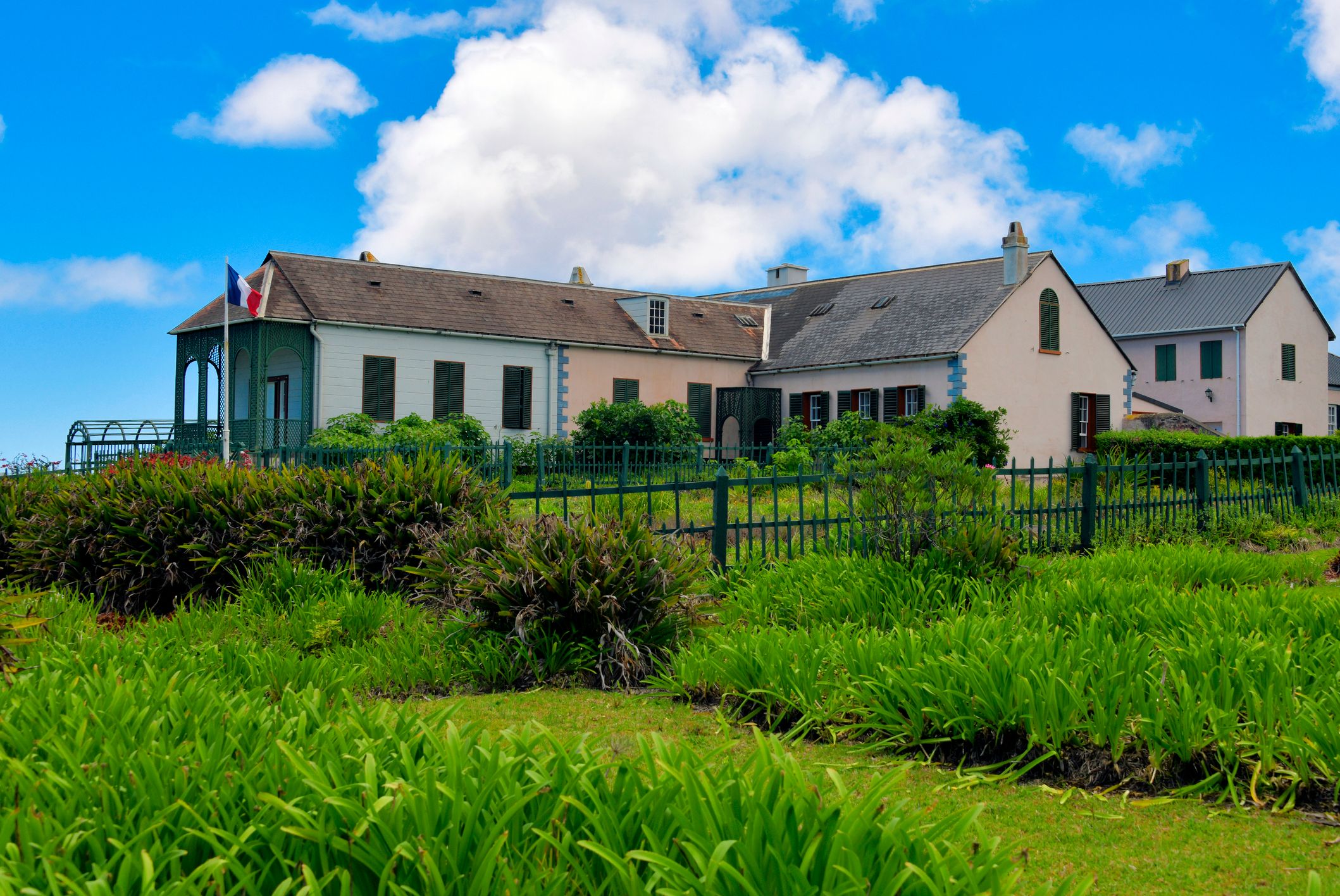
Longwood House is the island's most famous historical attraction, and easily one of its most remarkable.
The single-storey residence sits on a windswept plateau surrounded by gardens, far removed from the grandeur of the palaces Napoleon once occupied.
Inside, visitors can explore rooms furnished to reflect his years in exile, including the chamber where he died. The house also contains original objects, paintings and other material associated with his final years.
The buildings underwent a major restoration programme between 2010 and 2014, supported by the French government and the Fondation Napoléon.
A short journey away lies the Valley of the Tomb, where Napoleon was buried in 1821.
His remains were returned to France in 1840 and now rest at Les Invalides in Paris, but the original burial site remains a peaceful place to visit. A path descends into a sheltered green valley, where the empty grave marks an extraordinary chapter in European history.
There's an important practical detail for cruise passengers: these attractions have restricted opening hours.
According to the Fondation Napoléon, Longwood House normally opens Monday to Friday from 11am to 1pm, while the Valley of the Tomb is open on weekdays from 9am to 3pm. Visits outside those hours may be possible by prior arrangement.
Fondation Napoleon
If Napoleon is the main reason for your visit, an organised excursion is the safest way to see both locations during a short port call. Don't assume you can simply arrive at Longwood whenever your ship happens to drop anchor.
Discovering Jamestown, Saint Helena's remarkable capital
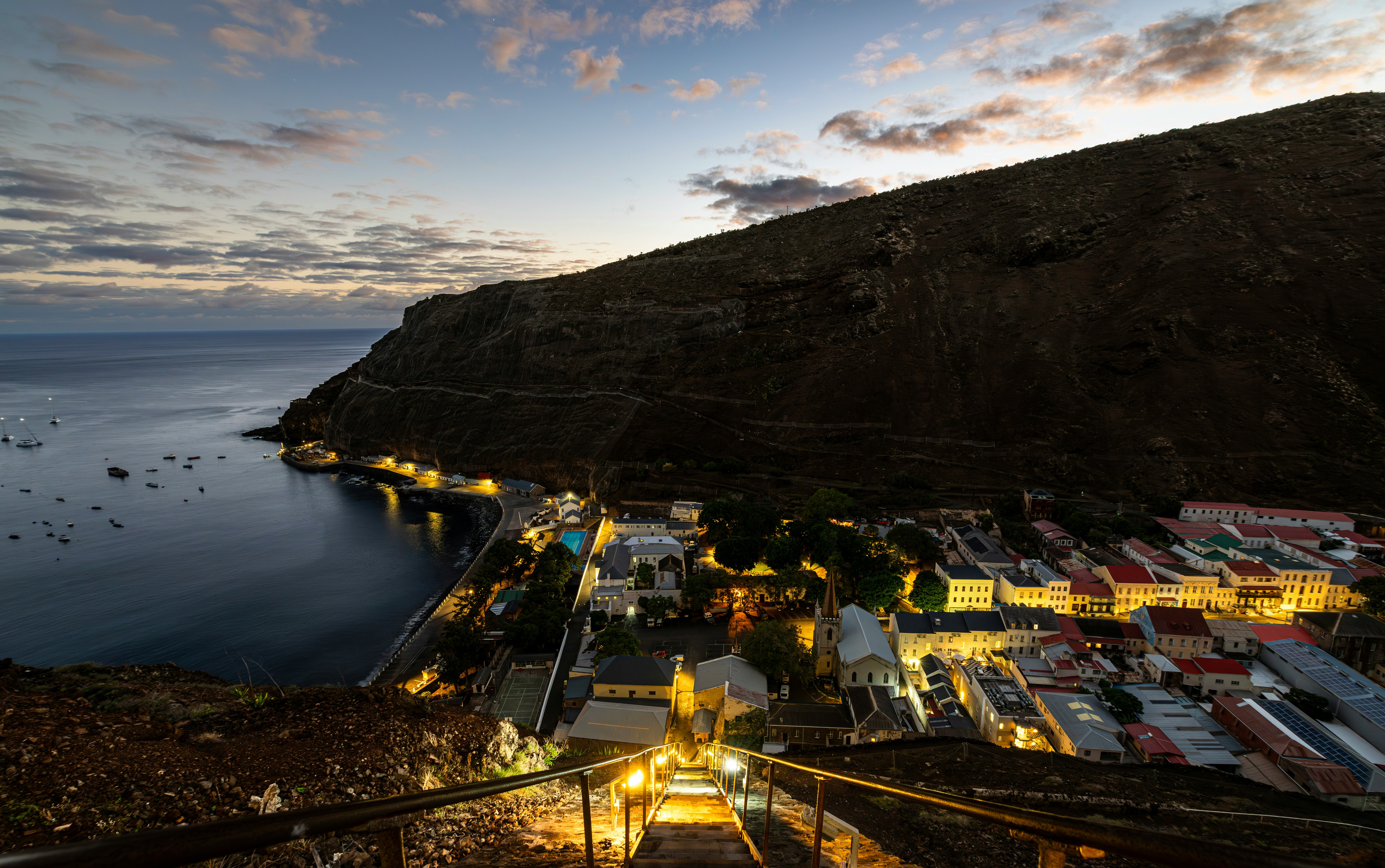
For a settlement of just a few thousand people, Jamestown makes a spectacular entrance.
The island's capital occupies a narrow valley between two enormous volcanic cliffs, with historic buildings pressed together along a main street leading towards the harbour.
Its architecture reflects centuries of British colonial influence, with Georgian houses, traditional shops and the Church of St James, founded in the seventeenth century.
There's also an attraction that may be rather less appealing after a substantial breakfast.
Jacob's Ladder is a staircase of 699 steps climbing almost vertically from Jamestown to Ladder Hill, originally constructed as part of a cable railway used to transport goods to the fortifications above.
The railway disappeared long ago, but the steps remain, offering spectacular views across the town and harbour.
It's a demanding climb, particularly in warm weather, and the sort of activity that makes you reconsider whether getting a certificate for reaching the top is sufficient compensation.
The island's history extends well beyond Napoleon, however.
During the nineteenth century, Saint Helena became an important British naval base in the campaign against the transatlantic slave trade. Thousands of Africans were brought here after British ships intercepted slave vessels.
Around 25,000 people arrived between 1840 and the mid-1860s, many in appalling health. An estimated 8,000 died, with most buried in Rupert's Valley.
The burial grounds and archaeological discoveries there reveal a deeply painful aspect of the island's past, one that deserves recognition alongside its better-known Napoleonic connections.
The Museum of Saint Helena, near the foot of Jacob's Ladder, provides a useful introduction to the island's wider heritage.
An island of cloud forests, rare birds and giant tortoises
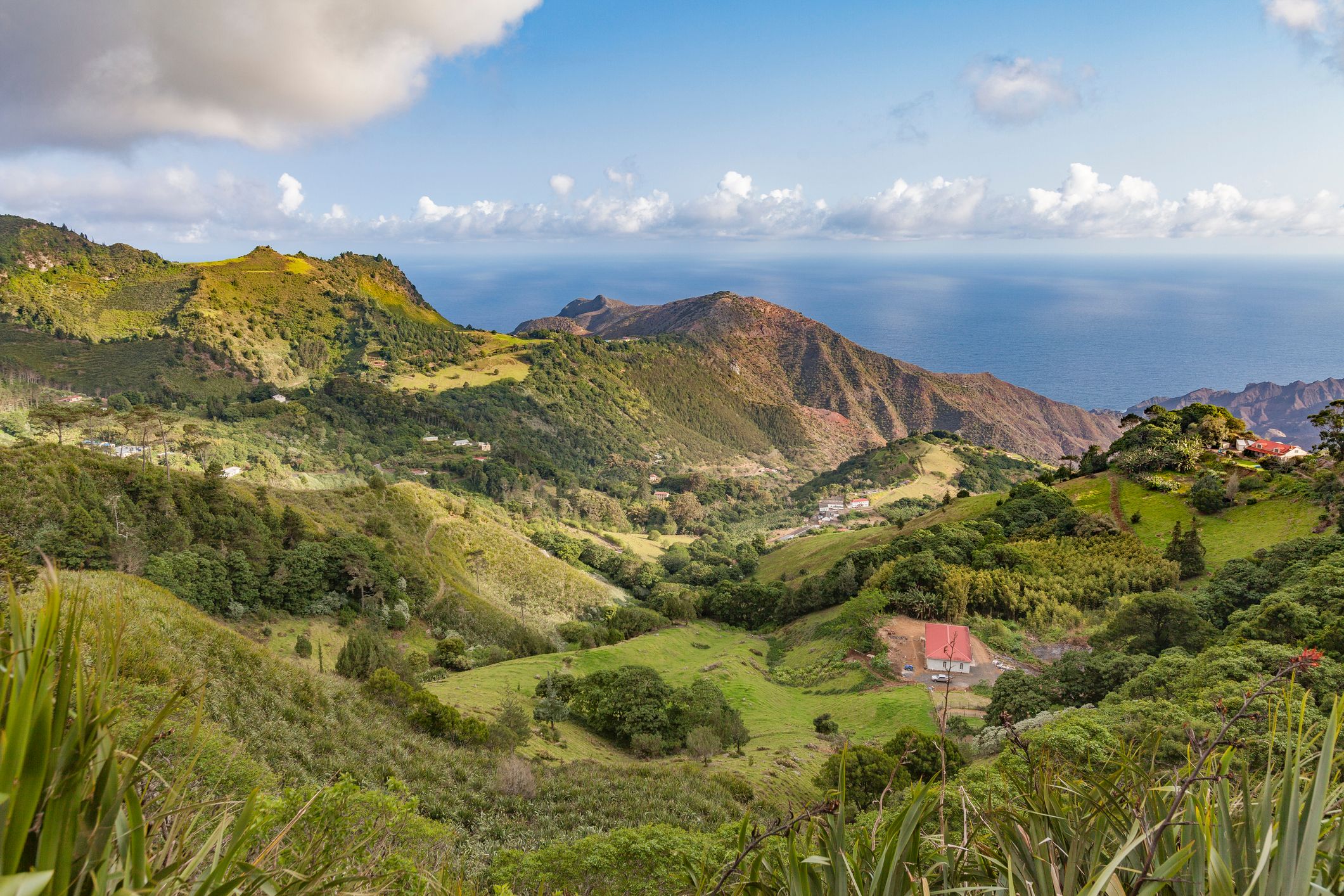
If you only know Saint Helena as a barren rock in the Atlantic, its interior comes as something of a surprise.
The island rises from dry coastal cliffs to green uplands where ferns, mosses and unusual endemic plants flourish in misty mountain conditions.
Diana's Peak National Park protects some of the island's rarest habitats, including surviving fragments of cloud forest. Conservationists are working to restore these ecosystems, which support species found nowhere else on Earth.
Among them are extraordinary plants such as the black cabbage tree, a member of the daisy family that evolved into a tree, and the endangered Saint Helena ebony.
The cloud forest is also remarkably important to the island's water supply, with native vegetation capturing moisture from passing clouds.
Birdwatchers can look for the Saint Helena plover, locally known as the wirebird. It's the island's only surviving endemic land bird, and one of its most important conservation priorities.
Then there's Jonathan.
Believed to have hatched around 1832, the giant tortoise has spent more than a century living in the grounds of Plantation House, the governor's official residence. He was recognised by Guinness World Records for his extraordinary longevity in 2026.
A drive through the island's interior can reveal a remarkable amount of this natural history, even during a relatively short visit.
For serious walkers, the trails around Diana's Peak offer some of the best scenery, although they're better suited to longer stays than a tightly scheduled cruise excursion.
Can you see whale sharks around Saint Helena?
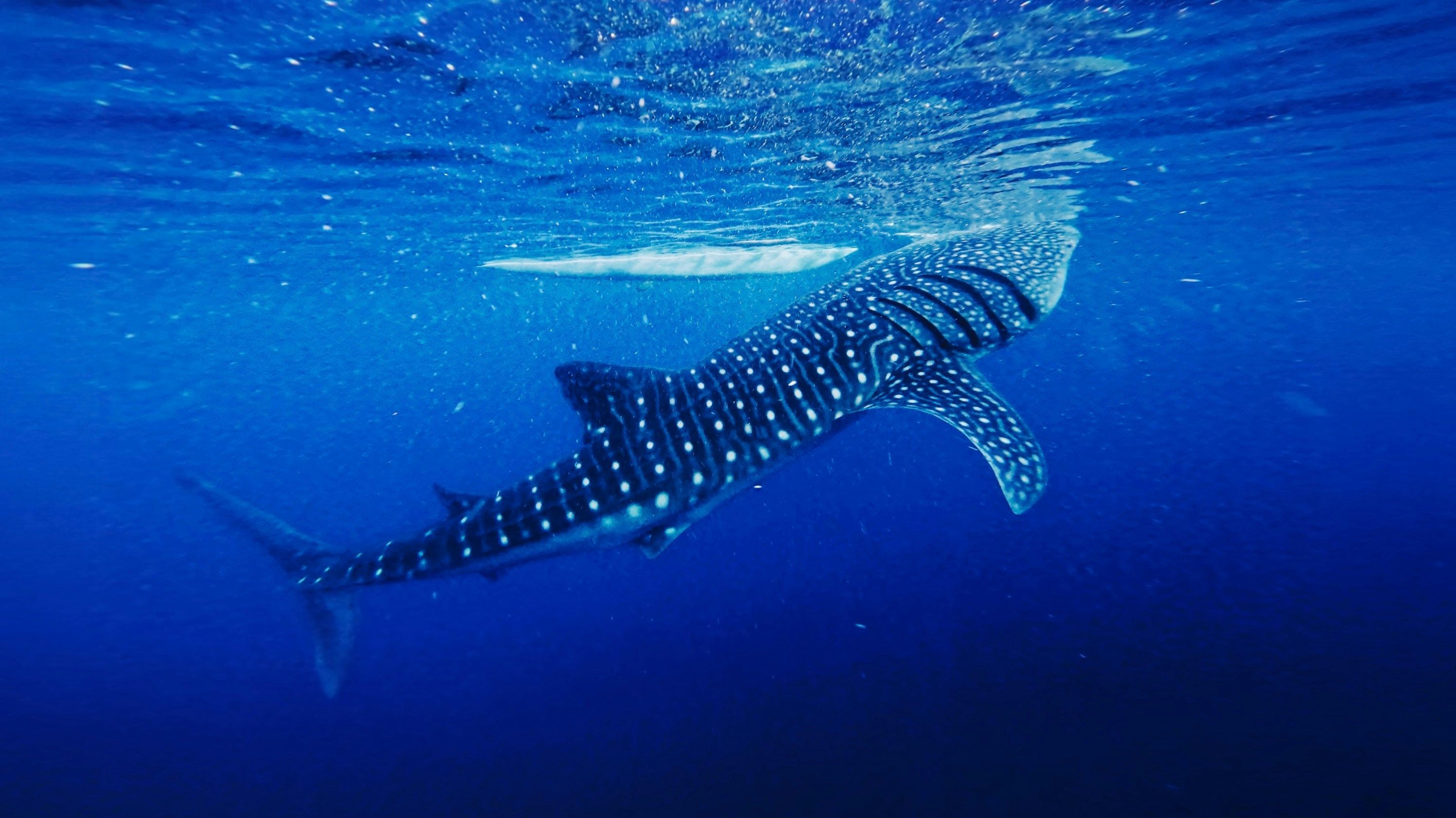
Saint Helena's waters support an equally fascinating range of wildlife.
Whale sharks, the world's largest fish, gather around the island seasonally, generally appearing from November and reaching their highest numbers during January and February.
Despite their formidable size, these animals feed by filtering plankton and other small prey from the water.
Saint Helena is particularly interesting to scientists because its whale shark gatherings include both mature males and females, something relatively unusual at known aggregation sites.
Accredited local operators offer opportunities to observe them, including snorkelling encounters subject to regulations and conditions.
But this isn't an activity to undertake casually. Wildlife interactions are governed by rules designed to minimise disturbance, and sightings depend on the season, sea conditions and the animals themselves.
For cruise passengers visiting during a suitable period, it's worth checking whether their ship offers an approved marine wildlife excursion.
Alternatively, simply spending time along the coast can be rewarding. Dolphins inhabit the surrounding waters, while humpback whales visit seasonally.
Is Saint Helena worth visiting on a cruise?
Saint Helena is a destination that rewards curiosity.
Its association with Napoleon is extraordinary, but the island has a much richer story to tell. There's its colonial and maritime history, its remarkable wildlife, a distinctive local culture and landscapes that seem quite improbable for somewhere so far from almost everything.
Arriving by ship also provides an unusual appreciation of its geography. Those great cliffs that make Saint Helena so spectacular were precisely what made it such a formidable place of confinement.
For Napoleon, the surrounding ocean represented the end of his freedom. For modern travellers, crossing it offers the possibility of discovering somewhere that relatively few people ever see.
The landing may be uncertain, the journey exceptionally long and the sightseeing schedule complicated by some rather limited opening hours.
But that seems a reasonable price for reaching an island so remote that even Napoleon couldn't find a way home.