There are certain animals you don't expect to encounter on a cruise. Dolphins, certainly. Penguins, if you've chosen your itinerary well. A three-metre lizard capable of bringing down a water buffalo is rather less conventional.
Yet on a scattering of volcanic islands in eastern Indonesia, Komodo dragons roam freely through dry forests and sun-baked grasslands. They're the world's largest living lizards, equipped with powerful jaws, venomous bites and a reputation that discourages casual attempts at friendship.
And you can visit them by cruise ship. The experience involves a little more planning than a conventional shore excursion, however. There are protected habitats, compulsory ranger supervision, restrictions on visitor numbers and several islands whose names are easily confused. Getting your Komodo dragons and your Komodo National Park geography straight is a sensible first step.
Where can you see Komodo dragons in Indonesia?
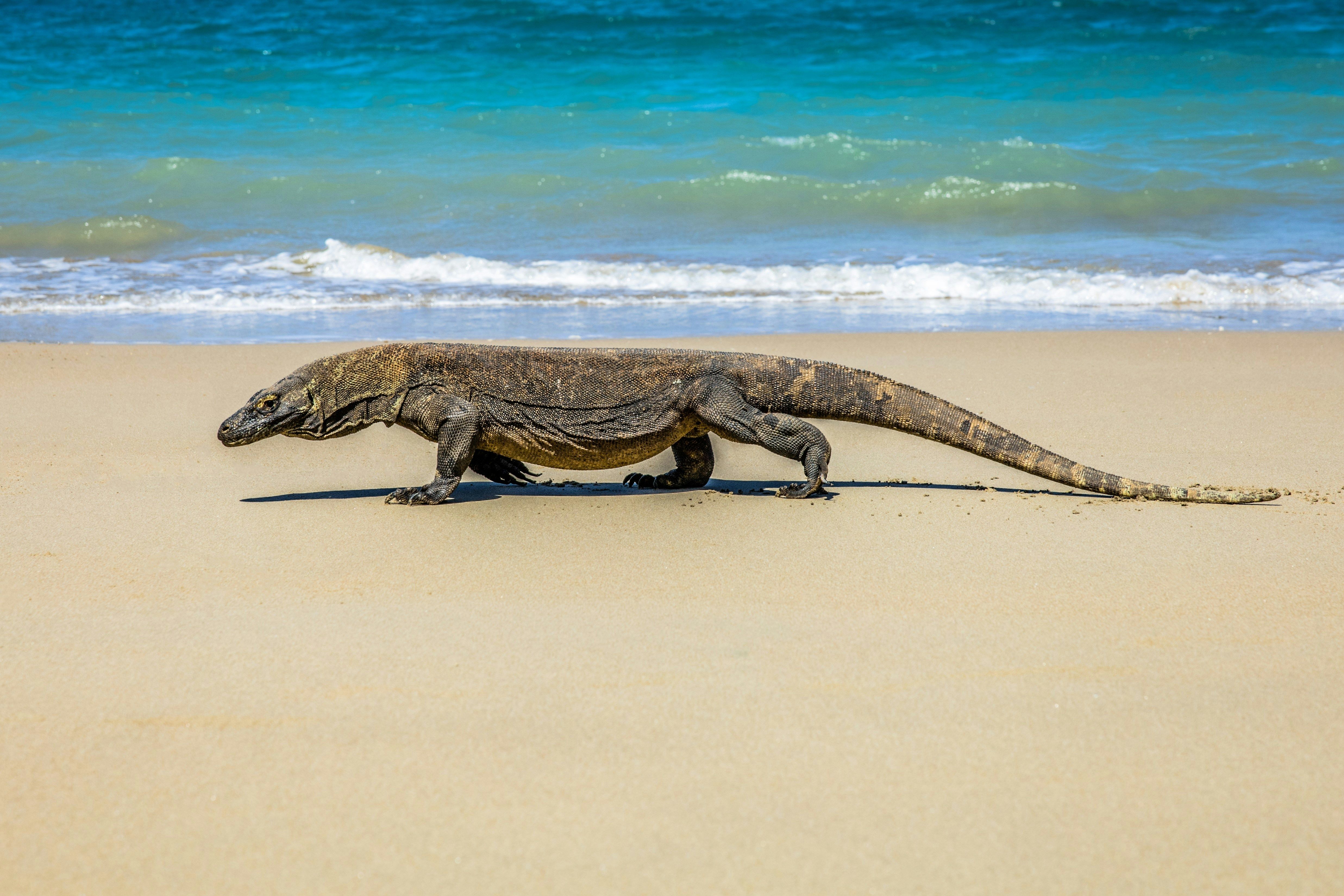
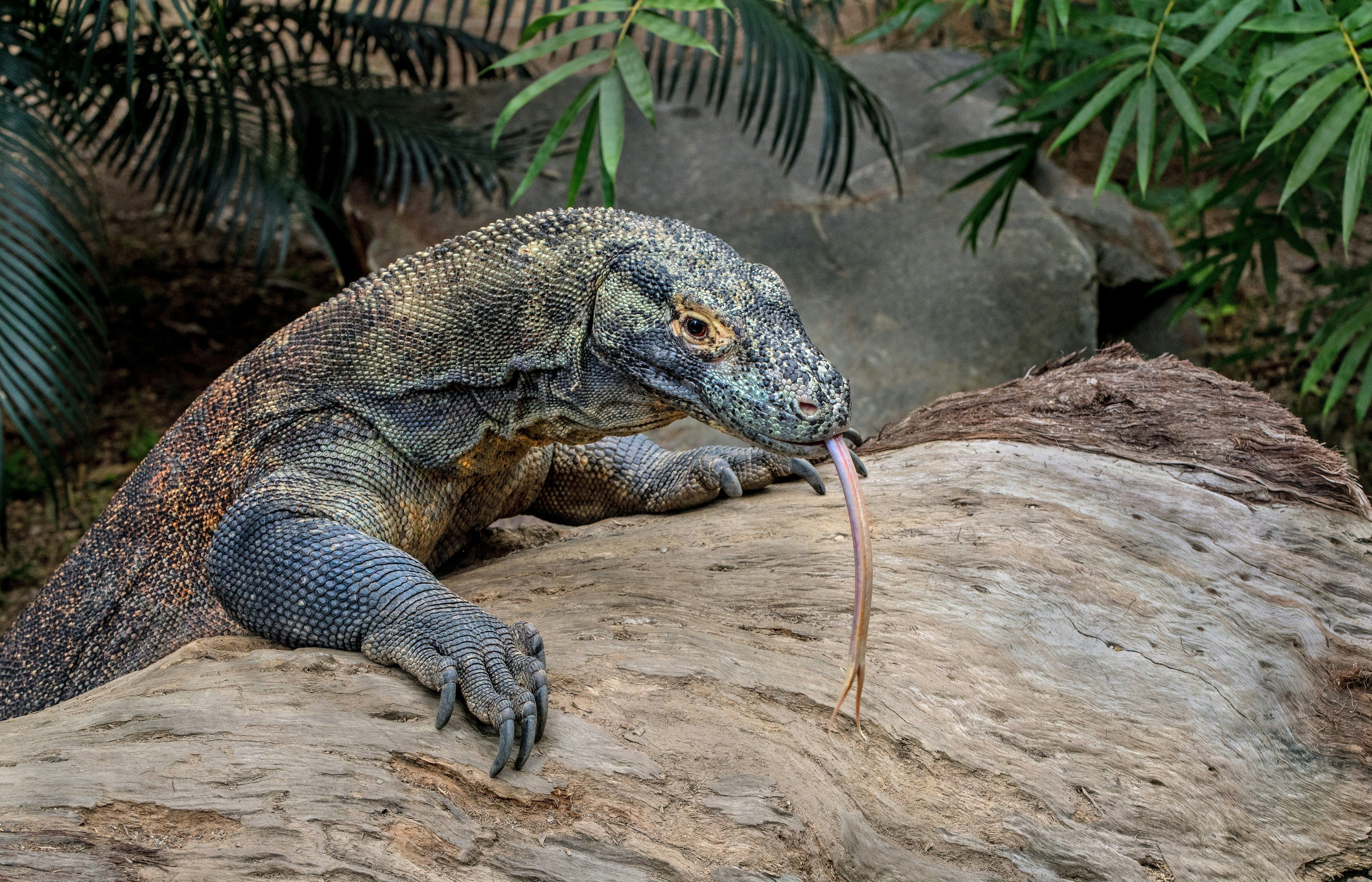
Komodo National Park lies between the Indonesian islands of Sumbawa and Flores, around an archipelago of rugged hills, turquoise bays and extraordinarily rich marine habitats.
Its three principal islands are Komodo, Rinca and Padar, but they're not interchangeable.
Komodo Island is the classic destination, with visitors arriving at Loh Liang to join guided walks into dragon habitat. The animals live wild here, meaning sightings are possible rather than guaranteed. You might find one resting in the shade, or spend your walk examining the landscape while your ranger points out signs of wildlife.
Rinca Island also supports wild Komodo dragons, with the principal visitor area at Loh Buaya. It's undergone substantial redevelopment, including elevated walkways designed to reduce dangerous encounters between people and animals. Rinca is a particularly interesting choice for visitors who want to understand how wildlife tourism is being managed.
Padar, meanwhile, is famous for its extraordinary hilltop view over three sweeping bays. It's well worth visiting for the landscape, but it isn't an established dragon-watching destination.
For cruise passengers, the distinction matters. An itinerary advertising Komodo may mean a landing on Komodo Island itself, while a longer tour from the mainland town of Labuan Bajo might visit Rinca, Padar or several islands. Check the actual landing point before booking.
How do cruise passengers visit Komodo Island?
Cruise ships calling at Komodo typically anchor offshore, with passengers travelling to the island by tender or another authorised boat.
At Loh Liang, visitors enter the national park and join supervised walks. Depending on the excursion, you may spend around an hour exploring the designated trails, although longer walks can be available.
Don't expect to hire a scooter, wander off independently or head into the undergrowth for a better photograph. Access is controlled for good reason. These are wild predators, and the surrounding habitat is protected.
You should also check whether the excursion price includes park admission, ranger services and any additional conservation or activity fees. Charges and entry arrangements can change, so a cheap-looking independent tour isn't necessarily cheaper once everything has been added.
On a short cruise call, I'd prioritise a properly organised dragon encounter over a complicated island-hopping itinerary. It's tempting to combine Komodo, Padar, Pink Beach and snorkelling in one afternoon, but boat transfers, weather and landing restrictions can quickly consume the available time.
Komodo or Rinca: which island is better for seeing dragons?

If seeing a Komodo dragon is your priority, both islands are legitimate choices. The decision is more about how you want to experience the animals than which island has the better name.
Komodo's Loh Liang visitor area offers a more traditional wildlife walk through dry woodland and savannah, with rangers accompanying visitors along designated routes. It's also the logical choice when your cruise ship is anchored directly off Komodo Island. There's little point arranging a complicated transfer elsewhere when the animals you've travelled to see already inhabit the island in front of you.
Rinca's Loh Buaya visitor area has a more managed feel. Its elevated walkway and visitor facilities were developed partly to separate tourists from the dragons, which sometimes approach areas used by people. Visitors can observe the habitat without necessarily undertaking a lengthy trek.
The Indonesian government's conservation planning documents explicitly identify reducing potentially dangerous contact between dragons and visitors as a reason for Rinca's redevelopment.
Both locations require visitors to follow ranger instructions. For wildlife walks, arrange an authorised ranger-led excursion rather than attempting to explore independently. Don't approach, touch or feed the animals, and don't wander away from your group for a photograph.
They're capable predators, however unimpressed they may appear by your presence. A dragon lying motionless in the shade isn't an invitation to go and see whether it's friendly.
Can you visit Padar Island and Pink Beach on the same cruise?

Potentially, but this is where a little ambition can become a scheduling problem.
Padar's celebrated viewpoint requires a steep climb in exposed conditions. The reward is one of Indonesia's most remarkable landscapes, with sharply folded hills separating bays of differently coloured sand. Pink Beach, meanwhile, owes its unusual colour partly to reddish material from tiny marine organisms mixed with lighter sand.
Both are attractive additions to a longer boat tour, particularly one departing from Labuan Bajo on Flores. But they're separate stops, requiring sea transfers, and a cruise passenger with six or seven hours ashore shouldn't assume that every attraction advertised in a regional day-tour package is realistically accessible.
If you're booking independently, establish exactly where you'll meet your operator, whether your ship permits independently arranged tender departures and how much time the complete excursion requires.
I'd rather spend an unhurried morning observing Komodo dragons than spend an entire port day being transported between attractions with mounting anxiety about the ship's departure.
Are there new restrictions on visiting Komodo National Park?

Yes, and they're particularly relevant to anyone planning a future sailing.
Indonesia introduced a visitor quota of 1,000 people per day from 1 April 2026, covering the national park's principal tourism areas, including Komodo, Rinca and Padar, alongside marine attractions.
The Ministry of Forestry says the restrictions are intended to protect the park from the cumulative effects of overtourism while supporting a sustainable local tourism economy. The government is monitoring the system and has indicated that its management will continue to evolve.
Visitors should therefore expect controlled admission and advance booking arrangements rather than assume they can simply turn up at the jetty and purchase entry. Booking procedures have also been developing around the park's SiORA reservation system.
For cruise passengers, the simplest approach is to confirm with the operator that the excursion includes the necessary permits and an allocated visitor slot. Independent travellers should check the latest arrangements with the park authority or an authorised local tour provider before paying.
It would be unwise to quote a supposedly definitive entrance price months in advance. Indonesian park charges can include separate components for admission, activities and visitor services, and they're subject to change.
Is visiting Komodo National Park sustainable?
It's a question worth asking when the principal attraction is an endangered animal living in a fragile island ecosystem.
Komodo National Park became a UNESCO World Heritage Site in 1991, recognised for both its remarkable landscapes and biodiversity. Its waters support coral reefs, turtles, manta rays and an extraordinary variety of marine life.
Tourism provides employment and income for communities living around the park, but it also brings pressure from boats, visitor infrastructure, waste and increasing numbers of people entering sensitive habitats.
In 2025, UNESCO welcomed Indonesia's progress on tourism management while calling for stronger regulation of liveaboard vessels and cruise ships, alongside continued monitoring of the dragon population.
The debate isn't simply about whether tourists should be allowed to visit. It's about how many visitors the islands can accommodate, how the benefits are distributed and whether conservation remains the priority as demand grows.
Choosing an authorised excursion, respecting wildlife distances and supporting operators employing local guides are sensible starting points. For a particularly good visit, look for an excursion that explains the park's ecology and conservation challenges rather than treating the dragons as unusually large photographic props.
Which cruises visit Komodo Island in 2027?
You don't need to charter a private yacht to reach Komodo, although the islands are more commonly featured on longer Asian itineraries than on conventional short cruises.
One confirmed example is Oceania Nautica's 14-night Lands of Spices & Dragons voyage, departing Bali on 17 January 2027 and finishing in Bangkok on 31 January. It calls at Komodo on 19 January, with a scheduled visit from 10am to 6pm, before continuing through Indonesia to Singapore, Thailand and Cambodia.
For travellers starting in Australia, Oceania Vista's 15-day Koalas to Komodos sailing departs Sydney on 26 February 2027, visits Komodo on 11 March from 8am to 4pm, then continues to Lombok and Bali.
Those calls demonstrate that visiting the dragons is a realistic cruise experience. They don't, however, guarantee that a particular ranger walk or island-hopping excursion will be available. Check the shore-excursion programme and park admission arrangements for your actual sailing.
For travellers who want more time in the national park, a small-ship expedition or locally operated multi-day boat journey from Labuan Bajo may be more rewarding. These trips can explore several islands and marine habitats at a gentler pace, subject to the same conservation restrictions.
Is a Komodo dragon cruise worth it?
If you're interested in wildlife, absolutely. There are very few places where you can step ashore and encounter an animal that looks so convincingly prehistoric, particularly in landscapes this beautiful.
But the strongest reason to visit is also the reason to take the restrictions seriously. Komodo dragons have survived here for an extraordinary length of time, adapting to harsh, isolated environments that are now under pressure from human activity.
A good excursion gives you the chance to understand that world, guided by someone who knows the animals and their habitat, with no guarantee that nature will arrange itself conveniently for your camera.
And if you do come across a three-metre dragon lounging beside the trail, there's no need to get any closer. It has already made a fairly memorable impression.