These five cruise destinations each reward a different way of looking. Antarctica needs space. Norway wants height. Venice is best in motion. Santorini improves when you stop chasing the sunset. Greenland comes alive when people and settlements are allowed back into the frame.
Antarctica photography: show the scale
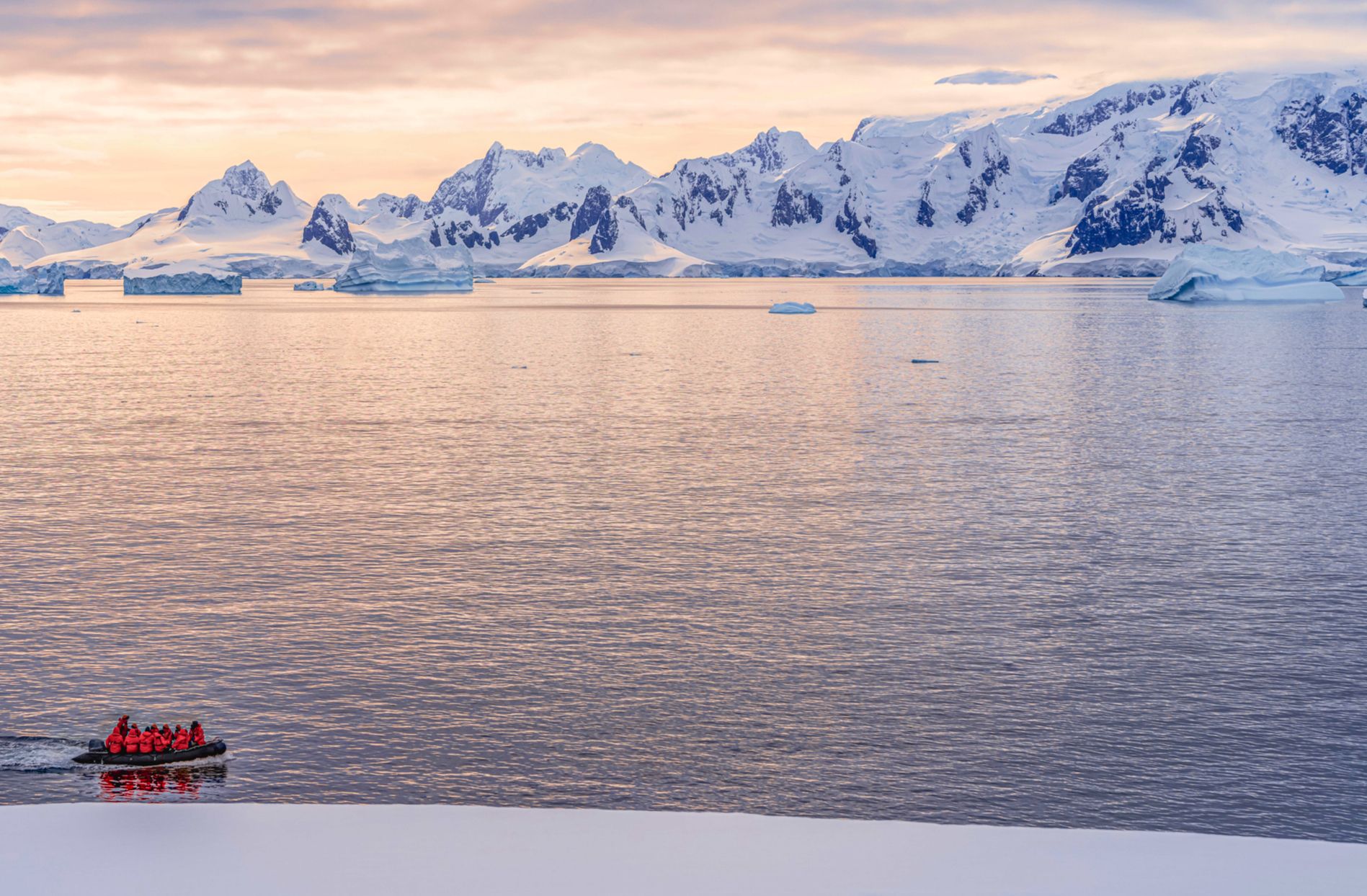
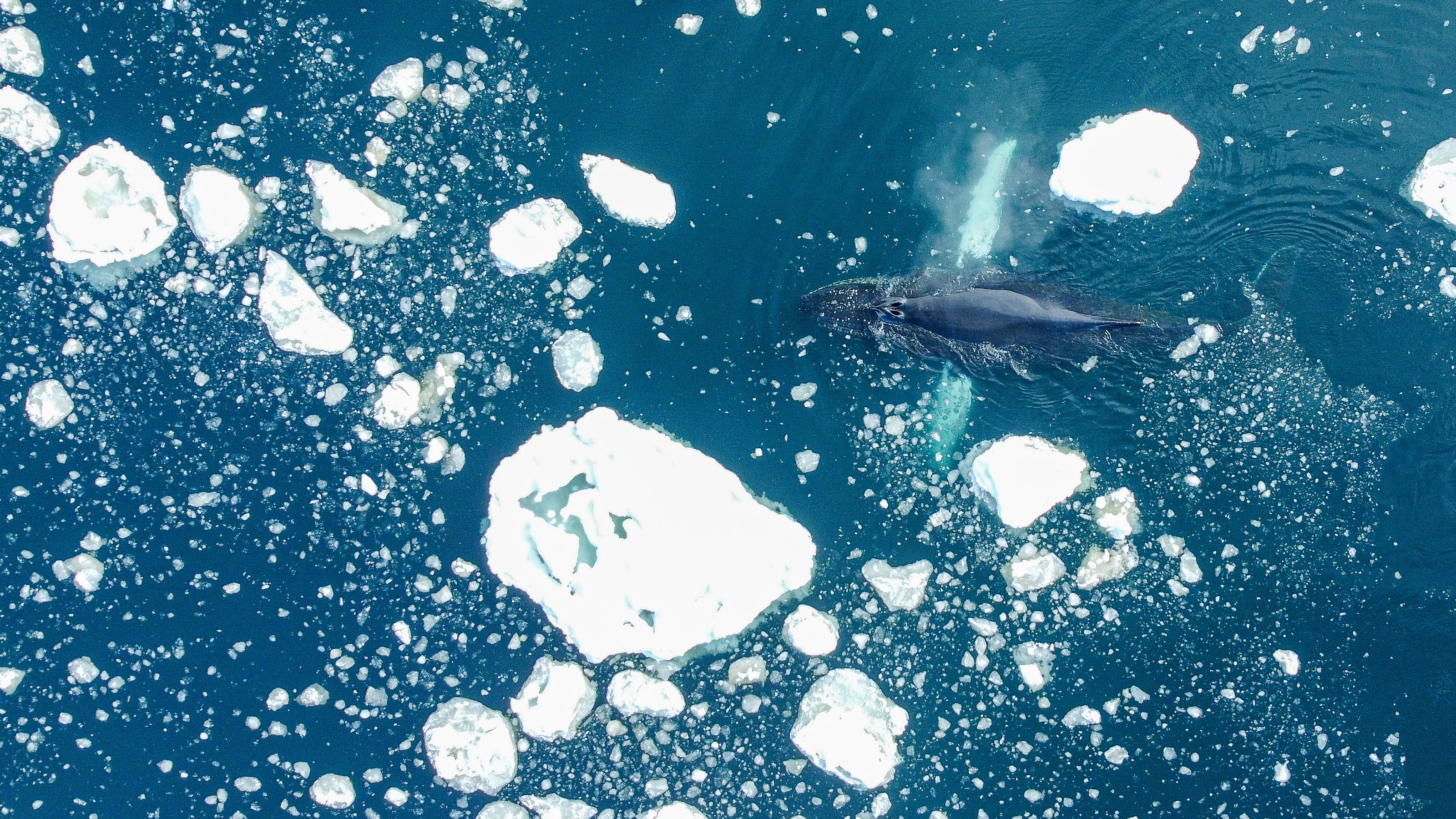
Most people arrive in Antarctica wanting a close-up of a penguin which is more than fair enough. They’re photogenic, already dressed for dinner and largely indifferent to which angle you shoot them from. But often, the most powerful Antarctic photographs are the ones that show how small the wildlife is.
Leave room around the subject. A lone penguin beneath a wall of ice says more about the continent than a tightly cropped portrait. The same applies to a Zodiac beside an iceberg or passengers reduced to coloured dots at the foot of a glacier.
Bad weather can help. Mist, falling snow and a faint horizon simplify the landscape and make Antarctica feel properly remote. Clear skies are lovely, but the continent doesn’t need to look cheerful to photograph well.
Keep your distance from wildlife and let the animals decide whether they come closer. IAATO advises visitors not to approach Antarctic wildlife within five metres and prohibits recreational drones in the coastal areas visited by its members. The penguin will have to manage without aerial coverage. Take the close-up, then step back. Antarctica’s real subject is scale.
Norwegian fjord photography: turn the camera vertically
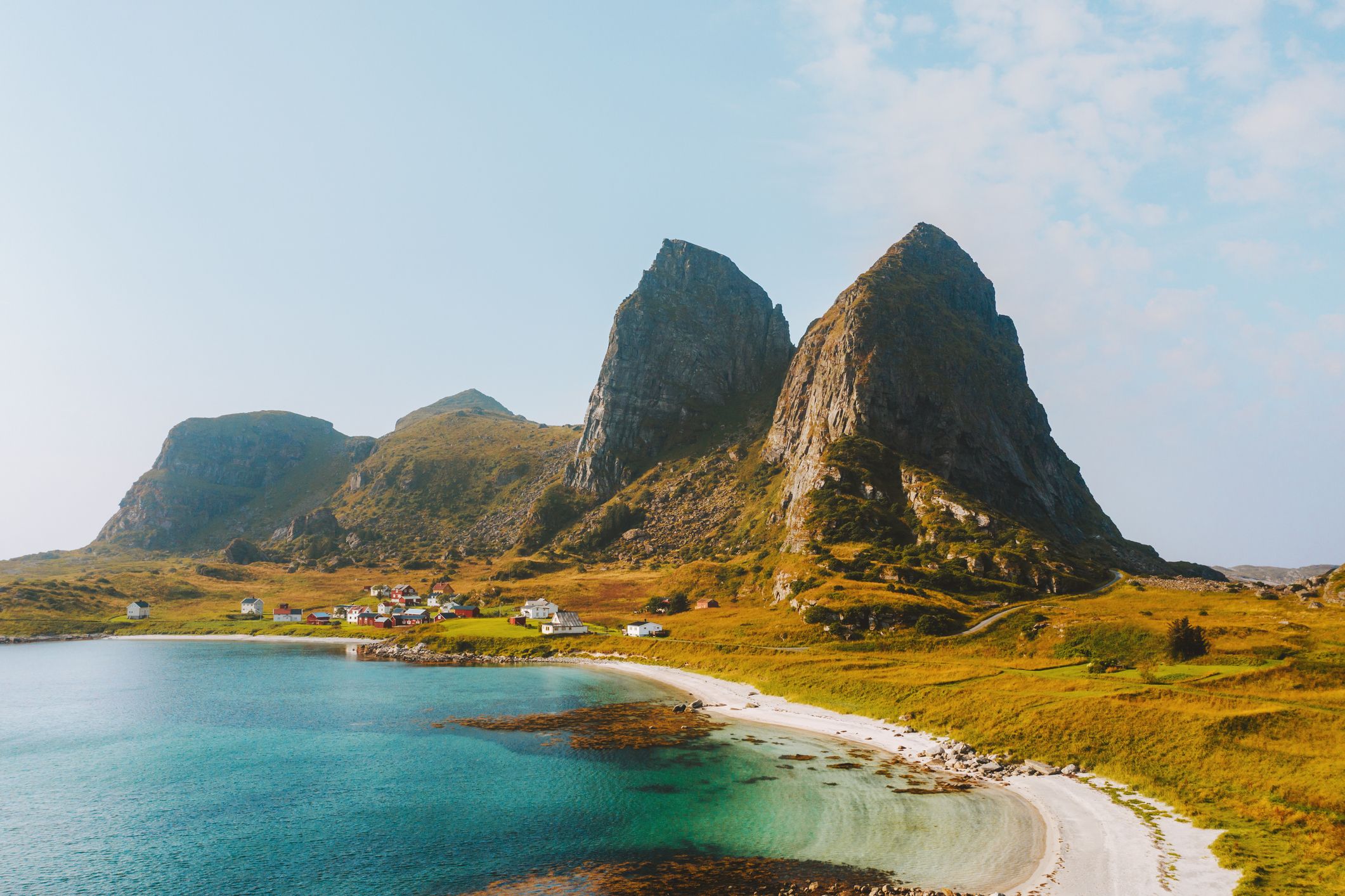
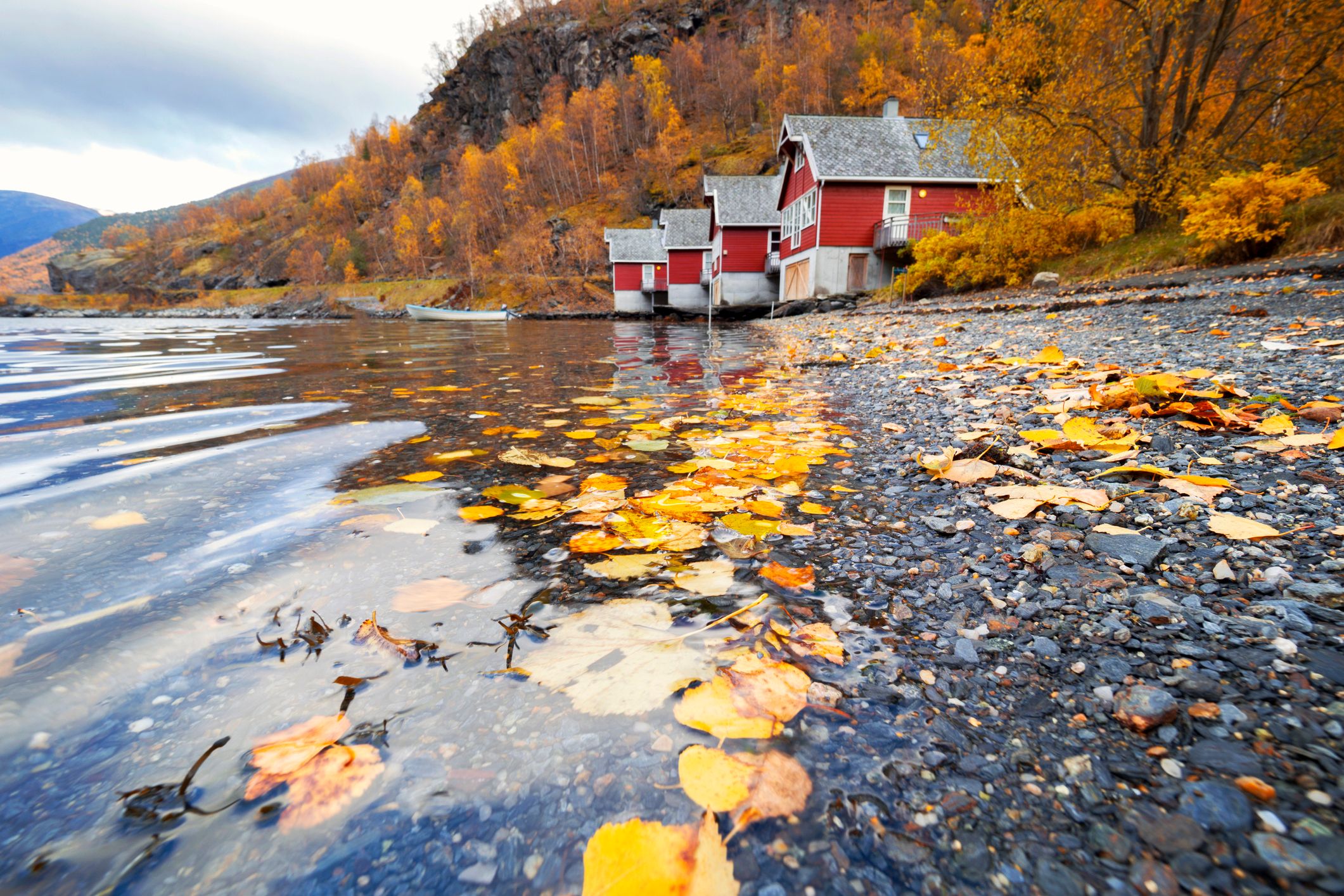
Norway’s fjords make landscape orientation feel strangely inadequate. In Geirangerfjord and Nærøyfjord, cliffs rise as much as 1,400 metres above the water. Waterfalls drop from hanging valleys, farms cling to ledges and passing boats look almost toy-like beneath the mountains.
A very wide lens can flatten all that drama. Try shooting vertically instead. Follow a waterfall from the ridge to the sea, or include a ferry, farmhouse or kayak to show the scale.
Longer lenses work well too, compressing distant cliffs, waterfalls and settlements into layers. As the ship turns, the landscape constantly rearranges itself, so it’s worth moving between decks rather than taking one photograph and retreating indoors for tea.
Don’t be disappointed by cloud or rain. Low mist divides the mountains into layers, wet weather deepens the greens and waterfalls look far more convincing when there’s actually some water in them. Norway’s scenery is enormous. Your photograph should admit it.
Venice photography: notice what’s moving
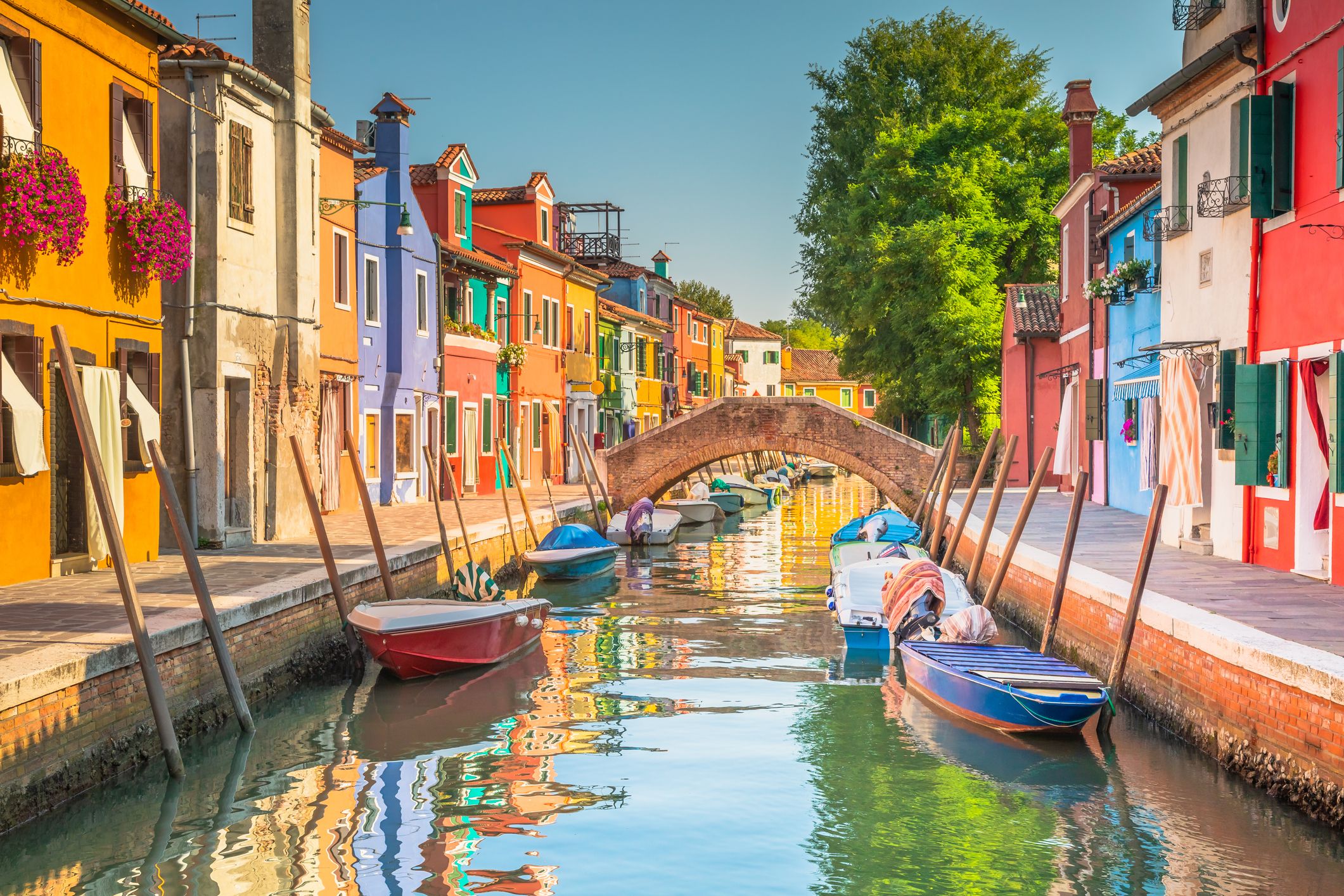
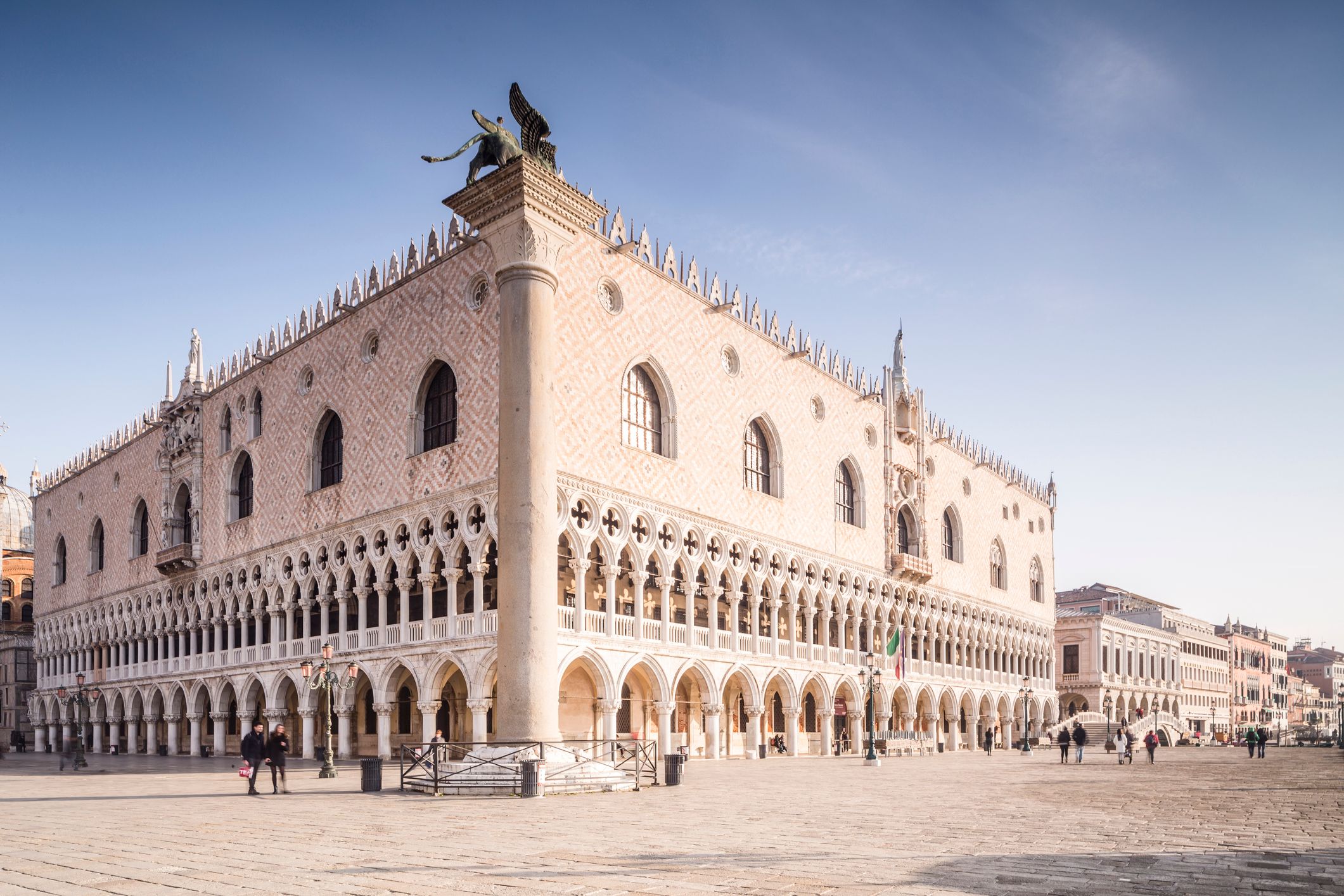
Venice has been photographed so thoroughly that taking out a camera can feel like joining a competition several centuries late. The famous views remain beautiful, but Venice becomes more interesting when you stop treating it as a stage set. Photograph delivery boats passing palaces, washing above narrow canals, groceries arriving by water or reflections breaking apart behind a vaporetto.
The city’s official tourism service encourages visitors to explore beyond the busiest route between the Rialto Bridge and St Mark’s Square. With roughly 3,000 alleys, there’s no need for every photograph to involve standing in somebody else’s way on the same bridge.
Neighbourhoods such as Cannaregio, Dorsoduro, Castello and Giudecca offer quieter canals, workshops, gardens and everyday life. From the water, use boat windows, mooring posts and passing vessels to frame the city rather than waiting for an empty Grand Canal, which may take some time. Venice photographs best when it’s allowed to behave like a living city.
Santorini photography: turn away from the sunset
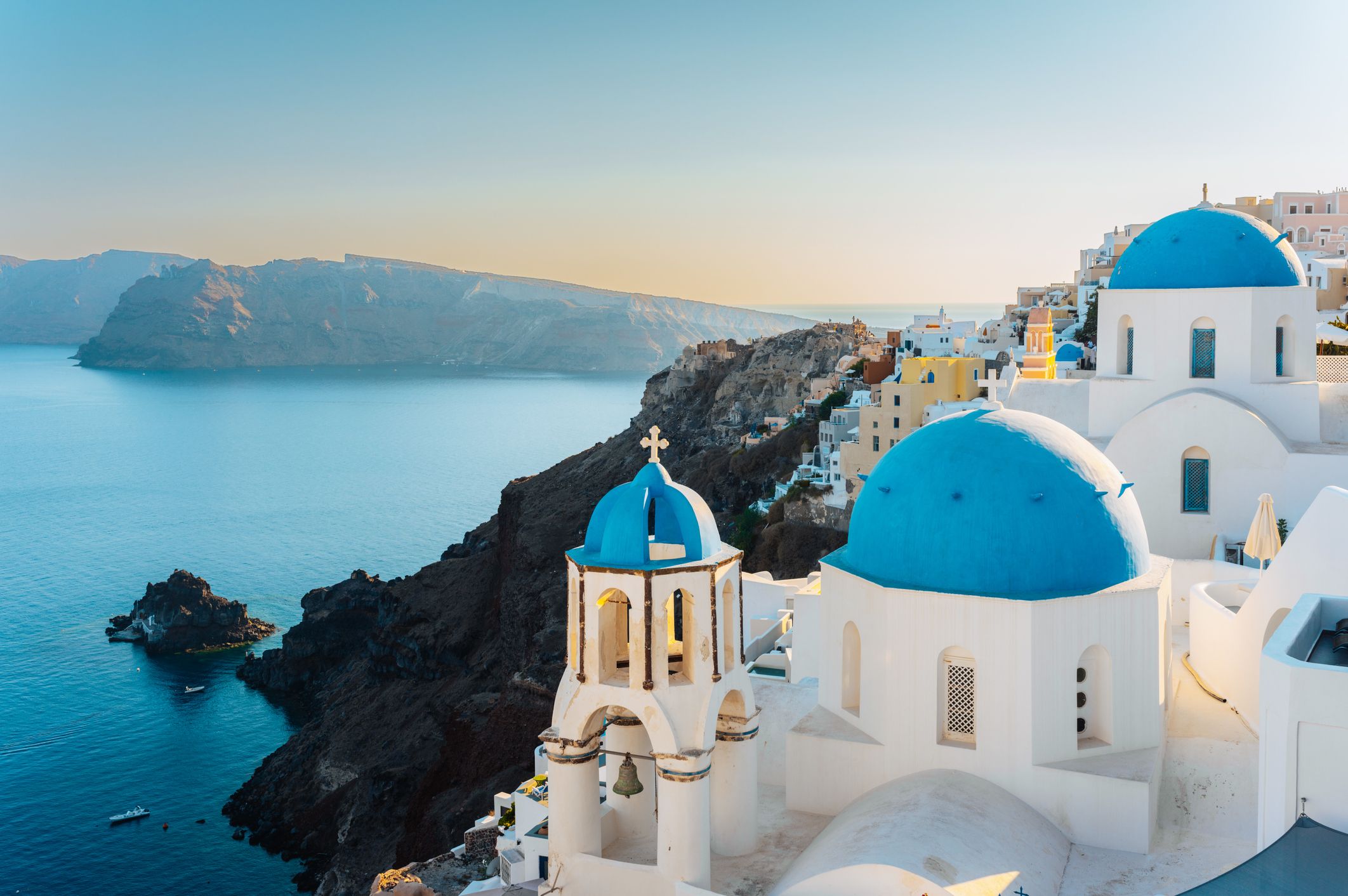
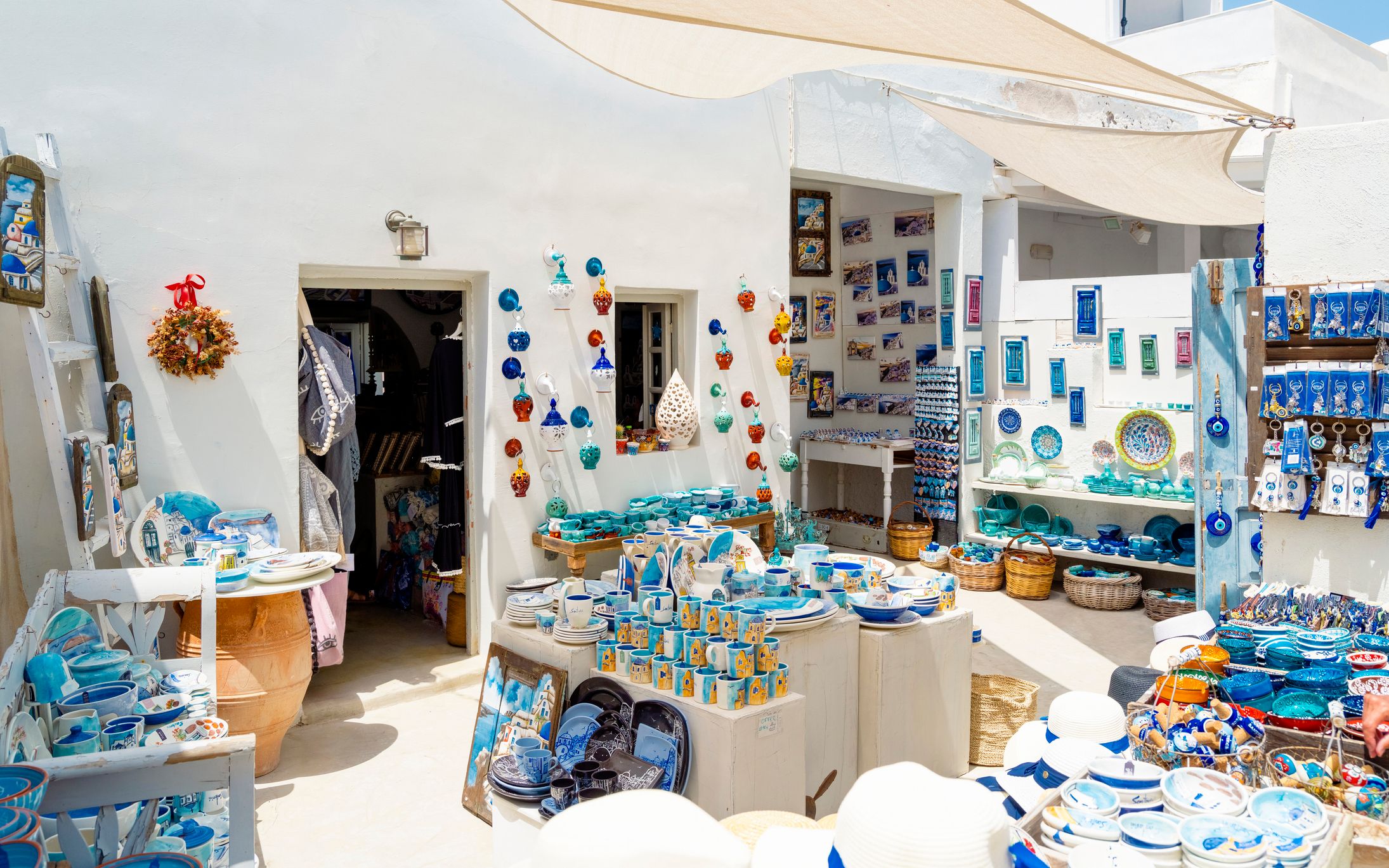
Santorini’s blue domes are famous for a reason. You should photograph them. You may even enjoy doing so alongside everybody else who has arrived with exactly the same plan. But the island is more dramatic from sea level.
From a tender, its white villages appear as a narrow strip along the top of dark volcanic cliffs. That view explains Santorini far better than another tightly framed church roof. It shows the caldera, the scale of the island and the rather ambitious places people decided to build.
At sunset, try turning around. While crowds point west, the evening light may be falling across white walls, windmills and faces behind you. From the water, the whole caldera changes colour without requiring you to defend six inches of wall in Oia.
Elsewhere, Pyrgos offers rooftops and broad island views, while Akrotiri and the volcanic beaches bring black sand, red rock and rougher textures into the picture. Santorini becomes more interesting when it’s allowed to look volcanic as well as romantic. It already has enough colour. Go gently with the saturation slider.
Greenland photography: include the people
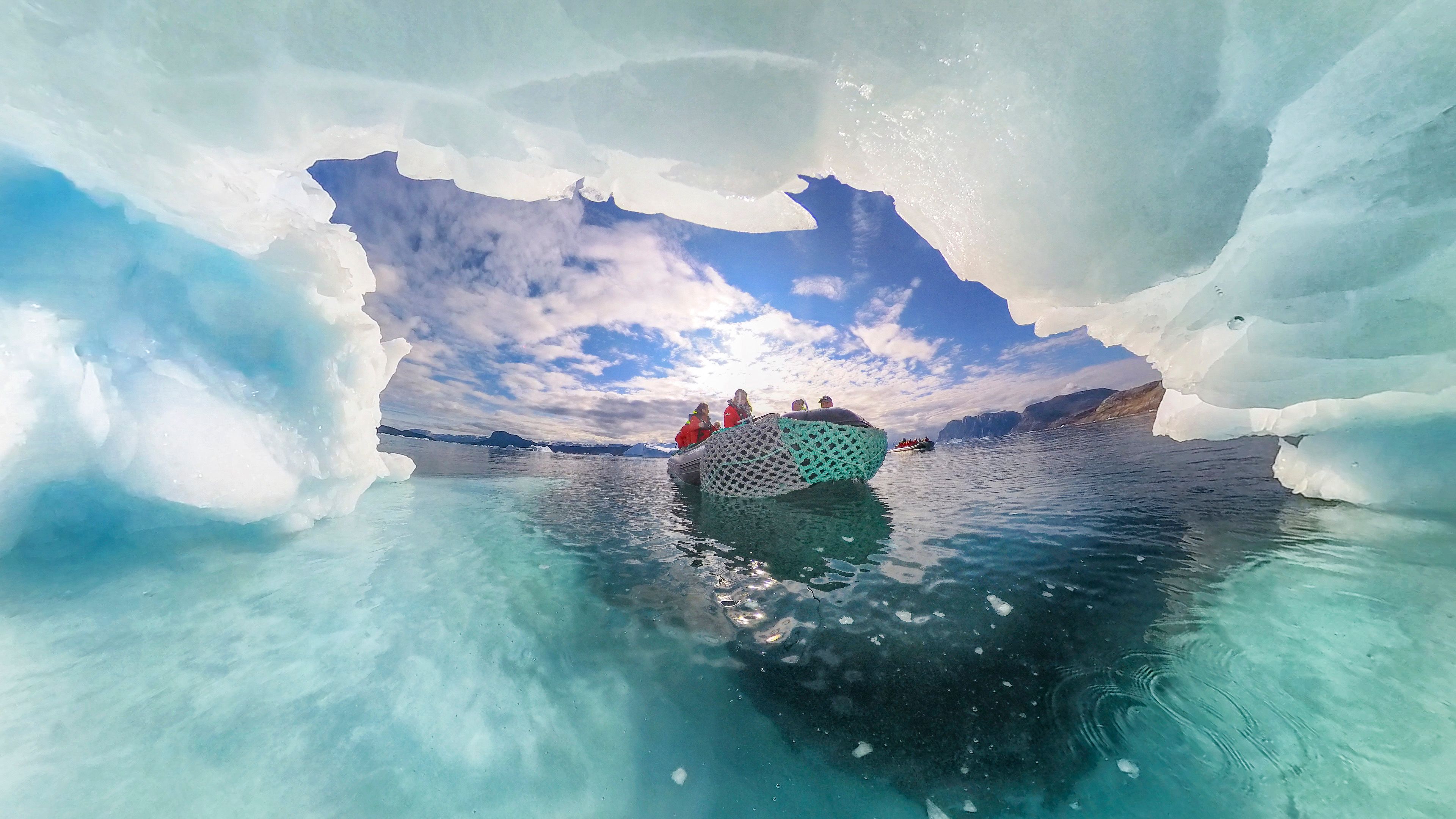
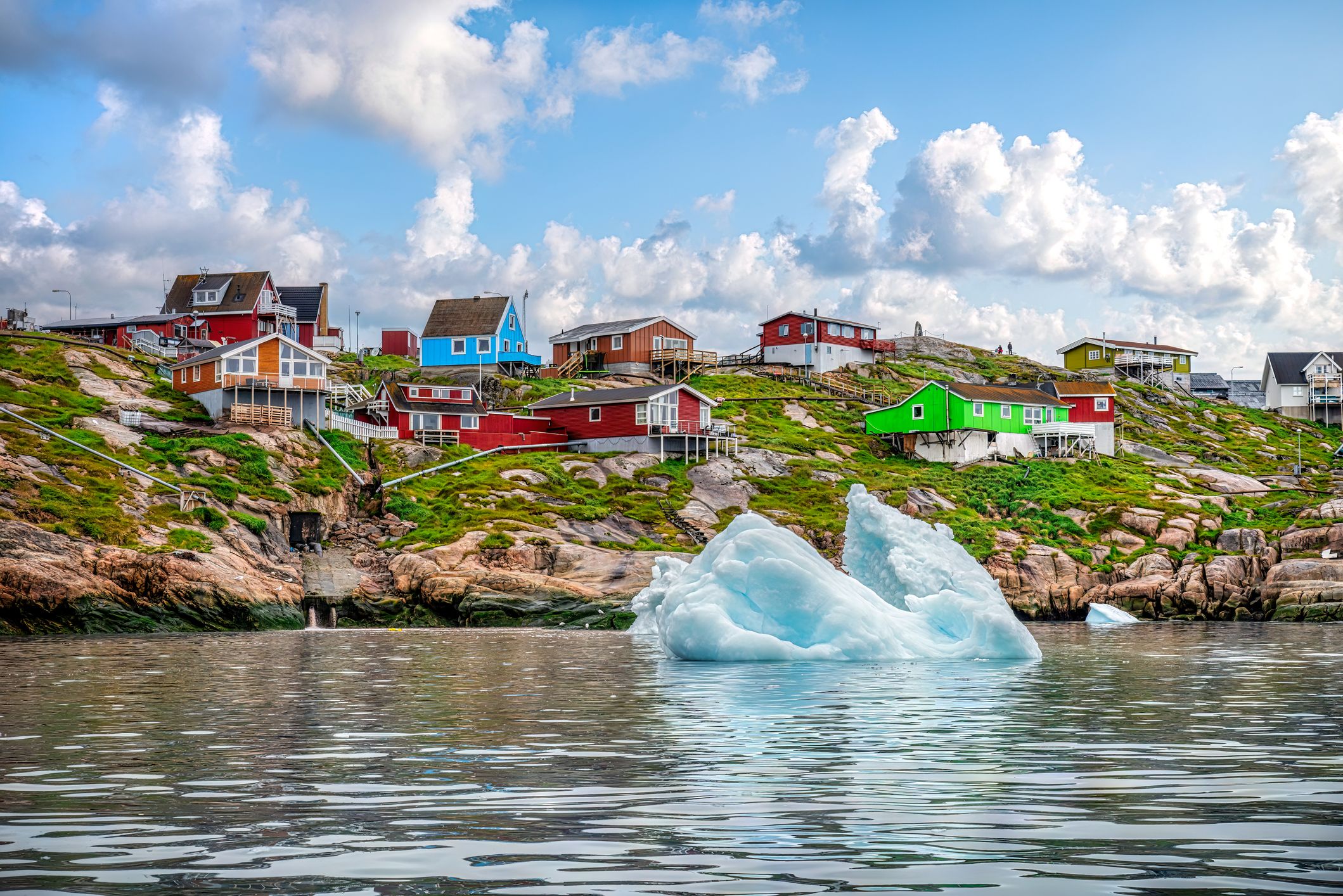
Greenland and Antarctica are often grouped together as large white places, but they ask for very different photographs. In Greenland, brightly painted houses, fishing boats, churches, harbours and sled dogs belong in the landscape. They show that the Arctic is lived in, not simply admired from the deck of a ship.
Around Ilulissat, the UNESCO-listed Icefjord is filled by one of the world’s most active glaciers, producing a landscape of constantly shifting icebergs.
The most effective photographs often combine both sides of Greenland. A red house beneath an iceberg gives the ice scale. A fishing boat crossing a vast fjord shows how people move through it.
Summer’s midnight sun can also transform the scene, warming blue-white ice with orange and pink light long after dinner. It’s excellent for photography and less useful for remembering when you’re supposed to go to bed. When photographing residents, ask permission. A town isn’t a collection of colourful props provided for the benefit of your composition.
Take the obvious photograph, then keep looking
There’s nothing wrong with photographing the famous view. It became famous because it’s good.
But once you’ve taken it, move a little. Turn around. Wait for the light to change. Include the person, boat or animal that gives the landscape scale. The postcard shows where you went. The better photograph shows what caught your eye.