
On sea days the ship does the hard work, the horizon is a simple blue line and, if you are not careful, you can spend eight hours moving heroically between buffet and sun lounger without actually noticing the ocean you are sailing through.
I grew up with two parents who are both unapologetically obsessed with birdwatching. Other people’s childhood holidays involved beaches and ice cream. Mine involved damp sandwiches in RSPB car parks while my mum tried to get her binoculars onto a distant speck that she insisted was “definitely a Bittern”. The upside is that now, when I am at sea, I cannot help but keep my eyes peeled.
Why seabirds are the best kind of sea day entertainment
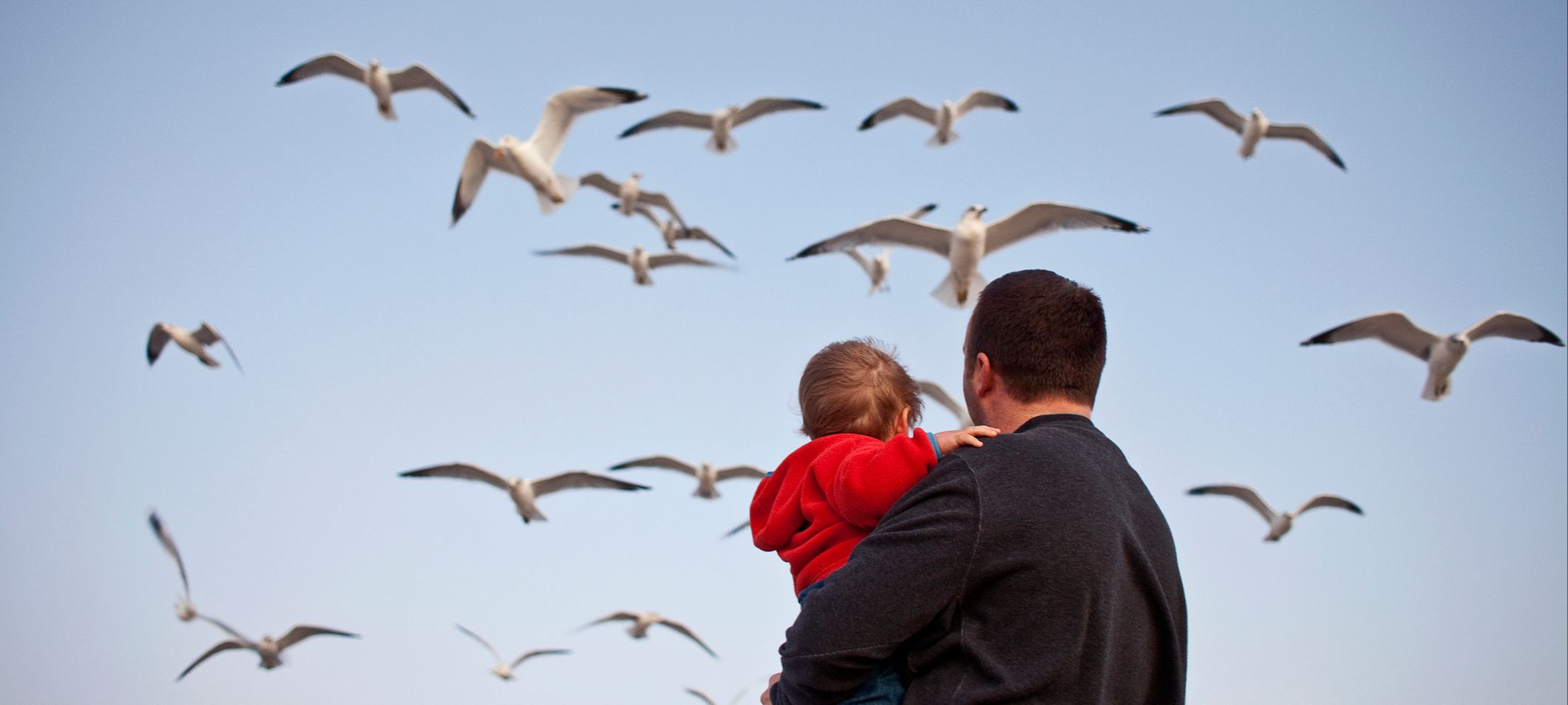
Seabirds are the ocean’s commuters. Many spend most of their lives out here, only coming to land to breed on cliffs, skerries and small islands. North Atlantic cliffs can host huge colonies of Puffins, Kittiwakes, Razorbills, Guillemots and Gannets, packed together in what the RSPB politely describes as “raucous” cities of birds.
When you are on a ship skirting those coasts you are, effectively, riding their main road. It is why even short coastal sailings around Britain and Norway can often produce seabirds in impressive numbers.
Further afield, tropical waters trade Puffins for Frigatebirds and Boobies, sleek gliders and plunge-divers that look as if they were designed by an aeronautical engineer. Surveys in the Dutch Caribbean, for instance, found Brown Boobies and Magnificent Frigatebirds (magnificent is the name, not an adjective) among the seabirds most often seen offshore, with Red-Billed Tropicbirds as an occasional bonus.
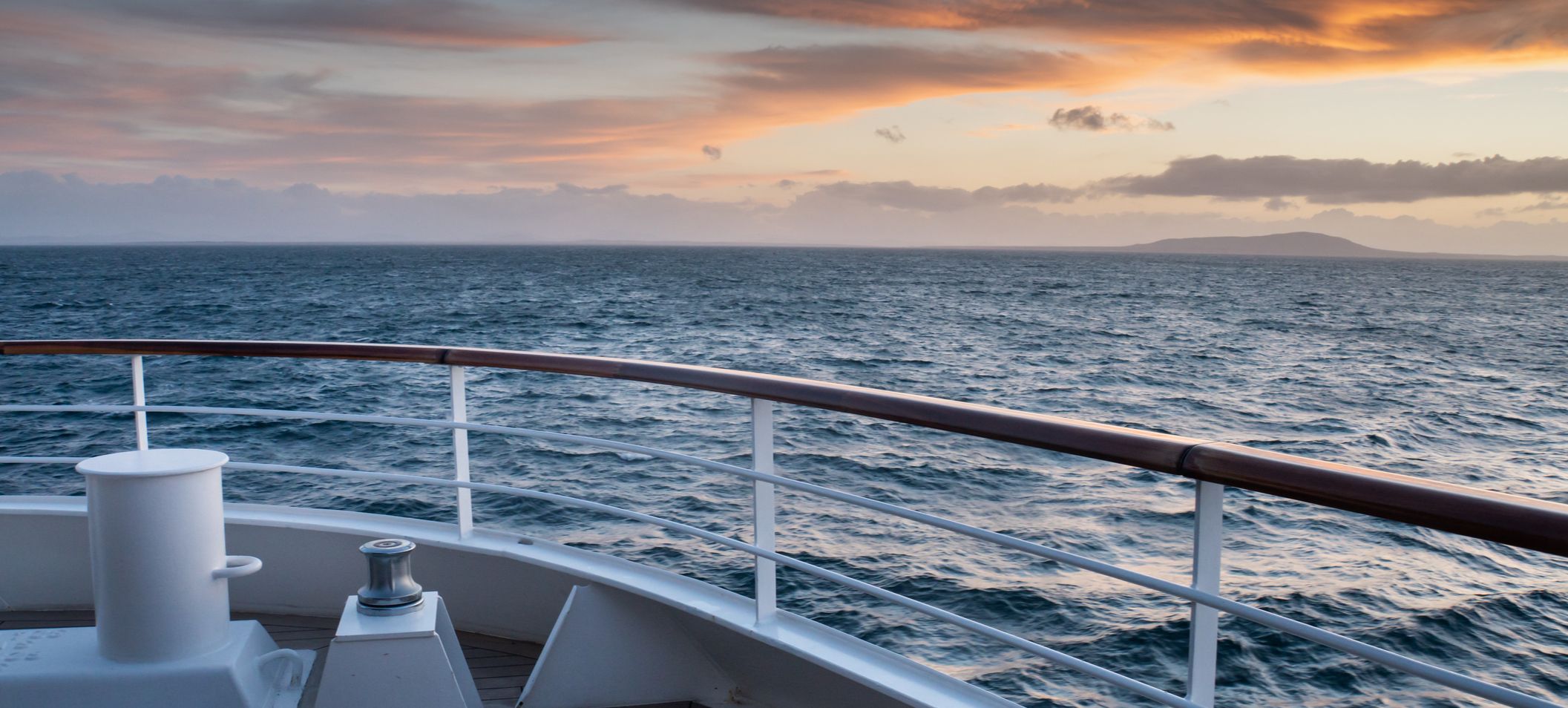
Antarctic voyages up the Drake Passage add Albatrosses, Cape Petrels, Skuas and Shearwaters to the cast list, along with, of course, penguins once you are close to land.
You do not need to know every name. It is enough, to begin with, just to notice that there is an impressive feathered creature flying alongside you.
Tools of the trade (including cabin binoculars)
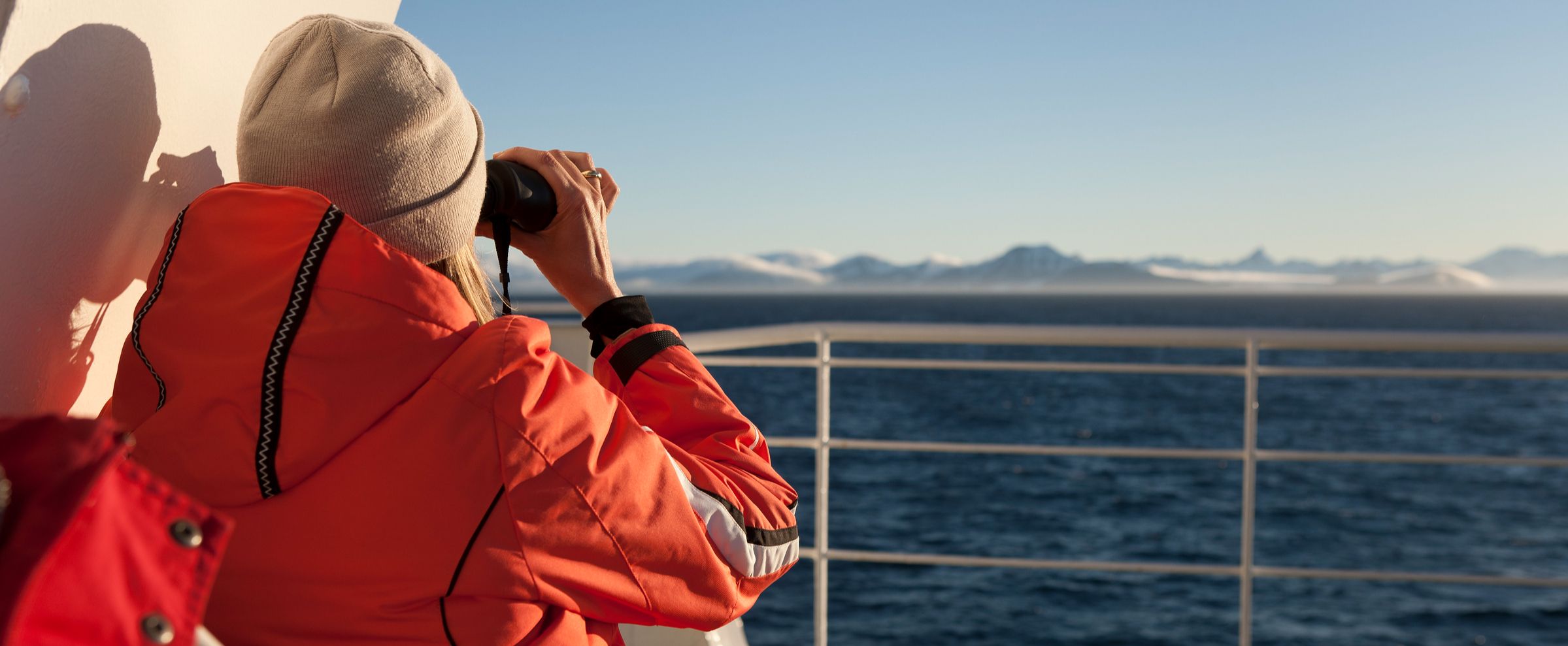
Let us deal with gear first, because my parents would never forgive me if I did not.
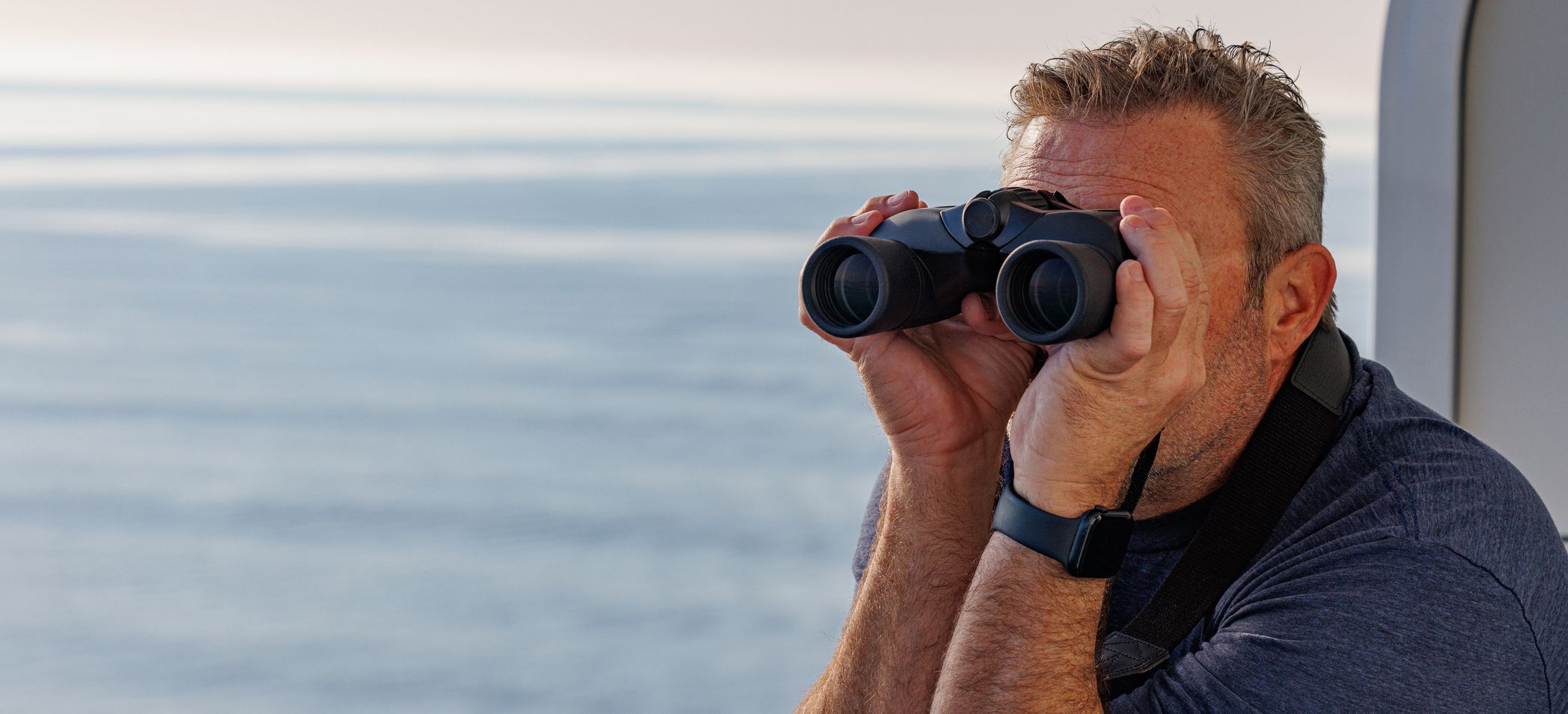
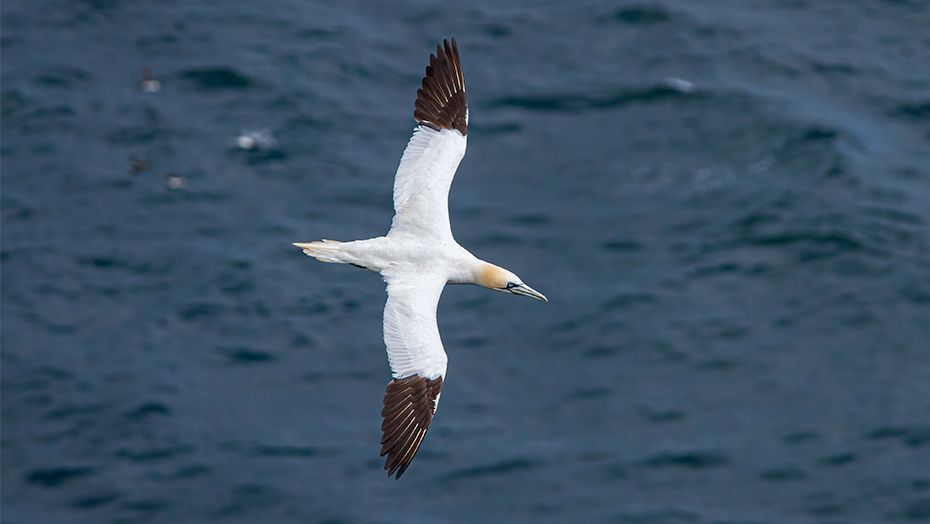
A small, decent pair of binoculars transforms sea days. You can enjoy a gannet just fine with the naked eye, but through glass you suddenly see the golden wash on its head, the dagger of the bill and the way it folds itself into a missile as it dives.
Some cruise lines make this easier. Scenic’s ocean ships, including Scenic Eclipse, list in-suite binoculars among the standard amenities, a little hint that wildlife is very much part of the show.
Viking’s ocean ships have offered binoculars in certain stateroom categories too, and reviews note them among the in-cabin extras, while some expedition operators, such as Hurtigruten on selected expedition sailings, include complimentary use of binoculars.
Cabin binoculars are wonderful, especially if you are travelling light, but do not rely on them. Availability can vary by ship and cabin type, and on a crowded deck there is always someone else who has clocked the albatross first. A compact pair you know how to focus will bring you much more joy.
The other useful tool is an ID app or digital field guide. Several birdwatching apps now include seabirds and allow you to log sightings offline. Just be warned: this is how my entirely normal friends became the sort of people who say things like “I really hope we see a Shearwater on the crossing”.
Now, to the birds themselves. Think of this less as a complete checklist and more as a cast of characters you might want to look out for as a novice.
North Atlantic and Norwegian coast: Gannets, Puffins and troublemaking Skuas
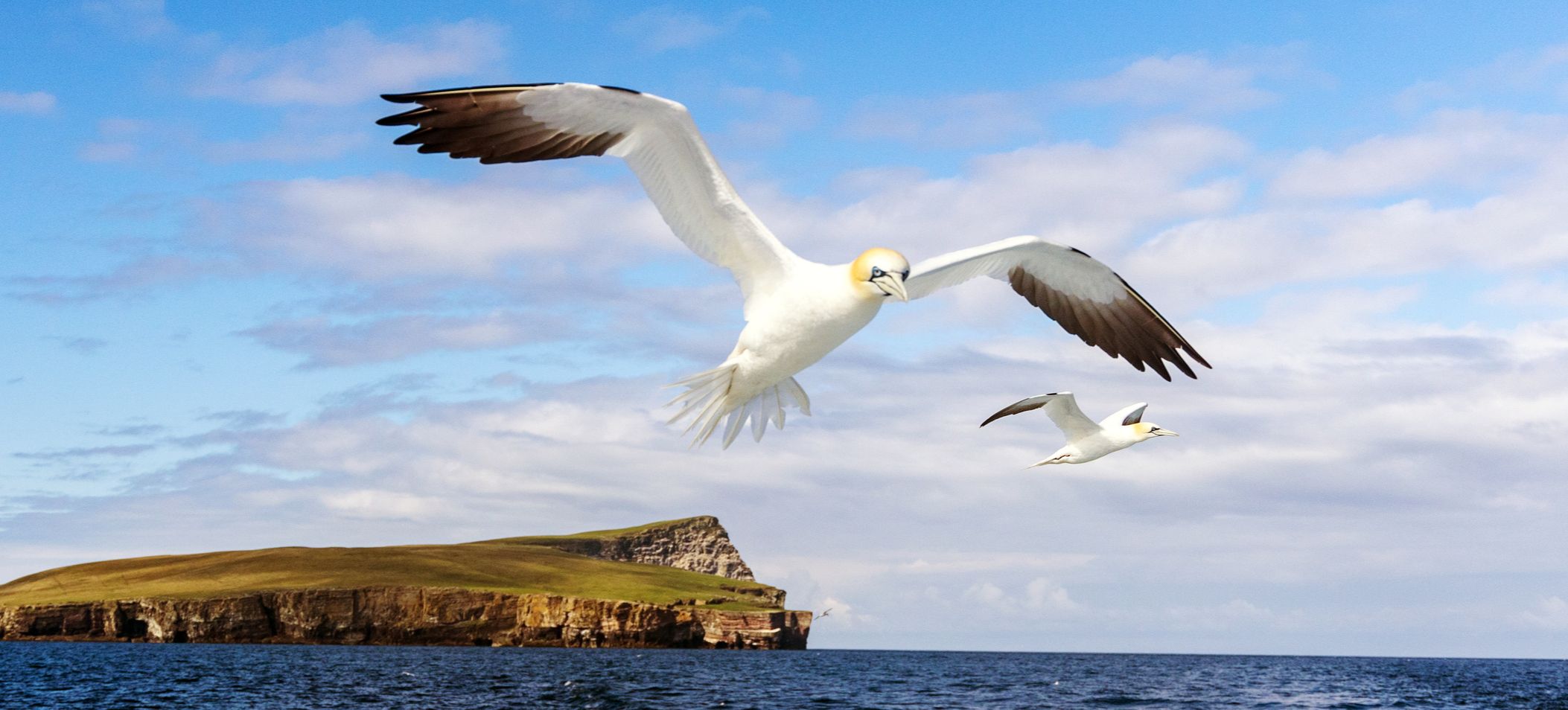
On routes around the British Isles, Iceland, Ireland or coastal Norway, the star of the show is usually the Northern Gannet. This is the largest seabird in the North Atlantic, bright white with black wing tips and a pale ochre head. It spends most of its life gliding over the open ocean and nests in vast colonies on cliffs and sea stacks, including places like the Shetlands and Bempton Cliffs in the UK.
Watch for their hunting technique. A gannet will circle high above the ship, then suddenly fold its wings and plummet headfirst into the water at motorway speeds, vanishing in an explosion of spray. They have reinforced skulls and air sacs under the skin to cope with this kind of madness, which is reassuring when you see one trying to drill through the sea surface in front of you.
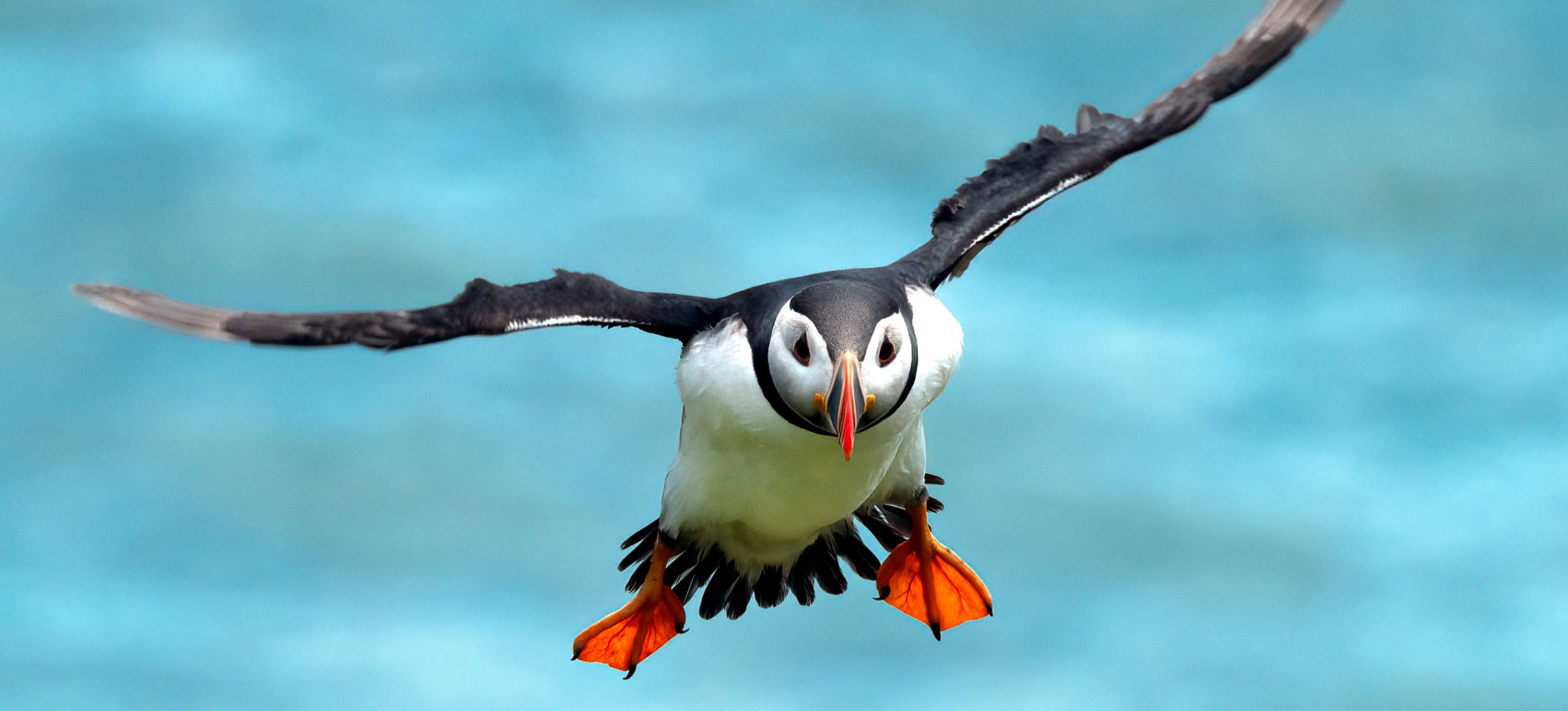
Closer to the cliffs, keep an eye out for the adorably worried-looking mascots of the seabird world: Puffins. These small auks have black and white bodies and that unmistakable colourful bill in breeding season. In summer they raft in noisy groups offshore, commuting between their burrows and the open sea; in Iceland and around parts of Newfoundland, millions gather, making them one of the North Atlantic’s most beloved seabirds.
Around them you may see Kittiwakes, small, neat gulls with inky wing tips; Fulmars, which look like gulls but glide with a stiffer-winged, more efficient flight; Guillemots and Razorbills, which fly low over the water; and the occasional Skua lumbering through with an air of menace. Skuas make a living by harassing other seabirds until they give up their fish, so if you see one, it is worth checking which poor puffin it is about to mug.
Mediterranean shimmer: Shearwaters tracing the waves
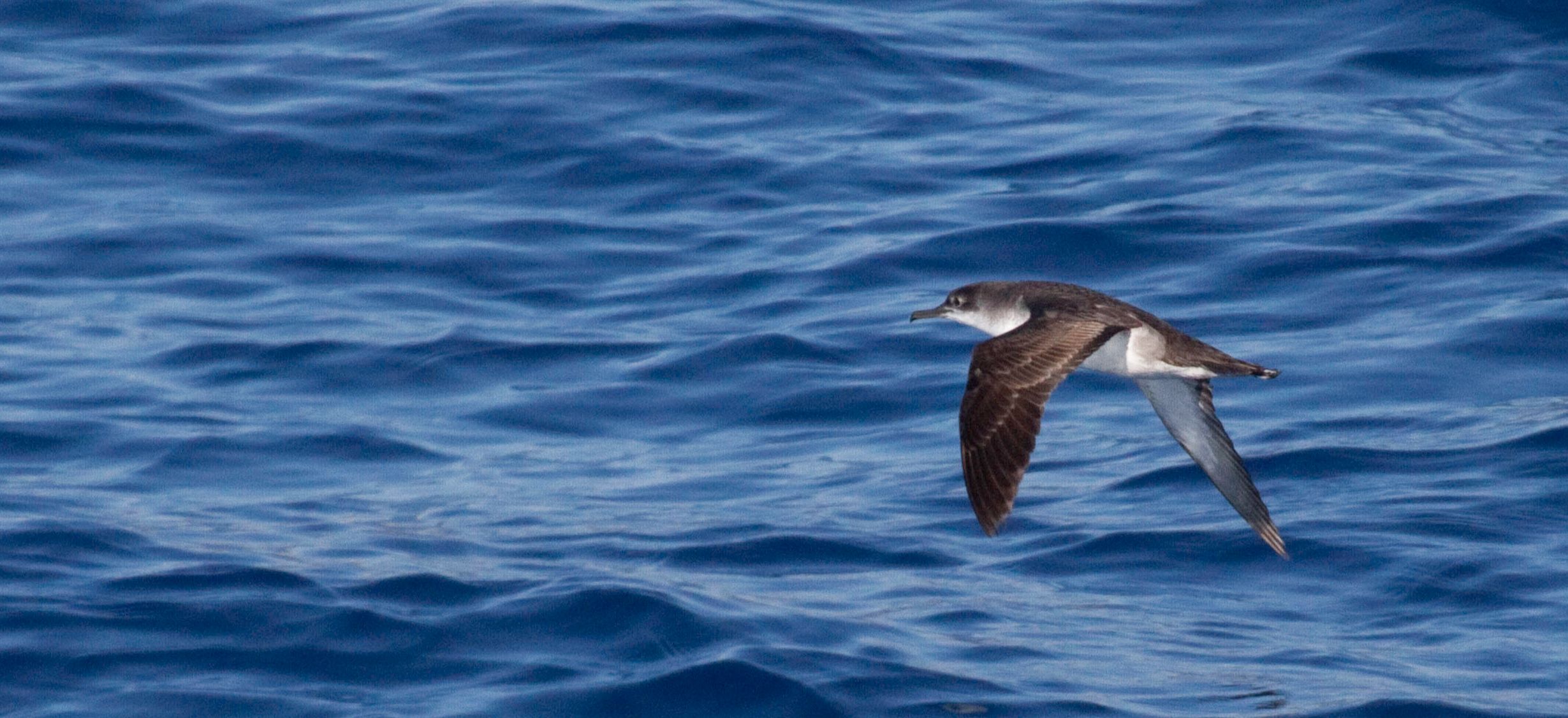
If your itinerary runs through the Mediterranean, the seabird palette is subtler but no less fascinating. Two of the signature birds here are Scopoli’s Shearwater and the Yelkouan Shearwater.
Both are long-winged, elegant seabirds that breed on rocky Mediterranean islands and spend much of their lives out at sea, foraging over open water. Scopoli’s Shearwater, for example, nests on rocky islands and steep coasts in the Mediterranean before many birds disperse to the Atlantic to feed.
Yelkouan Shearwaters breed on islets and coastal cliffs around the central and eastern Mediterranean, including Greece, Italy and Malta, and are frequently observed far offshore, where they take small fish and crustaceans.
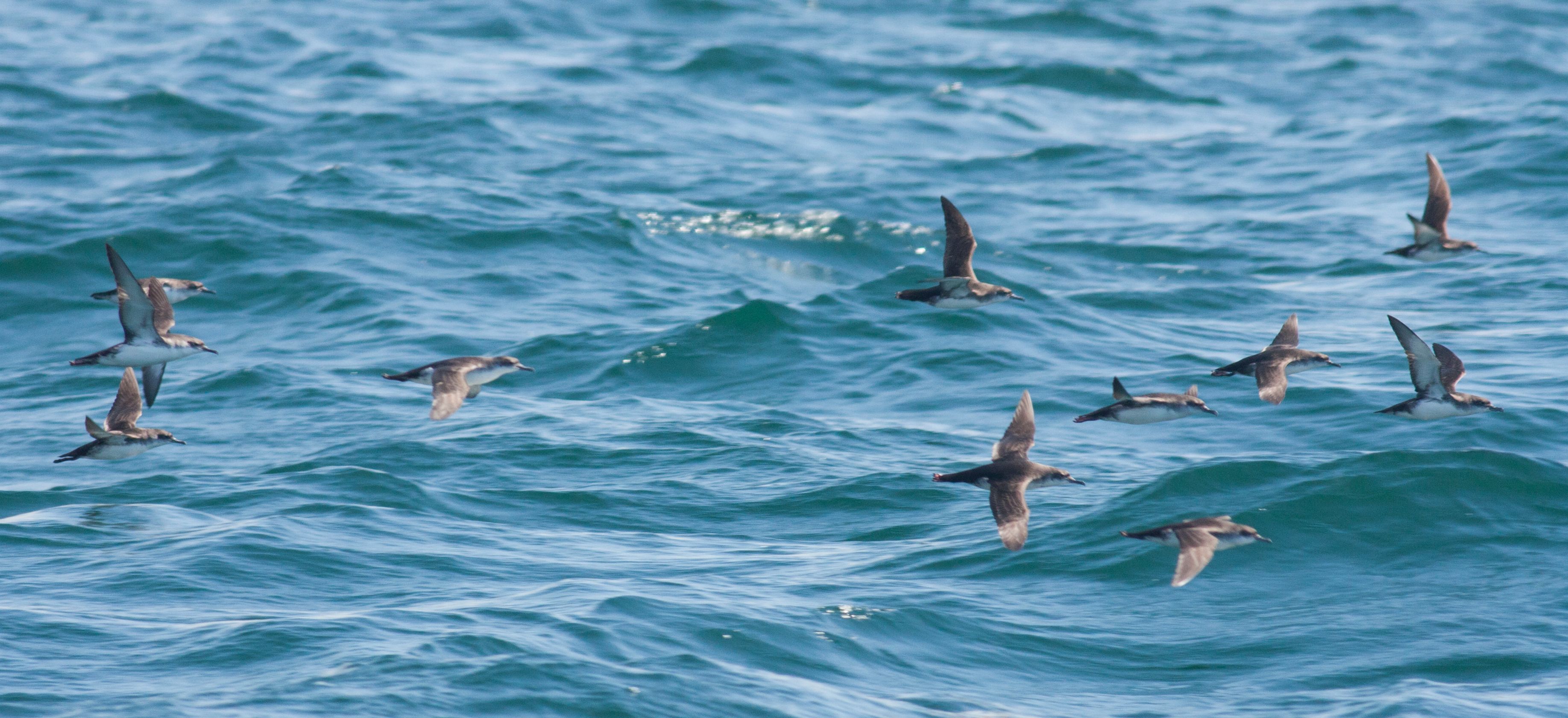
From the ship you will often see them in loose flocks, flying low and fast over the waves. They have a characteristic “shearing” flight, tipping from side to side with stiff wings, almost brushing the water as they go. Once you have noticed that shape and movement, you will start to see them everywhere, particularly early and late in the day when the light is soft and they show up as flickers of dark and white against the glitter.
Around ports and coastlines, Yellow-Legged Gulls will be your constant companions, along with Terns and the occasional Cory’s Shearwater moving between Atlantic and Mediterranean feeding grounds.
Caribbean and tropical Atlantic: Frigatebirds, Tropicbirds and Boobies
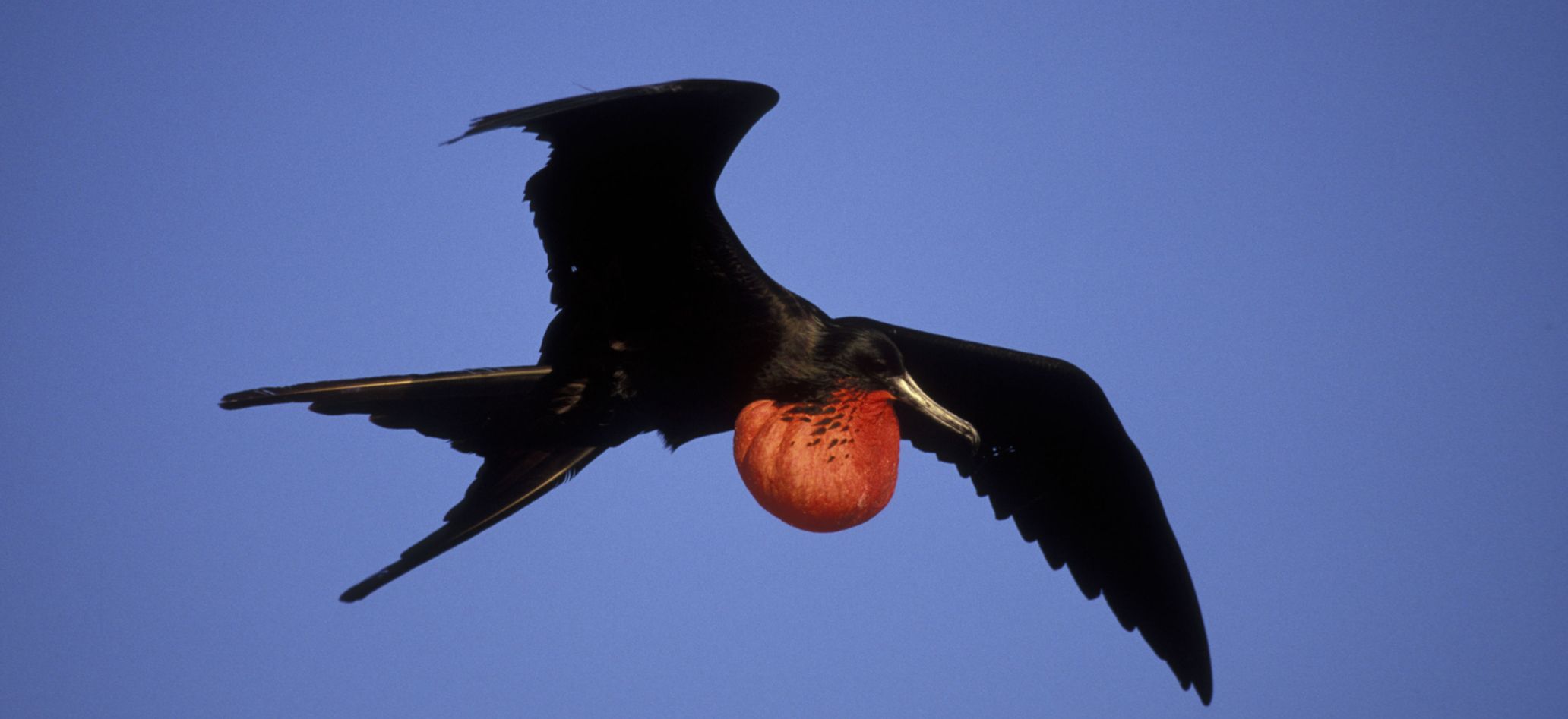
In warmer waters the feathered cast changes dramatically. Around the Caribbean islands and tropical Atlantic, the sea day sky can be patrolled by magnificent Frigatebirds. These are the dramatic, long-winged black birds you see hanging effortlessly in the air, often with a tail shaped like a swallow. Scientific summaries describe Frigatebirds and Tropicbirds as slender, striking seabirds that patrol tropical oceans, with Frigatebirds in particular adapted for a piratical lifestyle, chasing other seabirds until they drop their catch.
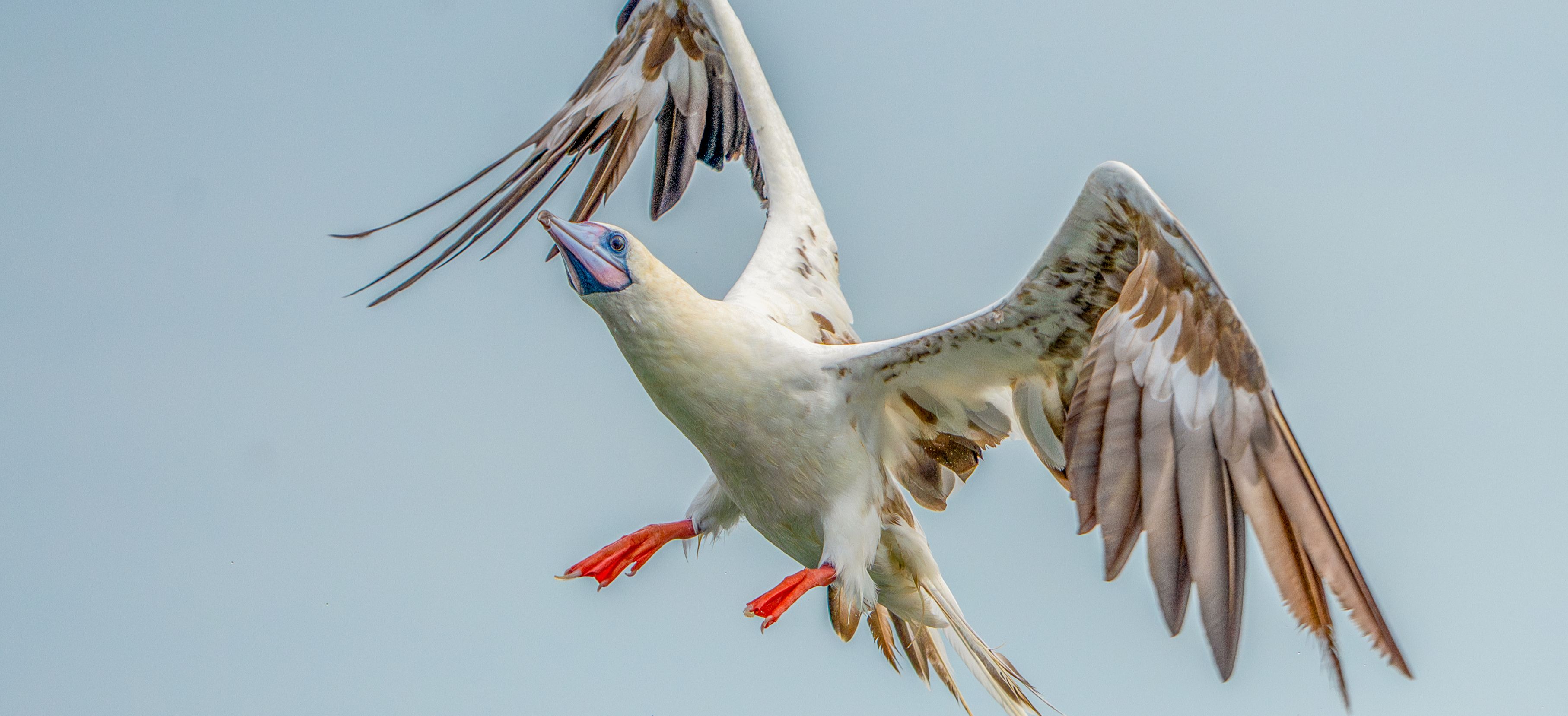
Alongside them you may see Boobies: Brown Boobies with chocolate backs and white bellies, or Masked Boobies that are almost entirely white, sailing over the waves or flying low behind the ship to take advantage of the air currents. Field observations and regional surveys in the Dutch Caribbean, for instance, list Brown Boobies and Magnificent Frigatebirds among the seabirds most frequently recorded offshore, along with red-billed tropicbirds on some transects.
Tropicbirds are pure theatre: white birds with long, trailing central tail feathers, often seen high above the ship or making lazy circuits over sea cliffs near island ports. If you spot something that looks almost too elegant to be real, that's probably them.
Alaska and the North Pacific: Puffins again, plus Murres and Auklets
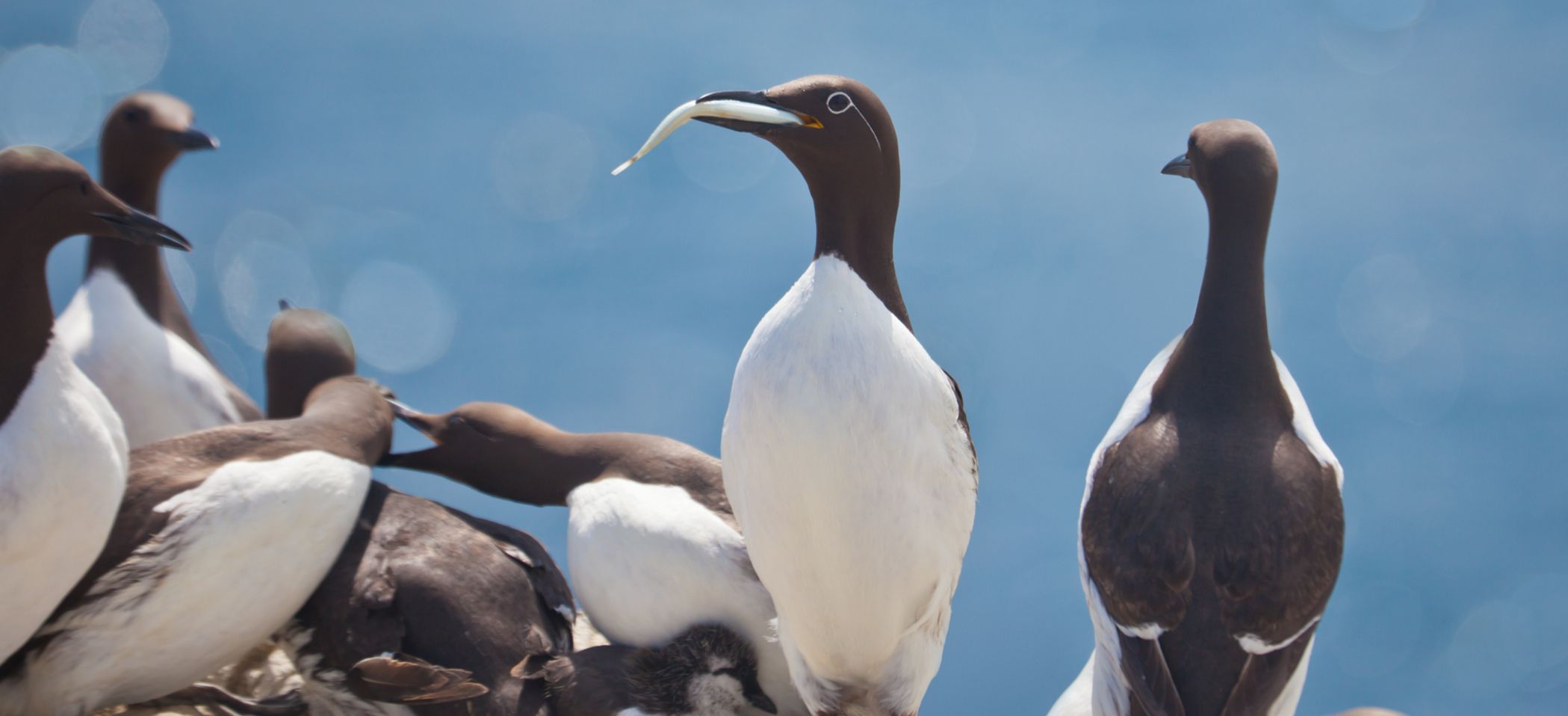
Alaska itineraries, from the Inside Passage to the Aleutians, offer some of the richest seabird watching in the northern hemisphere. The rocky coasts and islands of southeast Alaska host dense colonies of Puffins, Kittiwakes, Murres and Cormorants, especially around places like the Kenai Fjords and the Pribilof Islands.
Here the Puffins are usually Horned or Tufted Puffins, close relatives of the Atlantic species but with a more extravagant look. Murres (similar to guillemots) form noisy cliff ledges, while Auklets, small auks with quirky head plumes or horn-like bills, will swirl around your ship in tight flocks.
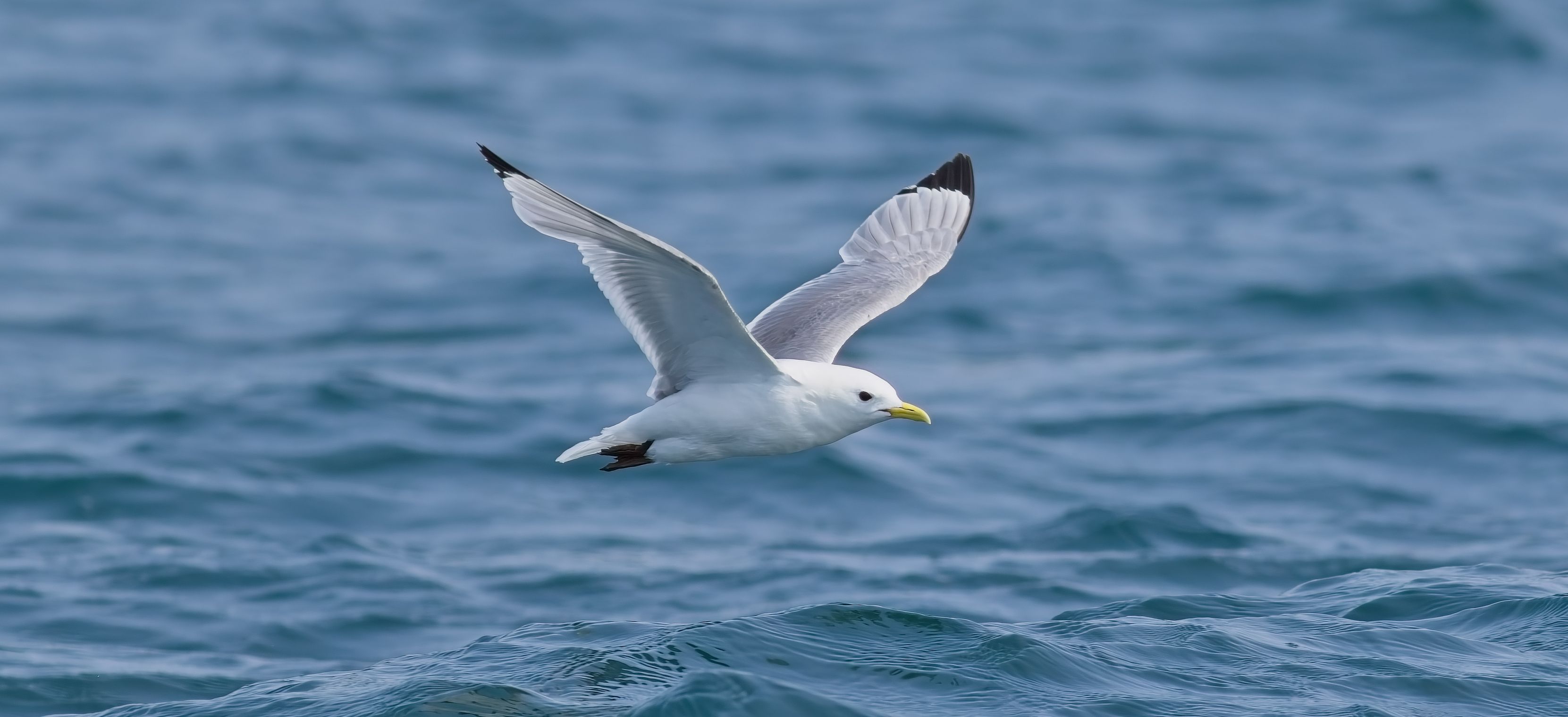
Kittiwakes, named for their repetitive call, often follow fishing boats but will gladly cruise along behind a ship if there is any chance of food in the wake. Watch too for Bald Eagles on the shoreline and rafts of sea ducks closer inshore on port days; even the most determined non-birdwatcher is usually disarmed by a bald eagle posing photogenically on a spruce.
Southern Ocean and Antarctica: Albatrosses and Petrels on the wing
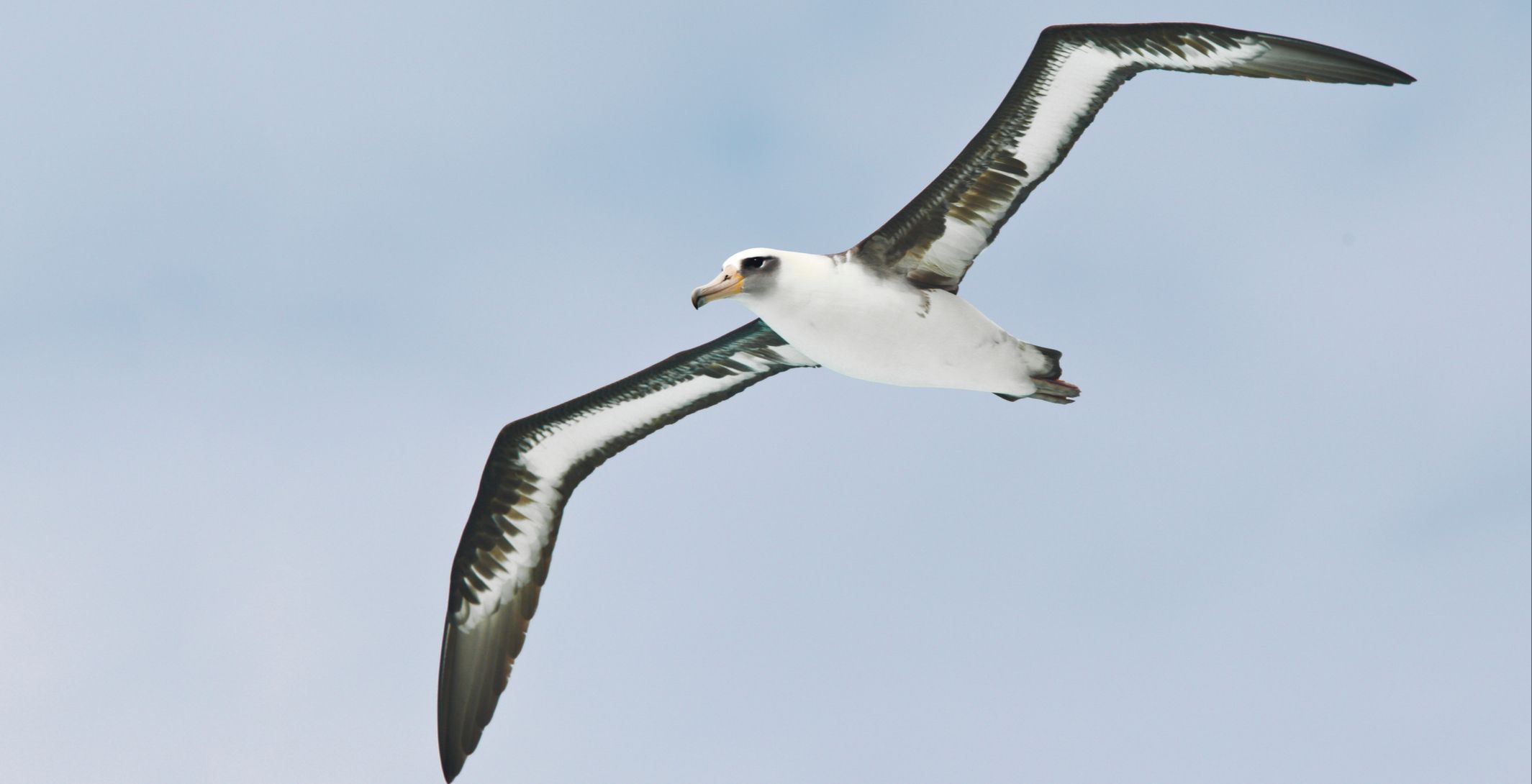
If you find yourself heading south across the Drake Passage on an expedition cruise, clear your diary. This is where every lesson your bird-mad parents tried to teach you could suddenly pay off.
Albatrosses are the undisputed royalty of the Southern Ocean. Wandering and royal albatrosses have wingspans that can exceed three metres and spend most of their lives riding the winds of the open ocean, dropping in only briefly to nest.
Guides on Antarctic voyages routinely describe days when the ship is surrounded by Prions, Petrels and several Albatross species, with birds gliding in great arcs past the bow.
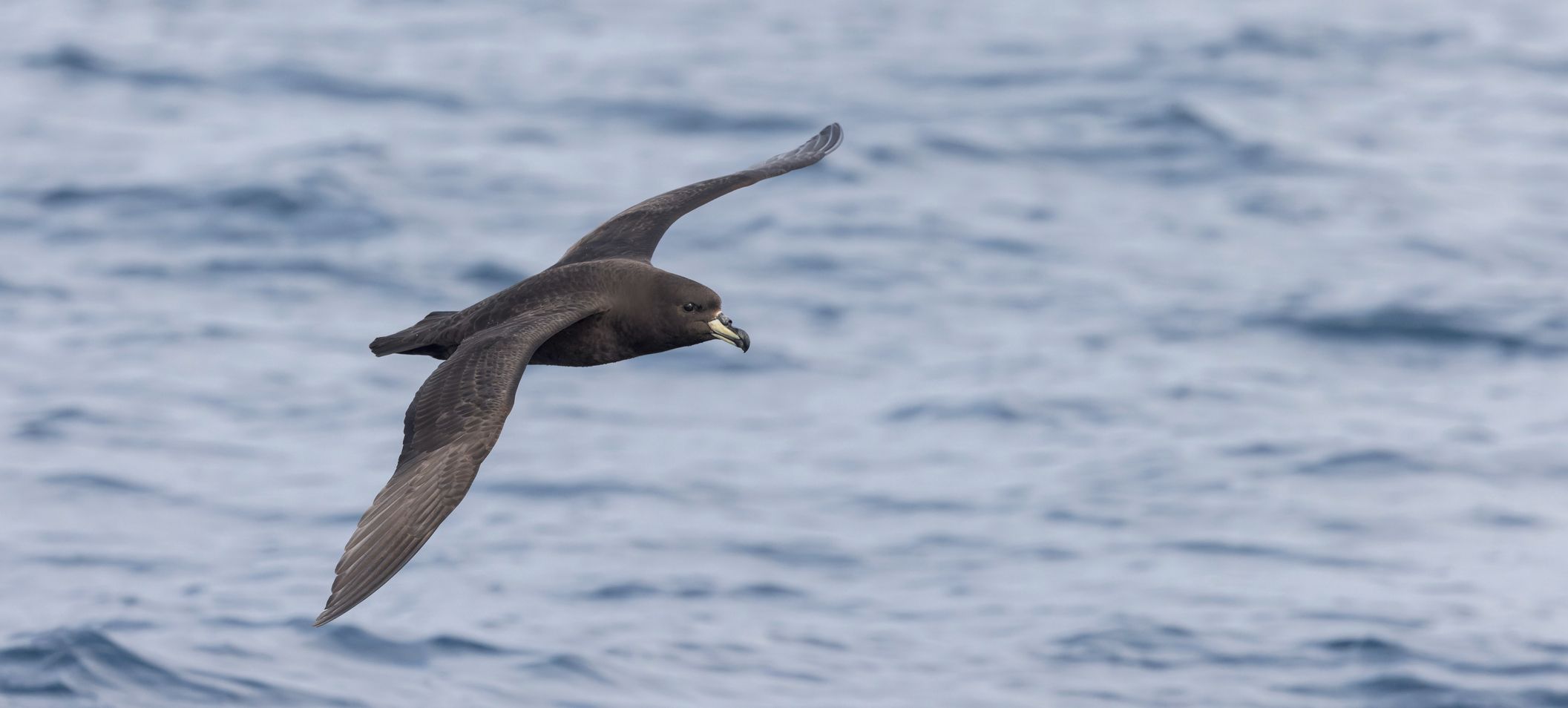
The trick is to plant yourself somewhere on deck with a reasonably wind-proof layer and simply watch. Albatrosses barely flap; they skim low along the troughs, rise up the face of a wave and bank around in high, clean curves. Smaller birds, such as Cape Petrels and various Storm Petrels, flick and flutter more, dancing over the surface in search of food. Together they make the ship feel like the slow, lumbering intruder that it is.
Closer to the continent and the Antarctic Peninsula, the first penguins appear, porpoising out of the water around the ship or clustering on ice floes. Technically they are seabirds too, but since they tend to steal the show, I'll leave diving into all of their different species for another article.
South Pacific and Galápagos: Boobies and their acrobatic cousins
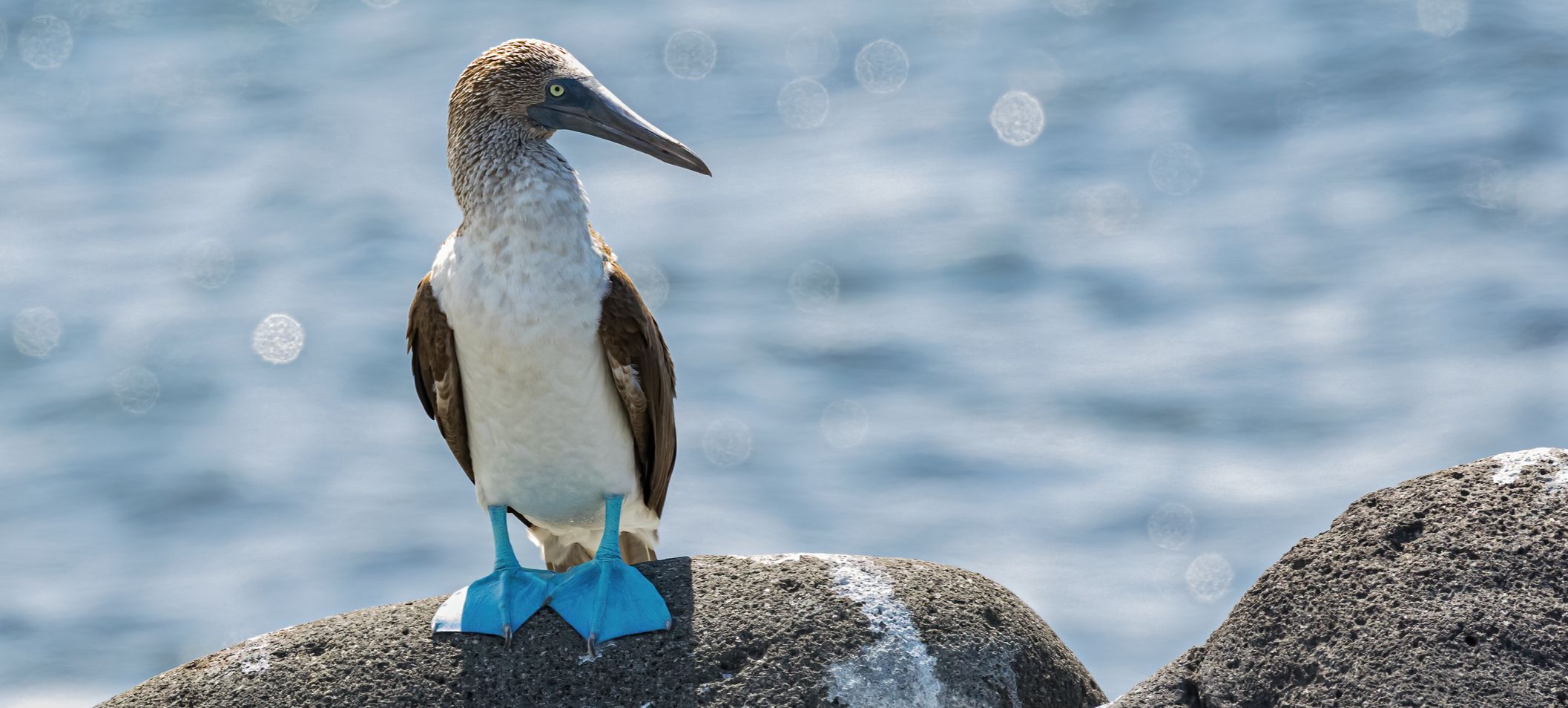
In the wider tropical Pacific and around the Galápagos, you meet the full Booby ensemble. Nazca, Blue-Footed and Red-Footed Boobies all breed around the Galápagos archipelago, diving for fish with the same fearless plunges as their Gannet cousins.
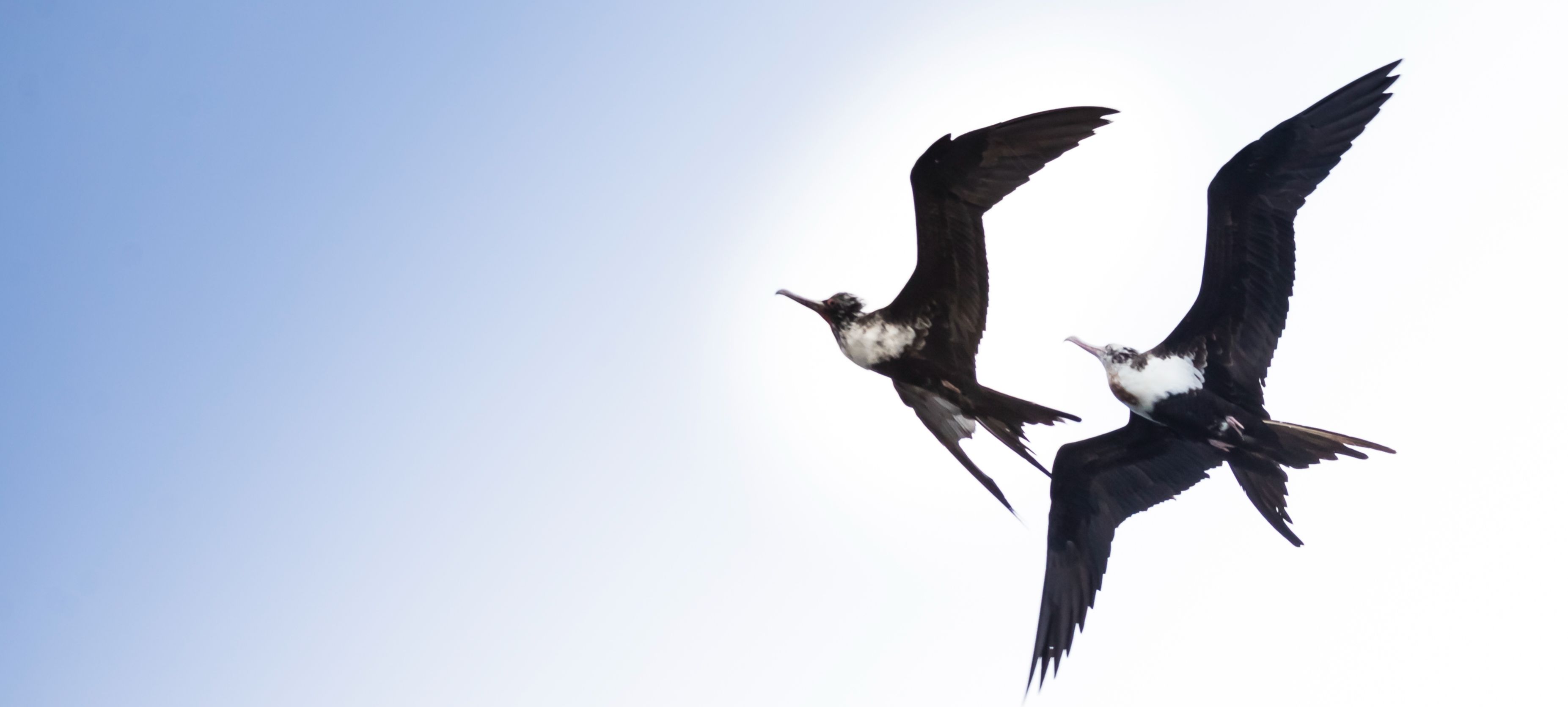
They are joined offshore by the same family of Frigatebirds and tropicbirds that patrol the Caribbean. On some itineraries you may also see Wedge-Tailed Shearwaters and other Pacific shearwaters tracing long lazy lines along the swell, especially early and late in the day when they commute to and from breeding colonies.
How to actually spot something

A few small habits make a big difference.
Give yourself ten minutes at a time. Birdwatching at sea is oddly meditative once you accept that there will be long stretches where nothing happens, then a sudden flurry of wings and you are frantically trying to remember which way round Puffins are coloured.
Use the ship. Birds like the updrafts around the bow and the turbulence around the stern. If there is a wake, scan along it; smaller seabirds and dolphins often favour this strip of disturbed water. On cooler routes, visit the forward observation deck occasionally, where the crew might be quietly keeping a tally of whales and birds between duties.
Most of all, keep your expectations loose. You might set out dreaming of Albatrosses and come back with a notebook full of gulls. That is fine. My parents have always insisted that the point of birdwatching is not the rare birds but the act of paying attention. A cruise ship on a sea day is simply a comfortable, well-catered bird hide from which to practice that art.
And once you have watched a Gannet turn itself into a living javelin or anAalbatross hang in the wind alongside the bridge, you may discover that you have quietly acquired a new hobby to take on every voyage. Which, if you come from a family of birdwatchers, feels a little bit like coming home.