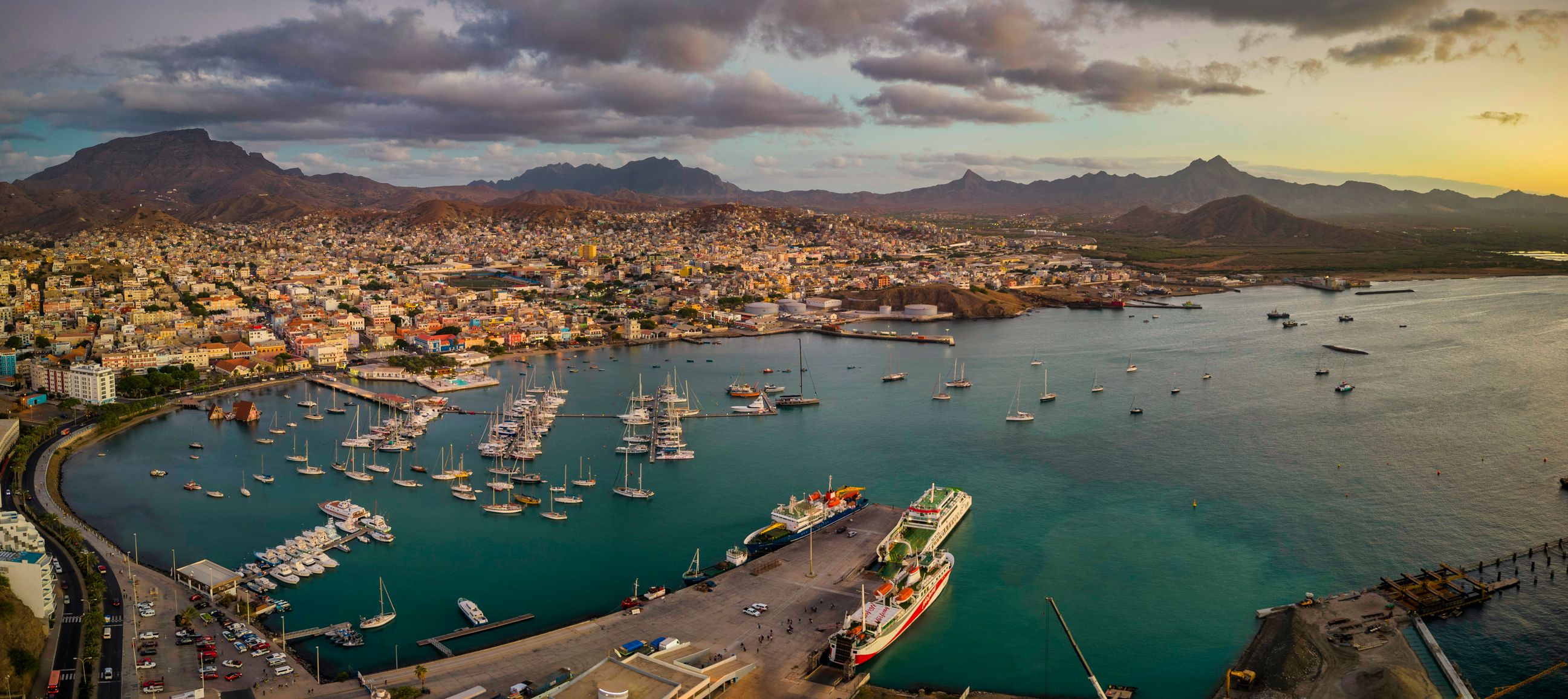
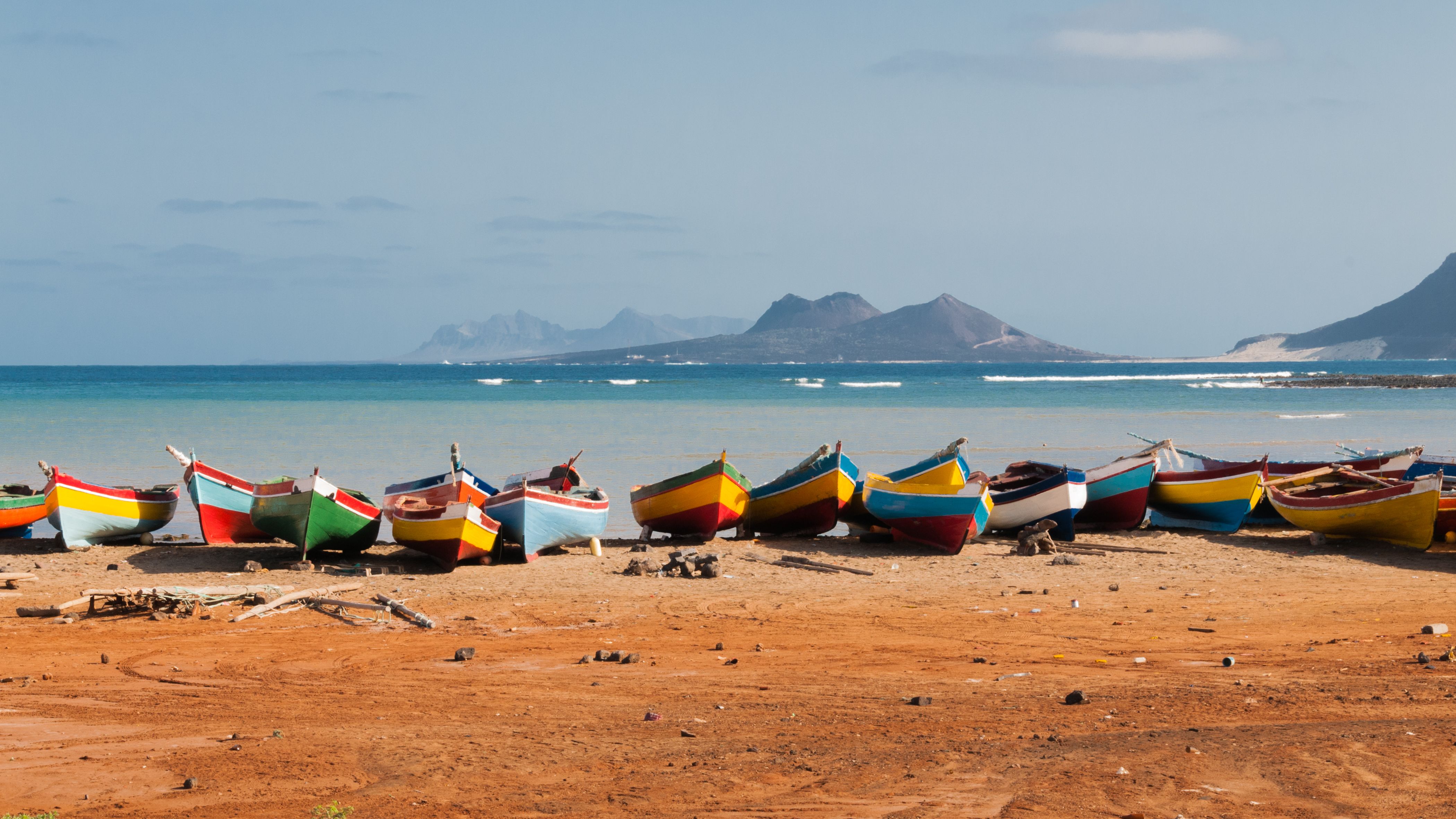
The capital of São Vicente, in Cape Verde, has the useful advantage of being walkable from Porto Grande, but it doesn’t reveal itself in a single neat gesture. It arrives in fragments: a song drifting out of a doorway, a harbour ringed by bare volcanic hills, a sudden patch of green high above the town, the smell of coffee and pastry at a counter where everyone else appears to know exactly what they’re doing.
That makes it a very good cruise call. Not because it offers the polished certainty of a capital-city greatest-hits tour, but because it gives you texture. Mindelo is Cape Verde with its collar loosened: musical, dry, bright, windy, lived-in and quietly proud of its cultural importance. It is also the sort of place where a shore day can become much better if you resist the urge to over-plan it to within an inch of its life.
The best way to understand it is in three parts: the music, the view from Monte Verde and the pastelaria you should probably take a taxi for, even if only to preserve your remaining dignity in the midday heat.
Mindelo: Cape Verde’s music city by the sea
If you arrive in Mindelo knowing only one thing about Cape Verdean music, it will probably be Cesária Évora. That is no bad starting point. The great singer, known as the Barefoot Diva, was born in Mindelo, died in Mindelo and helped take morna, Cape Verde’s famously wistful musical tradition, far beyond the islands.
Morna is often described through longing, exile, sea-crossings and sodade, that deep Cape Verdean ache for home, distance and what has been left behind. This is music from an archipelago shaped by movement: sailors, migration, drought, colonial history, return, departure and the emotional inconvenience of loving a place that people keep having to leave.
It would be tempting to make the entire port day about Cesária, and Mindelo certainly invites that. Her presence is everywhere, in murals, memories, bars, airport statues and the way visitors talk about the city before they’ve even arrived. But Mindelo’s music is not preserved in amber around one voice, however extraordinary. The city is still a musical place, with morna, coladeira, funaná, jazz and more contemporary sounds moving through bars, restaurants, cultural spaces and festivals.
For cruise passengers, the timing of your call matters. If you have a late stay or overnight, lucky you. Go out in the evening and find the city when it is much more itself. Music in Mindelo is not ideally experienced at 10.15am between a souvenir purchase and a bus departure, although cruise itineraries do love a challenge. Look for a small venue, a restaurant with live music or a guided evening walk that focuses on the city’s musical culture rather than simply promising “local vibes”, a phrase that should always make one clutch one’s wallet slightly.
If your ship leaves earlier, you can still do something worthwhile. The city centre has cultural spaces, markets, public art and enough references to Cesária Évora to make even the most musically vague visitor understand they’ve stepped into a place with serious sound running through it. A coffee stop in town, a walk through the streets and a conversation with a local guide can give the music a little context, which is better than treating morna as a pleasant noise to accompany lunch.
Monte Verde: São Vicente’s best view from above Mindelo
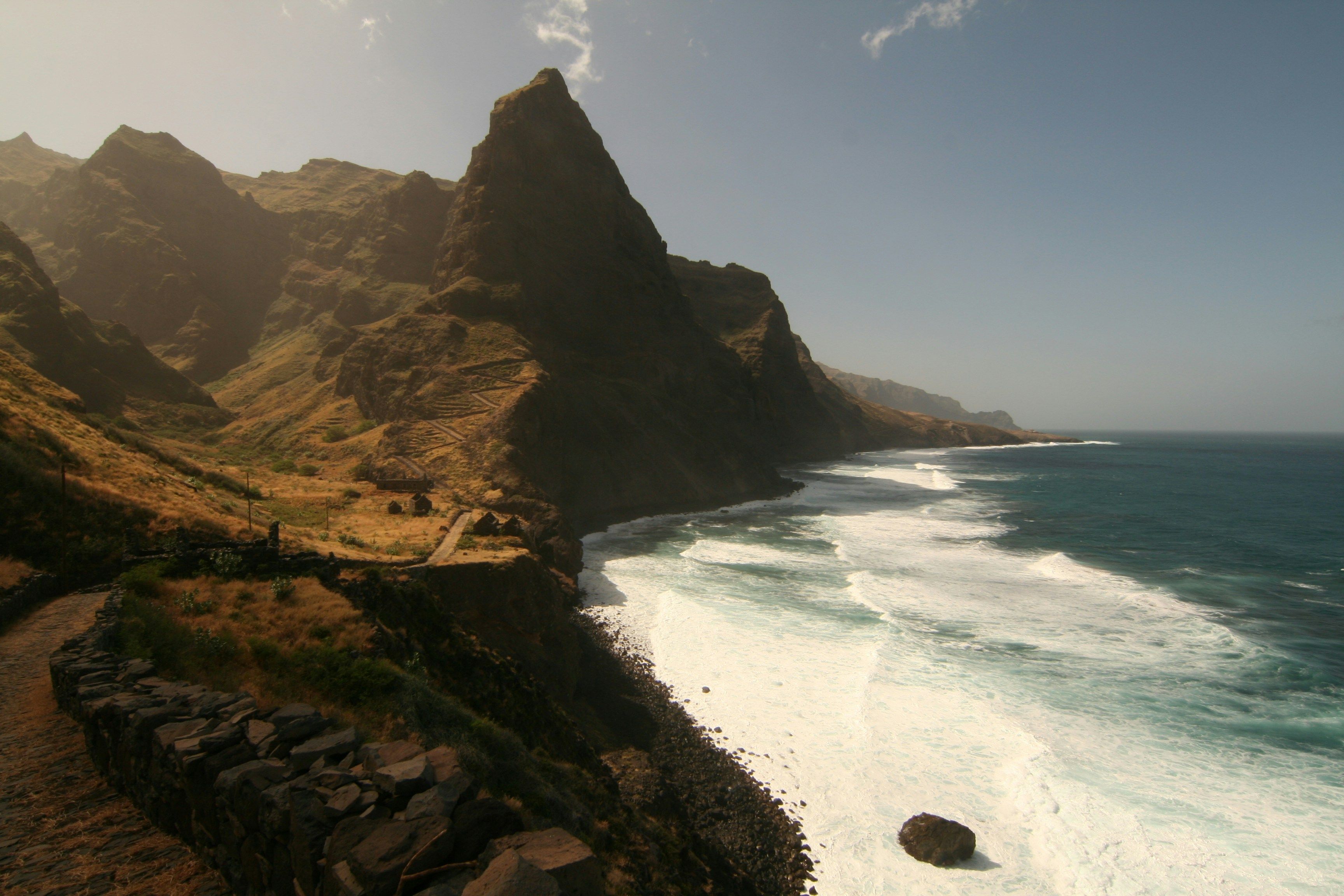
After the music, go up. Monte Verde is the highest point on São Vicente, and the name feels faintly optimistic when you first look at the island from sea level. São Vicente can appear dry, rugged and sun-blasted, all ochre slopes and volcanic edges, as though someone once considered adding lushness and then decided against it on aesthetic grounds.
Then the road climbs. The journey from Mindelo to Monte Verde is not long, but it changes the scale of the island beautifully. The city drops away behind you. Porto Grande opens out below, with the ship sitting in the bay looking suddenly less impressive than it did from the pier, which is unfair but useful. Mountains fold into one another. The Atlantic appears in large, blue arguments. On a clear day, you may see across to Santo Antão, the neighbouring island that looks like it has been designed specifically to make hikers say things like “just one more ridge” before regretting every decision they have ever made.
Monte Verde itself is not simply a viewpoint, though for cruise passengers on limited time the view is likely to be the main event. The mountain is protected as a natural park, with a greener, cooler environment that contrasts with the island’s drier lowlands. That contrast is part of the pleasure. São Vicente is not a place of obvious abundance, so the pockets of cloud-fed vegetation and the sudden lift in air feel almost theatrical.
You can hike if you have time, energy and the sort of holiday personality that includes proper footwear. Many cruise visitors will be happier taking a taxi or guided island tour up towards the top, pausing for the view, then descending with the smug glow of people who have experienced altitude without having to earn all of it. There is no shame in this. Cruise travel has many advantages, and avoiding unnecessary uphill suffering is one of them.
The only complication is weather. Monte Verde can collect cloud like a nervous host collecting coats. Go up on a clear day and the island arranges itself beneath you. Go up in mist and you may find yourself admiring a very atmospheric patch of grey while your driver insists that normally it is magnificent. They may be telling the truth. Mountains are notorious for this sort of thing.
Pastelaria Morabeza: a Mindelo bakery worth the detour

Pastelaria Morabeza is the kind of place that understands the power of a glass bakery cabinet. Pastries, cakes, bread, coffee, juices, perhaps something savoury if you are pretending to be balanced. The sort of counter where you begin with firm intentions and end by pointing at three things because your Portuguese has collapsed and your judgement has followed it.
Morabeza is also a word worth knowing in Cape Verde. It is often used to describe the country’s hospitality, warmth and way of receiving people. Conveniently, it also sounds exactly like the sort of emotional state one hopes to achieve after coffee and a pastel de nata. This may not be linguistically rigorous, but it is spiritually accurate.
Pastelaria Morabeza is not some hidden, candlelit secret reached only by those who have solved a local riddle. It is well known, popular and practical, which is exactly what you want on a cruise call. The point is not discovery for the sake of bragging rights. The point is finding somewhere that locals and visitors both use, where you can sit down for a moment, eat something sweet, watch the city move around you and remember that shore excursions do not have to be performed at military speed.
If you have gone up Monte Verde by taxi, ask to be dropped here afterwards rather than straight back at the port. If you are exploring on foot from the ship, it is still a reasonable detour, depending on heat, footwear and whether your body has begun making quiet legal objections to more walking.

What should you order? A pastel de nata is the obvious choice, because even a mildly disappointing pastel de nata is still a better life event than many things we choose to do voluntarily. But let the cabinet speak. Fruit pastries, cakes, bread, snacks, whatever looks freshest, whatever the person ahead of you ordered with confidence. This is a good general rule in travel and, in fairness, in life.
Why Cape Verde deserves more than a quick look
Cape Verde is sometimes treated on cruise itineraries as a mid-Atlantic pause: a useful stop between continents, a sunny interruption, a place to stretch legs before the next long stretch of sea. That undersells it badly.
Mindelo, especially, has the makings of a perfect small cruise call. The port is close to town. The island is compact enough to see more than one side of it in a day. The music gives the visit emotional weight. Monte Verde gives you the geographical drama. The pastelaria gives you the kind of practical happiness no viewpoint can provide, however panoramic.
It is not polished in the way some cruise ports are polished. Good. Polished can be exhausting. Mindelo still feels like a working port city, with music under the surface, hills behind it and enough rough edges to prevent the whole thing becoming decorative.
In three parts, it makes perfect sense. First the sound of the city. Then the island from above. Then coffee, pastry and a brief period of sitting still while pretending you planned the whole day this elegantly.