Corsica is one of those places that makes considerably more sense from the water. Mountains rise almost immediately behind the coast, old citadels occupy improbable pieces of rock and the towns still carry the architectural fingerprints of centuries of Genoese rule.
It also changes character remarkably quickly. A cruise around the island might give you Napoleon’s Ajaccio, beachy Calvi, lived-in Bastia and Bonifacio perched above white limestone cliffs. They’re all recognisably Corsican, but they make for four very different days ashore.
Ajaccio cruise port: Napoleon, old streets and an easy day ashore
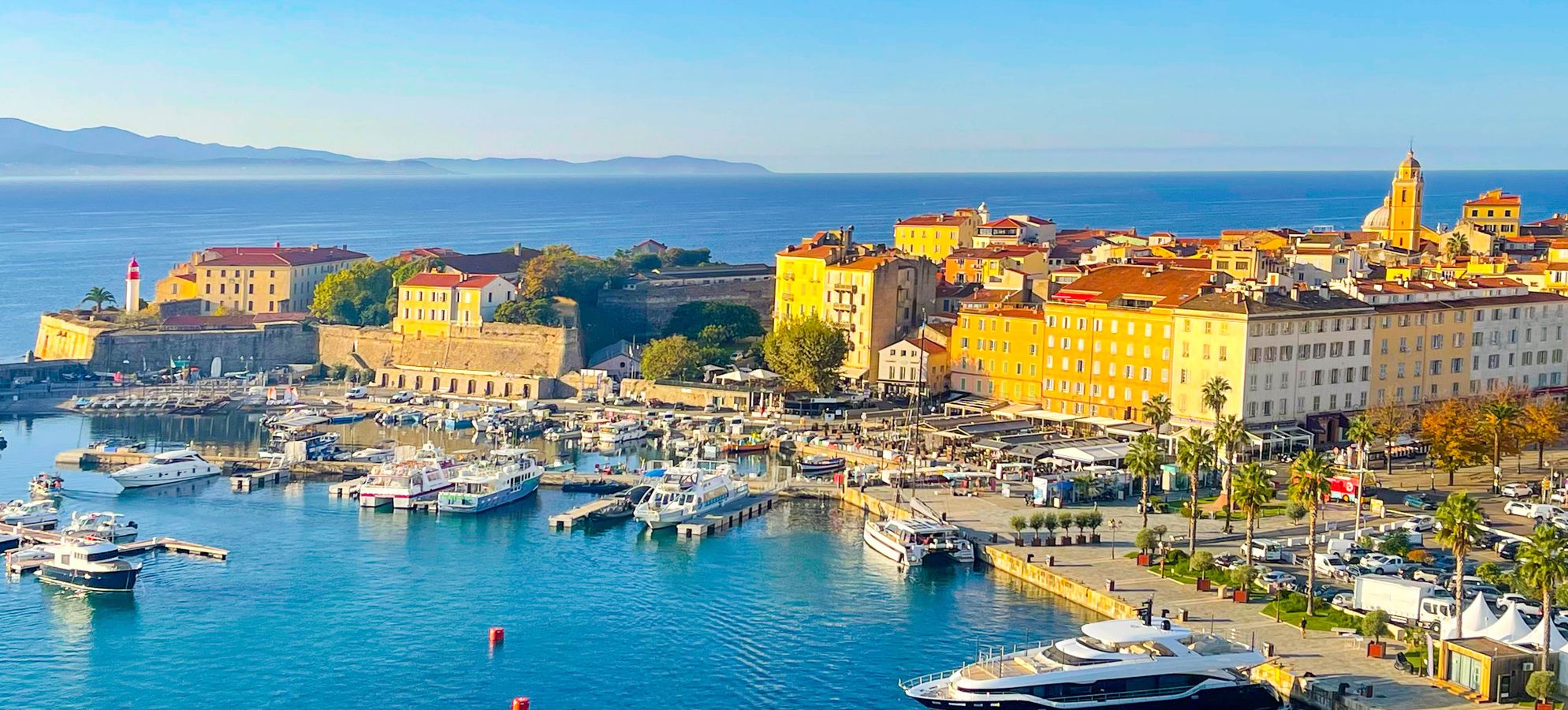
Ajaccio is the straightforward one. The port sits in the centre of the city, so there’s no gateway-port arithmetic to perform before deciding whether an excursion is worth your time. The historic centre, market and waterfront are all easily explored on foot.
Napoleon is not a subtle presence. He was born here on 15 August 1769, and Ajaccio has subsequently taken quite a thorough approach to reminding people. His birthplace, Maison Bonaparte, is now a national museum, while the cathedral where he was baptised, several statues, the Imperial Chapel and the Palais Fesch continue the theme. The house itself takes around 45 minutes to visit, which is enough to understand the family story without allowing the entire port day to become Napoleon Studies.
There’s plenty here if imperial history leaves you cold. Palais Fesch has an important collection of Italian paintings, while the old town grew around a Genoese citadel first built when Ajaccio was founded in 1492. If you’ve got a longer call, boats also head out towards the Sanguinaires Islands, the rocky archipelago beyond the bay.
Ajaccio works particularly well if you don’t want to organise much. Walk off the ship, have a look around, eat something, perhaps encounter Napoleon again despite having specifically decided not to, and carry on.
Calvi cruise port: a citadel in the morning, beach in the afternoon
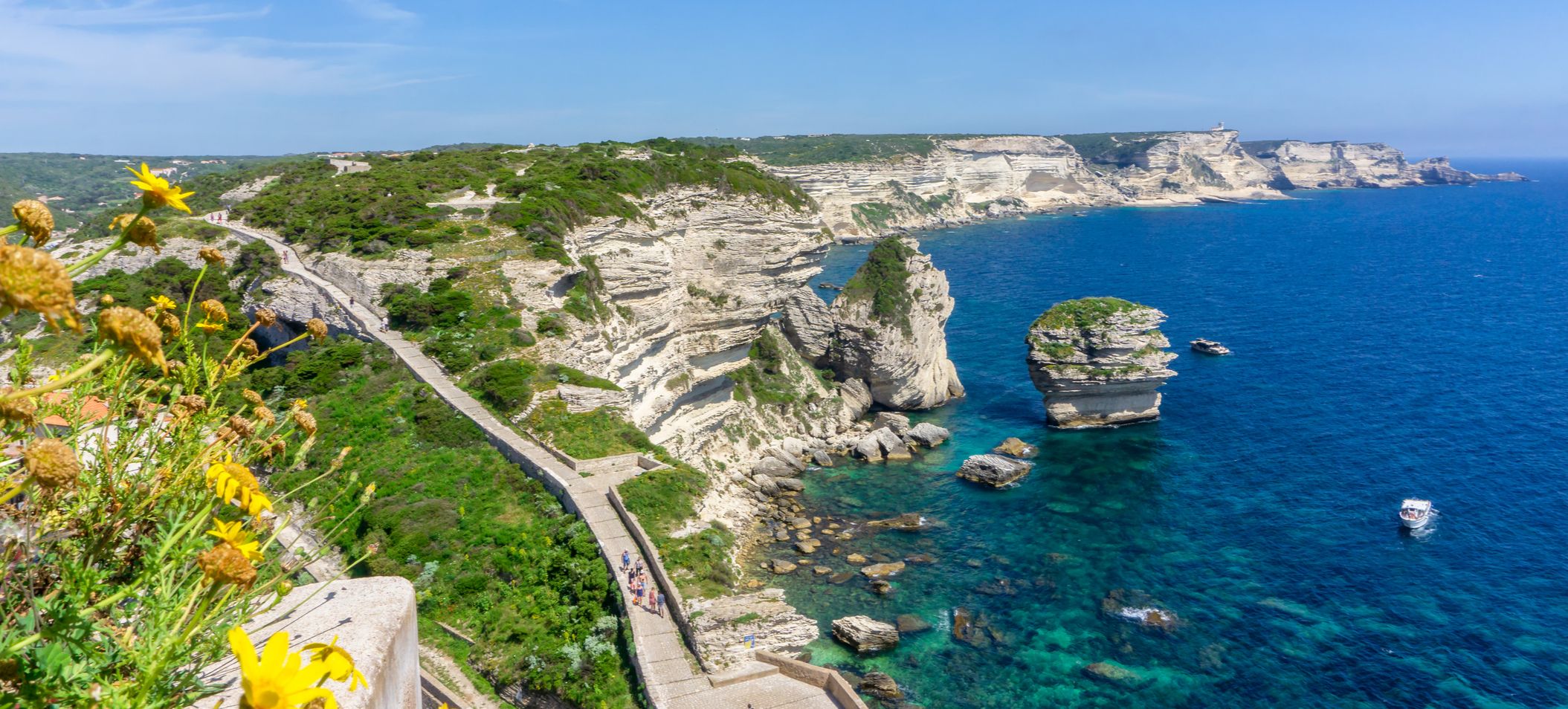
Calvi has perhaps the most immediately holiday-like setting of the four. Its citadel rises above a broad bay, with mountains behind it and a long sandy beach beginning only a few hundred metres from the town centre. The beach itself runs for almost four kilometres, so this is one of those unusually cooperative Mediterranean ports where culture and swimming can coexist without a 50-minute coach transfer.
The obvious first stop is the citadel. Begun in the 15th century and once home to Genoese governors, it’s a compact upper town of cobbled lanes, churches and ramparts with views across the marina and Balagne mountains. The tourist office has a marked route through it, although the basic navigational principle of “keep going uphill until the view becomes excellent” also works reasonably well.
Then go back down. Calvi’s waterfront is lined with cafés and restaurants, and the beach is close enough to make an afternoon swim genuinely practical rather than something undertaken with repeated checks of the time.
You may also encounter claims that Christopher Columbus was born here. Even Corsica’s official tourism material sensibly describes that as a hypothesis rather than a certainty, so perhaps don’t restructure your understanding of 15th-century European history over lunch.
Bastia cruise port: the Corsican city that feels most lived in
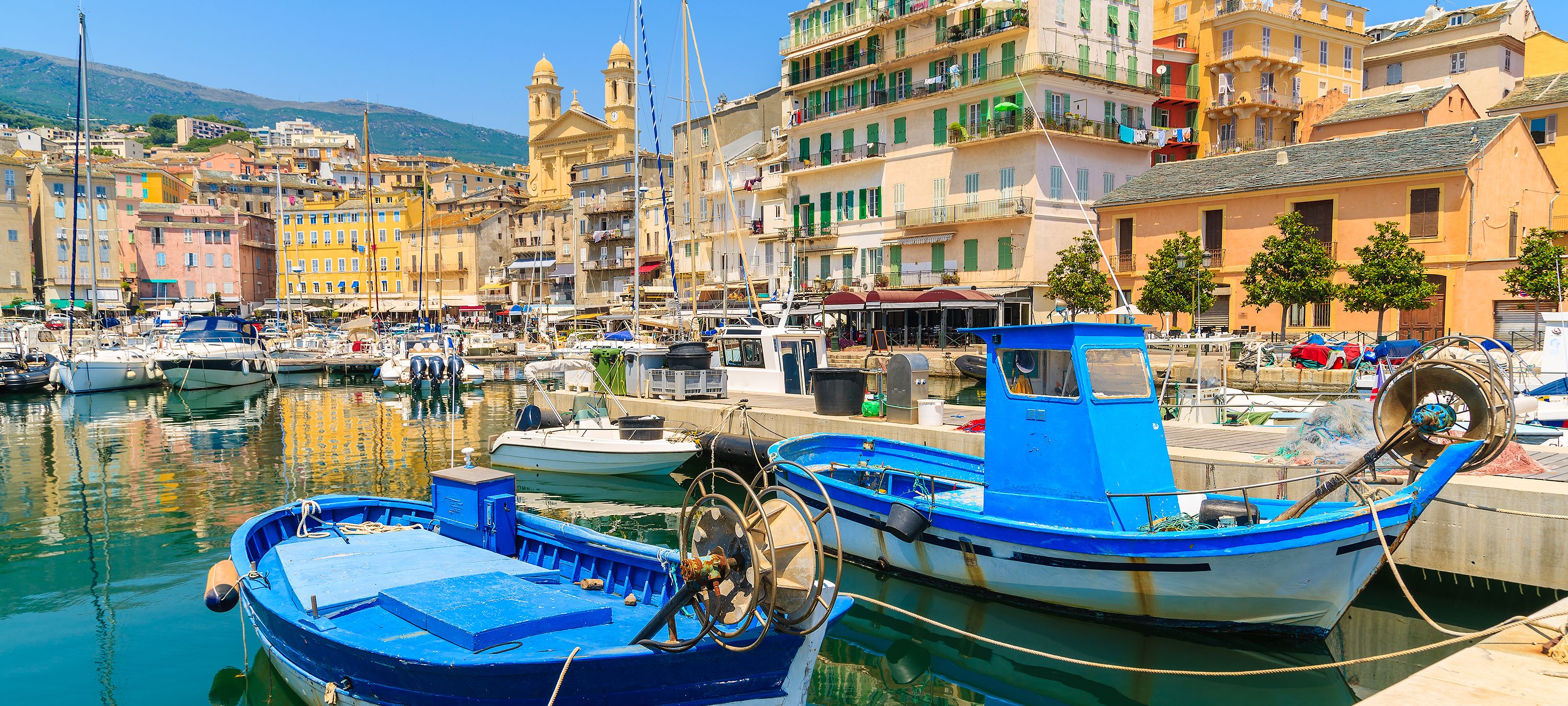
Bastia has a different energy. Its commercial port is right in the city, but unlike Calvi or Bonifacio, the place doesn’t seem arranged primarily for your arrival. It remains one of Corsica’s main passenger gateways, with ferries coming and going to mainland France and Italy, and that everyday traffic gives it a pleasantly functional feel.
The old city is deeply Genoese. Bastia was founded under Genoese rule in the late 14th century, and the route from the broad Place Saint-Nicolas through Terra Vecchia to the Old Port and Citadel is easily done on foot. Around the harbour, tall old houses crowd the water behind a Genoese breakwater, with cafés occupying the useful bits at ground level.
Above it, the Terra Nova citadel contains the former Governors’ Palace, once the seat of Genoese power in Corsica and now the Musée de Bastia. The museum covers seven centuries of city and island history, while its hanging gardens look back over the Old Port and towards the Tuscan archipelago.
Bastia is the port I’d choose if you like cities more than attractions. There are churches and museums to visit, certainly, but much of its appeal is simply walking, eating and watching a Corsican city get on with its day without feeling obliged to perform one for you.
Bonifacio cruise port: cliffs, citadels and 189 inconvenient steps
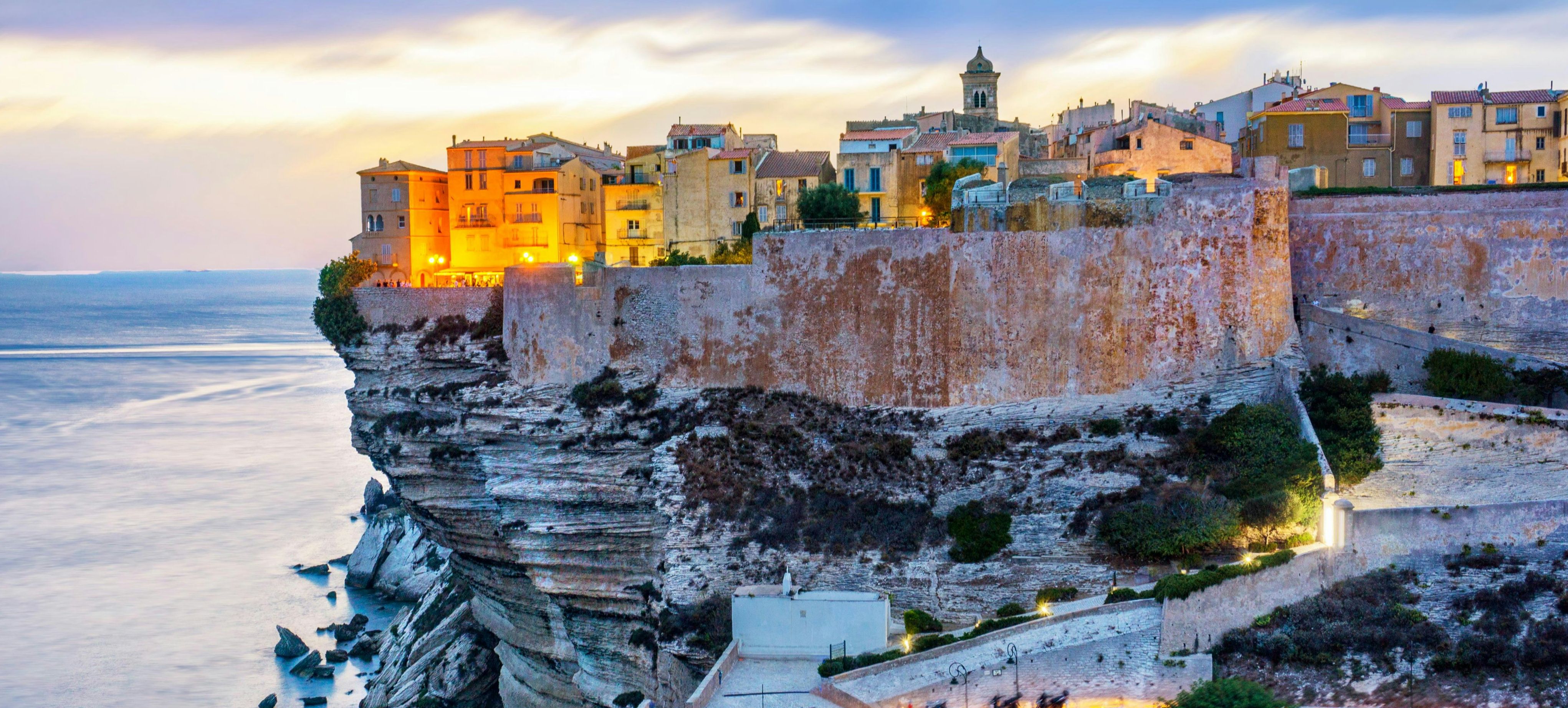
Bonifacio has clearly decided subtlety is overrated.
Its medieval citadel sits more than 60 metres above the sea on pale limestone cliffs at Corsica’s southern tip. Ships approach through a narrow natural harbour beneath the old town, and Sardinia lies across the strait. Even by Mediterranean standards, it is an unnecessarily photogenic way to arrive somewhere.
From the marina, head uphill into the citadel, where Genoese fortifications contain narrow lanes, churches and viewpoints over the cliffs. If you’d prefer to outsource the climb, the tourist board notes that a little train runs from the lower town. This is useful information to discover before proving anything to yourself unnecessarily.
The more committed can descend the King of Aragon’s Staircase, 189 irregular steps carved into the limestone face. Despite the legend that Aragonese troops hacked it out overnight during a 1420 siege, the staircase was actually developed to reach a freshwater source. At the bottom, a path runs just above the sea with views towards Sardinia. Naturally, once you’ve enjoyed those views, there remains the small administrative matter of climbing 189 steps back up.
Bonifacio also rewards getting back on a boat. Regular trips from the marina run beneath the cliffs and citadel, past sea caves and the staircase, with the shortest sightseeing circuit taking around 70 minutes. From below, you get the view that explains why the town was built where it was, even if it does raise questions about the weekly food shop.
Which Corsica cruise port should you choose?
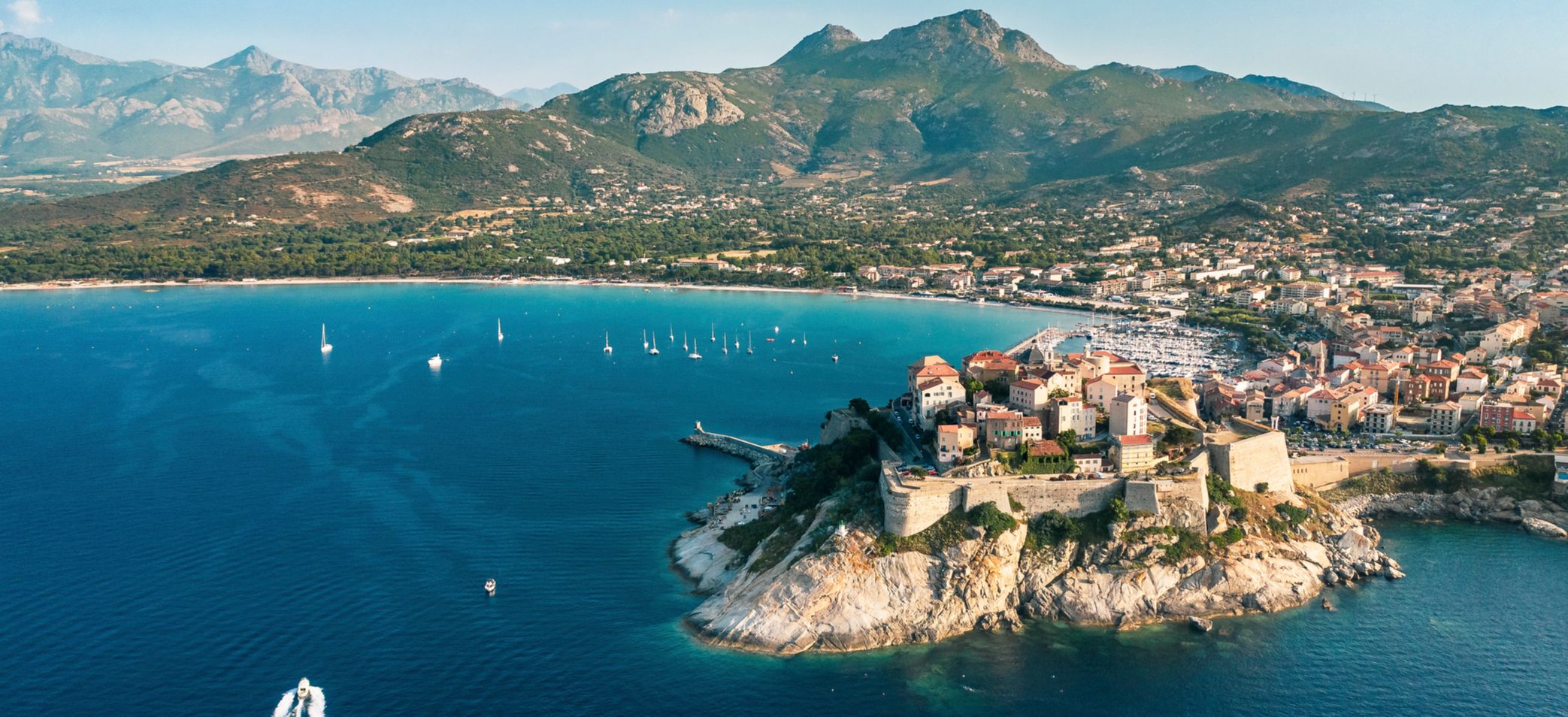
If your itinerary gives you a choice, the four ports suit very different moods. Ajaccio is the easiest introduction and the obvious one for Napoleon. Calvi combines a handsome citadel with a genuinely usable beach. Bastia feels the most like a working Corsican city, with layers of Genoese history rather than one headline attraction. Bonifacio wins comfortably for spectacle.
The useful thing about seeing Corsica by ship is that you don’t have to decide what kind of island it is. Within a few days it can be imperial city, beach town, ferry port and medieval fortress balanced above the sea.
Which, for one island, feels slightly greedy.