There are few cruise announcements more capable of changing the mood of a breakfast room than: “There has been a change to our itinerary.”
Suddenly, the port you had researched, the excursion you had booked and the waterfront restaurant you had quietly built the day around all begin to wobble. Someone nearby will immediately claim they “had a feeling this would happen”. Someone else will decide the captain has personally ruined their holiday. Neither is usually true.
Cruise itineraries change for all sorts of reasons: weather, rough seas, port congestion, strikes, safety decisions, medical emergencies, tender conditions, mechanical issues, river levels or instructions from local authorities. Sometimes it happens before you travel. Sometimes it happens when you are already on board, wearing sensible shoes and holding a bag full of port-day optimism.
It is frustrating. It can also be the right call. Ships are not buses, ports are not guaranteed theatre seats, and the sea, famously, does not care what was printed in the brochure.
Why cruise itineraries change

The main reason cruise lines change itineraries is safety. If conditions make it unsafe to enter a port, operate tenders, keep to schedule or protect passengers and crew, the captain and cruise line can alter the route.
That might mean arriving later, leaving earlier, changing the order of ports, replacing one stop with another, adding a sea day or revising the itinerary more significantly.
Most cruise contracts allow lines to make changes when needed. That may feel harsh if you have been looking forward to one specific port for months, but the captain has to make decisions based on weather, sea conditions, port instructions, guest safety, mechanical realities and the ship’s ability to operate safely. In other words, they are probably not sitting on the bridge thinking, “Let’s skip Mykonos just to annoy everyone.” Probably.
Cruise itinerary changes due to weather

Weather is one of the most common reasons for cruise itinerary changes, especially during hurricane season, winter storms and rougher shoulder-season sailings.
The Atlantic hurricane season runs from 1 June to 30 November. Even in a quieter-than-average season, one storm in the wrong place can still affect a sailing. In the Caribbean, western Atlantic and Gulf of Mexico, cruise lines may change the order of ports, swap islands, add sea days or head for calmer waters.
Weather can disrupt cruises almost anywhere. Mediterranean storms can make docking unsafe. North Sea conditions can affect northern Europe sailings. Fog can delay arrivals. Strong winds can stop a ship entering port. In polar or expedition regions, ice, swell and visibility are part of the daily decision-making.
The difficult bit is that the weather may look fine to passengers. You might be standing on deck under blue sky wondering what the fuss is about. But the issue could be the harbour approach, wind at the berth, swell at the tender platform, conditions later in the day or the next leg of the route.
Why tender ports are cancelled
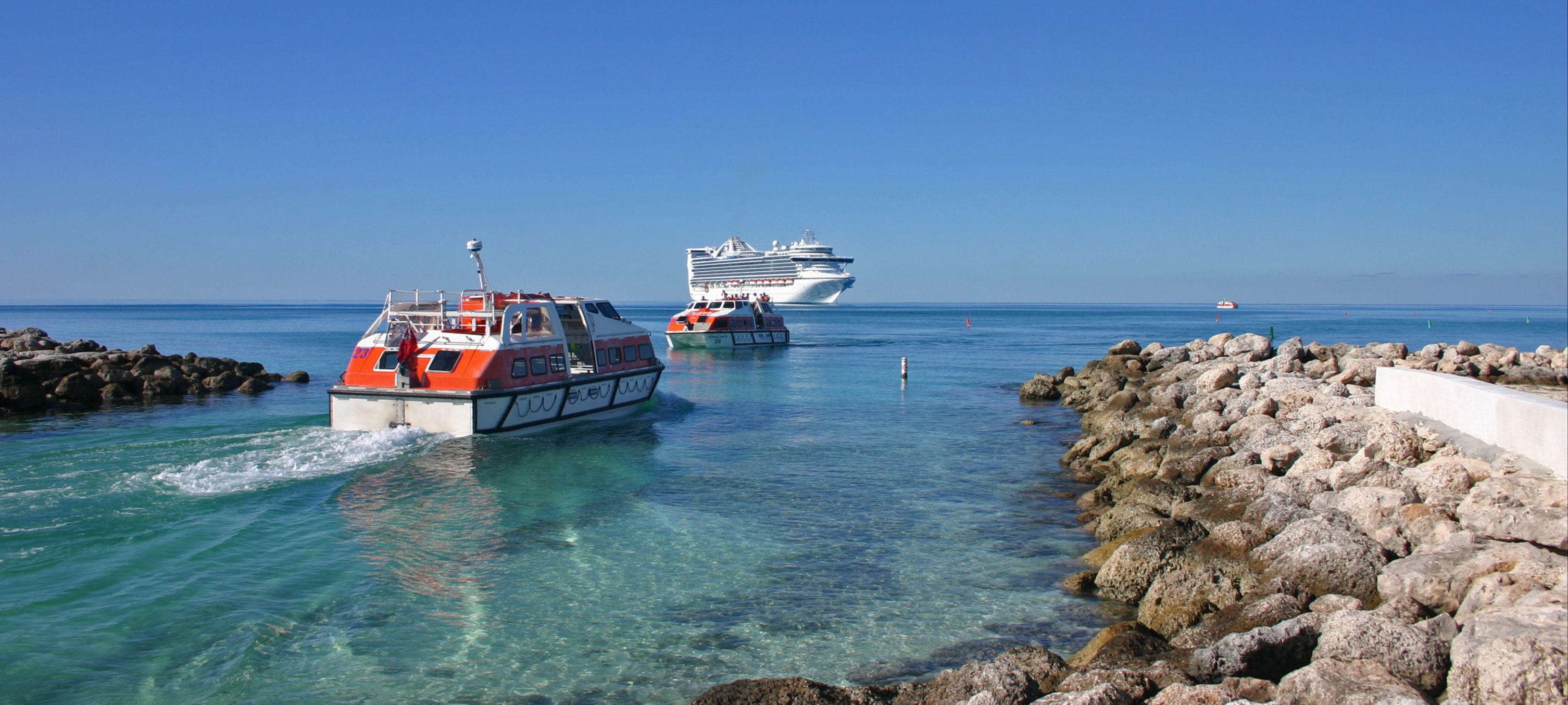
Tender ports are the ones where the ship anchors offshore and passengers are taken ashore in smaller boats. They can be beautiful and atmospheric, but they are also more vulnerable to cancellation. Tendering depends on sea conditions, swell, wind, visibility and whether passengers can safely move between ship and tender. If that transfer is unsafe, the port may be cancelled even if the destination is visible and apparently sitting there being perfectly visitable.
This is particularly frustrating because you may be able to see the place you are not going to. Emotionally, it is like looking through a bakery window after closing time. Ports such as Santorini, Mykonos, Guernsey, Cannes, Bar Harbor, parts of Alaska and many expedition landings can involve tenders. If one port is the main reason you are booking, check whether it is tendered before you commit.
Port congestion, strikes and local rules
Ports are busy, complicated places. Ships need berths, pilots, security, customs, coaches, crew services, supplies and space for passengers to disembark safely. Sometimes a berth becomes unavailable, a port changes its rules, a strike affects operations or local authorities restrict cruise traffic. Popular destinations are also increasingly managing cruise numbers because of overcrowding, environmental concerns or pressure from residents.
That can mean a different docking location, altered timings, shuttle changes, a substitute port or a missed call. In some cases, a cruise sold around Venice may actually use a gateway such as Trieste or Ravenna. That is not necessarily bad, but it is worth knowing before you book. Strikes, protests, security concerns, government advice and local disruption can also force changes. Cruise lines usually take these decisions cautiously, which is exactly what you want when a safety issue is involved.
Medical emergencies and mechanical issues
Sometimes a ship changes course because a passenger or crew member needs urgent medical care. The ship may divert, speed up, slow down or call at an unscheduled port. Mechanical issues can also affect a sailing. A technical problem may reduce the ship’s speed, delay arrival, change the route or, in more serious cases, shorten or cancel a cruise.
What happens next depends on the scale and timing of the issue. A small delay after departure is very different from a major change before you travel. If the change is significant, the cruise line may offer alternatives, onboard credit, future cruise credit, a refund or the option to rebook, depending on the circumstances and booking terms.
River cruise itinerary changes and water levels
River cruises have their own version of itinerary chaos: water levels. If levels are too low, ships may not be able to sail safely without risking grounding. If levels are too high, ships may be unable to pass under bridges or use certain locks. Rivers such as the Rhine, Danube, Rhône, Seine and Douro can all be affected.
When this happens, river cruise lines may alter the route, use coaches between ports, swap guests to another ship, change docking points or add hotel stays. In the least glamorous version, the river cruise briefly becomes a coach holiday with nautical intentions.
What happens onboard when a port is cancelled?
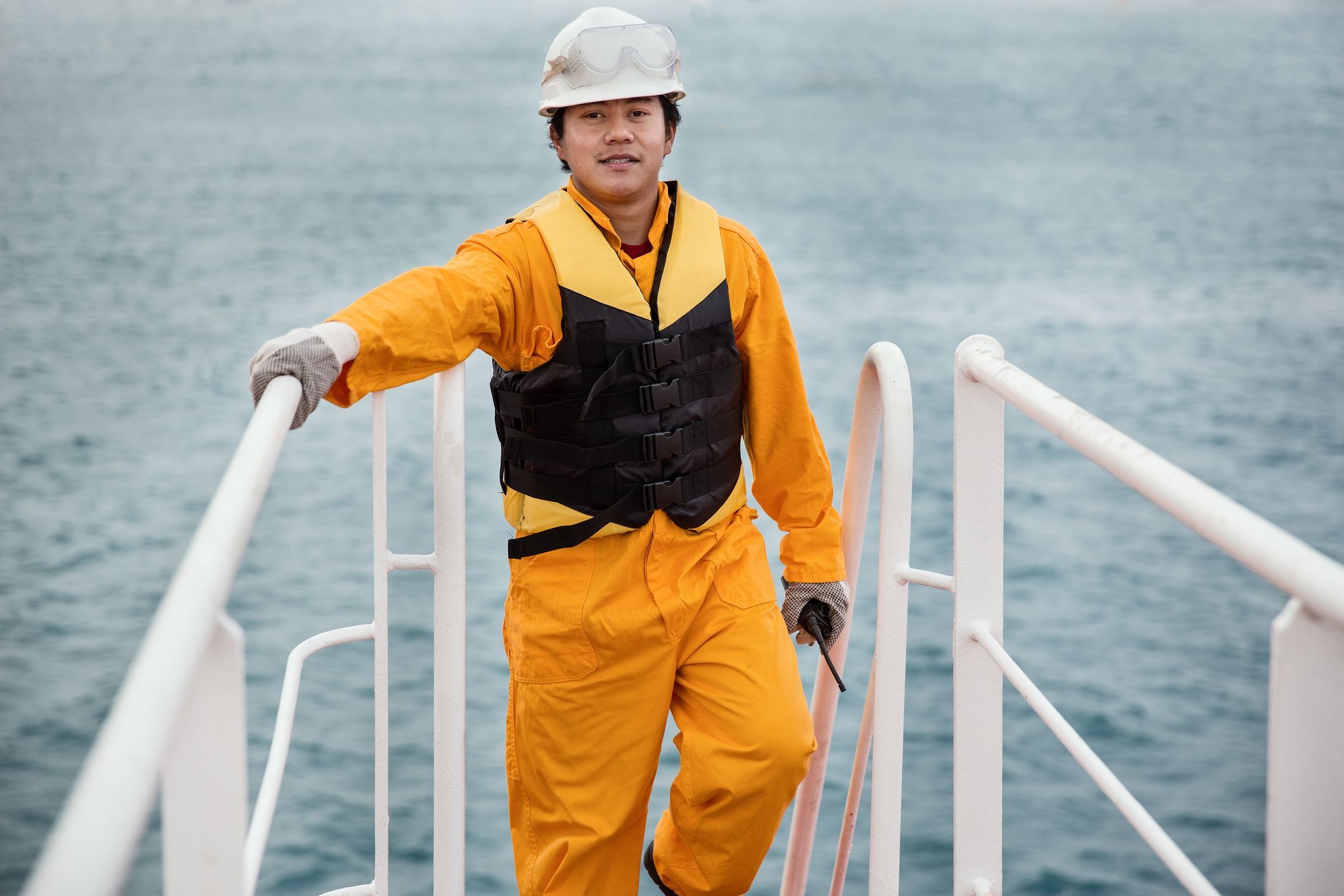
If a port is cancelled during the cruise, the line will usually confirm the change through the captain, cruise director, daily programme, app, cabin letter or tannoy announcement.
If there is a substitute port, alternative excursions may be arranged. If the day becomes a sea day, the onboard team will usually add extra activities, talks, entertainment or dining options.
Cruise-line shore excursions for the cancelled port are usually refunded automatically. Port taxes and fees may also be refunded where applicable, often as onboard credit, though policies vary.
Independent excursions are trickier. If you booked directly with a local operator, you will need to check their cancellation policy. Some are flexible and used to cruise disruption. Others are not, especially if you booked a private guide, driver or non-refundable ticket. Travel insurance may help, but only if your policy includes the right cover.
Do you get compensation if your cruise itinerary changes?

Sometimes, but not always.
Cruise lines generally reserve the right to change itineraries for safety, weather, operational reasons and events outside their control. A missed port does not automatically mean compensation beyond refunds for cruise-line excursions or applicable port fees.
For UK travellers, package holiday protections may apply if a significant part of the holiday cannot be provided as agreed. Depending on the timing and scale of the change, you may be entitled to suitable alternatives, a price reduction or, before departure, the option to cancel for a full refund if the change is significant.
The word “significant” matters. Missing one tender port on a long cruise is not the same as losing the main destination on a short itinerary. A late arrival is not the same as a cancelled sailing.
If a major change happens, keep all written communications, take screenshots, ask the cruise line or travel agent what options are available and check your booking terms. If needed, escalate formally after the trip rather than conducting a one-person courtroom drama at guest services.
What to do if your cruise port is cancelled
First, read the announcement properly. A lot of panic comes from hearing half a sentence and letting imagination do the rest.
Check whether the port has been replaced, whether timings have changed and whether excursions are being refunded. If you booked with the cruise line, wait for the official excursion update. If you booked independently, contact the provider quickly and politely.
If the change creates a practical problem, such as a missed flight, hotel, private transfer or important appointment, speak to guest services and your travel provider as soon as possible. Keep names, times, emails, receipts and screenshots.
Then try to salvage the day. You are allowed to be disappointed. You are also allowed to enjoy the substitute port, book the spa, go to a lecture, have a long lunch or sit somewhere quiet with the book you packed to suggest you are more literary than your Kindle history implies.
A changed itinerary can ruin a day if you let it. Occasionally, it improves one by accident.
How to protect your holiday before you sail

Before booking, check whether ports are tendered, how far key cities are from the port, whether the itinerary starts and ends where you think it does, and whether any port is especially weather-sensitive.
Buy travel insurance with cruise-specific cover if missed ports, itinerary changes, cabin confinement, unused excursions or cruise interruption matter to you. Standard travel insurance may not cover as much as cruise passengers assume.
Book independent excursions with flexible cancellation policies where possible, especially in tender ports. Leave buffer time before and after the cruise if flights, trains or hotels are involved. And avoid building the entire trip around one port unless you are emotionally prepared for the sea to make other plans.
Why a changed cruise itinerary is not always a disaster
A missed port can be disappointing, especially if it is the place you most wanted to see. But most itinerary changes happen for practical, safety-led reasons. That is how you want ship decisions to be made. Sensibly. Cautiously. Without anyone thinking, “I’m sure this dangerous harbour approach will be fine because Linda from deck six has booked a walking tour.”
Cruising has always involved uncertainty. Routes, weather, tides, ports and local conditions all shape the journey. The best approach is to know what might change, understand what you are entitled to, protect yourself where you can, and leave a little room for the unexpected. If your itinerary changes, be annoyed if you need to. Ask reasonable questions. Check what you are owed. Sort the practicalities.
Then, if possible, let the ship do what ships do best. Move on.