This strange and increasingly appealing corner of the industry is exactly what it sounds like: sailings where you either do not know the ports until the last possible moment, or you help choose them as you go. Fred. Olsen is leaning into this trend particularly hard. Its current examples include a Captain’s European Mystery Cruise on Borealis, sailing 16 October 2026 from Southampton for nine nights, where guests visit four European countries and the ports are kept secret until arrival, plus a You Choose Your Cruise sailing on Borealis from Southampton on 8 December 2026 for 10 nights, where guests vote between pairs of ports as they go.
The question is whether this sounds to you like it's liberating or just mildly stressful...
First, what “cruise roulette” actually means

The phrase makes it sound as though the captain is spinning a wheel at midnight and heading wherever the arrow lands. But that's not exactly what's happening.
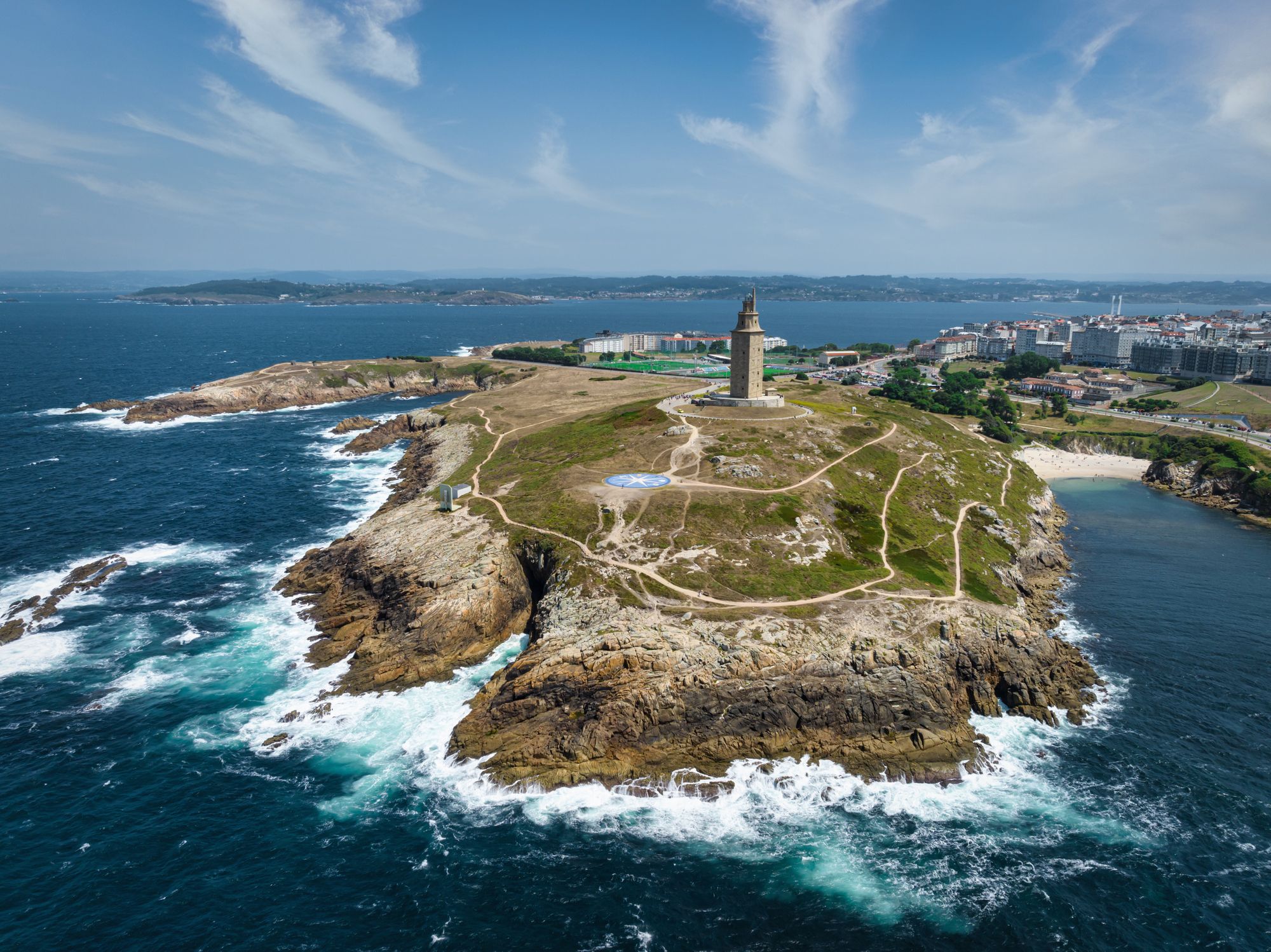
Fred. Olsen’s You Choose Your Cruise is structured choice, not anarchy. On its current 2026 example, guests are voting between pre-selected options such as Santander or Getxo, then later Matosinhos or Vigo, and finally El Ferrol or La Coruña. Timings are flagged as approximate depending on the choices made. In other words, the ship's not improvising. It's offering a menu.
The mystery version is marginally more opaque, but still not chaos. Fred. Olsen’s official page says the 2026 sailing has been crafted with Captain Degerlund and the line’s journey planners, will call at ports not featured on any other Fred. Olsen itinerary in 2026, and will keep each stop secret until the “last possible moment.” That is surprise, yes, but a planned one.
So the first reassuring thing for nervous planners is this: nobody is freewheeling into an unsuitable harbour because Dave from cabin 6027 got overexcited at a quiz night.
The thrill is real, and slightly infectious


Mystery sailings have been around for years, and the appeal is surprisingly easy to understand. Cruise Critic’s guide to mystery cruises describes the atmosphere as one where passengers gather around maps, pore over charts, and try to work out where they are headed next, while route displays are sometimes switched off to preserve the fun.
Fred. Olsen’s own language leans into exactly this, describing the “electric atmosphere” and the whispers and guesses that build from the moment you step on board. That is partly marketing speil, but in this case it also feels believable. Most cruises are organised around anticipation of places. These are organised around anticipation itself.
There is something quite seductive about surrendering the modern need to know every restaurant reservation, every transfer, every church opening time three months in advance.
The lack of control is not theoretical

Let us not romanticise this too much. If your favourite part of a cruise is planning the shore days in forensic detail, “cruise roulette” is probably not for you.
A genuine mystery sailing means you cannot build your own perfect independent day in advance, because you don't know where you are going. Cruise Critic puts it plainly: departure and arrival ports are shown, but the detailed schedule is replaced by question marks, and you only find out the ports at the last minute. The same article advises travellers to be open-minded, because if you want specific ports and book with strong hopes they will be included, you are “more than likely to be disappointed.”
Even the vote-based format asks you to loosen your grip. On Fred. Olsen’s December 2026 sailing, you are not selecting between, say, “Basque country” and “the Norwegian fjords.” You are choosing between paired ports in the same broad region. It is collaborative, but only within guardrails. If you were hoping to steer the whole ship with the power of democracy, I've some bad news.
So how wild does it really get?
Less wild than the concept suggests, which is probably why it works.
For all the mystery branding, these cruises still come with the same bones as any regular sailing: the same ship, the same departure port, the same onboard life, the same meal times, the same small arguments about where to sit after dinner. Cruise Critic notes that aside from not knowing where you are going, you still get the usual food, entertainment and onboard activities.
And in Fred. Olsen’s case, the examples we can actually see are modestly controlled. The vote-your-route cruise still signals the sort of experiences on offer. Santander means shopping and Palacio de la Magdalena. Getxo is sold as the gateway to Bilbao and Rioja. Matosinhos gets you Porto and the Douro. Vigo gets you festive lights and an overnight. Even the final choice, El Ferrol or La Coruña, still points in the direction of Santiago de Compostela. The line is varying the flavour, not throwing darts at the map.
The mystery cruise is the bolder proposition, but even there the framing is measured. Four European countries. Ports carefully selected by planners and a named captain. So the honest answer to “how wild does it get?” is: socially quite fun, logistically less extreme than you fear, emotionally either exhilarating or deeply annoying depending on how much you enjoy not being in charge.
The people most likely to love it
This sort of sailing is built for repeat cruisers, easygoing travellers, and couples where one person likes surprises and the other has reluctantly agreed to “try being spontaneous” for once.
It also suits people who care more about the feel of a voyage than ticking specific ports off a life list. If your joy comes from the rhythm of sea days, deck gossip, captain’s announcements and seeing where you end up, mystery works beautifully.
And, whisper it, it probably suits cruise traditionalists better than bucket-list maximalists. The whole concept has something rather old-fashioned about it. You board. You trust the ship. You stop trying to optimise every minute of your own leisure.
The people most likely to hate it
Anyone who gets itchy without a plan.
Anyone who wants to book a very specific restaurant in a very specific city months in advance.
Anyone whose packing strategy relies on absolute meteorological certainty.
Cruise Critic’s practical advice on mystery sailings is beautifully sobering here. Because you may not know whether you will end up in warmer or cooler conditions, it recommends packing strategically for different eventualities, including sunscreen, layers, a hat and a rain jacket. That is sensible. It is also exactly the sort of sentence that makes some travellers long for a normal itinerary and a lie-down.
If your ideal holiday is one where every day has already been lovingly colour-coded before embarkation, then no, cruise roulette is not for you. And that is fine. We must all know ourselves.
The Cruise Collective verdict
I like the idea of these sailings more than I would trust myself on them, which is probably the most useful answer I can give.
Fred. Olsen’s version is clever because it is not actually asking passengers to embrace pure chaos. The You Choose format offers enough agency to feel playful, while the mystery format offers enough structure to stop it becoming absurd. You know the ship. You know the departure port. You know the length. In the mystery case, you even know the broad frame of a European voyage through four countries. The wildness is mostly psychological.
So, is cruise roulette for you?
If you like your holidays with a little uncertainty, a little theatre, and the feeling that the trip is unfolding rather than being executed, then yes, probably.
If you find the words “port remains a secret until arrival” spiritually unsettling, then no. Book the sailing with the nice PDF and the reassuringly fixed excursions instead.
There is no shame in being in either camp.
But if you do book one of these mystery or vote-your-route voyages, at least commit to the bit. Don’t spend the whole week trying to outsmart the captain with a tracking app and a face like thunder. The point is to be surprised.