Turku, Helsinki and Stockholm are port cities. Not in a quaint, museum-label way, but in the practical sense: ferries come and go, trams rattle towards terminals, cargo yards sit beside cafés, and locals use the water as transport rather than just scenery. This gives this particular Baltic route a pleasingly lived-in quality. You're not just drifting between polished cruise highlights. You're travelling through the working seams of northern Europe, where design shops, market halls, maritime museums and commuter ferries all coexist in chilly, northern-European style.
It is not quite a cruise in the traditional sense, more of a ferry-port week, which doesn't exactly sound glamorous until you consider that it gives you cabins, sea crossings, harbours, short urban hops, good public transport and the chance to arrive in Stockholm through the archipelago rather than via a baggage carousel.
How to plan a Baltic ferry-port week
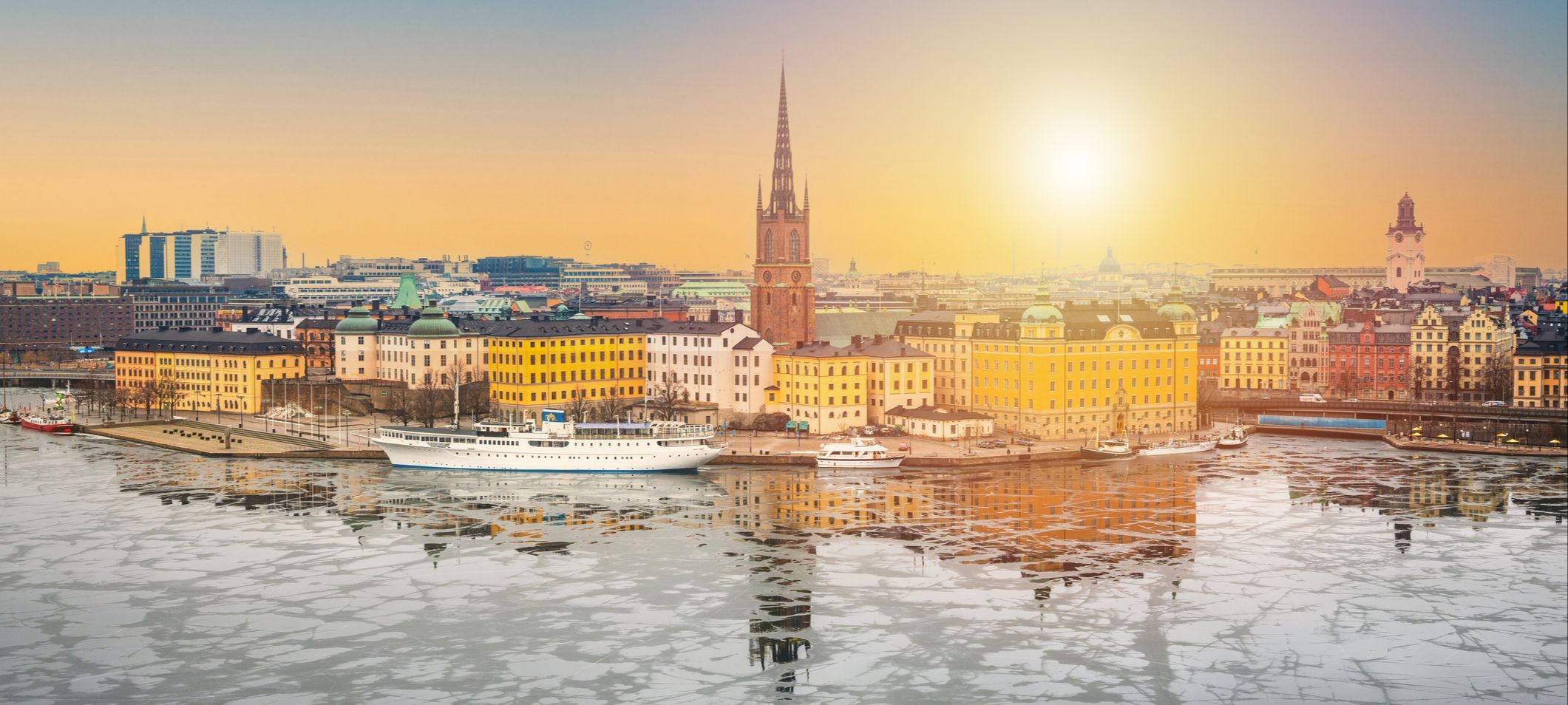 The neatest version of the route starts in Helsinki or Stockholm, then works in Turku as the smaller, more quietly interesting Finnish counterpoint. You can travel between Helsinki and Turku by train in around two hours, then take an overnight or daytime ferry between Turku and Stockholm. Alternatively, you can sail between Helsinki and Stockholm, then connect to Turku by rail on the Finnish side.
Tallink Silja and Viking Line are the names to know. Between them, the Baltic ferry world runs on a pleasingly regular rhythm of cabins, car decks, buffet restaurants, tax-free shops, conference groups, prams, dogs, lorry drivers and families who have clearly done this before and therefore look much calmer than everyone else. Tallink Silja operates year-round routes including Helsinki to Stockholm and Turku to Stockholm, while Viking Line also connects Finland, Sweden, Estonia and Åland.
Turku by ferry: Finland’s oldest city from the harbour
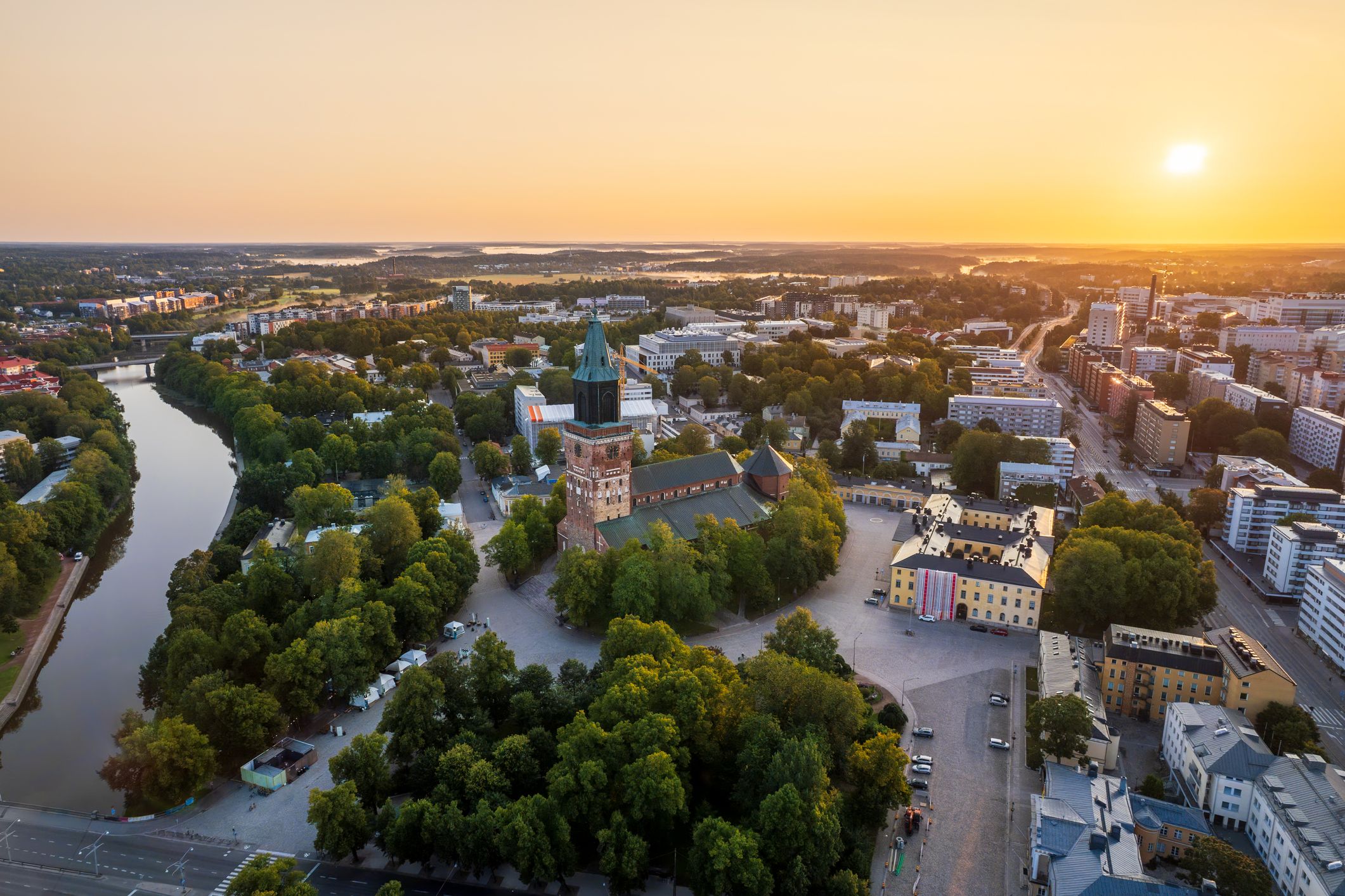
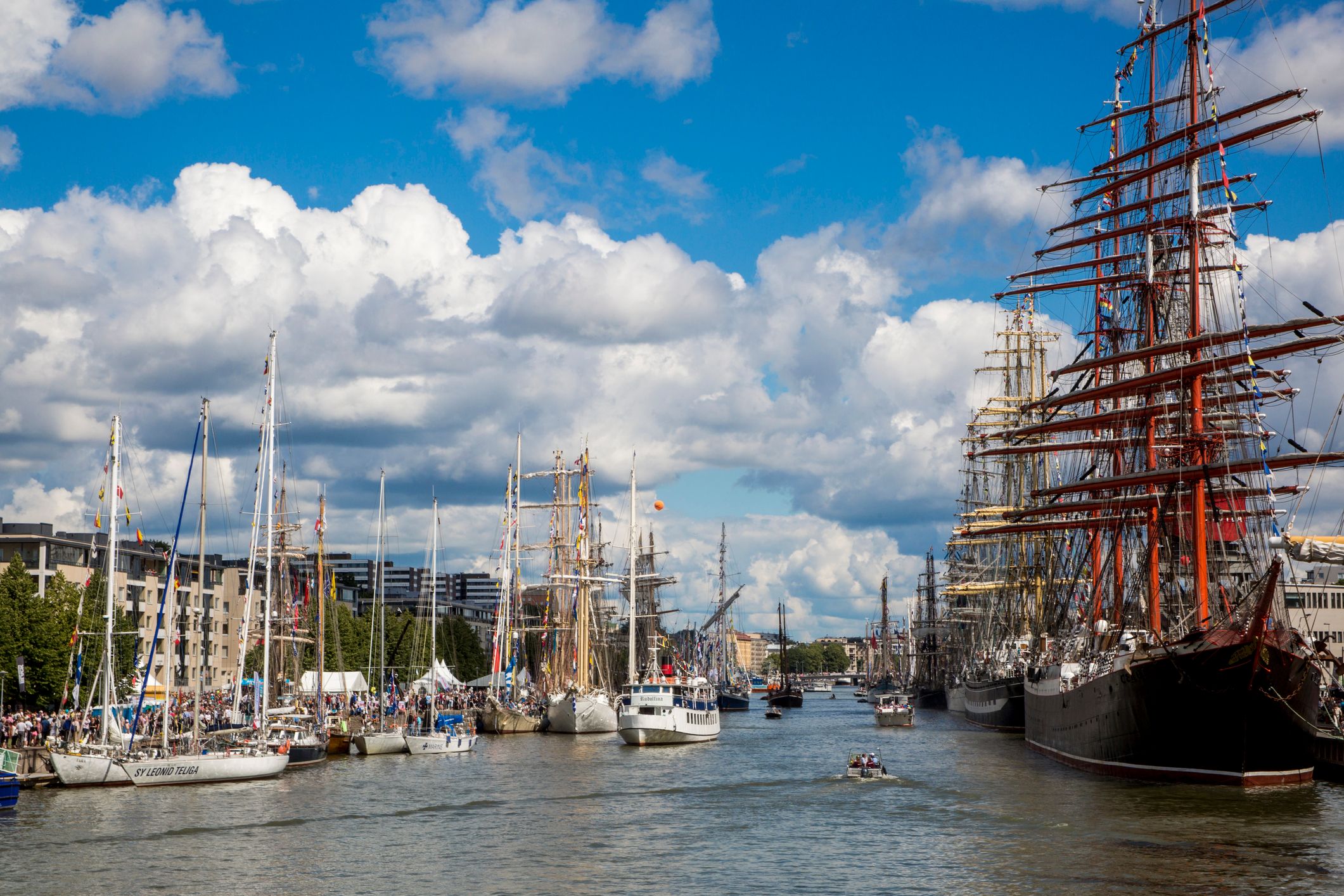
While Turku doesn't necessarily have Helsinki’s capital-city polish or Stockholm’s theatrical confidence, it does have the River Aura, a handsome waterfront, a castle by the harbour, a proper maritime museum a the slightly underrated charm of a place that's somewhat undervisited.
Turku Castle is the obvious landmark, and it earns the attention. It's large, medieval and satisfyingly close to the water, exactly the sort of building that makes more sense when you arrive by sea. The old power of the city was tied to its river mouth and its western connections, so the castle doesn't feel like a random heritage lump. It feels like a gatekeeper.
After that, let the river guide you. The Aura banks carry much of the city’s everyday life, from restaurants and seasonal terraces to museums and old ships. The Market Hall is good for a pause if you like food stops that don't require a tasting menu or a lesson about fermentation. Turku Cathedral, further upstream, gives the city its older spiritual centre, while Aboa Vetus Ars Nova and Luostarinmäki museums offer different angles on the city’s past.
Turku suits travellers who like harbours, modest scale, maritime history and cities that do not immediately shout for attention. It is also very good for anyone who has had enough of capitals and would quite like a place where the pace is gentler but the sense of place is strong.
Helsinki by ferry: trams, design and city harbours
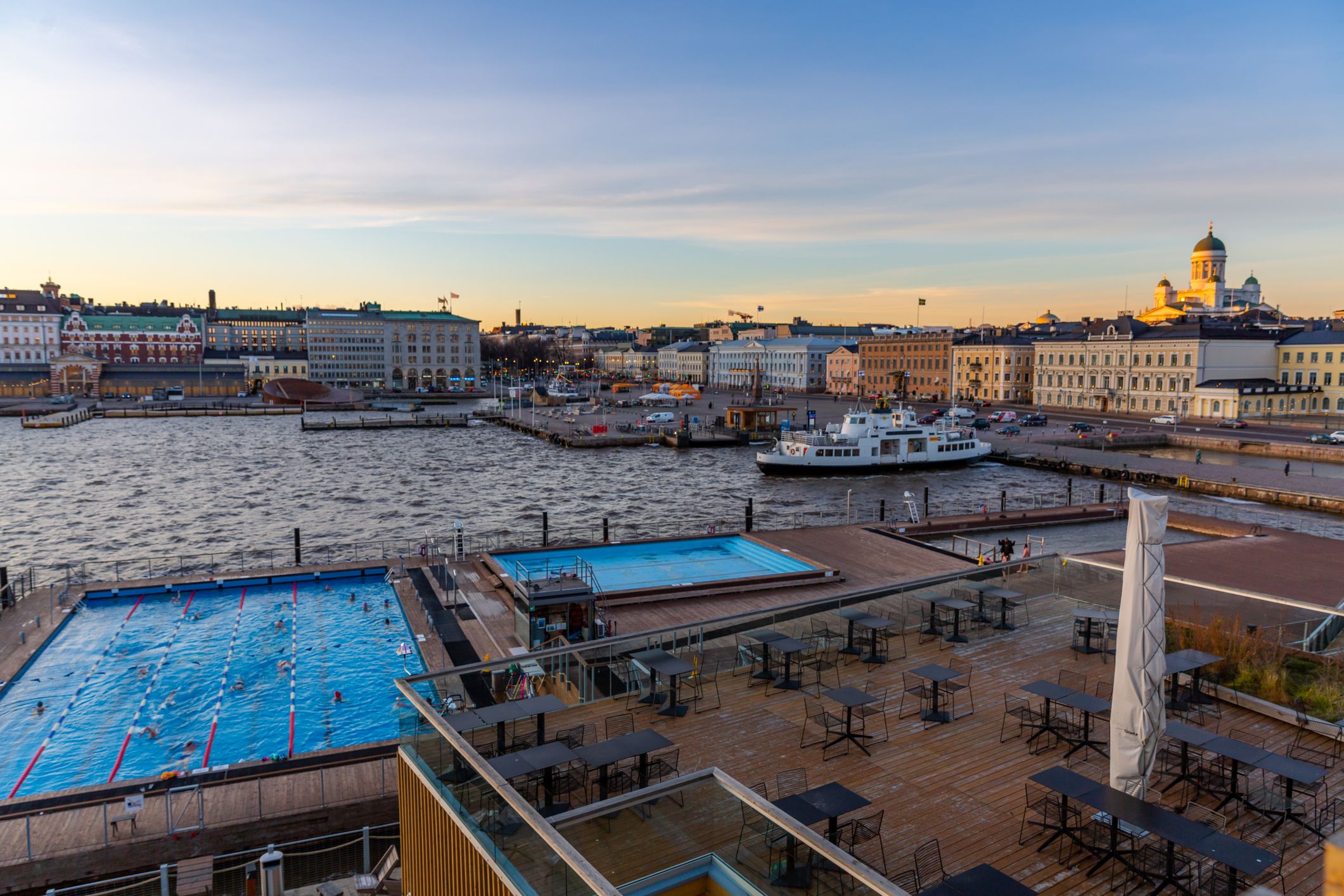
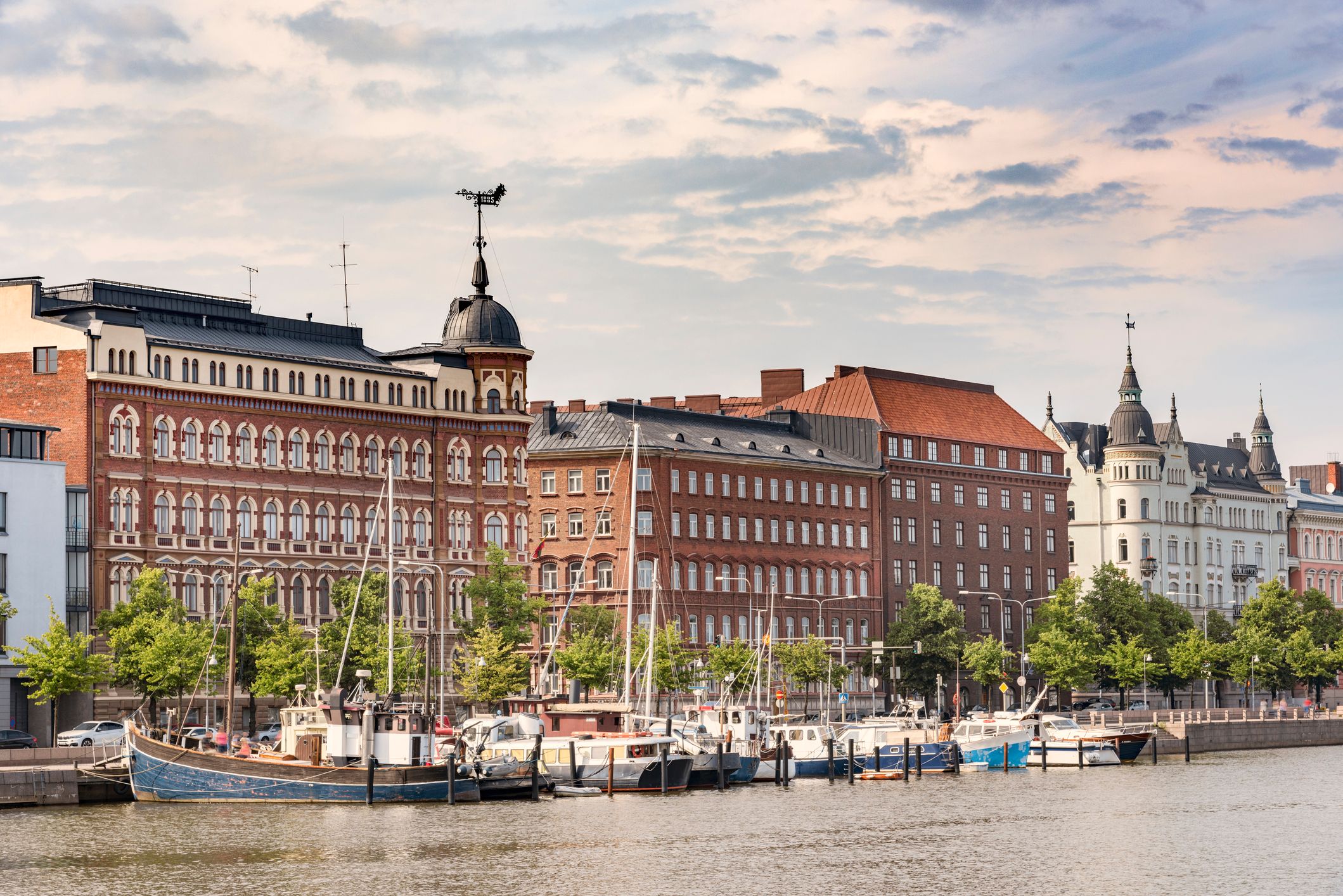
Helsinki is a city that seems to have been designed by people who understand the value of a good tram line. It is not showy in the Stockholm sense, instead its pleasures are more precise: granite, glass, harbours, islands, design shops, market halls, saunas, clean-lined cafés and a public transport system that make the city feel satisfyingly usable.
It is also very much a ferry city. Port of Helsinki’s passenger terminals are woven into the urban fabric: Katajanokka for Viking Line services to Stockholm and Tallinn, Olympia Terminal for Tallink Silja’s daily departures to Stockholm, and West Terminal 2 for busy Tallinn services.
If your interests run to design, Helsinki is almost indecently well set up. The Design District spreads through neighbourhoods such as Punavuori and Kaartinkaupunki, with shops, studios, galleries and cafés that make you briefly believe your home could be transformed by one good chair and better cable management. This is dangerous thinking, but also a fine way to spend an afternoon.
The centre itself is compact enough to work on foot and tram. Senate Square, the cathedral, Esplanadi, the Old Market Hall, Oodi Library and Amos Rex can all fit into a well-paced day, depending on how many coffee stops you consider necessary. If you want the city’s newer waterfront mood, look towards areas such as Jätkäsaari, where port activity, housing, trams and redevelopment all sit together in a way that feels very Helsinki: functional, designed and allergic to fuss.
Helsinki suits travellers who like design, public transport, architecture, islands and cities that are calm without being dull. It is also good for people who enjoy the feeling that a port city has managed to make everything work properly without making too much noise about it.
Stockholm by ferry: archipelago arrival and harbour life
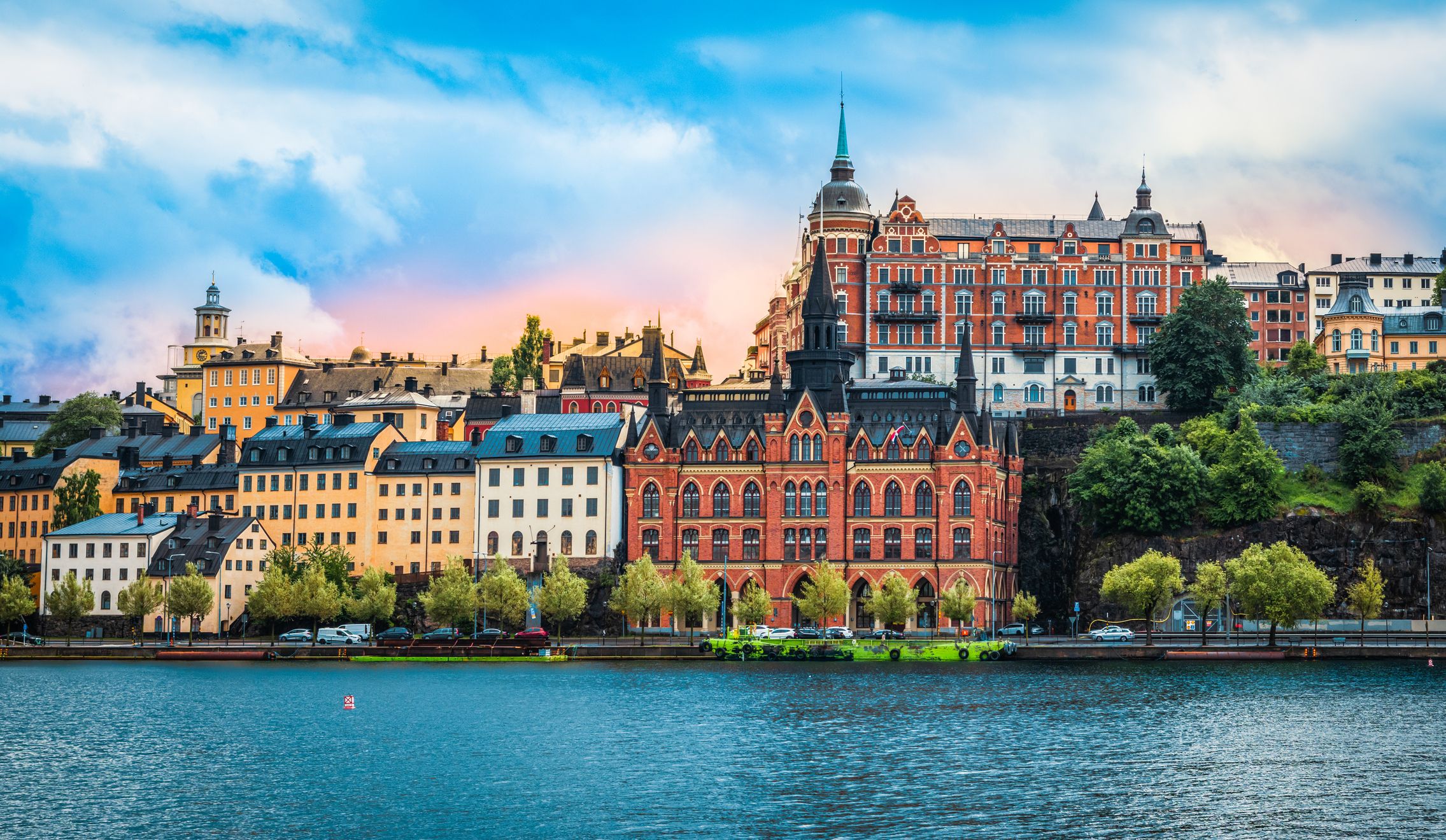
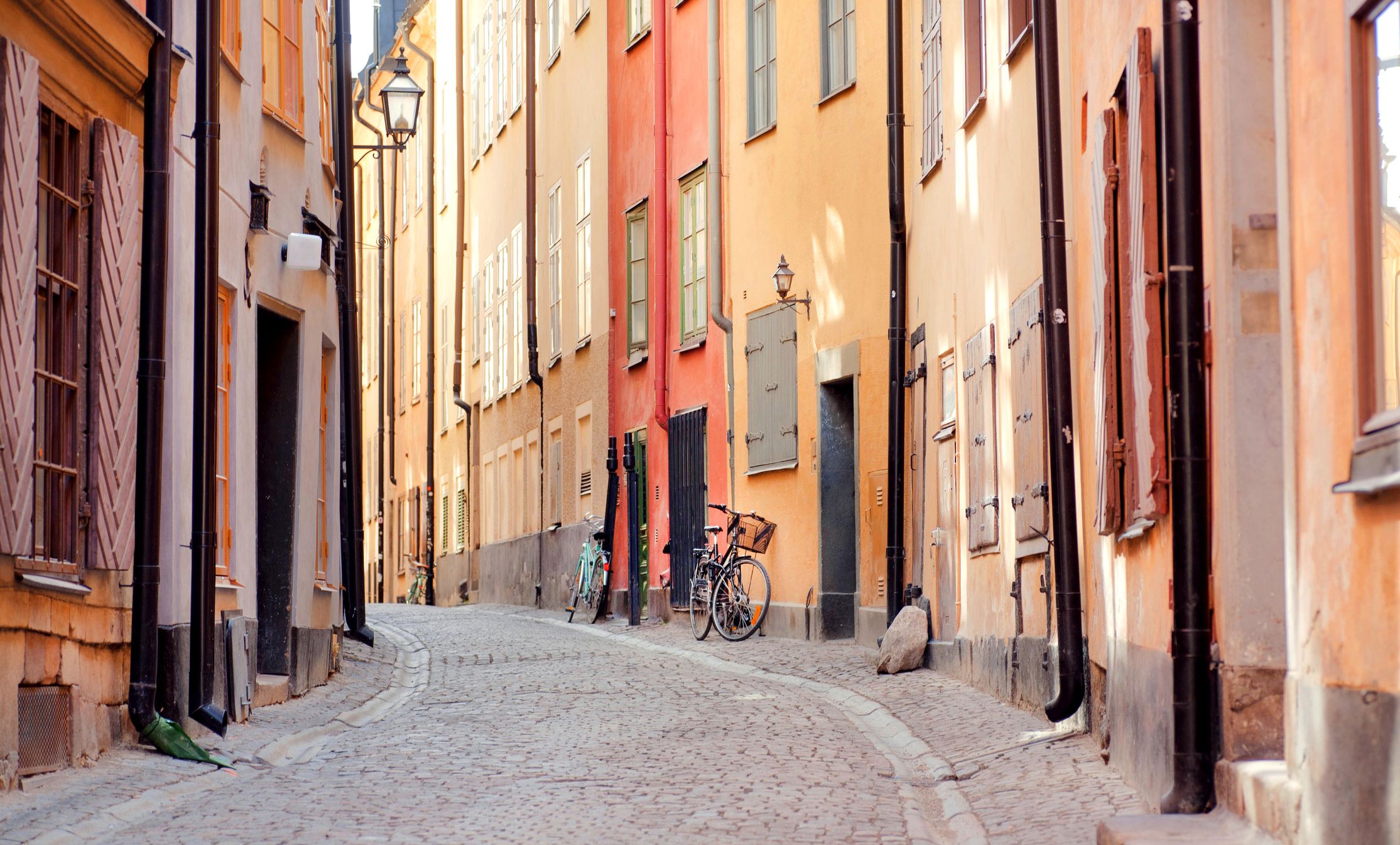
Stockholm is the grand finish because it's a city that understands water better than almost any city in Europe (save perhaps Venice...) Built across islands, stitched together by bridges, ferries and quays, it looks good from almost every angle.
The approach by ferry is the correct way to meet it. The archipelago narrows and thickens, islands slide past, summer houses appear, then the city gradually gathers itself into something more urban. By the time you reach the terminal, you have had a better introduction than any airport could possibly offer, unless the airport has recently added 24,000 islands and a sunrise.
Stockholm is rich enough to make one day feel both generous and not nearly enough. The Vasa Museum is the obvious maritime choice and a fantastic place to start. It displays the Vasa, the warship that sank on its maiden voyage in 1628 and is now the world’s only preserved 17th-century ship. More than 98 percent of it is original structure survieves which is astounding for something that's spent several centuries underwater. It's also a perfect museum for this route, because it turns the city’s relationship with shipbuilding, ambition and harbour disaster into one enormous, dark, magnificent object. Getting there can be part of the day. The Djurgården ferry runs between Slussen and Djurgården via Skeppsholmen, is part of Stockholm’s public transport and takes around 10 minutes. =
After Vasa, stay on Djurgården for the Nordic Museum, Skansen or waterside walking, or head back towards Gamla Stan for the old city. Södermalm is better if you want cafés, design shops, viewpoints and the more lived-in Stockholm that exists beyond royal buildings and postcard lanes. Östermalm offers polished food halls and elegant shopping. The metro adds another layer, particularly if you are interested in stations that appear to have been decorated by people who quite rightly refused to let commuting be visually boring.
Stockholm suits travellers who like design, museums, islands, ferries, architecture and cities that make beauty look almost administratively efficient. It is also the stop most likely to trick you into thinking you could live there, before a restaurant bill gently reminds you to calm down.
When to do a Turku, Helsinki and Stockholm ferry week
Summer gives the route long light, busy terraces, archipelago views and the soft northern pleasure of everyone enjoying the sunshine for the rarity it is at this latitude. This is also the easiest time for first-timers, especially if you want to enjoy deck time on the ferries and long evenings by the water.
Spring and early autumn are arguably better if you prefer thinner crowds and cities that feel more local. The light can be beautiful, the ferries still run, and you are less likely to find yourself competing for every waterside table.
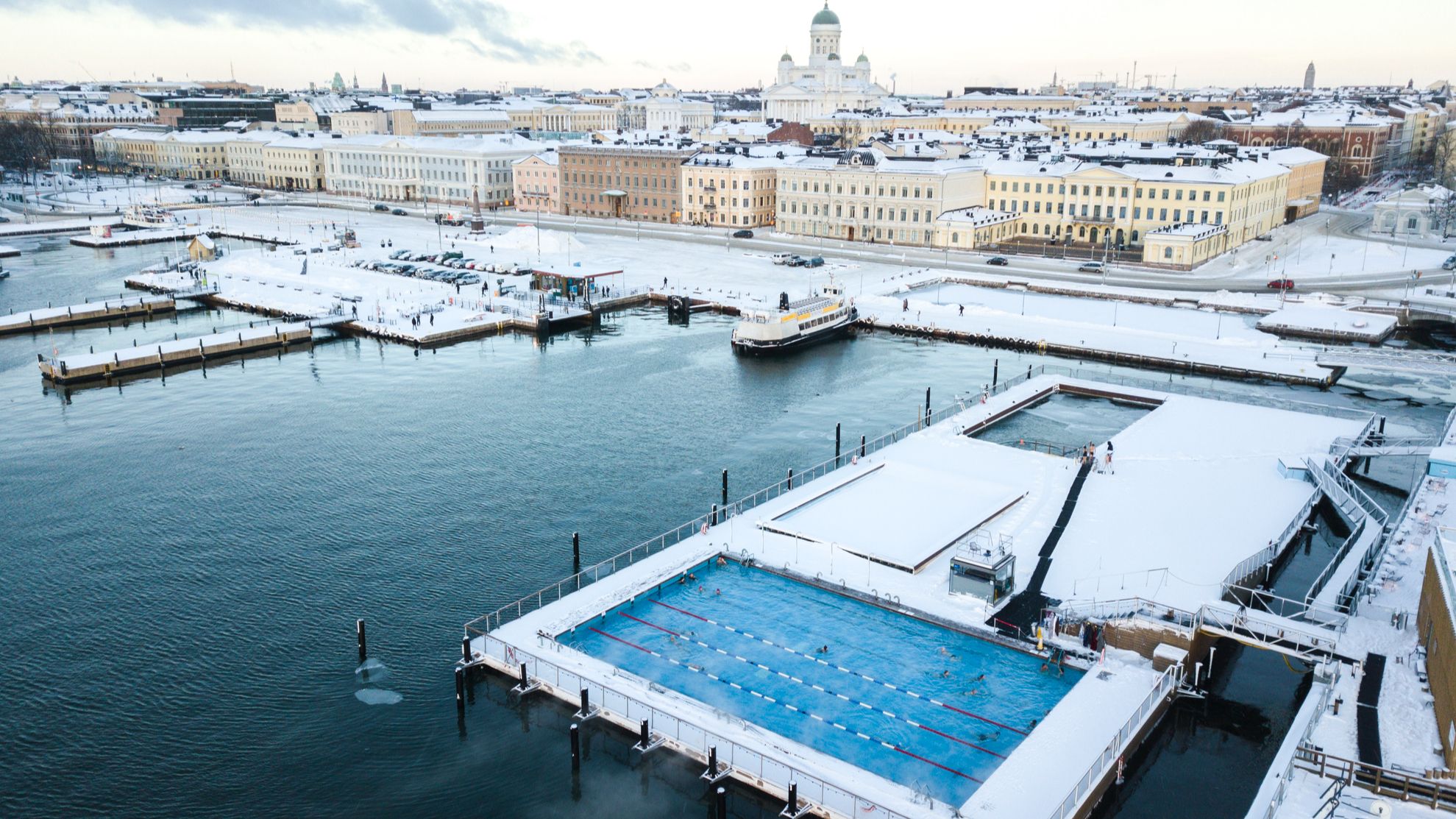
Winter changes the mood completely. It can be dark, cold and atmospheric, with Christmas markets, saunas, snowy harbours if you are lucky and ferries that feel more like shelter than transport. You need to like coats, cafés and indoor culture. You also need to accept that standing on deck may become a brief activity rather than a lifestyle.