Slovenia has 46.6 kilometres of coastline, which is less seafront than some countries devote to a single resort. But it has used that space remarkably well.
Along this compact stretch of Adriatic sit Venetian town squares, fishing harbours, salt pans, olive groves and a cruise port from which you can reach caves, castles, white horses, an Alpine lake and one of Europe’s most likeable capitals before the ship starts making pointed noises about final boarding.
Most cruises visiting Slovenia dock in Koper, close to the Italian border at the northern end of the Istrian peninsula. The passenger terminal is only a few steps from the historic centre, with a panoramic lift connecting the waterfront to the old town above. This makes Koper unusually forgiving of passengers who haven’t booked an excursion and only begin researching the destination after breakfast.
The question isn’t whether there’s enough to see. It’s how much of Slovenia you can reasonably attempt without turning a port day into a race against maritime law.
Where do cruise ships dock in Slovenia?
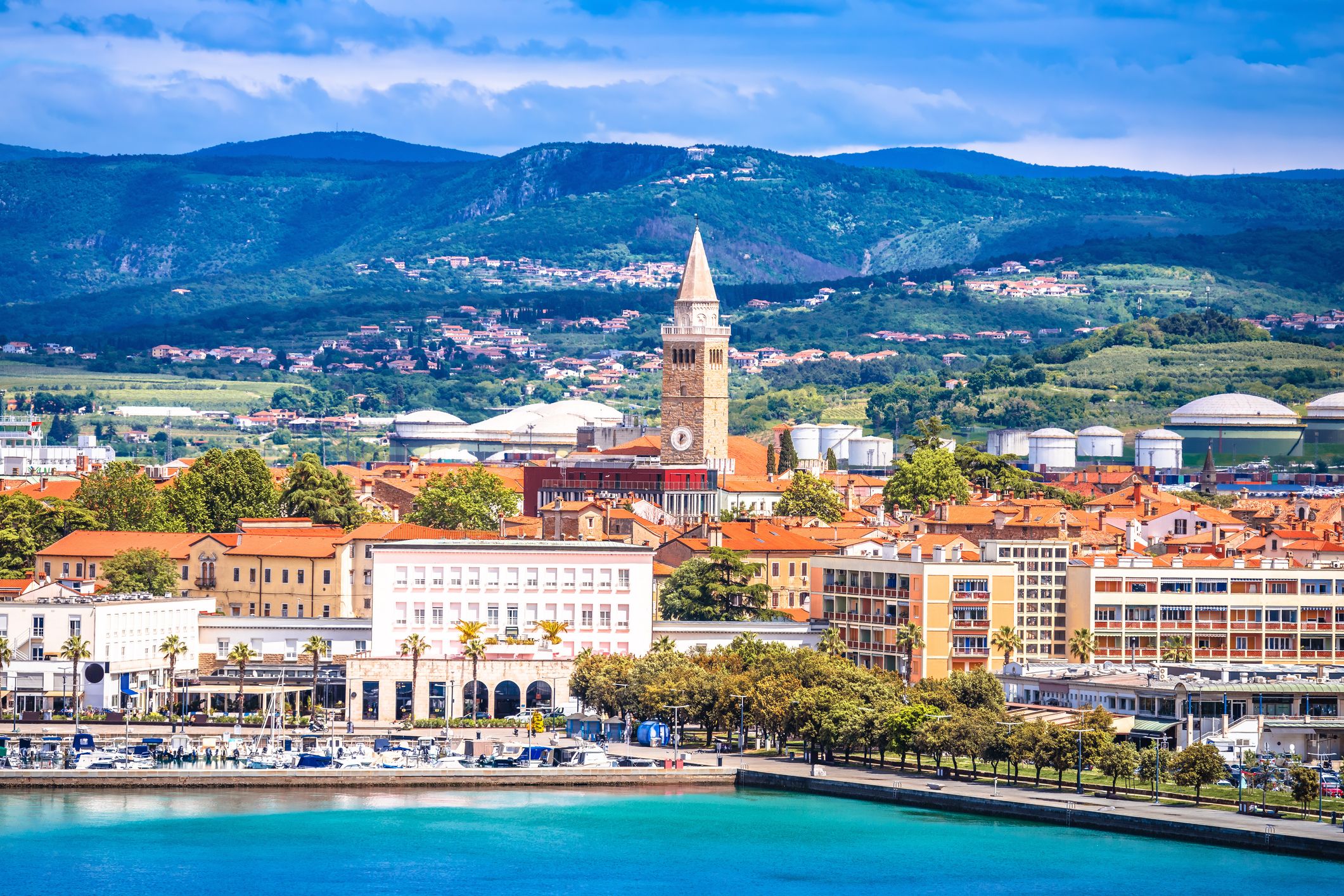
Cruise ships call at Koper, Slovenia’s principal passenger port. Its modern terminal opened in 2025, although ships have been bringing cruise passengers here since 2005. The great advantage is its position beside the city rather than at the end of an industrial peninsula requiring a shuttle bus, two forms of identification and a growing sense that you’ve been abandoned near a warehouse.
Koper’s central Tito Square is roughly 200 metres from the port, so you can be standing beneath a Venetian palace within minutes of leaving the ship. The town is also the gateway to the wider Karst region and to destinations including Piran, Lipica, Postojna, Ljubljana and Lake Bled.
Public buses connect Koper with other coastal towns, and taxis are available around the city. For inland attractions, particularly caves and Lake Bled, an organised shore excursion or pre-booked private transfer is usually more realistic than relying on public transport. Slovenian scenery may look soothing, but a train connection with a fixed sailaway time is capable of introducing quite a different mood.
Explore Koper old town from the cruise terminal
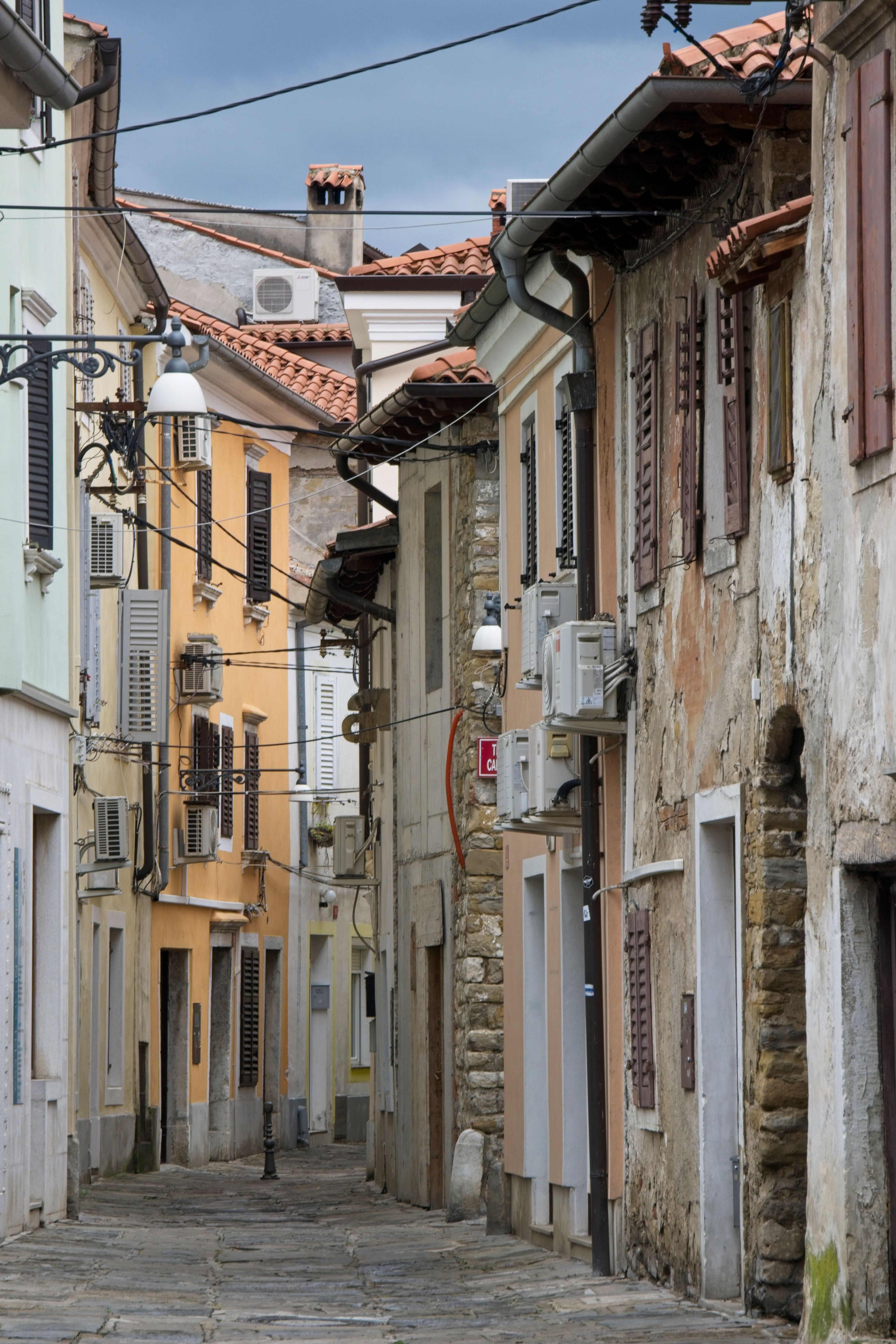
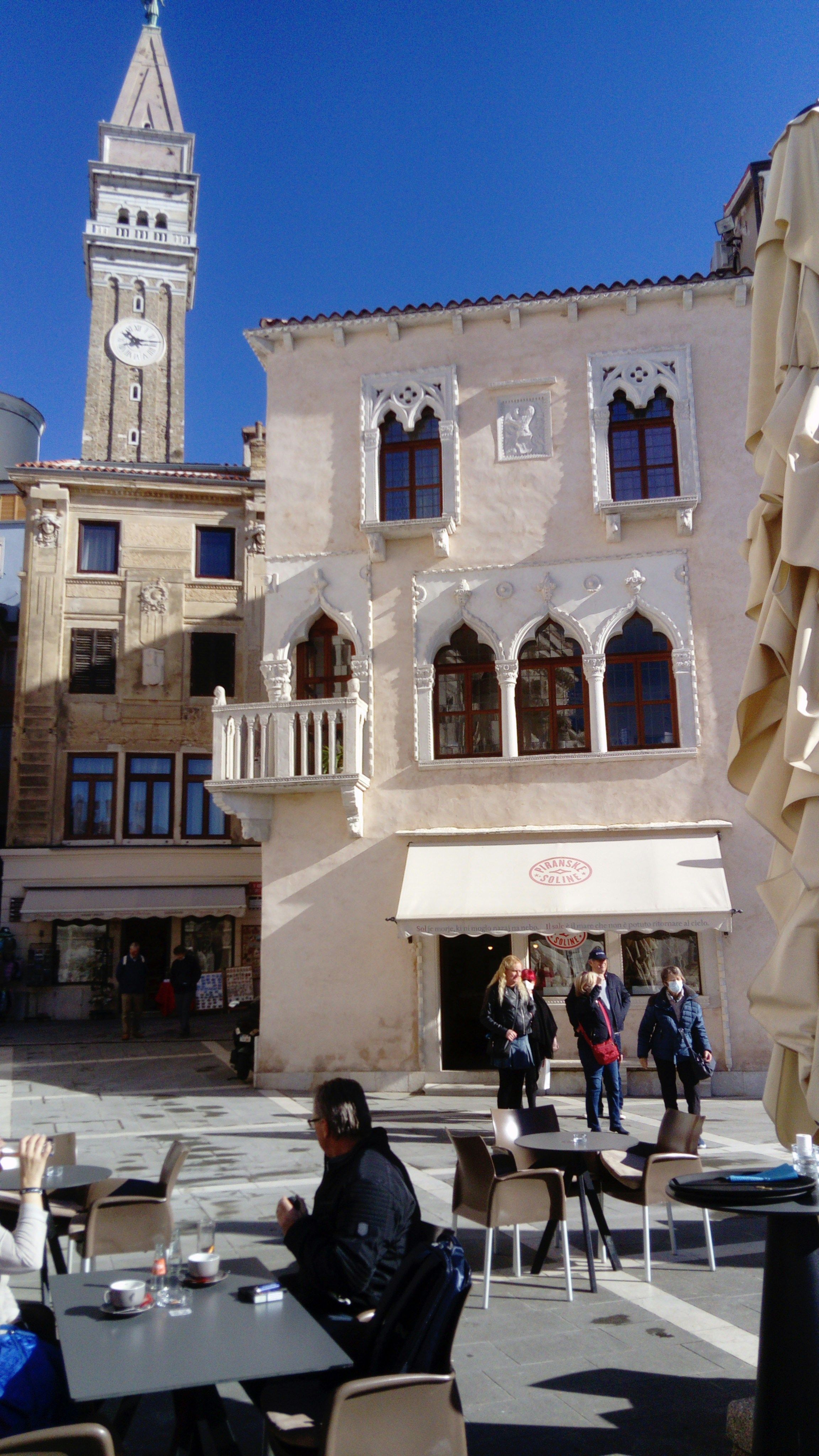
Koper is sometimes treated as the place you leave in order to see “the real Slovenia”, which is unfair. It has one of the most attractive historic centres on the northern Adriatic and requires almost no logistical effort to enjoy.
The city was once an island and spent centuries under Venetian rule, leaving it with narrow lanes, carved stone façades and squares that seem to have misplaced themselves on the journey between Venice and Croatia. Tito Square is the architectural centrepiece, bordered by the Venetian Gothic Praetorian Palace and the Cathedral of the Assumption. Its 54-metre bell tower offers views across the tiled roofs, port and green Istrian countryside, assuming you haven’t selected your holiday activities according to the strict principle of avoiding stairs.
From the square, wander down Čevljarska ulica, once the shoemakers’ street, towards Prešeren Square and its Da Ponte Fountain. Continue through the Muda Gate, the only surviving entrance from Koper’s former defensive walls, or drop towards Carpaccio Square and the waterfront. The compact centre is largely pedestrianised, so getting thoroughly lost requires more commitment than usual.
Koper suits shorter port calls, passengers with limited mobility and anyone who prefers to spend the day exploring at their own pace rather than being issued a coloured sticker and repeatedly counted. Allow two or three hours for the principal sights, longer if you want lunch, a swim or a wander through the market.
The surrounding countryside also produces olive oil, wine and Istrian food, so local tasting excursions are a good alternative for repeat visitors. They offer the cultural seriousness of agricultural heritage alongside the practical advantage of someone repeatedly pouring you wine.
Visit Piran from Koper cruise port
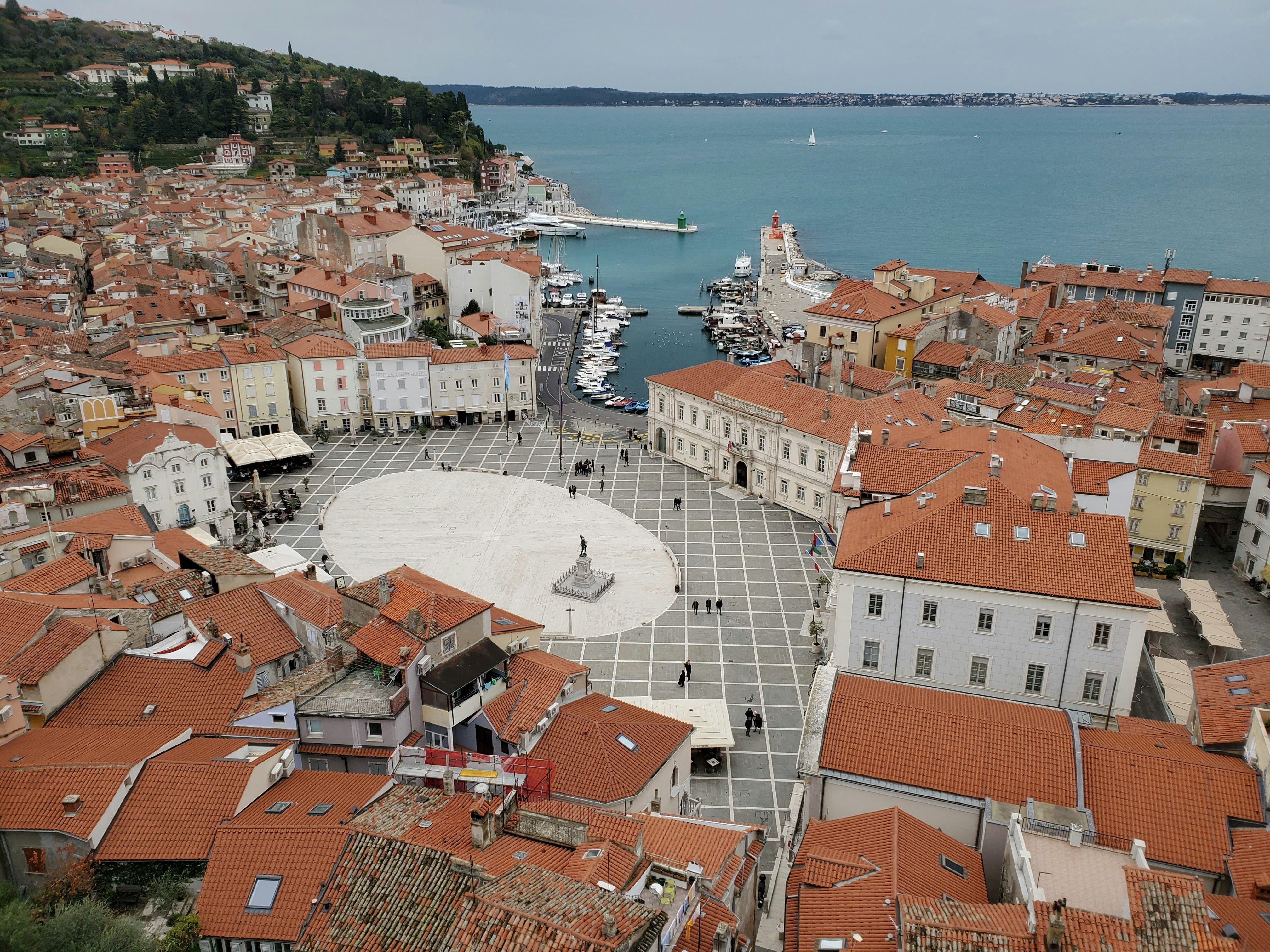
If you have time for one excursion along the Slovenian coast, Piran is the obvious choice.
It lies around 17 kilometres from Koper, with the road journey typically taking 20 to 25 minutes in ordinary traffic. The old town grew wealthy through salt and developed under centuries of Venetian influence, which explains its closely packed houses, warm-coloured façades and habit of looking extremely composed from every available angle.
Tartini Square forms the centre, opening directly towards the harbour and backed by a jumble of lanes rising up the peninsula. Walk uphill to St George’s Church for the classic view across the terracotta roofs and Adriatic. The climb is steep enough to make the scenery feel earned, but not so severe that it should require commemorative sportswear.
Piran is best explored without a strict route. Its appeal lies in the stone alleys, small squares, waterfront restaurants and sections of medieval wall rather than a long checklist of ticketed attractions. From the tip of the peninsula, you can follow the promenade around the old town, watching swimmers use the ladders set into the rocky waterfront.
The town’s fortunes were closely tied to nearby salt production, and the Sečovlje and Strunjan salt pans remain an important part of the surrounding landscape. If your excursion includes them, you’ll see traditional salt fields and wetlands rather than the industrial heaps the word “saltworks” may initially bring to mind.
Piran works particularly well as a half-day trip, leaving time to explore Koper before or afterwards. In summer, allow extra time for traffic and avoid planning your return around a margin best described as legally interesting.
Discover Izola and the Slovenian coast
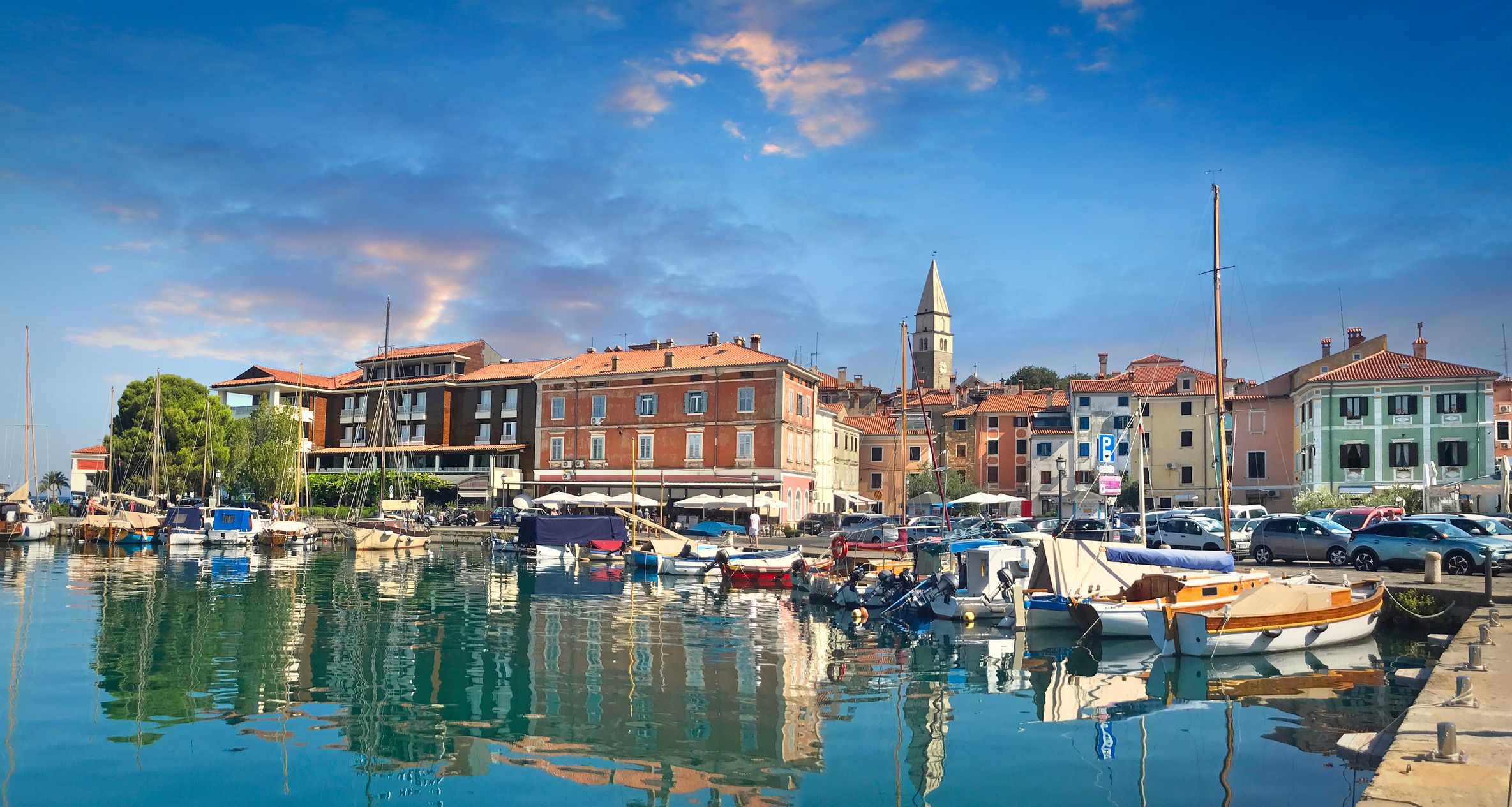
Izola sits between Koper and Piran and offers a quieter alternative to its more photographed neighbour.
The town developed around a former island and retains a strong connection to fishing, with a marina, working harbour and old streets gathered behind the waterfront. Slovenia’s tourist board describes it as a fishing town whose name reflects the island that once provided shelter there.
Izola doesn’t present itself as one grand historic set piece. That’s part of the pleasure. You can walk beside the harbour, visit the old centre, stop for seafood and watch ordinary coastal life carrying on despite the arrival of several coaches containing people wearing identical lanyards.
Active visitors can also follow sections of the Parenzana, a cycling and walking route built along the former railway between Trieste and Poreč. Its Slovenian stretch links coastal towns and passes landscapes including nature reserves, vineyards and olive-growing country.
A coastal excursion combining Koper, Izola and Piran gives a fuller impression of Slovenian Istria without consuming most of the day in transit. It’s the sensible option for passengers who want variety but don’t particularly wish to see the inside of a motorway tunnel.
Take a shore excursion to Škocjan Caves
Slovenia’s Karst region begins close behind the coast, and the ground soon becomes considerably more dramatic than the calm vineyards above it suggest.
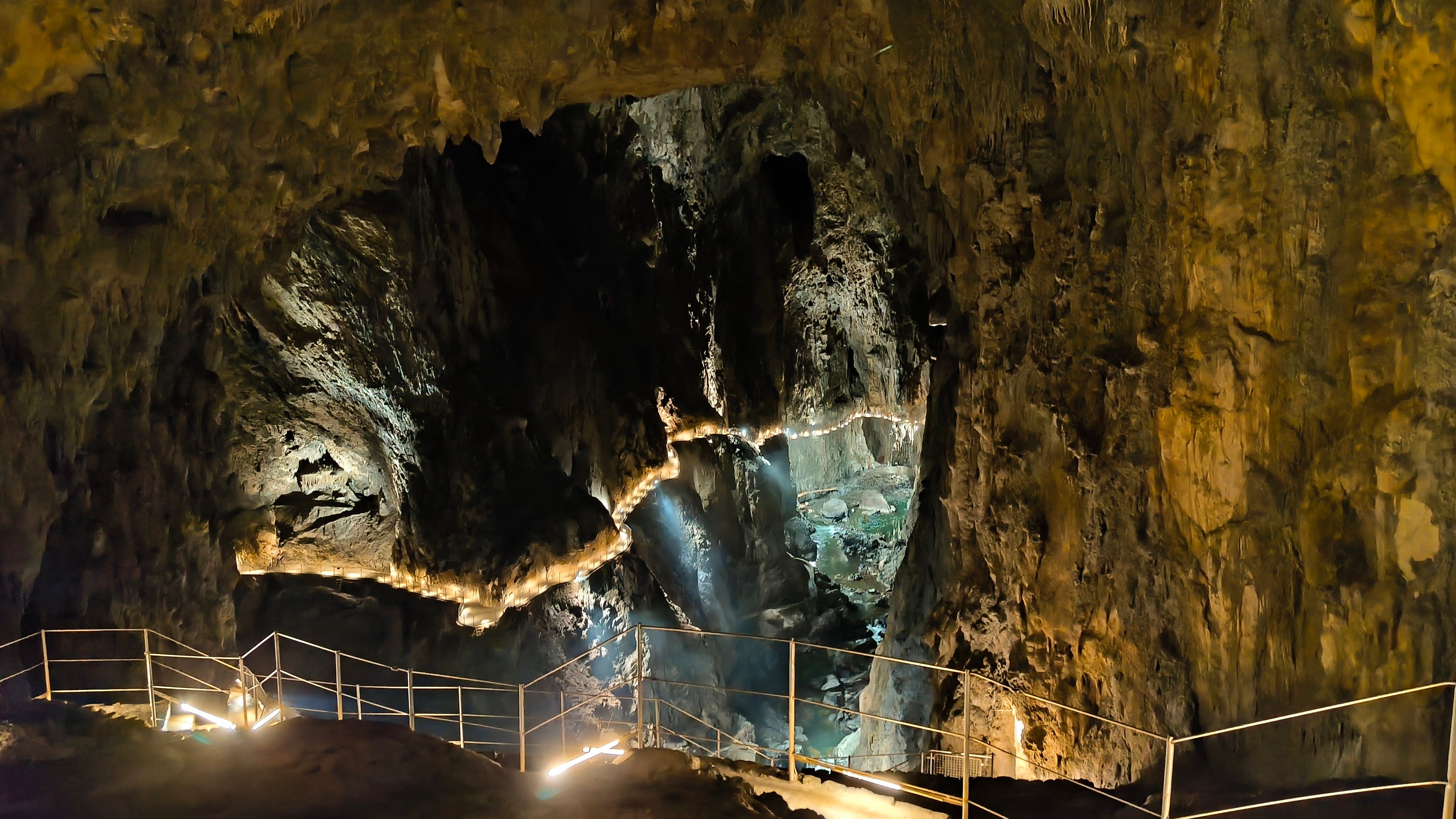
Škocjan Caves are among the country’s greatest natural sights and a UNESCO World Heritage Site. The system contains around six kilometres of underground passages, waterfalls, collapsed dolines and enormous chambers carved by the Reka River at depths exceeding 200 metres. It’s also one of the places that gave the scientific world its language for karst landscapes.
The standard visit feels less like entering an ornamental show cave and more like walking through the headquarters of a mildly theatrical underground civilisation. Paths cross a vast subterranean canyon above the river, with the water audible beneath you and the chamber roof disappearing into darkness.
This is the cave excursion for visitors who want scale, geology and atmosphere. It does, however, involve proper walking. Longer guided routes can take between two and a half and three hours, covering around five kilometres and roughly 1,000 steps. The temperature remains around 12°C, so bring an extra layer even if Koper is baking gently beside the sea.
Škocjan is close enough to combine with another Karst attraction, particularly Lipica, but timed entry matters. Book through the ship or arrange transport in advance rather than arriving with the optimistic belief that internationally protected cave systems operate on a casual drop-in basis.
Visit Postojna Cave and Predjama Castle
Postojna Cave is Slovenia’s best-known cave attraction and lies about 45 minutes by road from Koper. Its tour lasts roughly 90 minutes and combines an underground train ride with an easy guided walk, making it more accessible than the longer routes at Škocjan.
The railway carries visitors deep into a system of chambers and formations before continuing on foot through illuminated passages. It’s highly organised, hugely popular and occasionally has the atmosphere of a theme park designed by a geologist, but the cave itself is extraordinary.
Postojna is also home to the olm, an aquatic cave-dwelling salamander sometimes described as the “human fish” because of its pale skin. It has adapted to permanent darkness with the sort of determination most of us reserve for avoiding the cabin lights after an enthusiastic evening ashore.
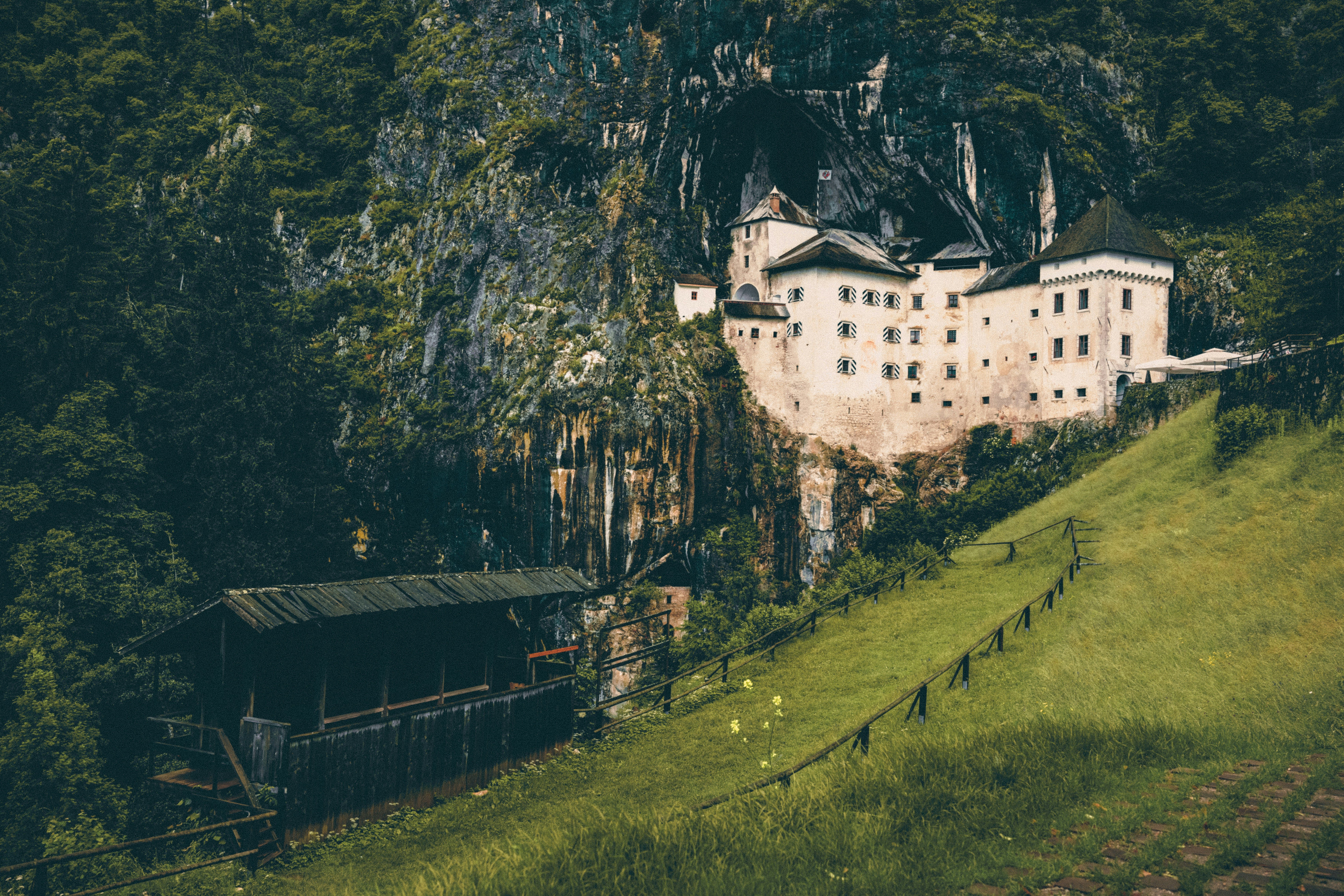
Predjama Castle stands about nine kilometres away, built directly into the mouth of a 123-metre cliff. Parts of the fortress have occupied the site for more than 800 years, producing the pleasing effect of a medieval castle attempting to retreat backwards into a mountain.
The cave park operates a seasonal shuttle between Postojna and Predjama for combined-ticket holders, with the journey taking around 20 minutes. Timetables vary, so passengers travelling independently need to coordinate their visit carefully.
Postojna and Predjama make an excellent full excursion from Koper. Choose them over Škocjan if you’d prefer easier walking, more infrastructure and the useful addition of a castle clinging implausibly to a cliff.
What should you choose on a Koper port day?
For a call of six hours or less, stay close to the coast. Koper and Piran make an easy pairing, while Koper alone offers enough architecture, food and atmosphere for an unhurried visit.
With eight or nine hours, the Karst becomes realistic. Škocjan, Lipica, Postojna and Predjama can each form the basis of a rewarding excursion, with some combinations possible if the entrance times align.
Ljubljana suits a longer call and travellers happy to spend two to three hours of the day in transit. Bled requires the greatest commitment and the widest safety margin, preferably with transport organised by the ship.
Slovenia’s size can be deceptive. The map encourages the dangerous belief that you can see the coast, a cave, the capital and an Alpine lake before tea. You probably could, in the same way that it’s technically possible to eat every course at the buffet. The more civilised approach is to choose one part of the country and leave enough time to notice it.
Koper gives you that rare cruise-port luxury: several worthwhile experiences within walking distance and a large portion of Slovenia within reach. Whether you spend the day beneath the earth, beside the sea or staring at a horse with considerably better posture than your own, it’s unlikely to feel like a compromise.