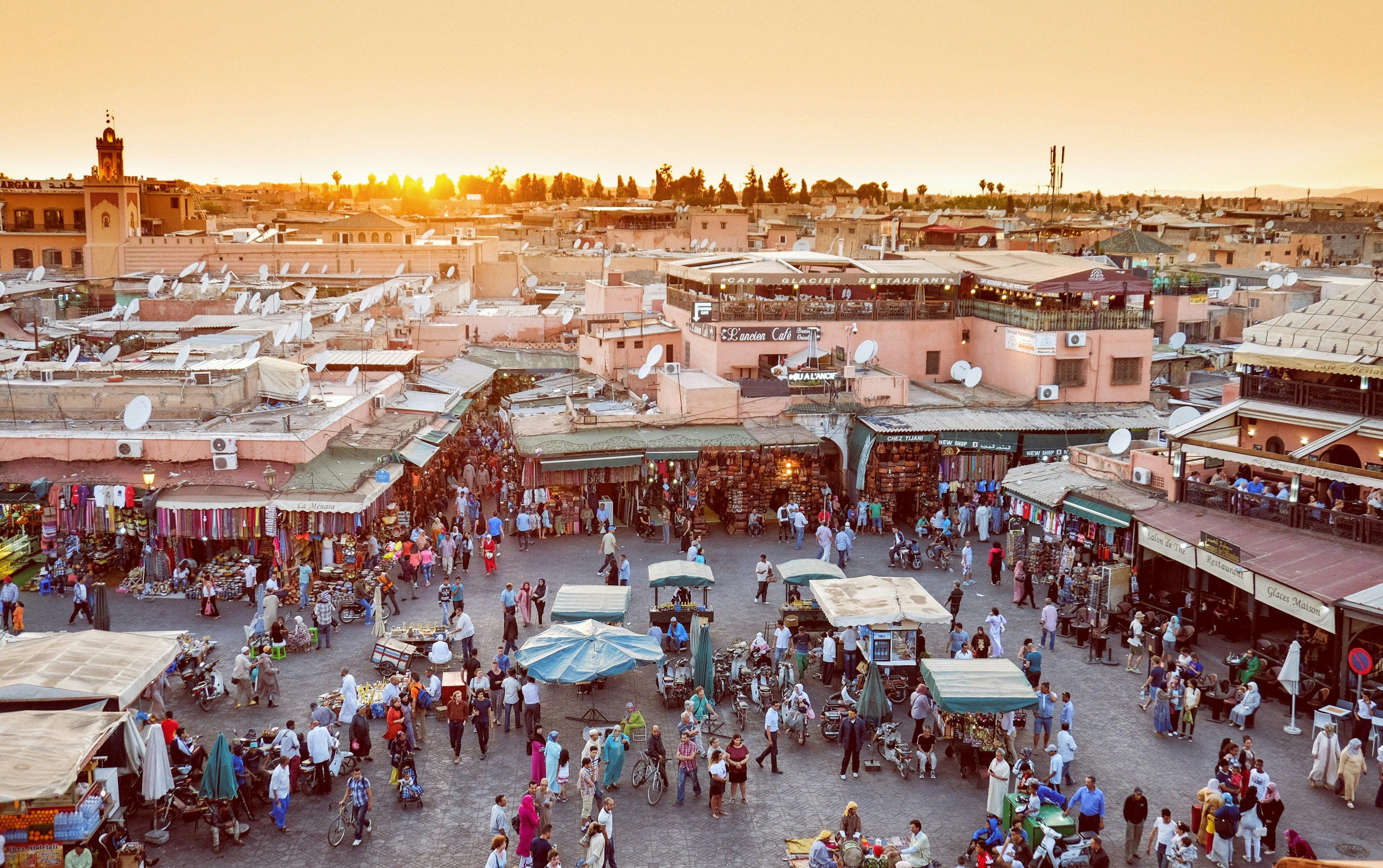
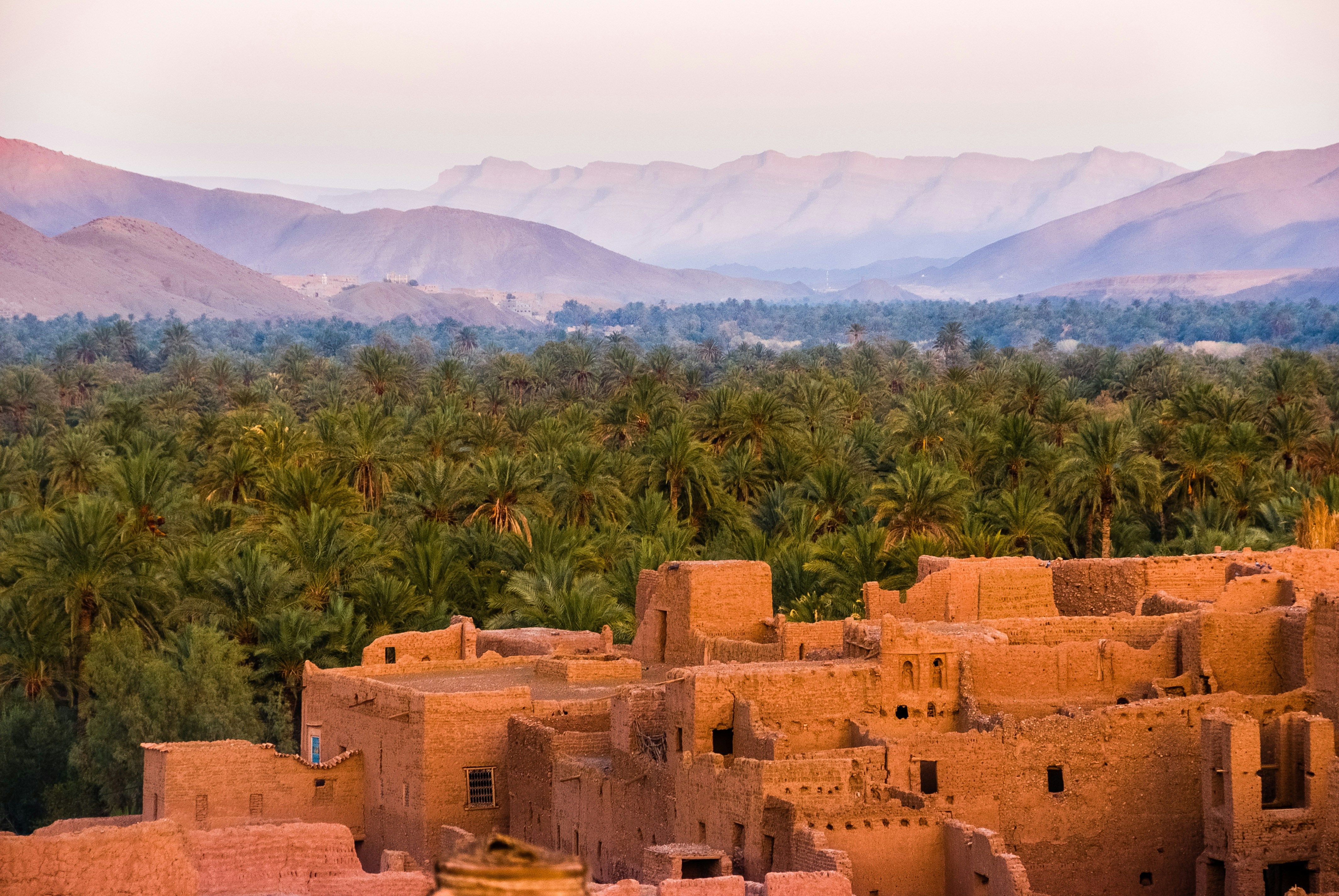
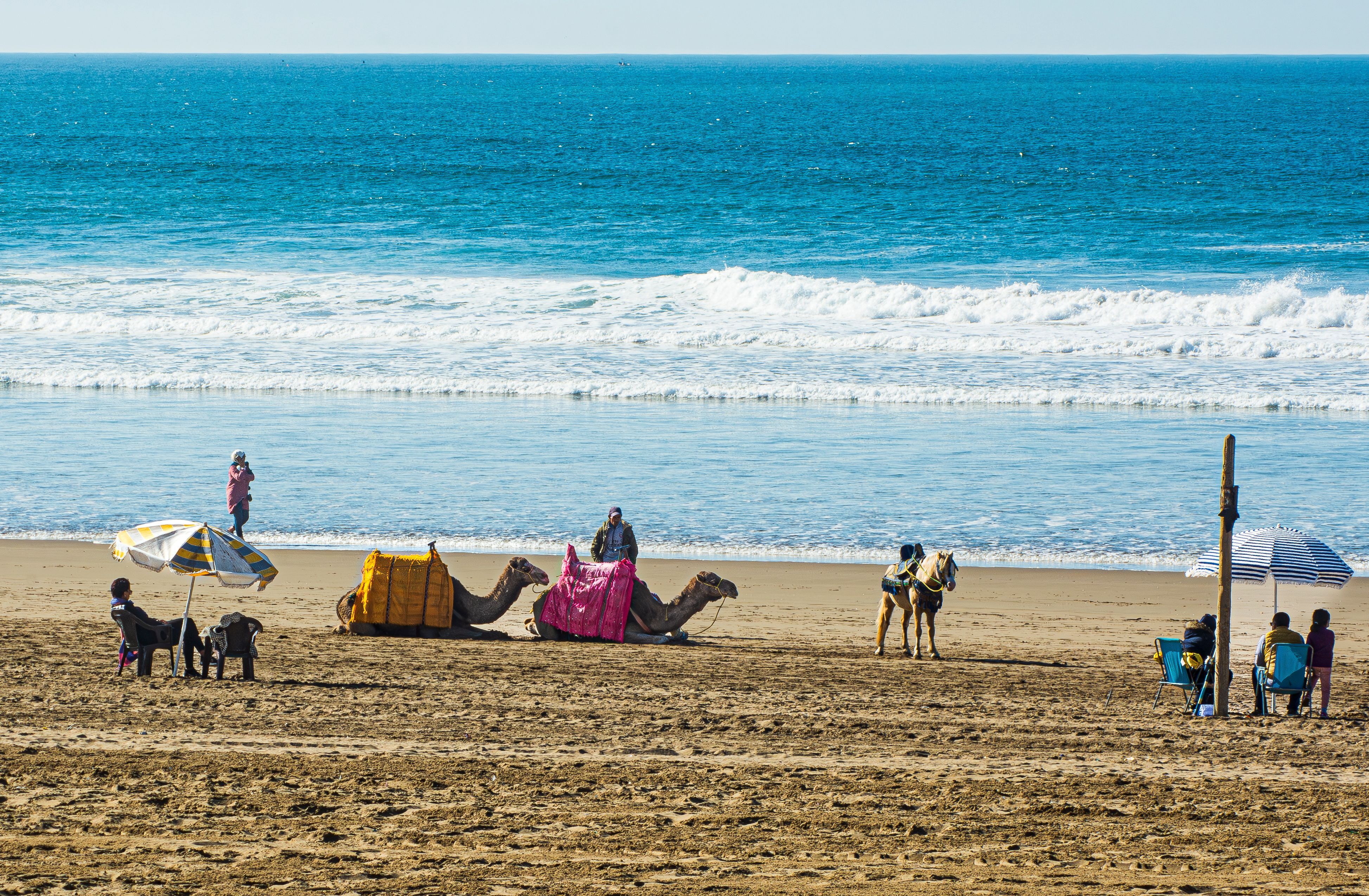
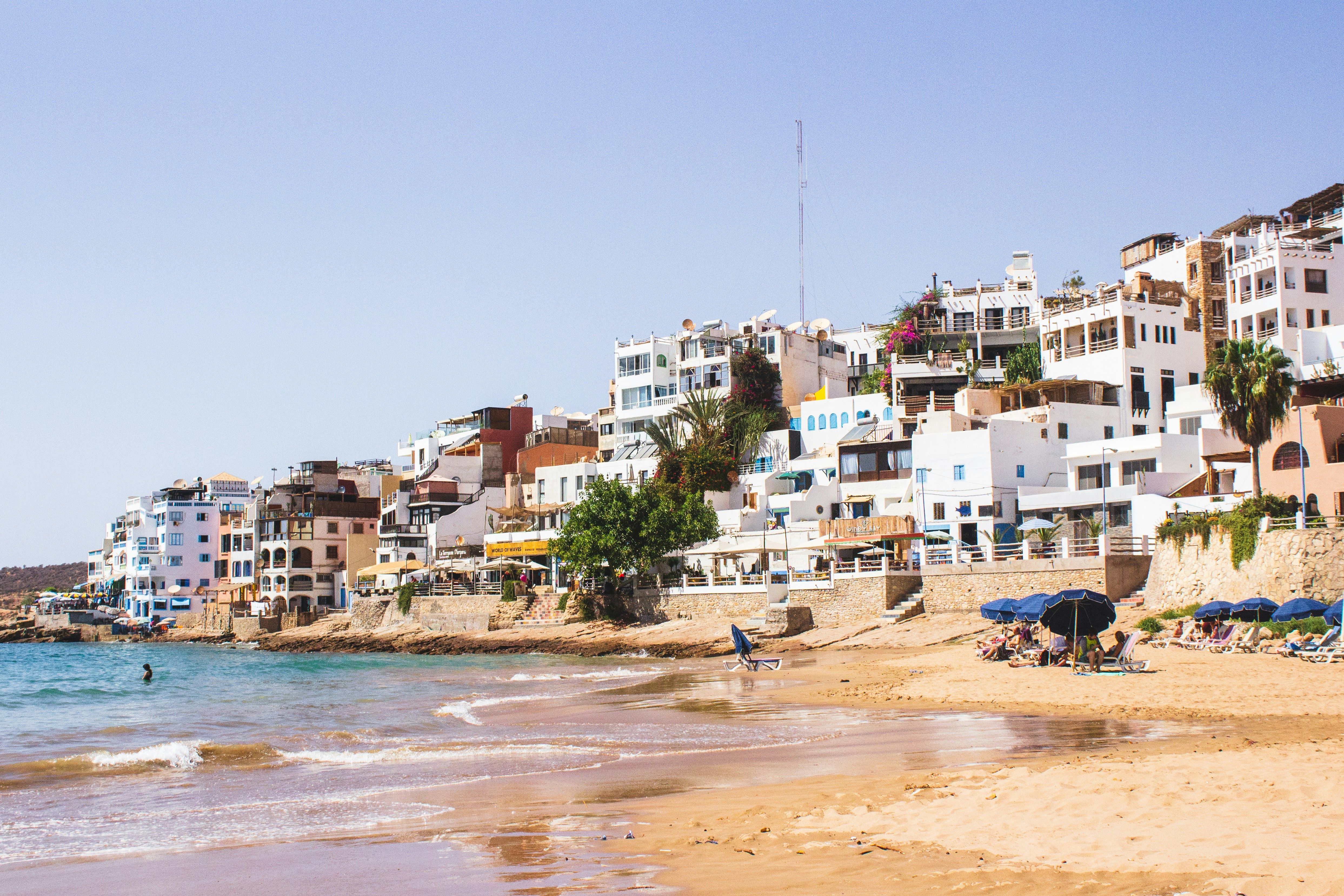
Morocco has had the good sense to arrange four remarkably different cities along one convenient stretch of coast. A cruise from Tangier to Agadir passes literary cafés, enormous mosques, Portuguese fortifications, pottery workshops, fishing harbours, earthquake-scarred hills and beaches long enough to make walking their full length feel faintly punitive.
Morocco’s tourism board actively promotes Tangier, Casablanca, Safi and Agadir as a coastal cruise route, but they shouldn’t be treated as interchangeable gateways to the same collection of souks and tagines. Tangier looks towards Europe across the Strait of Gibraltar. Casablanca is a sprawling commercial capital with trams, traffic and some of North Africa’s most distinctive 20th-century architecture. Safi is a working ceramics city with an unexpectedly rich Portuguese inheritance. Agadir belongs to Morocco’s sunnier south, where the Atlantic coast gives way to the Souss Valley and the Anti-Atlas beyond.
Taken together, the four ports tell a better story than any single excursion could manage. They show a country shaped by several seas, empires, trading routes, natural disasters and a shared reverence for blue pottery.
Tangier cruise port: literary legends and the Strait of Gibraltar
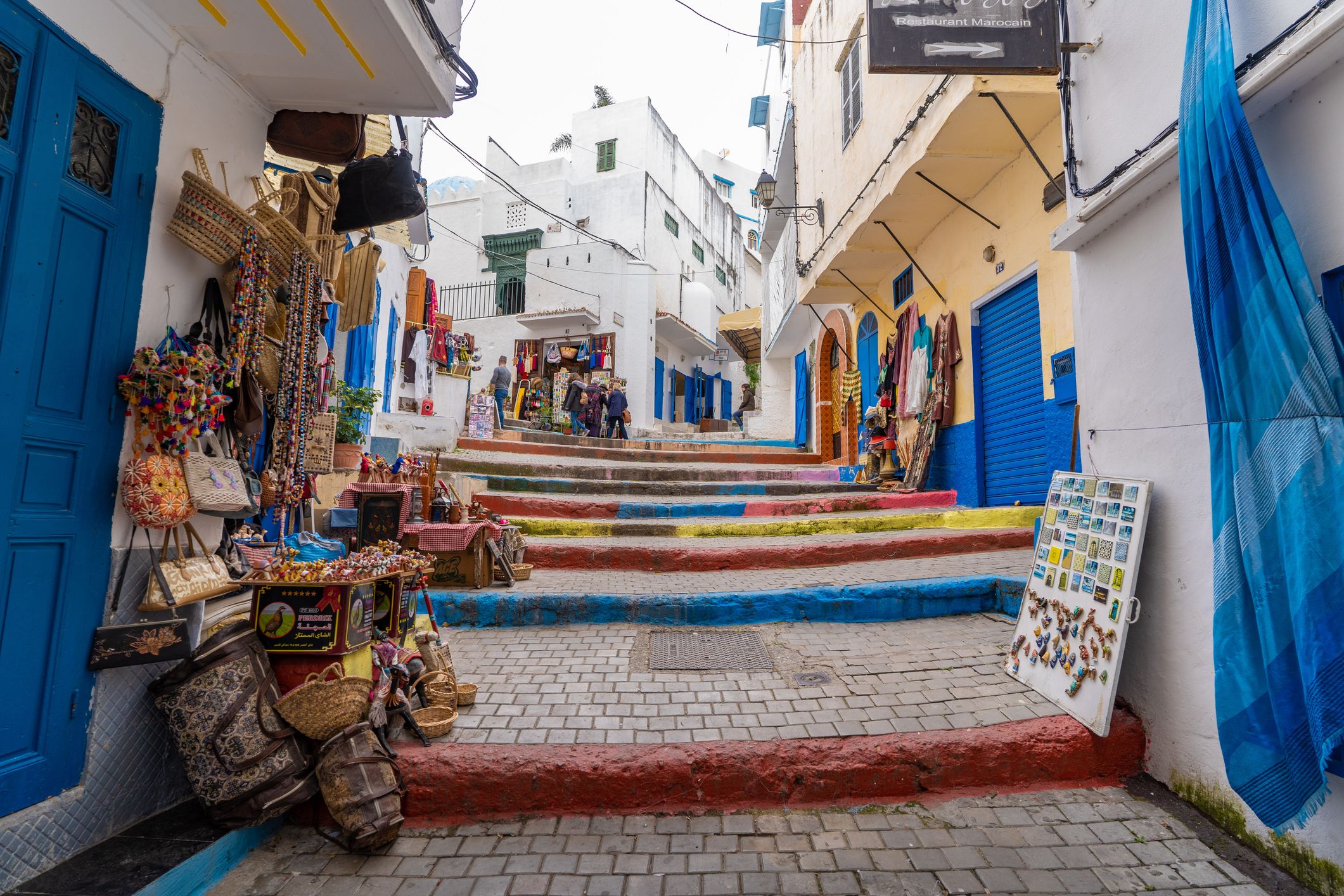
Tangier occupies the corner of Morocco where the Atlantic approaches the Mediterranean and Europe appears across the water with almost irritating clarity. Its city port sits beside the waterfront rather than far out in an industrial zone, making it the easiest of the four calls to explore independently. From the ship, the medina rises above the harbour in a jumble of pale walls, steep streets and terraces facing the Strait.
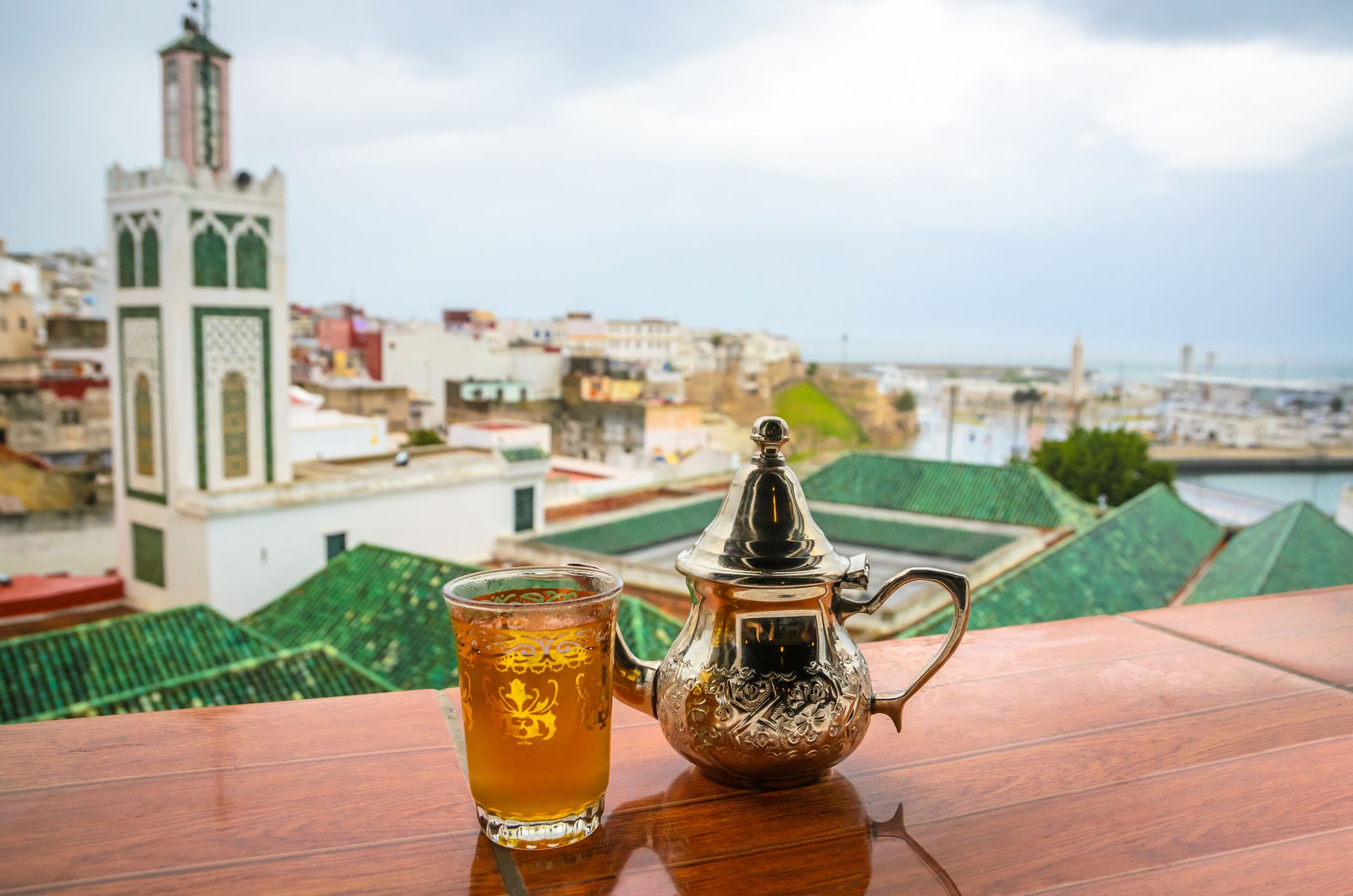
The city has spent decades being described as mysterious, generally by writers who arrived, stayed considerably longer than intended and then made that arrangement everyone else’s business. Paul Bowles moved to Tangier in 1947 and remained closely associated with the city for the rest of his life. Other writers and artists followed, helping to create the mythology of an international city populated entirely by novelists, spies and people drinking mint tea while awaiting an ambiguous envelope.
You can still trace some of that history today without turning your visit into too much of a literary cosplay. Walk from the port into the medina, passing through the lanes around the Petit Socco before climbing towards the kasbah. Along the way, the Tangier American Legation offers a more substantial account of the city’s international past. The building was presented by Sultan Moulay Suliman to the United States in 1821, served as a diplomatic mission for more than 140 years and is now a museum and cultural centre. It’s also the only US National Historic Landmark outside the United States.
Tangier’s old city rewards wandering, although “wandering” frequently becomes “climbing”. The medina, kasbah and Mendoubia Gardens can comfortably occupy a short call, with time left for coffee or lunch overlooking the port. The city’s Spanish, Moroccan, French and wider Mediterranean influences are most obvious in its cafés, shopfronts and food rather than in any tidy historical sequence. With a longer day, take a taxi or organised excursion west to Cape Spartel and the Caves of Hercules. Cape Spartel marks the dramatic meeting point commonly associated with the Atlantic and Mediterranean, while the surrounding headland looks back towards the Strait and the coast of Spain.
Casablanca cruise port: Art Deco architecture and modern Morocco
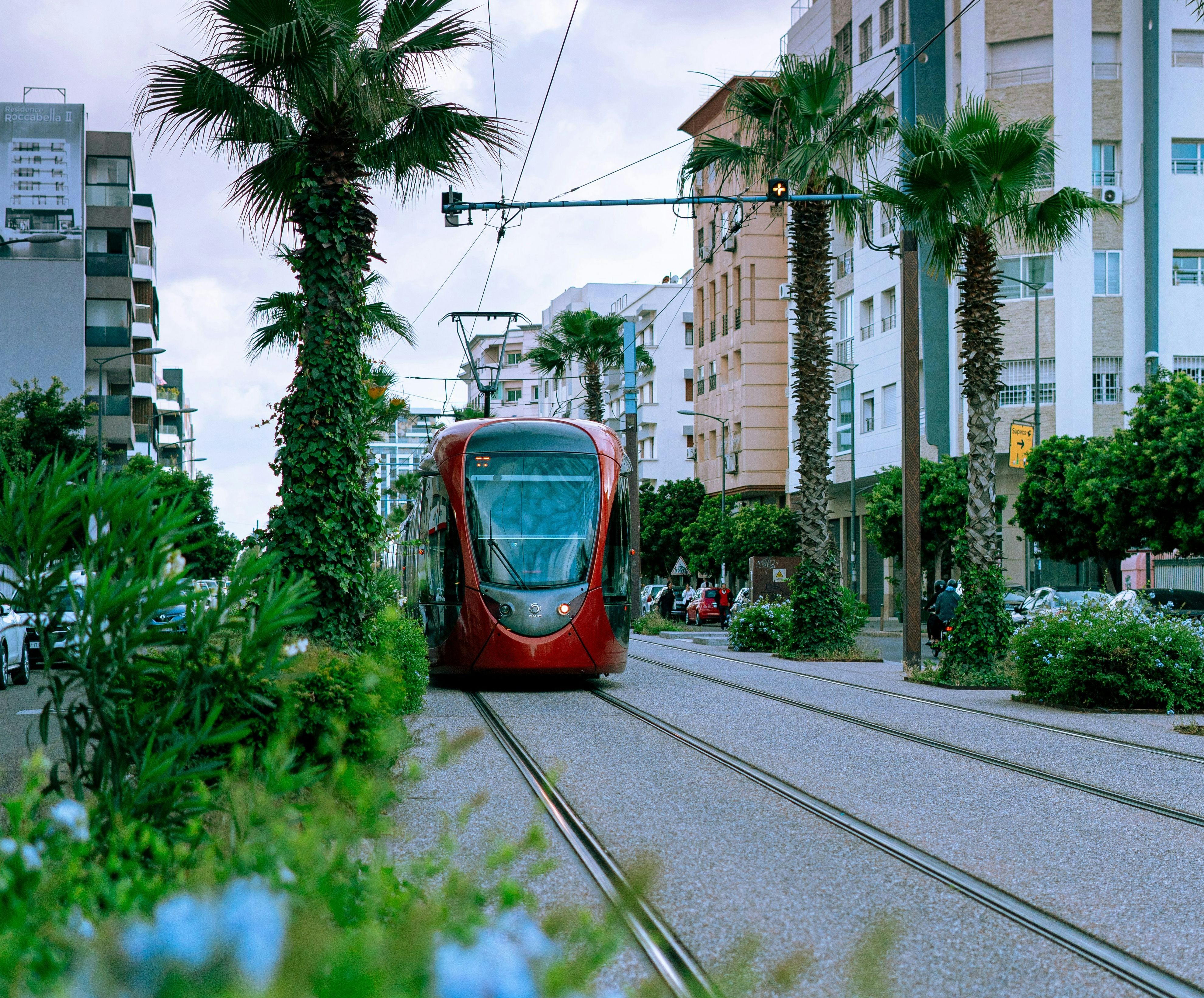
Casablanca arrives with an image problem. Its name summons images of Humphrey Bogart, Ingrid Bergman and a piano apparently capable of causing a major diplomatic incident. The film was made in Hollywood, while the actual Casablanca continued developing into Morocco’s economic capital, a city of banks, businesses, boulevards, apartment blocks and several million residents with places to be.
That difference is precisely why it deserves attention and the port reinforces the point. Casablanca’s new cruise terminal occupies the Moulay Youssef jetty inside one of the country’s major commercial harbours, so passengers should expect to use the ship’s transport, a taxi or an arranged transfer rather than emerging directly into a picturesque square containing one elderly man selling figs.
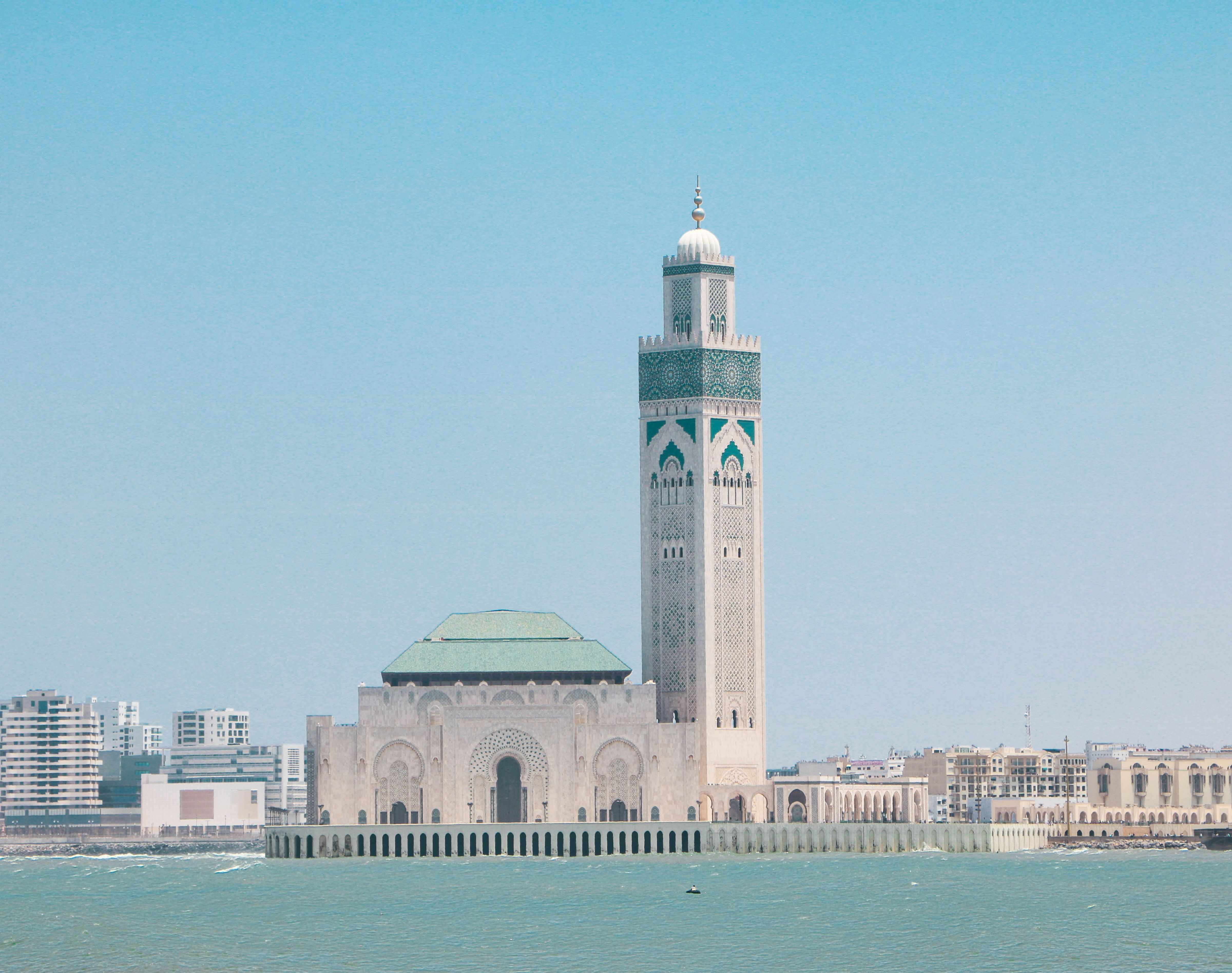
The city’s obvious landmark is the Hassan II Mosque, built beside the Atlantic with its vast prayer hall, intricate carved wood, marble, plasterwork and zellige. Official guided visits run at scheduled times, and current arrangements should be checked before leaving the ship rather than approached with the relaxed confidence usually reserved for an always-open supermarket.
The mosque is monumental, but Casablanca’s more revealing pleasure lies in the city centre. Around Place Mohammed V, Place des Nations Unies and Boulevard Mohammed V, façades combine Art Deco geometry, European modernism and Moroccan decorative traditions. Curved balconies sweep around corners, geometric plasterwork sits above shop signs and elderly buildings retain the faded confidence of somewhere once convinced the future would involve a great deal more chrome. Morocco’s tourism office specifically highlights the centre’s Art Deco architecture as a defining part of the city.
A good independent port day can connect the mosque with the old medina, the central architectural district and Marché Central. At the market, you can choose fish from the stalls and have it grilled nearby, which is both lunch and a reassuringly direct procurement process. Continue along Boulevard Mohammed V for the best concentration of early 20th-century buildings, then use a red petit taxi to cover the longer stretches rather than attempting to conquer Morocco’s largest city through personal resolve.
The Habous Quarter offers another version of Casablanca. Developed during the French protectorate, it uses arcades, small squares and traditional Moroccan forms within a planned neighbourhood. It’s more composed than the old medina and easier to navigate, though sufficiently attractive to produce a temporary interest in buying leather goods you didn’t know existed that morning.
Casablanca suits passengers who enjoy cities as living systems rather than scenic backdrops. Don’t attempt the mosque, Habous, the Art Deco centre, the Corniche and an excursion to Rabat in one day. Pick two or three areas and leave time for lunch. The reward is a version of Morocco that’s modern, restless and far less interested in performing antiquity than many visitors expect.
Safi cruise port: Portuguese history and Morocco’s pottery capital
Safi is the route’s quiet corrective. It lacks Tangier’s literary reputation, Casablanca’s size and Agadir’s resort infrastructure, and is sometimes treated chiefly as somewhere from which passengers can begin a long journey inland. Staying put is the more interesting decision.
The city curls around a working Atlantic harbour, where fishing boats and commercial activity remain part of the daily view. The regional tourism authority says the port’s boats land around 26 tonnes of fresh fish a day, which should remove any lingering uncertainty about lunch.
Begin along the seafront, where Safi’s Portuguese history is most visible. Portugal occupied the city during the early 16th century and left behind the Sea Castle, known as Ksar el-Bahr or Dar el-Bahr, standing directly above the Atlantic. Elsewhere in the medina are the remains of a Portuguese cathedral built in the Manueline style in 1519. Much of it was destroyed when the Portuguese withdrew in 1541, leaving a fragment of European Gothic architecture embedded within a Moroccan coastal city.
Access to historic structures can change during conservation work, so the sensible approach is to check locally before building the day around going inside. Even viewed from the surrounding streets, the fortifications give Safi a character distinct from Morocco’s better-known imperial cities. This was a place contested for its harbour and Atlantic trade, not designed merely to provide a pleasant background for somebody holding a woven basket.
From the seafront, follow the medina uphill towards Safi’s pottery district. Ceramics have become the city’s defining craft, with workshops producing the blue, green and richly patterned plates, bowls, jars and tiles associated with Safiot pottery. The official tourism board describes Safi as one of Morocco’s ceramics capitals, while Potters’ Hill remains the practical centre of production and painting workshops.
Unlike a conventional souvenir shop, the district lets you see objects passing through different stages of production. Clay is shaped, dried, painted and glazed in workshops where several generations may work alongside one another. It’s fascinating until you remember that plates are heavy, fragile and widely regarded by airlines as your problem.
The National Ceramics Museum provides broader context, bringing together pottery traditions from across Morocco alongside work associated specifically with Safi. Current visitor information lists a collection of archaeological and ethnographic ceramics, with Safiot pottery given particular prominence. Check the opening day against your ship’s call, as museums possess a remarkable instinct for closing precisely when somebody has crossed an ocean to see them.
Safi’s medina is manageable enough to explore slowly. Rue du Souk leads through workshops, shops and food stalls, while the elevated streets offer glimpses back towards the port. Finish with grilled fish close to the harbour and accept that the city has supplied a complete port day without requiring a coach, a motorway or an early-morning meeting beside a numbered paddle.
Agadir cruise port: beaches, the rebuilt city and the Anti-Atlas
After Tangier’s layered medina, Casablanca’s urban commotion and Safi’s old fortifications, Agadir can initially seem almost suspiciously straightforward. The city has a broad beach, a long promenade, resort hotels and enough sunshine to make the possession of a light jacket feel pessimistic.
Its appearance is partly the result of catastrophe. A devastating earthquake struck Agadir on 29 February 1960, destroying much of the old city. Modern Agadir was rebuilt on a new plan, with broad avenues and low-rise architecture rather than a restored historic medina. Above it, Agadir Oufella preserves the site of the former kasbah and the memory of the city that disappeared.
The kasbah’s restored interior reopened to visitors in 2024 following conservation and redevelopment work. It can now be reached by road or cable car, and the hilltop gives the clearest view of Agadir’s crescent-shaped bay, the modern city and the port below.
Cruise ships dock within Agadir’s commercial harbour, which remains an important gateway for goods and the regional food industry. It isn’t the sort of terminal from which you should set off hopefully on foot while following a distant palm tree. Use the cruise shuttle or a taxi to reach the beach, kasbah or centre.
For a relaxed day, pair Agadir Oufella with the seafront. The city’s beach and promenade extend for roughly ten kilometres around the bay, with cafés, restaurants and calmer water than the surf beaches farther north. There’s no need to manufacture a complicated itinerary. Walk, swim when conditions allow, have lunch and spend an hour behaving as though sitting down was your cultural objective all along.
Souk El Had supplies the necessary contrast. With more than 6,000 shops and stalls, it’s one of the city’s principal commercial spaces, selling produce, spices, household goods, textiles and the full range of items capable of becoming essential after three minutes of bargaining. It’s large enough to require a plan, or at least a memorable entrance gate.
Agadir also opens the route inland towards the Souss Valley and the Anti-Atlas. The landscapes around Tafraoute, Tiznit and Aït Baha introduce pink granite, argan country, fortified villages and mountain valleys far removed from the beachfront. Regional tourism projects identify the area between Aït Baha, Tafraoute and Tiznit as part of the Anti-Atlas touring region.
This is where the ship’s timetable matters. Tafraoute is a substantial journey from Agadir and belongs on an organised excursion, a particularly long port call or an overnight stay. It shouldn’t be attempted because somebody at breakfast described it as “only a couple of hours” while buttering toast. For a standard call, Agadir itself, the kasbah and Souk El Had form the stronger day. For a long call, heading inland reveals the southern landscapes that explain why Agadir feels so different from Tangier.
Cruising Morocco from Tangier to Agadir
Following Morocco south by sea gradually changes the country’s scale and mood. Tangier faces the Strait and the long shadow of its literary visitors. Casablanca turns towards commerce, architecture and the business of being a major city. Safi compresses Atlantic history into fortress walls, fishing boats and pottery kilns. Agadir opens everything out again, with a broad bay and mountain country waiting beyond it.
The route works because no port finishes the sentence begun by the previous one. Four calls produce four competing versions of Morocco, each entirely convinced it has the better lunch.
Cruise the route
See Morocco’s Atlantic ports for yourself
These Cruise Collective partner itineraries visit at least one of the
cities featured above, with exclusive member benefits available on
eligible bookings.
Closest route match
Cruise from Morocco to Senegal
Casablanca → Safi → Agadir
→ Dakhla → Dakar
The most direct continuation of this article, beginning in Casablanca
before following the coast through Safi and Agadir. One selected
shore excursion per port is included.
Best no-fly option
Colourful Atlantic Coastlines of Portugal, Morocco & Spain
London Tilbury → Portugal → Agadir
→ Casablanca → Tangier
→ Vigo → London Tilbury
A round-trip sailing from Tilbury covering three of the four cities
in this guide, with Portugal and Galicia added at either end and no
airport required.
Two Moroccan city calls
Madeira, Canaries & Morocco Holiday
Barcelona → Canary Islands → Madeira
→ Casablanca → Tangier
→ Málaga → Barcelona
A warmer start to the year combining two contrasting Moroccan cities
with Madeira and the volcanic landscapes of the Canary Islands.
Shorter cultural sailing
Portugal, Spain & Morocco: Lisbon, Seville & Tangier
Lisbon → southern Iberia → Tangier
→ Málaga
A compact itinerary linking Tangier with Lisbon and Andalusia, well
suited to travellers more interested in long port days than
collecting large numbers of sea days.
Prices, itineraries and availability were checked on 28 July 2026 and
may change. Prices are per person based on two sharing where stated.
Cruise Collective benefits apply to eligible bookings and are subject
to each cruise line’s terms, exclusions and availability. Log in or join
Cruise Collective to access the relevant booking instructions.