Perhaps you’ve found the perfect 12-night cruise but can only spare nine days. Perhaps the ship calls at Barcelona two days before it reaches Rome, where you already need to be. Or perhaps you’ve looked at the final sea day and thought, with the confidence of somebody who hasn’t yet encountered maritime law, “I’ll just get off early.”
Sometimes you can. Often you can’t.
Joining a cruise after its official departure or permanently leaving before its scheduled end is usually known as “downlining”. It sounds like a minor alteration to a holiday booking. In practice it can involve the cruise line, immigration authorities, port security, customs rules and, on some itineraries, century-old maritime legislation.
What does downlining on a cruise mean?
Downlining simply means embarking or disembarking at a port other than the one specified as the beginning or end of your booked cruise. So boarding in Naples three days into a Barcelona round-trip, or leaving permanently in Lisbon before the ship continues to Southampton, would both count.
It’s different from an itinerary that is deliberately sold with several embarkation options. MSC, for example, advertises Mediterranean cruises with multiple official embarkation ports. If your ticket says your cruise begins in Genoa while another passenger’s begins in Barcelona, everybody is behaving impeccably. You haven’t cleverly hacked the system.
Problems begin when you try to alter the embarkation or disembarkation points after booking.
Can you join a cruise after it has already started?
Possibly, but never assume you can simply meet it farther down the coast.
Royal Caribbean’s current UK guidance says the answer depends on the itinerary, your nationality and US or foreign law. Guests wanting to join late or leave early have to submit a request in advance and wait to be told whether the change is permitted. Its Australian guidance goes further, asking for downline requests at least two weeks before departure because processing can take up to ten business days.
Other lines are considerably less interested in discussing it. Norwegian Cruise Line’s UK FAQ says joining or leaving outside the published embarkation and disembarkation ports isn’t permitted, with mid-cruise exceptions considered only in emergencies.
So there is no cruise-wide rule saying you can miss Barcelona and casually reappear in Marseille with a suitcase. The answer begins with the policy of the line you’re travelling with, then gets progressively more governmental.
Can you leave a cruise early?

Again, sometimes, but “the ship is tied to the dock and I can physically walk down the gangway” isn’t the same thing as being allowed to finish your holiday there.
Leaving permanently can require customs and immigration clearance because you are no longer a day visitor returning to the ship. Holland America’s contract, for example, tells passengers planning an early disembarkation to inform the front office by the previous day so local customs inspections can be arranged. An unauthorised early departure can result in penalties, costs and no refund.
That makes spontaneous early departure a fairly poor strategy for catching a cheaper flight. If there’s a genuine reason you need to leave early, speak to the cruise line before booking if possible, or to guest services as early as you can once onboard.
Your cabin key is not, despite appearances, an international exit permit.
Why are US cruises particularly complicated?
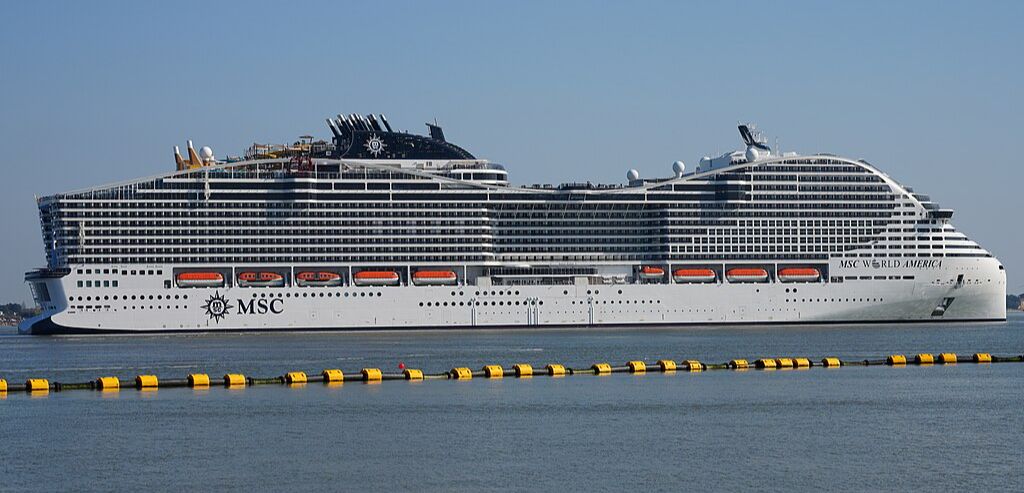
This is where the Passenger Vessel Services Act enters the conversation, an 1886 US law that regulates how passengers can be carried between American ports on ships that aren’t qualified for US coastwise trade.
It is frequently called the Jones Act in cruise discussions, including by some cruise lines, although technically the Jones Act concerns cargo while the Passenger Vessel Services Act covers passengers. US Customs and Border Protection says foreign-flag ships generally cannot transport a passenger from one US port to another unless the voyage meets specific conditions.
The detail gets gloriously maritime. CBP gives the example of a passenger travelling from San Francisco to Seattle on a foreign-flag ship as prohibited. Even adding a stop at a “nearby foreign port” doesn’t necessarily fix it: Los Angeles to San Diego via Hawaii and Ensenada can still breach the rules. By contrast, travelling from Miami to Key West after the ship has visited Aruba can qualify because Aruba counts as a “distant foreign port” under the regulations.
The important point for passengers isn’t memorising the legal geography of Aruba. It’s that changing where you personally board or leave can turn a perfectly lawful cruise itinerary into an unlawful passenger journey.
This is why Holland America says passengers on most US round-trip cruises should expect to embark and disembark exactly as ticketed, with only limited exceptions on certain itineraries.
What about cruises in Europe and elsewhere?

Outside the US, that particular law doesn’t apply, but life doesn’t suddenly become a free-for-all.
Cruise lines still have to deal with passenger manifests, immigration status, visas, customs clearance and whatever cabotage or passenger-transport rules apply locally. Royal Caribbean explicitly warns that nationality and foreign law can determine whether a partial cruise is permitted, while Celebrity’s published terms similarly say downline requests remain subject to local cabotage laws and aren’t confirmed until written authorisation has been issued.
There is also an operational problem. The port where you’ve arranged to join might be cancelled because of weather, industrial action or another itinerary change. Norwegian cites that possibility as one reason it doesn’t normally permit mid-cruise embarkation, and it explains why cruise lines are reluctant to build complicated joining arrangements around ports they can’t guarantee they’ll actually visit.
A ship cannot wait in Livorno because one passenger has based the entire success of their holiday on the 14.22 from Florence.
Do you get money back for the days you miss?
Usually not.
Royal Caribbean’s UK policy is unusually explicit: guests who are approved to join late or leave early receive no prorated refund for the unused part of the cruise. Its Australian guidance similarly says a downline adjustment doesn’t change the cruise price, penalties or cancellation fees.
Holland America also states that unauthorised disembarkation can leave passengers without any refund, compensation or credit.
So if you buy a 12-night cruise and receive permission to leave after night nine, you should generally think of yourself as buying a 12-night cruise and choosing not to use the final three nights. You have not invented flexible maritime pricing.
How to arrange a partial cruise

The safest approach is to ask before you book, and certainly before arranging non-refundable flights or hotels around your alternative port. Give the cruise line the exact ship, sailing date, nationality of each passenger and the port and date on which you want to join or leave, then get the answer in writing.
Do not rely on what happened to somebody in a Facebook group in 2019, even if they have used the phrase “I do this all the time”. Policies change, laws vary by itinerary and two passengers on the same ship can face different immigration requirements because they hold different passports.
If the line approves it, confirm exactly where and when you’ll be processed, what documents you need and whether any local fees apply. Royal Caribbean warns that some governments levy charges when guests permanently disembark before the scheduled end of a cruise, with those costs falling to the passenger.
So can you book only part of a cruise?
Occasionally. But you generally can’t treat a cruise like a train and decide that Barcelona to Naples looks like quite enough of it.
Some lines will consider a pre-arranged downline request. Others largely prohibit the practice. American itineraries introduce an additional layer of cabotage law, while international sailings can still involve immigration, customs and port restrictions. Even where permission is granted, the unused nights usually remain very much paid for.
If you know from the outset that you only want part of the itinerary, ask the cruise line before spending anything else.
It may say yes.
It may also introduce you to several areas of maritime law you had not previously expected to encounter while planning a holiday.