The first time you sail into the Isles of Scilly, there will likely be a moment when your brain can't quite compute what your eyes are seeing. The water is a clear blue-green, the beaches are white enough to pass for the tropics and there are palm fronds poking up behind low stone walls. Then a local boat called Seahorse chugs past and someone mentions the word “mizzle” and you remember you are still very much in Britain.
This little archipelago of five inhabited islands and more than a hundred islets sits off the tip of Cornwall, in the path of the Gulf Stream. That maritime nudge is why winters are milder, summers feel softer and subtropical plants can grow happily in conditions that would make most mainland gardeners green with envy. It's also why more small cruise ships are adding Scilly to their British Isles loops, promising “Caribbean-looking” scenery with British pub opening hours.
Where ships actually take you
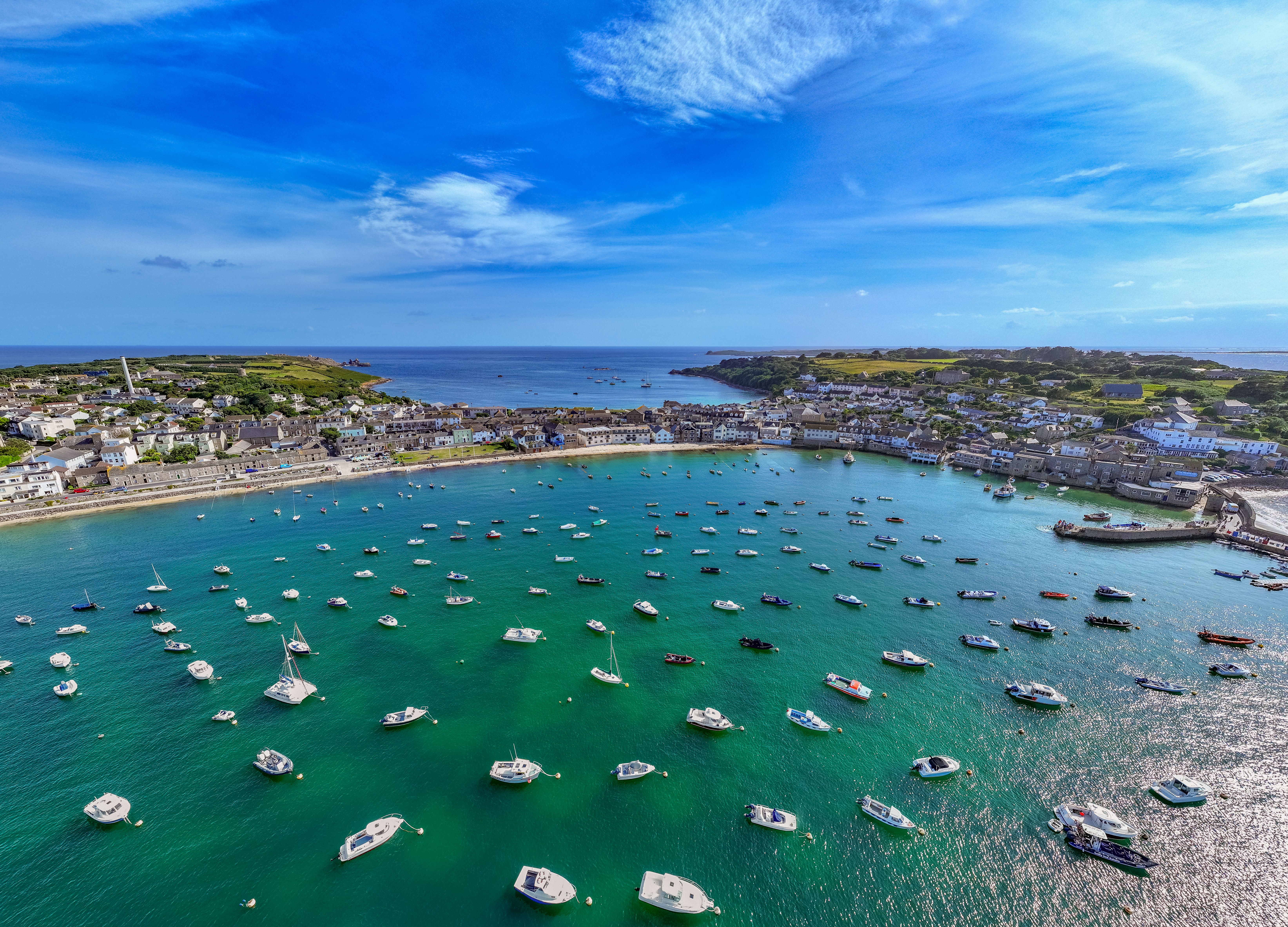
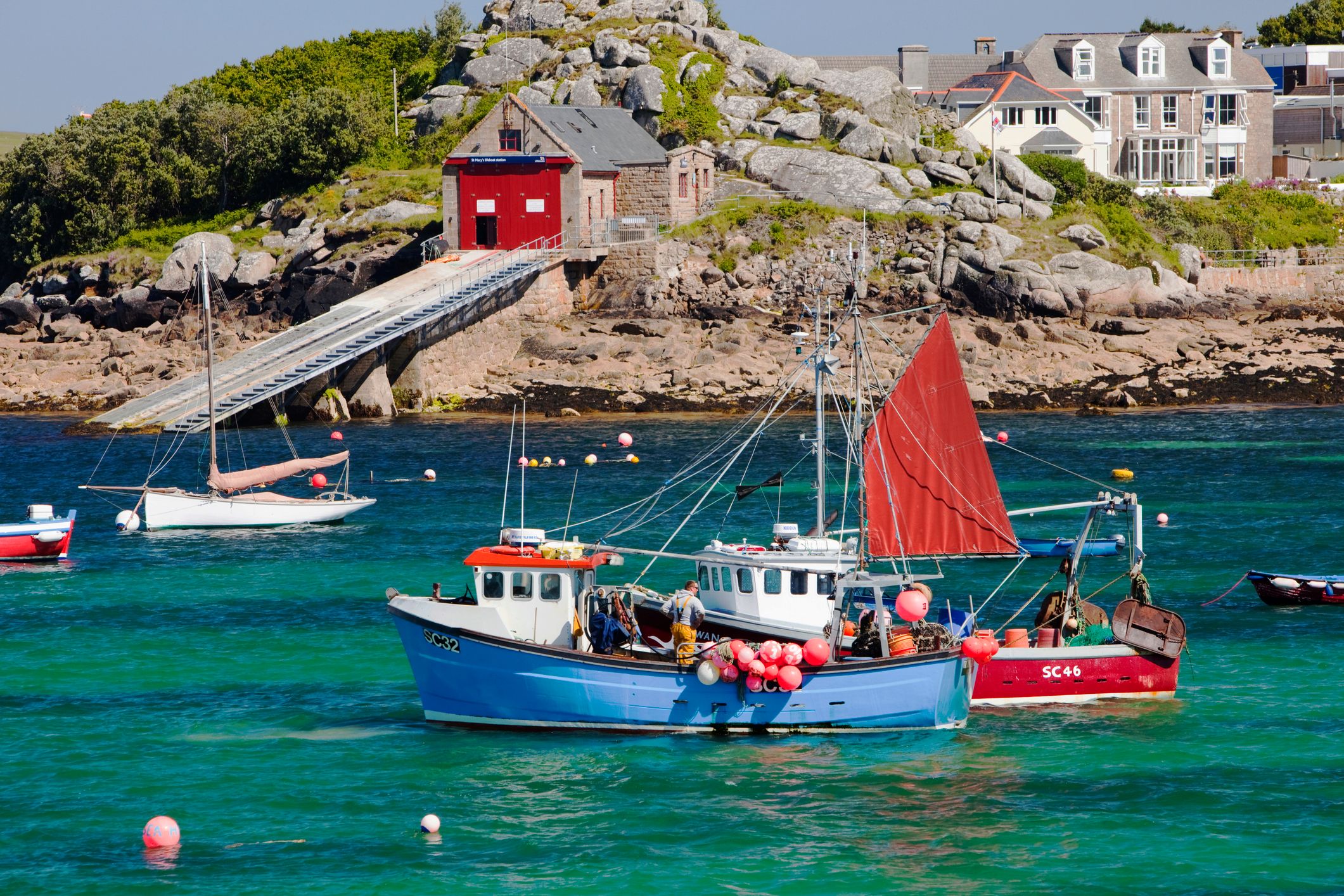
Most itineraries anchor off St Mary's, the main (and largest) island, and send you ashore by tender into Hugh Town. The harbour is small, the approach is shallow; this is a place built for mail boats and fishing boats, not 6,000-berth megaships. In practice that means Scilly tends to appear on the schedules of smaller lines such as Fred. Olsen Cruise Lines, Saga Cruises and British- Isles itineraries from the likes of Ambassador Cruise Line rather than the bigger global brands.
On a good-weather day, the tender ride alone feels like a scenic excursion. You skim past islets where Atlantic grey seals haul out on rocks and shags stand drying their wings in a pose not dissimilar to a yogi's best sun salutation. If the sea is grumpy, you'll very quickly understand why captains sometimes cancel the call altogether. Swell is the great Scillonian wildcard. Pretty as it looks, this is still the open Atlantic and if the boats cannot safely run, no one goes ashore.
A port day on St Mary’s
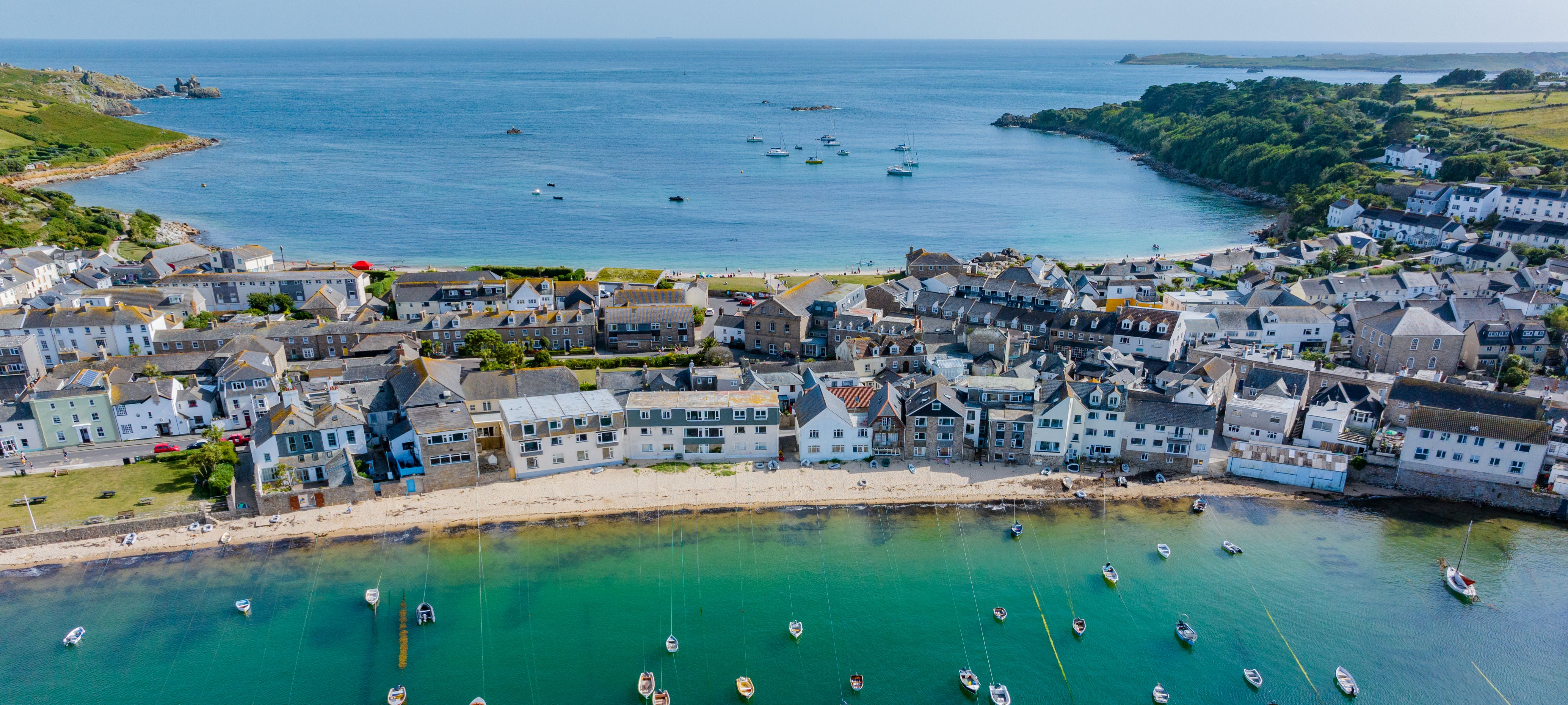
Hugh Town is the sort of capital that can be walked end-to-end in the time it takes to drink a coffee, and that's part of the charm. From the quay you can walk to Porthcressa Beach in under five minutes and immediately see why the “Caribbean of the UK” moniker keeps cropping up, even while the sea temperature's telling a very different story.
Head up to the Garrison, the fortified headland that guards the harbour, and you get wraparound views of the archipelago: neat fields stitched together by old stone walls, flash-white beaches on St Martin's, and the more rugged western edge where the Atlantic swells roll in. The loop walk from town up onto the ramparts and back again is ideal for a short cruise call. You can be back at the quay within an hour, feeling smug that you have “done” the whole island before lunch.
If time allows, wander to Old Town to see the church where former island resident (and Prime Minister) Harold Wilson is buried, or settle into a harbour-view café for crab sandwiches and people-watching. Scilly does not reward rushing. The pleasure lies in realising there are no traffic lights, very few cars and almost no one in a hurry.
Tresco: subtropical gardens and polished edges
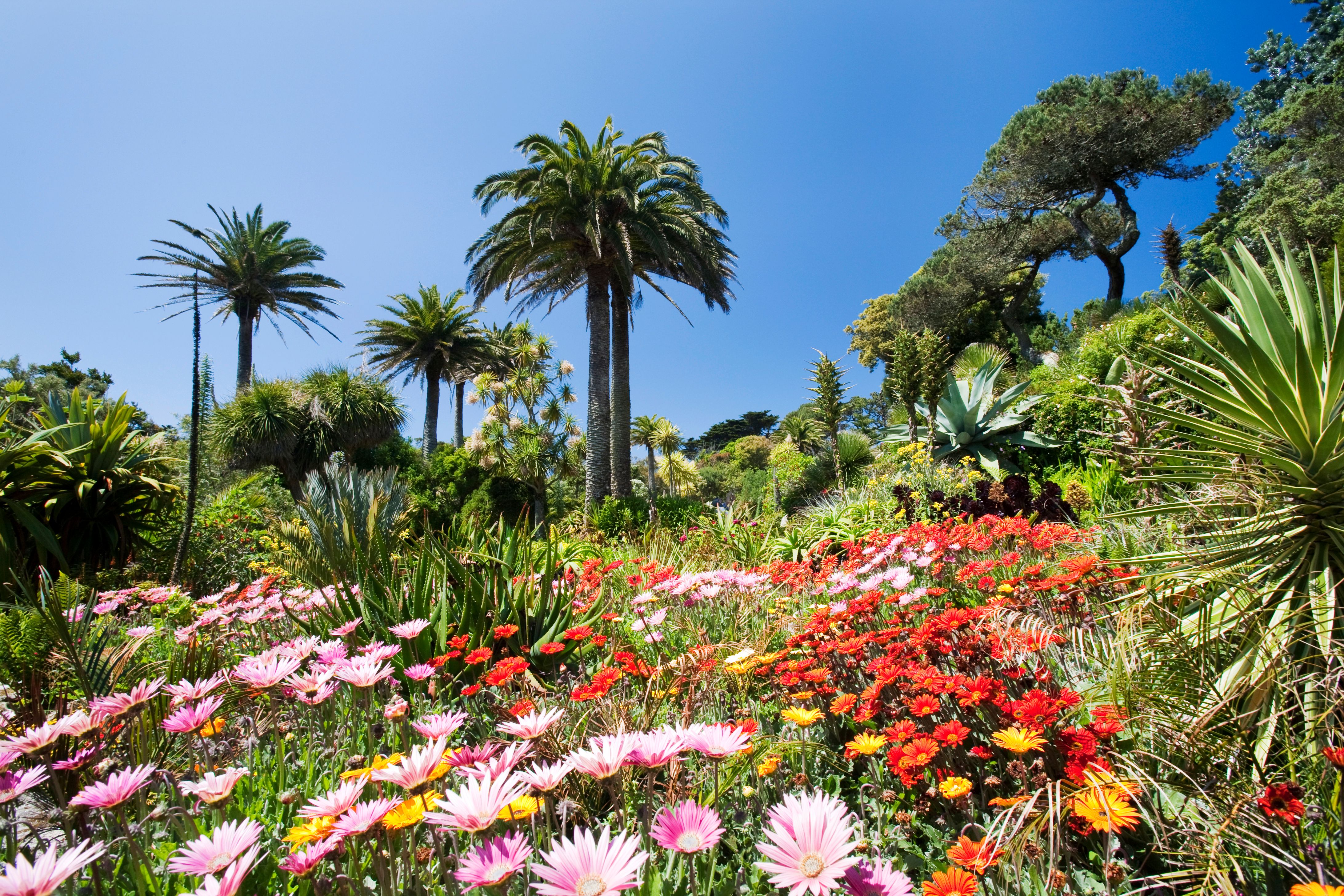
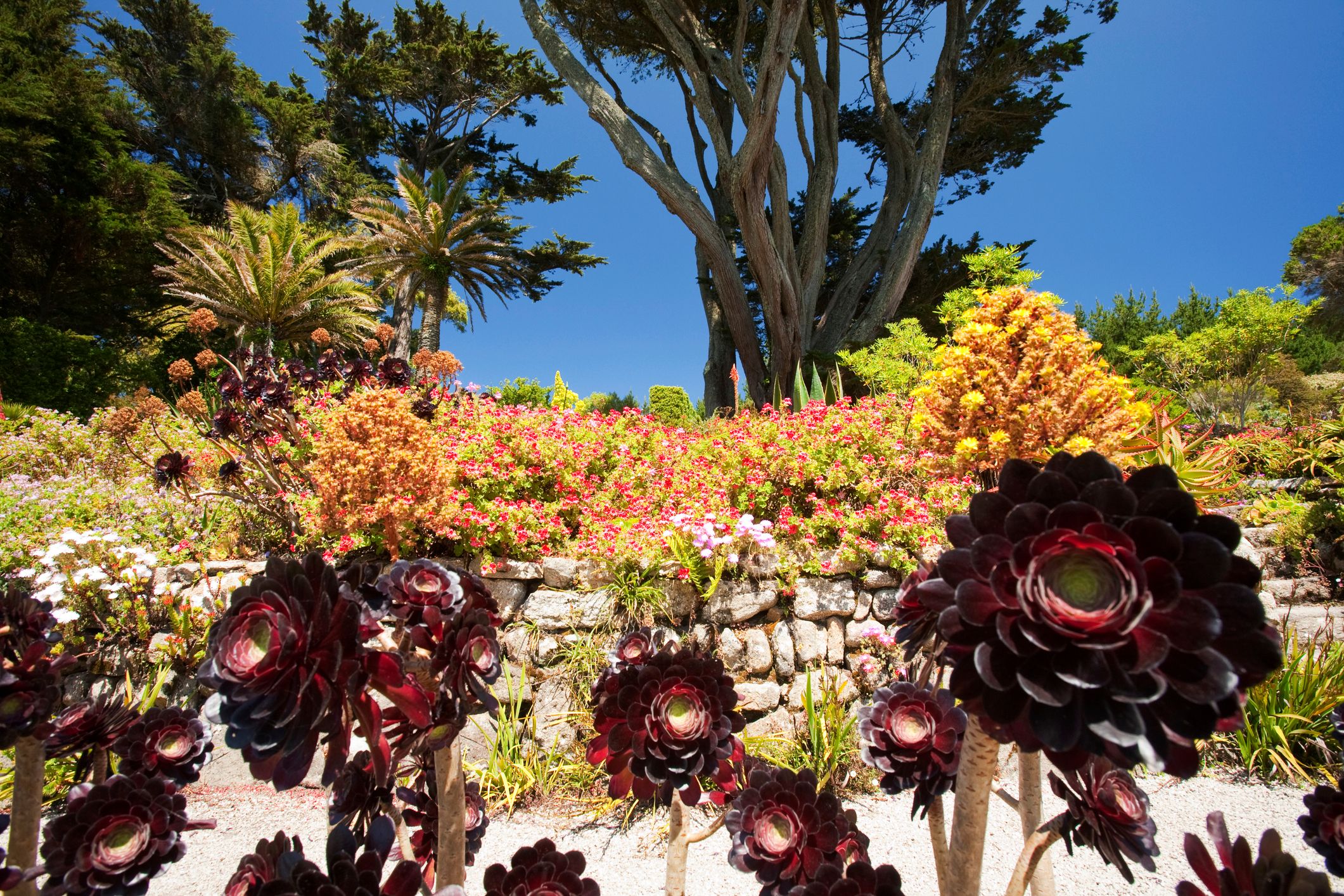
On some itineraries the ship will offer tenders not only to St Mary’s but also to Tresco. This is Scilly’s glossy island, known for its upscale cottages, smart pub and the Abbey Garden, an astonishing subtropical spread of some twenty thousand plant species, many of which would sulk and die on the mainland.
The garden is the star here. Terraces climb the slope around the ruins of a priory, planted with proteas, aeoniums and towering echiums that make you feel you have wandered into a cross between Madeira and a botanist’s fantasy sketchbook. The North Atlantic Drift keeps frosts at bay, so alien-looking species from South Africa, New Zealand and Latin America thrive in a way that feels faintly unfair to anyone who has ever lost a hydrangea to a cold snap.
Even if you skip the horticulture, Tresco’s paths lead to gentle beaches such as Pentle Bay, where the sand is pale, the water is chilly and the views to neighbouring islands remind you how compact this whole archipelago really is.
St Martin’s, Bryher and the wilder edges
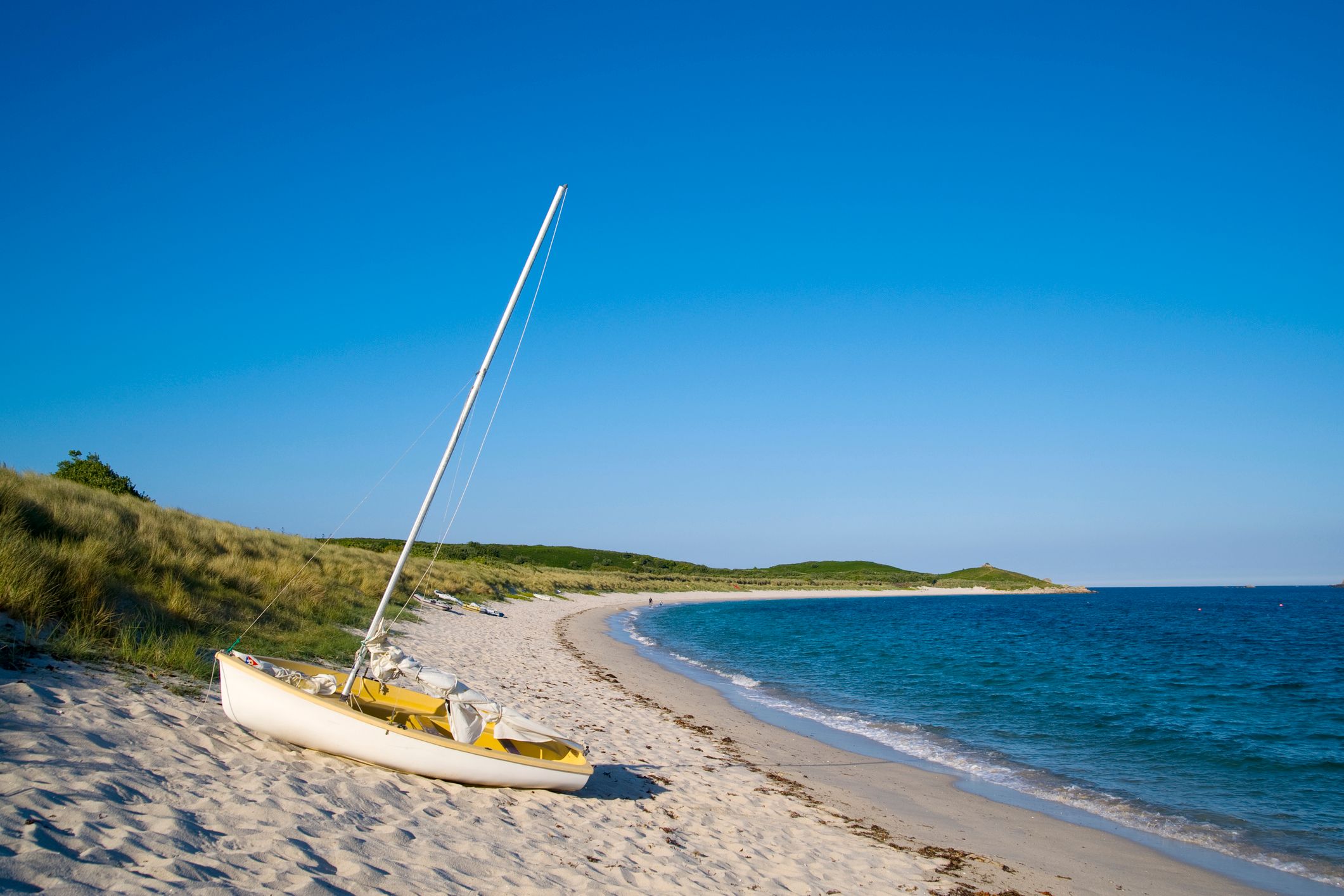
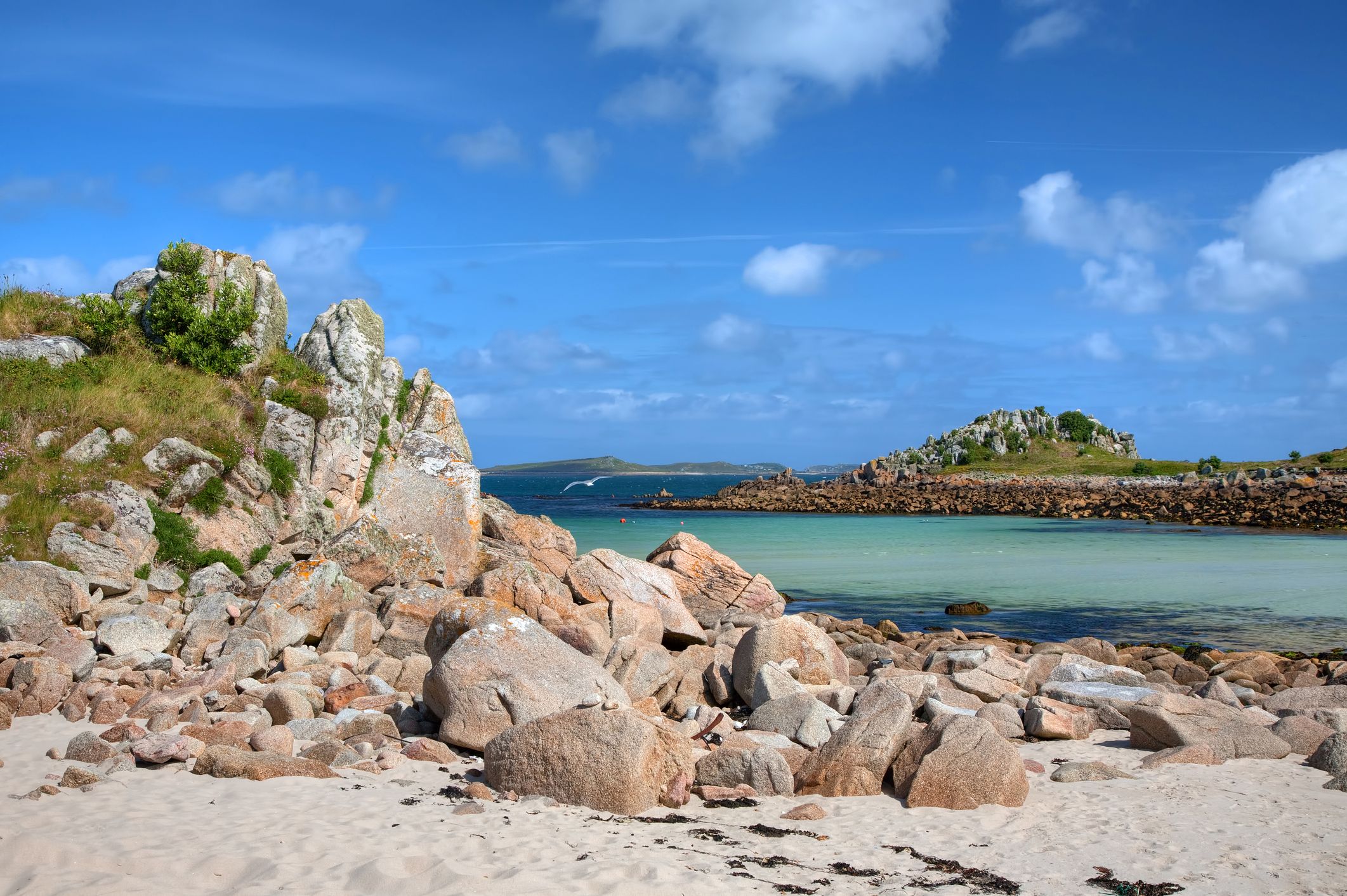
On independent stays, visitors hop local boats to explore the other inhabited islands. Cruise passengers sometimes get the same option if timings align, so it is worth knowing what you are looking at from the rail.
To the east, St Martin’s stretches out in a long curve of beaches that regularly crop up in “best in Britain” lists. Par Beach is the poster child, with dunes, clear shallows and a striped daymark on the hill behind that has been guiding sailors since the seventeenth century. There is a vineyard here, small and unpretentious, and on a warm afternoon the idea of tasting Scillonian wine while looking out over supposed-Caribbean sand is gloriously confusing.
To the west, Bryher faces the full force of the Atlantic. One side is all sheltered inlets and bobbing boats; the other is raw, wave-pounded granite. Stand near Hell Bay and you will see why so many shipwrecks stud the charts around these islands.
Even if your ship never tenders to these smaller islands, having a sense of their personalities makes scenic cruising feel richer. You are not just watching “some islands” slide by. You are watching the beach with the daymark, the hotel where people come to get away from everything, the headland where whales have been spotted on Christmas Eve.
When to go and what to expect
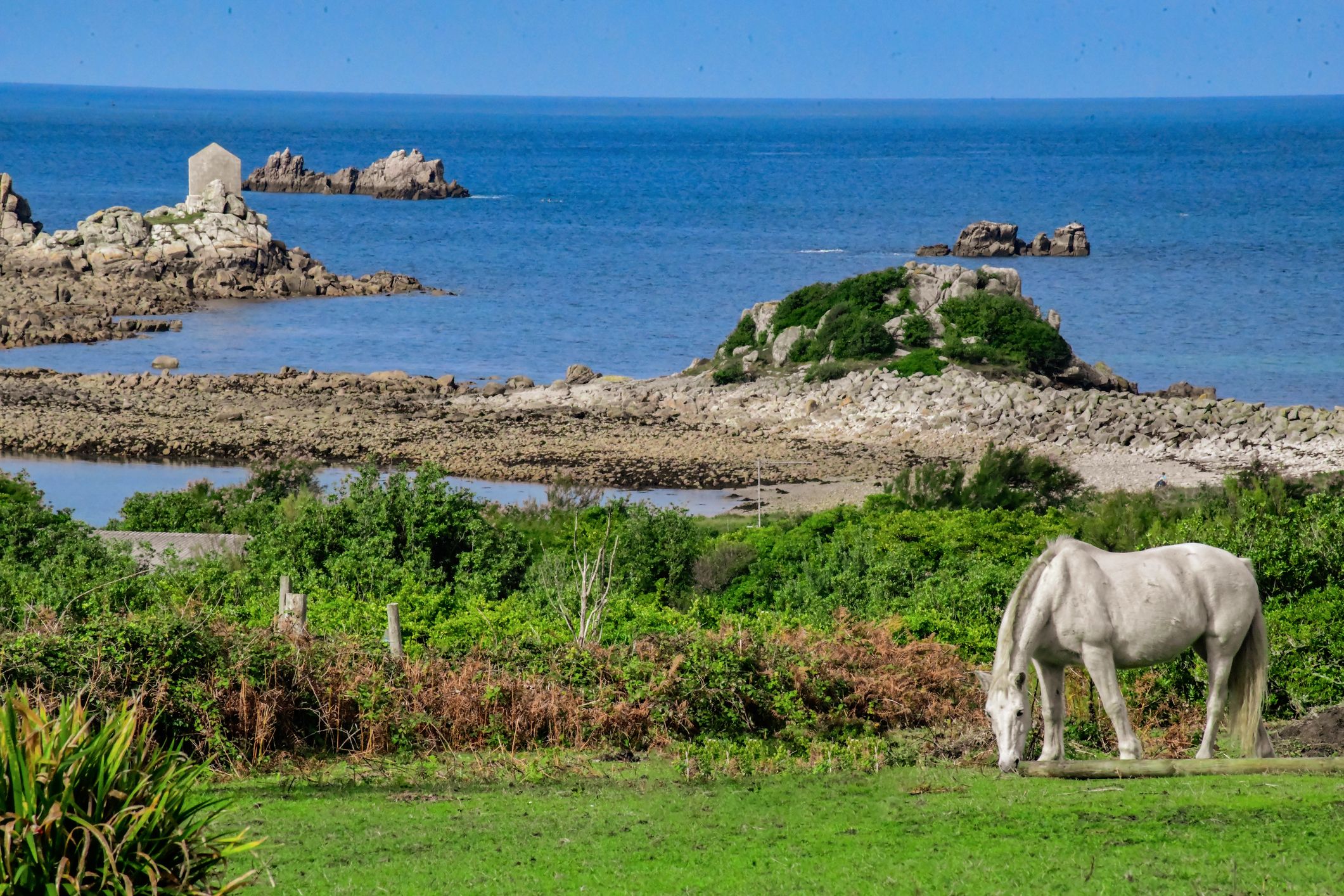
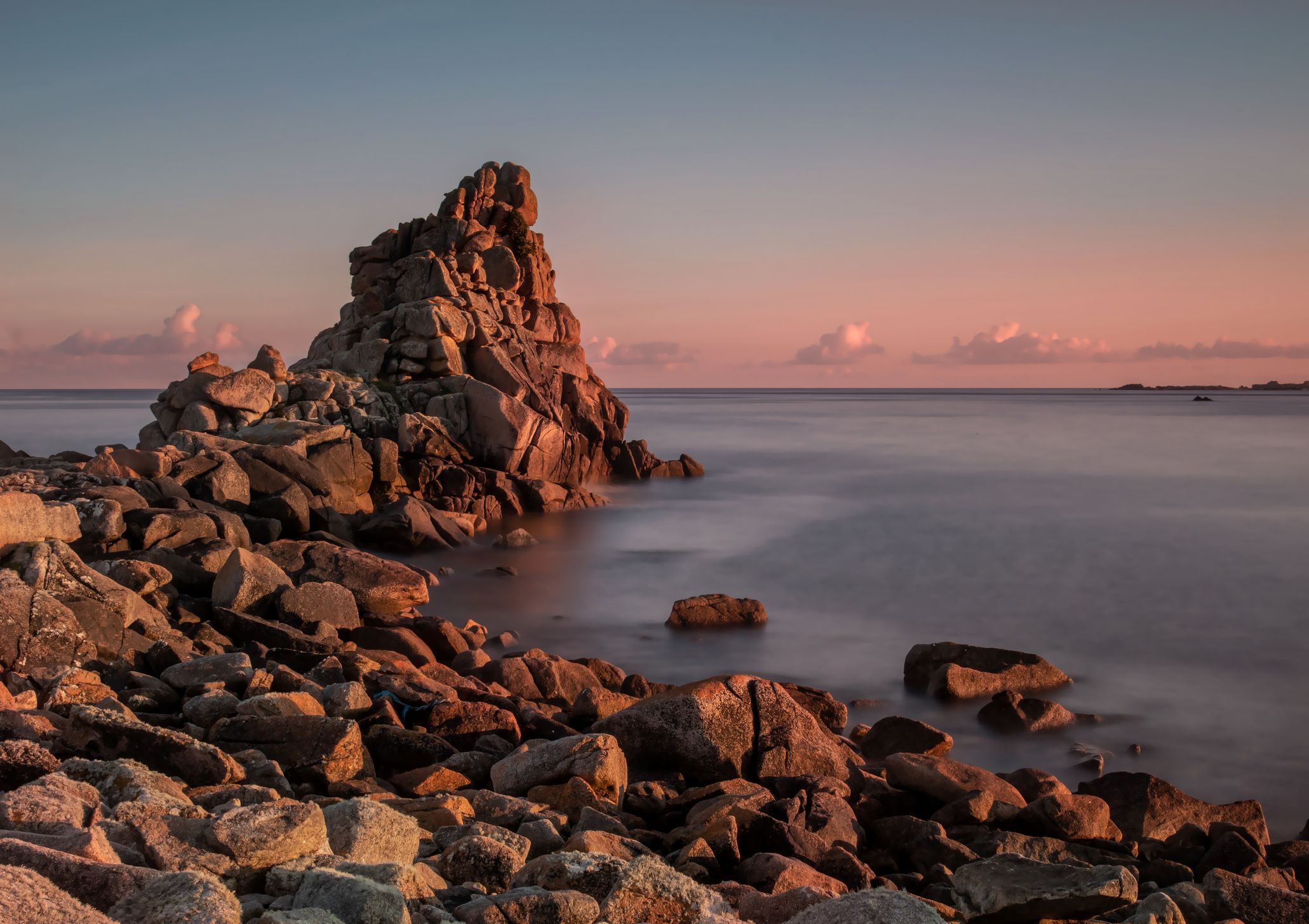
Part of Scilly’s appeal is that there is no bad season, only different versions of the same daydream. In spring, wildflowers stitch the cliffs and the islands feel freshly uncrumpled after winter. In high summer, sea temperatures peak in the high teens and the beaches look like a location scout’s moodboard, although you will be sharing them with holidaymakers and the odd family on bikes.
September can be glorious, with warm seas, softer light and slightly emptier paths. Winter brings storm drama and quieter harbours but also a higher chance that your ship will sail past rather than linger, because tenders cannot always run safely in rough seas.
Whatever the month, layers are your friend. The same short walk can involve blazing sun, sea fog, a chilly breeze and something that the locals will insist is “only a shower” despite evidence to the contrary. Proper shoes beat flip flops, even on beaches that look straight out of the Bahamas.
Why Scilly works so well by ship
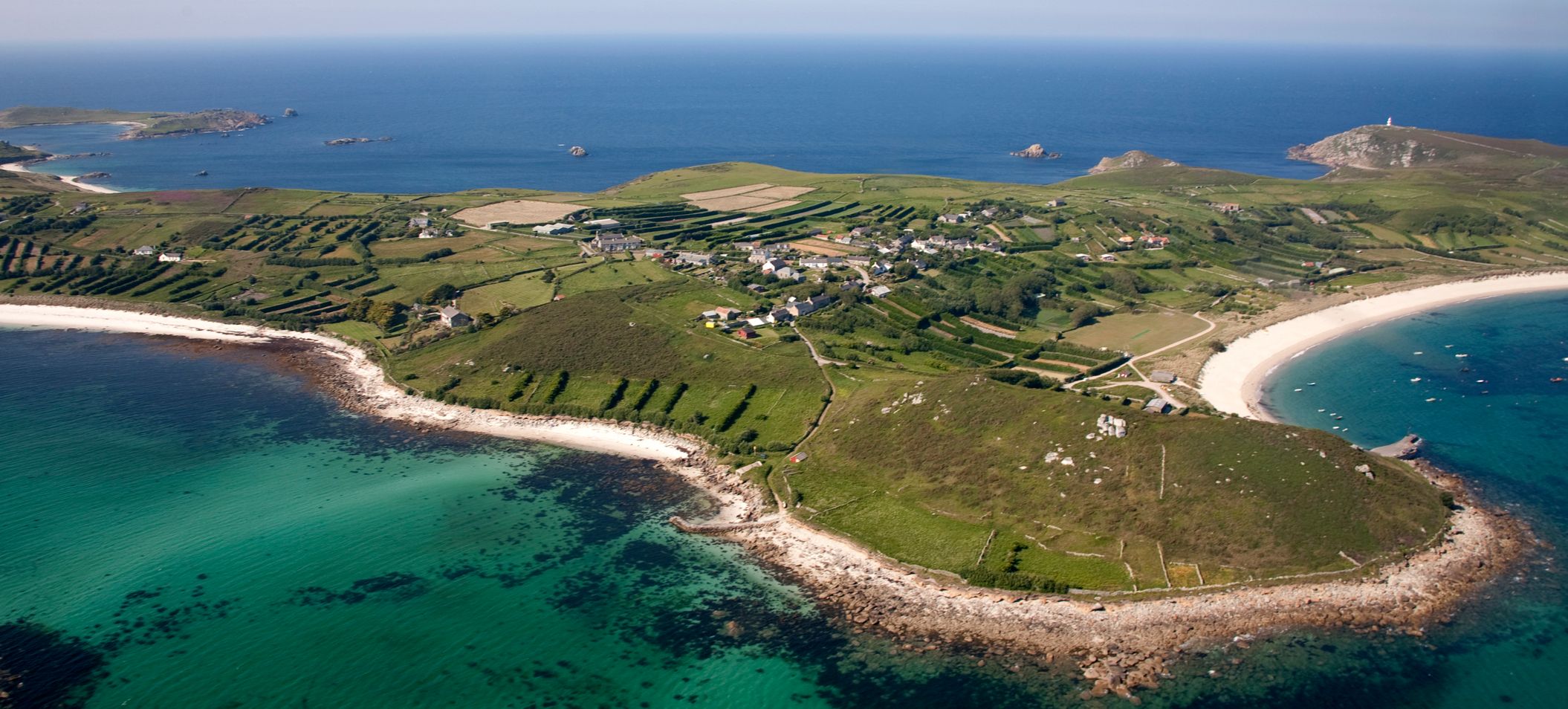
You can fly in on a tiny plane from Land’s End or endure the famously lively Scillonian ferry, but arriving by cruise ship has its own theatre. The view from the deck as you swing at anchor off St Mary’s is one of the finest in British cruising: the harbour wall, the toy-town houses of Hugh Town, the patchwork of fields and the white hooks of beaches in every direction.
Because ships usually call for a single day, the islands stay just the right side of busy. You get to dip into somewhere that feels unlike anywhere else in the UK and then sail away at sunset, watching the lighthouse blink you out towards open water.
That combination of other-worldly scenery and simple logistics is why Scilly features on such a wide range of British Isles routes. One week it might be a stop for a traditional coastal voyage, the next it might be part of an artsy small-ship itinerary that also calls into Scottish islands and Irish ports. In every case, the Isles of Scilly play the same role. They are the moment passengers look around and think: “Hang on. I did not know Britain could look like this.”