Albania has spent several summers being introduced as Europe’s very last secret, (a difficult status to maintain when half of social media appears to be filming the same three sunbeds in Ksamil).
Yet the country still feels unfamiliar to many cruise passengers. Sarandë is appearing on a growing number of Mediterranean itineraries, including sailings from Azamara, Seabourn, Swan Hellenic and Princess, but it still remains a port people are more likely to research the night before arrival than six months before booking.
What awaits is neither an undiscovered fishing village nor a cheaper, conveniently repackaged version of Greece. Sarandë is a busy modern resort and ferry port, backed by steep hills and ranks of hotels, with Corfu sitting clearly across the water. Its great archaeological site lies outside town, its most celebrated beaches have become rather sociable, and the quieter Riviera stretches north along a coast that requires more time than most ships provide.
It’s also on the Ionian Sea. Albania’s Adriatic coastline begins farther north, although cruise itineraries often use “Adriatic” as a loose umbrella for voyages linking Italy, Croatia, Montenegro, Albania and Greece. The water outside Sarandë is emphatically Ionian, should anyone at dinner attempt a geographical debate.
Arriving at Sarandë cruise port
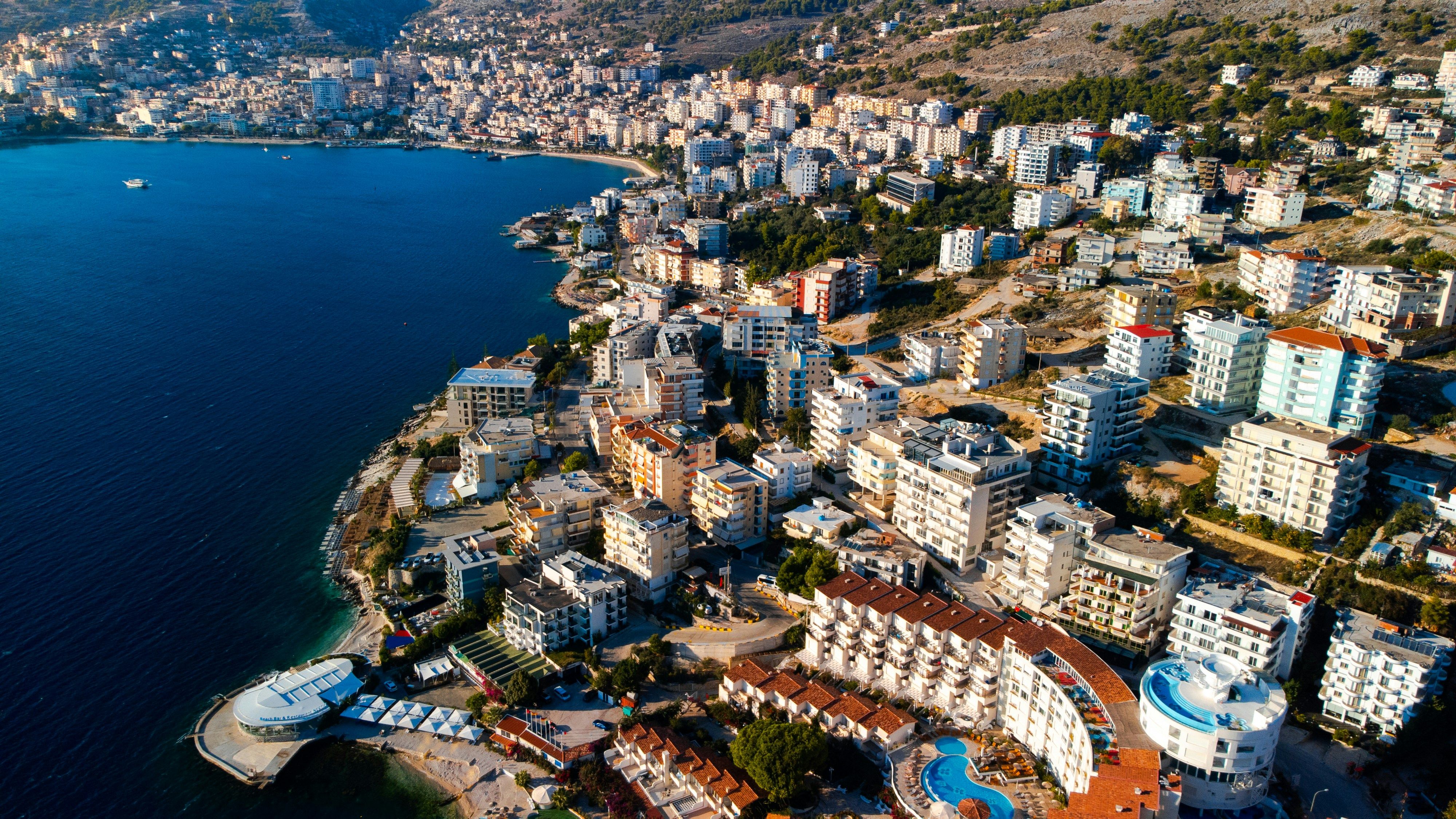
Sarandë curves around a natural harbour opposite Corfu. Arrival arrangements depend on the vessel: smaller ships may use the port, while larger ones commonly anchor in the bay and carry passengers ashore by tender. The port expected 28 cruise calls during 2026, reflecting its growing place on eastern Mediterranean routes.
The good news is that passengers arrive beside the central waterfront rather than in an industrial port several optimistic kilometres away. Once through the formalities, the promenade, restaurants and town centre are immediately accessible on foot.
Check the ship’s information before deciding how much independent travel to attempt. A tender journey reduces the usable day, particularly when several hundred people have simultaneously concluded that they’d prefer the first boat ashore. Return queues also need to be treated as part of the itinerary rather than an unfortunate surprise at the end of it.
What Sarandë is really like
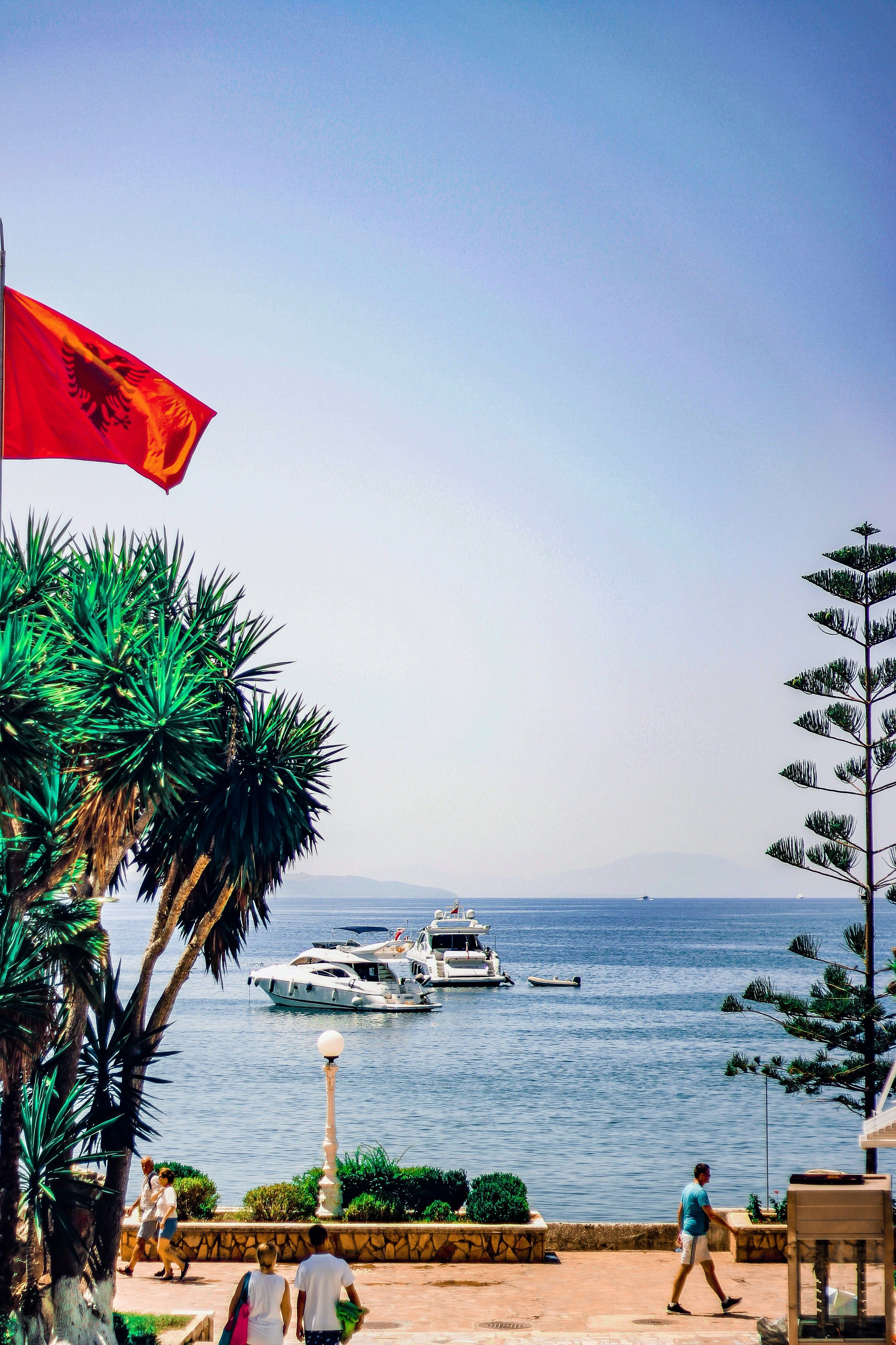
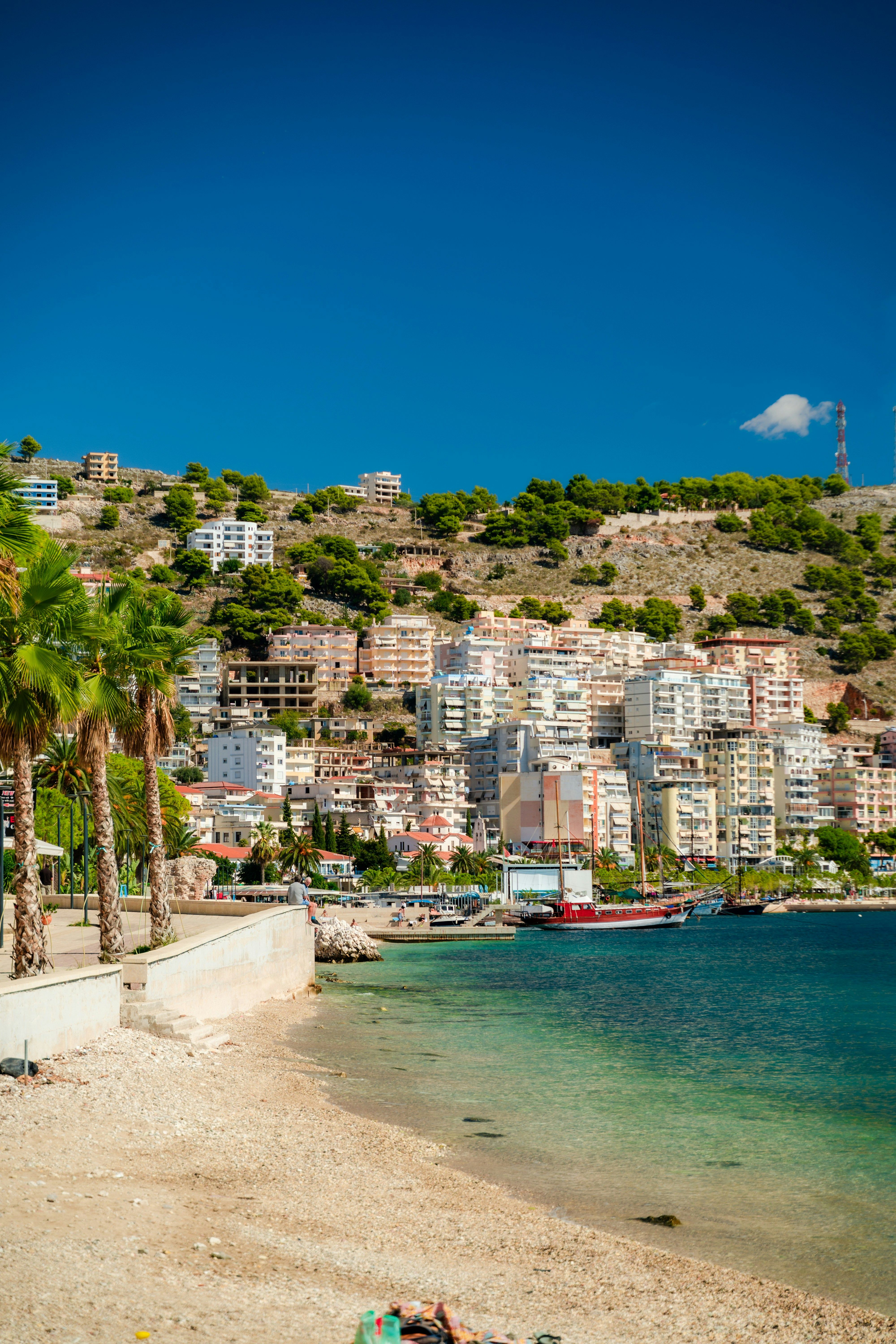
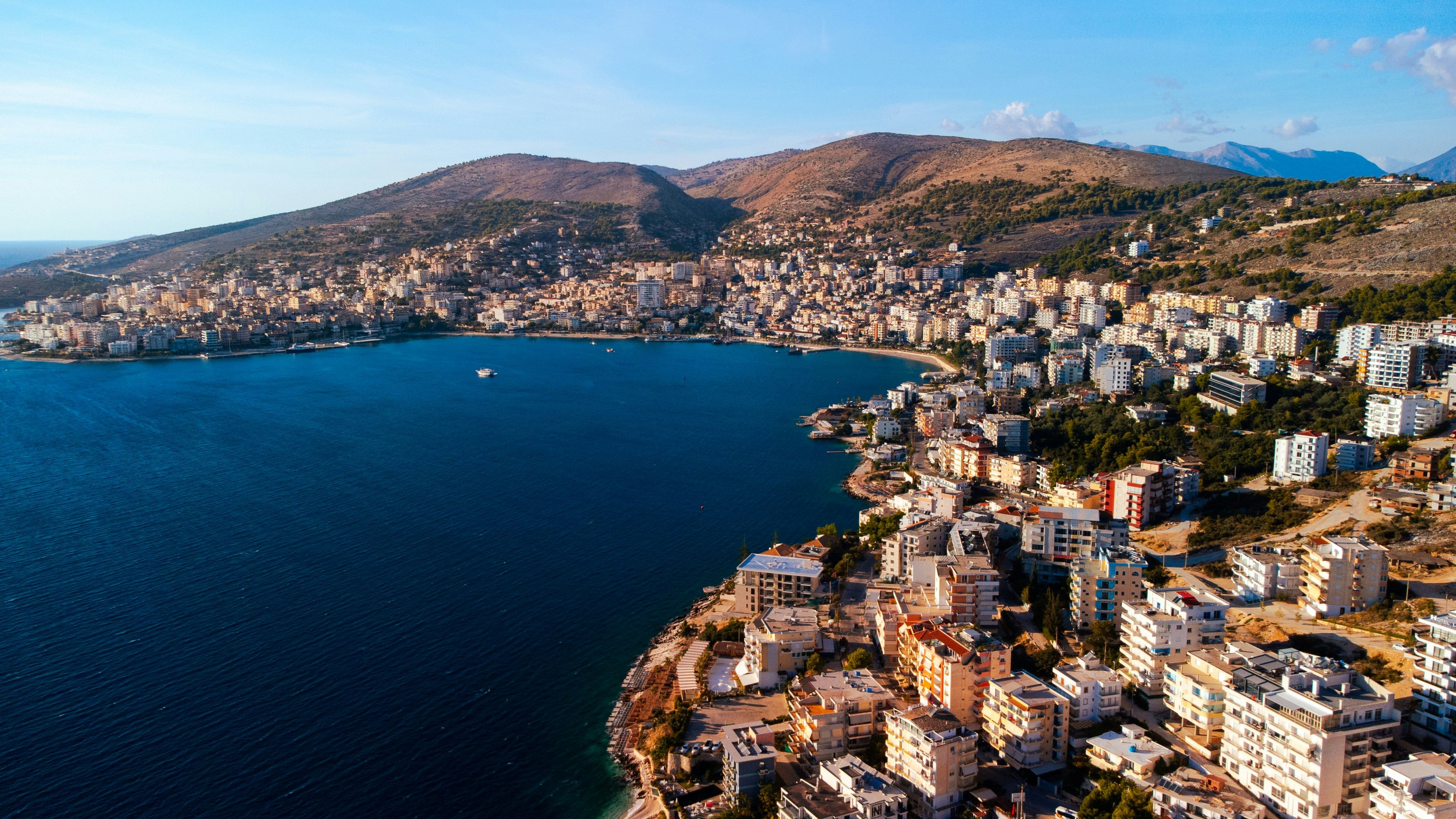
Sarandë doesn’t have a preserved old town comparable with Corfu, Dubrovnik or Kotor. Its modern identity is that of a lively seaside city built along the hills above the bay, with apartments, hotels, beach bars and restaurants spreading around a long waterfront.
The promenade is its easiest pleasure. It follows the bay past palms, swimming areas, cafés and boats travelling between Albania and Corfu. The city’s public spaces and pedestrian routes have been improved through recent coastal infrastructure projects, part of a wider effort to make Sarandë more comfortable for residents and visitors and extend its appeal beyond the peak summer season.
There are older fragments among the new buildings. Sarandë developed over the ancient settlement of Onchesmos, and the centre contains the remains of a fifth-century synagogue later converted into a Christian basilica. Sections of mosaic survive, although the site requires rather more imagination than Butrint and considerably less of your day.
Above town stands the ruined Monastery of the Forty Saints, from which Sarandë takes its modern name. Lëkurës Castle occupies another hilltop, offering views across the bay, Corfu and the surrounding coast. The castle is best reached by taxi rather than through an impromptu uphill walk undertaken after a substantial lunch.
Sarandë works well for a gentle day involving the promenade, a swim, one archaeological stop and lunch. Coastal menus lean towards grilled fish, seafood, fish soup and wild-herb byrek, while mussels cultivated around Lake Butrint are another regional speciality. Nobody will think less of you for making lunch the principal cultural activity.
Butrint is the essential excursion from Sarandë
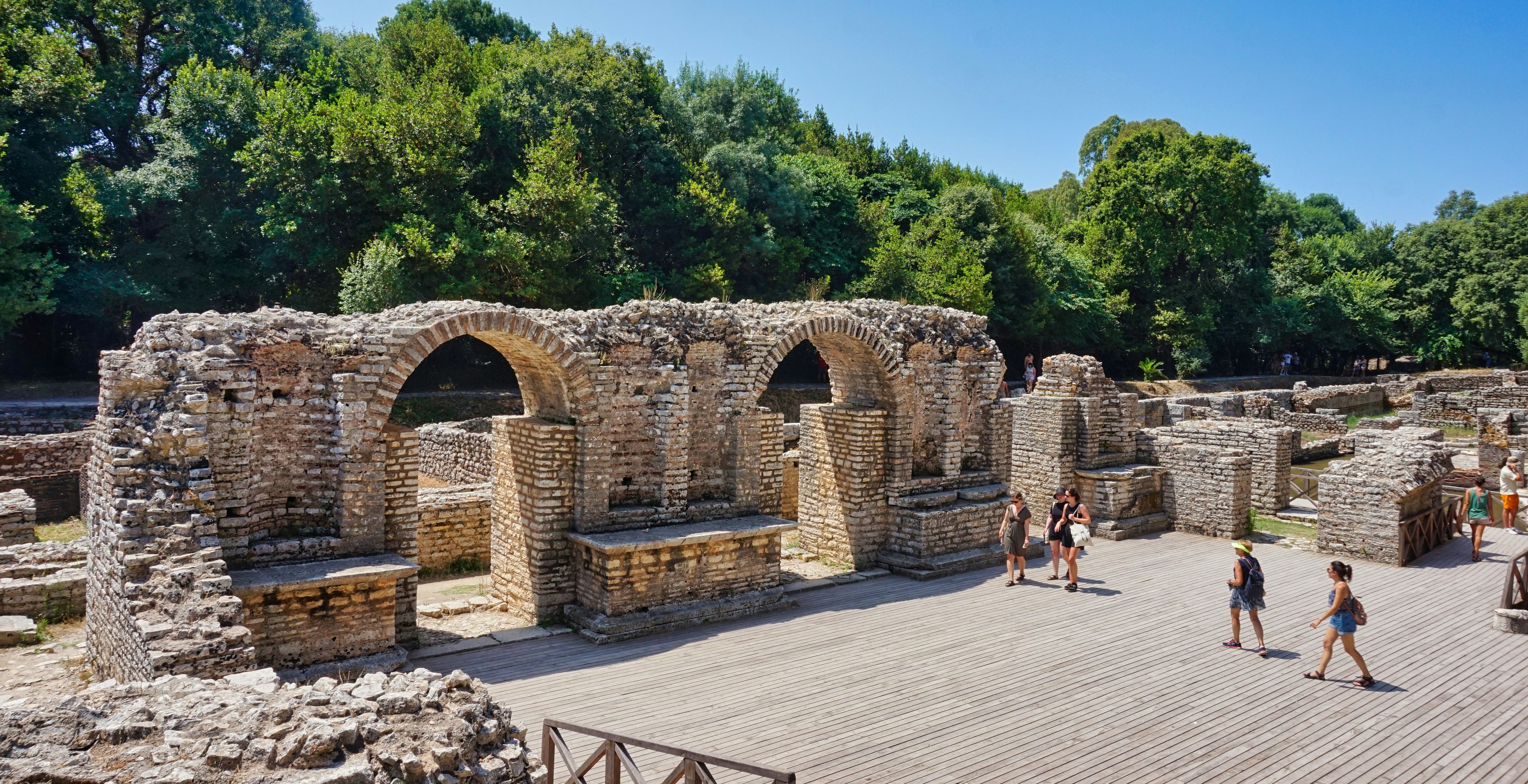
For most first-time visitors, Butrint is the reason to leave town.
The UNESCO World Heritage Site lies around 17 to 20 kilometres south of Sarandë, close to the border with Greece. A direct bus links the city with the archaeological park in roughly 30 minutes, travelling through Ksamil, while taxis, private guides and ship excursions offer more control over the return time.
Butrint’s appeal lies partly in the extraordinary number of civilisations occupying the same patch of ground. It began as an ancient settlement and Greek colony, became a Roman city and early Christian bishopric, and was later reshaped under Byzantine, Angevin and Venetian rule. Ottoman pressure led to further changes to its defensive system, while a fortress associated with Ali Pasha was added near the Vivari Channel in the early 19th century.
The remains sit among woodland, wetlands and water rather than within a modern city. Paths connect the Greek theatre, Roman baths, city walls, basilica and baptistery, whose mosaic floor is normally protected to preserve it. A Venetian castle above the site now houses a small museum and provides a view over the channel and surrounding landscape.
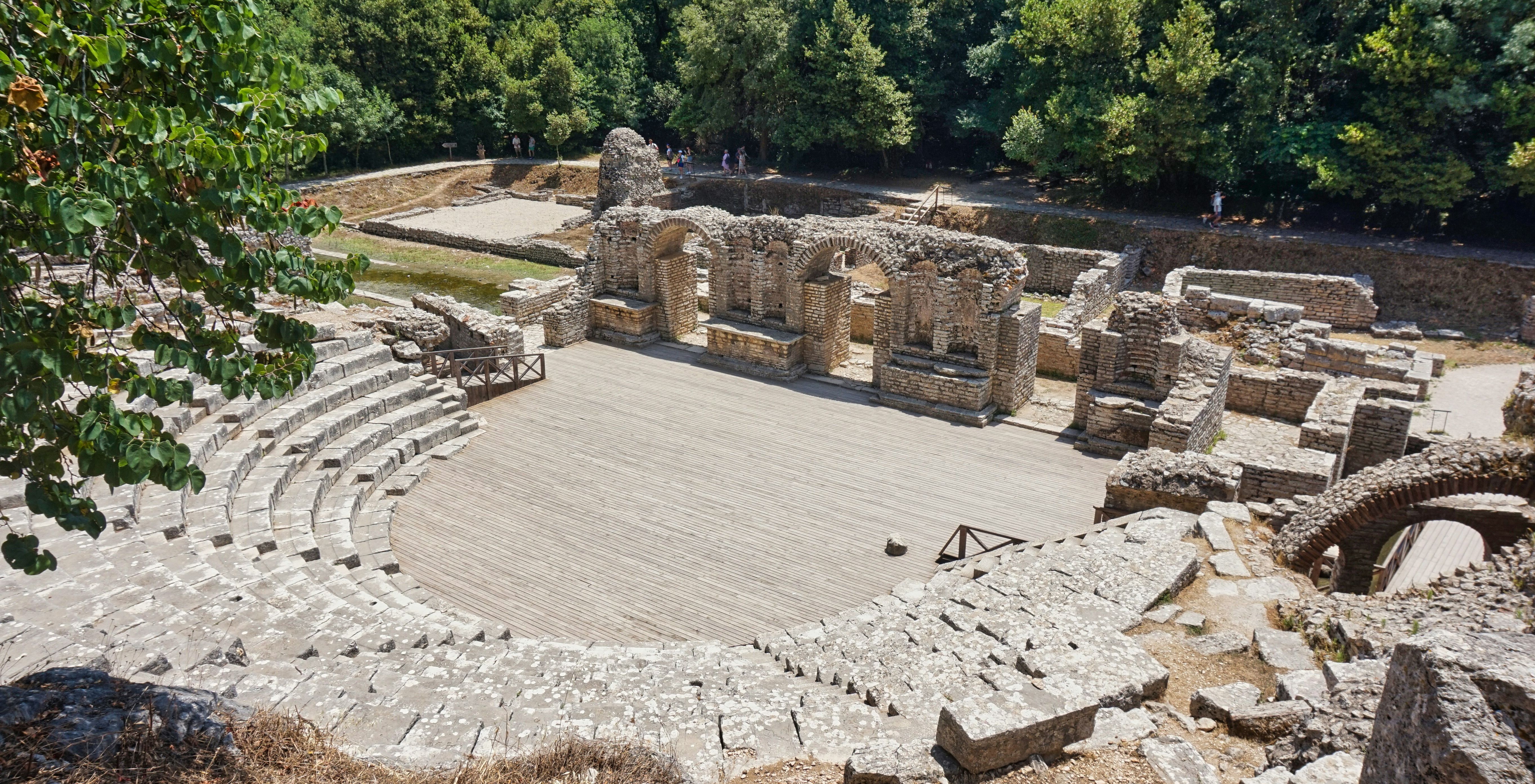
Butrint avoids the sense of being an archaeological theme park. Trees push between the monuments, water appears beyond the walls and the whole place retains the slight melancholy of a city slowly surrendered to marsh and forest. UNESCO describes it as a cultural landscape that escaped the aggressive development suffered by many other historic Mediterranean settings.
Allow at least two hours inside. The site is compact enough to walk, but speeding from theatre to basilica rather defeats the benefit of visiting somewhere that has taken several thousand years to assemble.
A ship excursion offers reassurance when the call is short or tendering is involved. Independent travellers can use the direct bus, but should leave a generous return margin and confirm that day’s timetable locally. A photograph of your ship departing towards Greece would be visually powerful but difficult to monetise.
Can you combine Butrint and Ksamil?
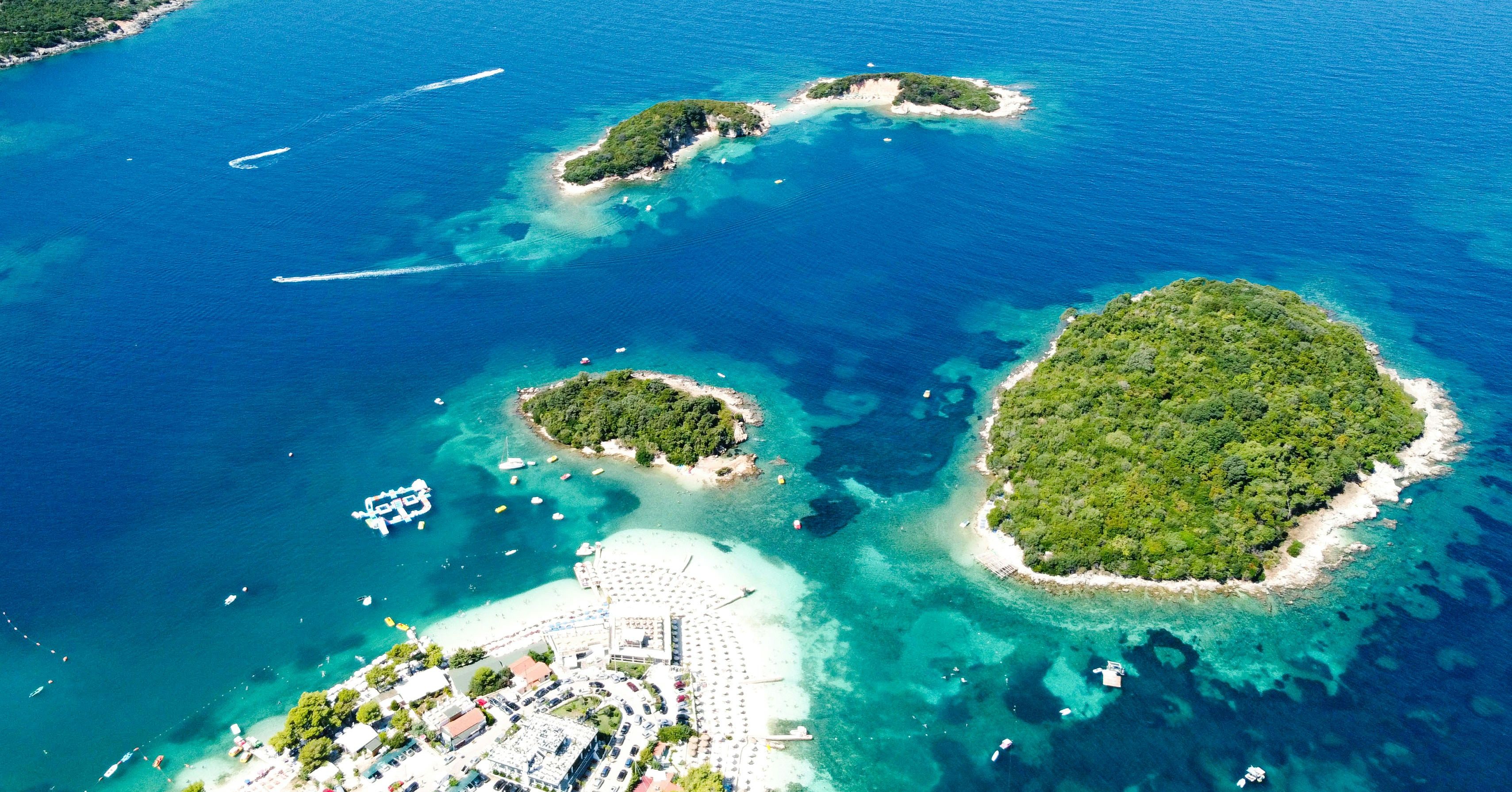
Ksamil lies between Sarandë and Butrint, making the two relatively easy to combine by road. Its small beaches face several green islands set in bright blue water, producing the images that have driven much of Albania’s recent tourism boom. The direct bus between Sarandë and Butrint passes through the settlement.
The water and islands are as attractive as the photographs suggest. The implied silence may be less reliable.
Ksamil has developed rapidly into one of Albania’s busiest coastal resorts, with beach clubs, restaurants, loungers and music filling much of the waterfront during high summer. Recent coverage of Albania’s tourism growth has highlighted both the coast’s appeal and the strain caused by fast construction, crowding and uneven infrastructure.
That doesn’t make Ksamil a bad stop. It means expectations should be adjusted from “deserted Balkan paradise” to “popular Mediterranean beach resort with exceptionally clear water”.
On a long port day, visit Butrint first and stop in Ksamil afterwards for lunch or a swim. The archaeological site is better before the heat and excursion groups build, while a beach is one of the few places improved by arriving in need of a sit-down.
Trying to inspect every ruin, visit several beaches, take a boat to an island and eat a leisurely seafood lunch requires a generously timed call. Otherwise, choose one beach and resist turning relaxation into a competitive scheduling exercise.
The Blue Eye and Gjirokastër from Sarandë
Passengers less interested in beaches can travel inland towards the Blue Eye and Gjirokastër.
The Blue Eye is a karst spring near the village of Muzinë, around 18 kilometres from Sarandë. Water rises from a deep blue centre surrounded by vivid green vegetation, creating the appearance that gave the spring its name. Its measured depth exceeds 45 metres, although the full underground system is deeper and more complex than the view from the platform suggests.
It’s beautiful, but the Blue Eye is fundamentally one highly photogenic spring. It works best as part of a longer inland excursion rather than the sole reason to spend much of a cruise call in a vehicle.
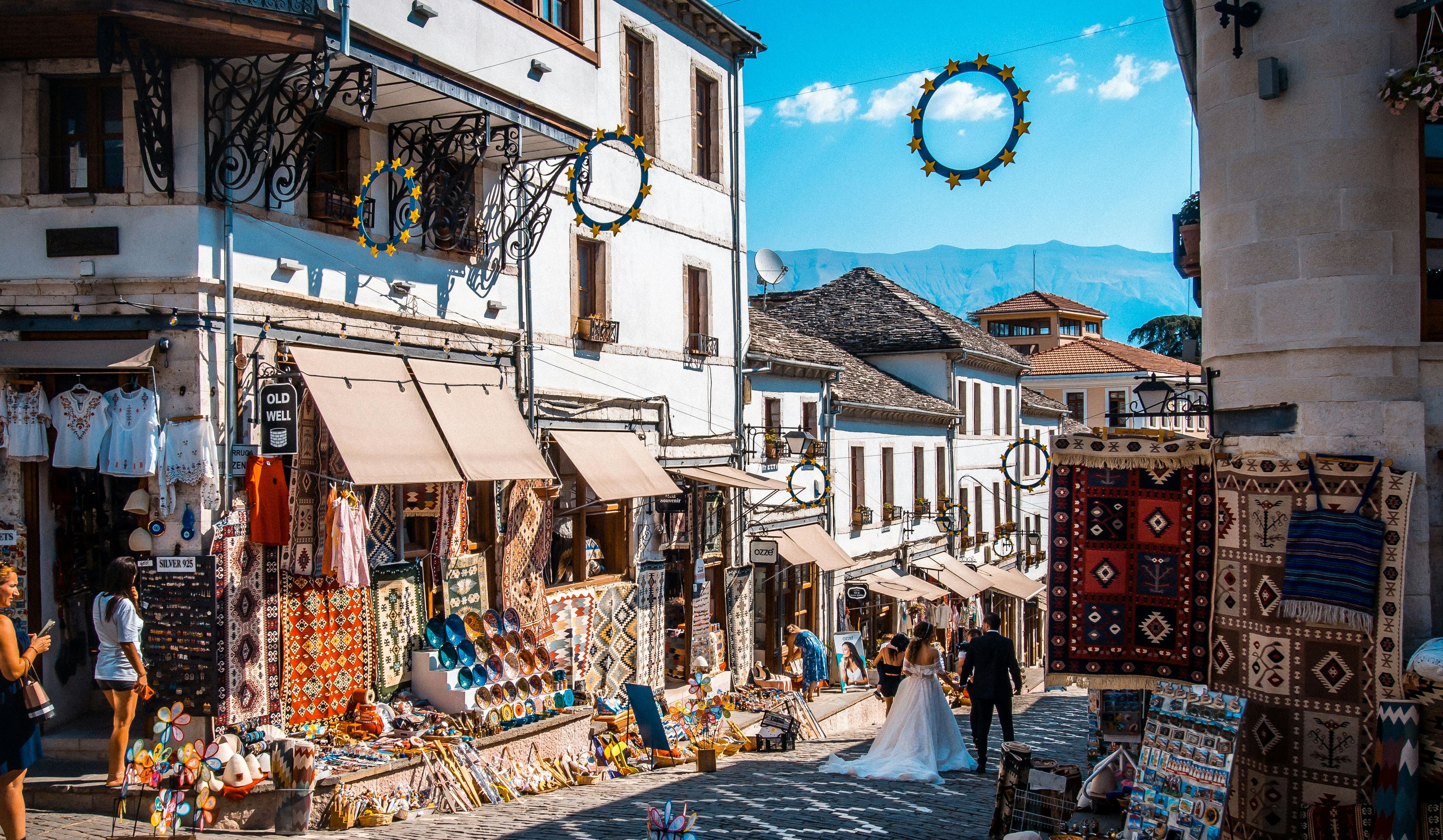
Farther on, Gjirokastër provides the clearest introduction to southern Albania’s Ottoman heritage. Its UNESCO-listed centre climbs steeply beneath a fortress, with stone houses, slate roofs and narrow streets shaped by the city’s position in the Drino Valley. UNESCO recognises Gjirokastër as a rare surviving example of an Ottoman-period town.
A combined Blue Eye and Gjirokastër excursion can fill a full day. It offers a strong alternative to Butrint, particularly for passengers who prefer inhabited historic towns to archaeological sites, but it shouldn’t be casually added to Butrint and Ksamil.
Attempting all four in one ordinary port call will produce an impressively comprehensive knowledge of the minibus interior.
Practical advice for a Sarandë cruise call
Albania’s official currency is the lek. Carrying some local cash is useful for buses and smaller purchases, even where euros or cards may be accepted. Check the price and currency before agreeing to a taxi journey rather than discovering that both parties have been performing different pieces of mental arithmetic.
Albania isn’t part of the Schengen Area. British citizens can currently visit visa-free for up to 90 days in a 180-day period, and passports must remain valid for at least three months beyond the planned departure from Albania. Cruise lines handle port formalities differently, so follow the ship’s instructions about whether you need to carry your passport ashore.
For Butrint, independent travel is realistic because there’s a direct bus. For the Blue Eye, Gjirokastër or the Riviera villages, pre-arranged transport is safer within a fixed port day.
Summer brings heat and crowds, especially at Butrint and Ksamil. Visit the archaeological site early where possible, carry water and leave beach time until later. The FCDO advises visitors not to drink Albanian tap water, so bring bottled water rather than conducting a personal trial during an eight-hour call.
How to spend one day in Sarandë
For a first visit, the strongest plan is Butrint followed by lunch and a walk along Sarandë’s waterfront. It combines the region’s most important historical site with enough time to see the city where the ship has brought you.
With a longer call in summer, add a short stop in Ksamil for a swim. Those more interested in living history and mountain scenery should choose Gjirokastër and the Blue Eye instead of Butrint, rather than trying to force southern Albania into one increasingly tense day.
Passengers staying in town can visit the synagogue remains, take a taxi to Lëkurës Castle and spend the rest of the call beside the water. It’s a modest itinerary, but considerably more enjoyable than returning to the ship with four attraction tickets, no lunch and a facial expression suggesting that Albania personally set the traffic lights.
Sarandë won’t offer the manicured coherence of Dubrovnik or the immediate beauty of Corfu Town. Its pleasures are more scattered: an archaeological city in the woods, mussels from a nearby lagoon, a castle above a modern bay and a coast that still changes character from one headland to the next.
Albania’s secret is plainly out. It hasn’t yet settled on what comes afterwards.