
There's something about being on holiday that seems to magnify everything.
Rows you thought you'd left at home suddenly feel impossible to avoid. Minor personality quirks become full-blown frustrations. One of you insists on getting up at dawn for sightseeing while the other would happily spend six hours beside the pool with a paperback and a second cocktail. Throw in a family, an all-inclusive buffet and the expectation that everyone should be having "the best week ever", and you've got the makings of a very good story.
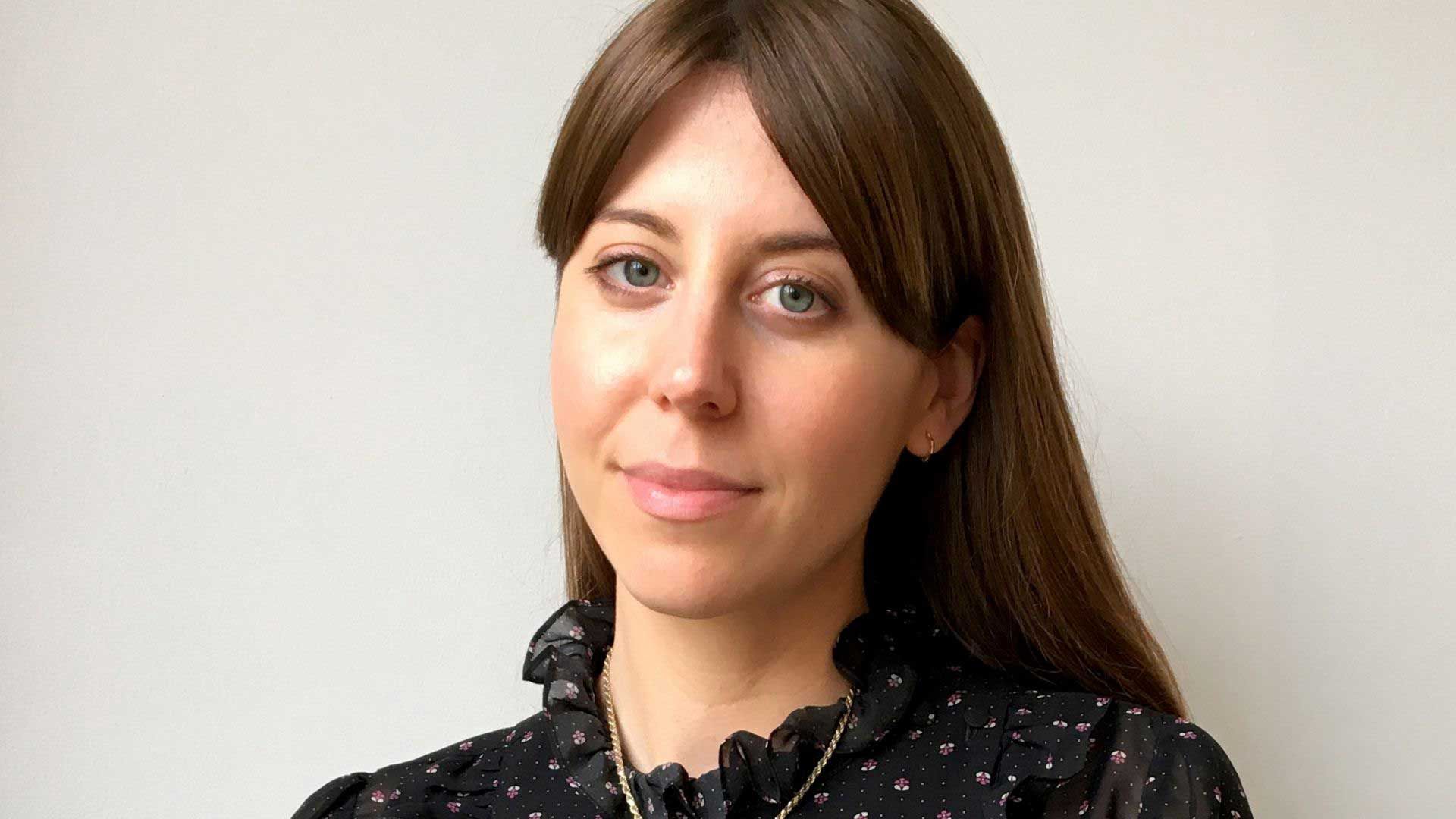
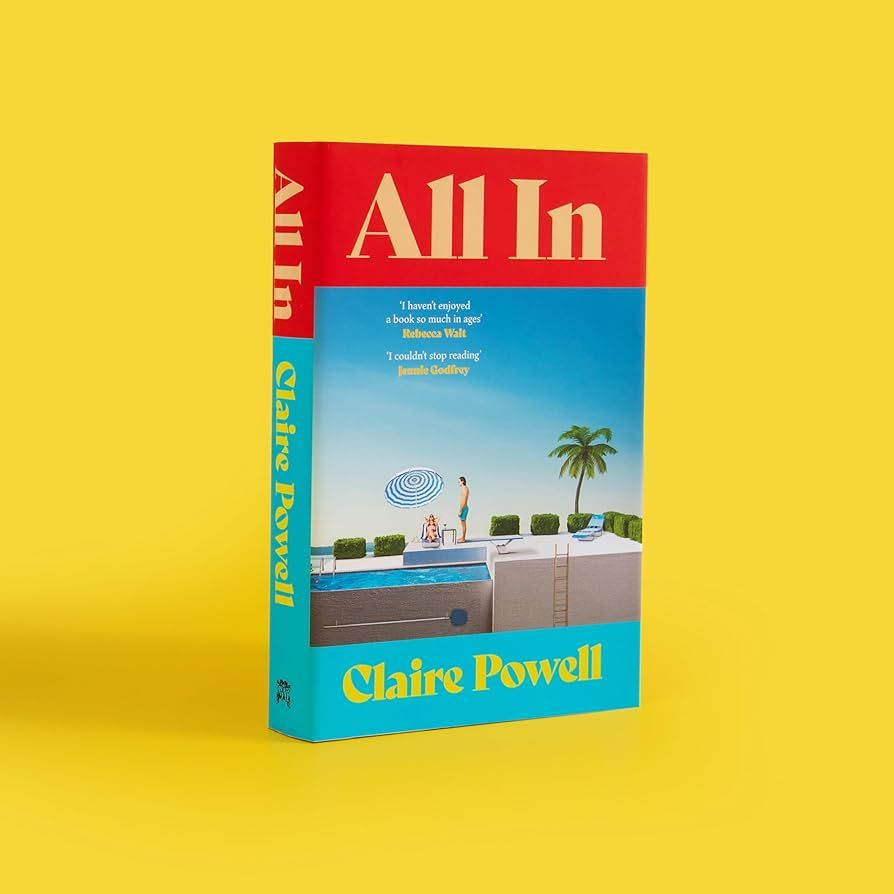
That's exactly the premise behind All In, Claire Powell's warm, funny and emotionally astute new novel. Set over a long weekend at a Mediterranean resort, it follows Jo and Dave, a couple trying to navigate grief, disappointment and family dynamics while surrounded by sunshine, cocktails and people determined to enjoy themselves.
We caught up with Claire to talk about why holidays are such fertile ground for fiction, balancing humour with heartbreak and what Jo and Dave's ideal trip might actually have looked like...
Book at a glance
All In
Claire Powell's funny, sharply observed novel follows one family, one Mediterranean all-inclusive holiday and a marriage pushed to breaking point by sunshine, cocktails and years of things left unsaid.
Start reading All In nowAvailable in both Kindle edition and hardback.
If you've ever returned from holiday wondering whether everyone secretly needed another holiday afterwards, this one's for you.
The holiday novel is one of my favourite tropes in fiction. So many things appealed – the time constraint, the intensity of experience, taking characters out of the mundane and into somewhere luxurious. Jo and Dave, the protagonists in All In are stuck in a rut, and at a crossroads in their relationship after years of failed fertility treatment. I knew that a holiday would shake them up and make them behave in unexpected ways. I felt I was writing a kind of very realistic romcom where the question isn’t ‘will they or won’t they get together?’ but ‘will they or won’t they stay together?’
I think any situation where there’s an expectation to ‘have a good time’ can be fraught with tension. We can’t help it! We want to be our best selves – we’ve spent so much money and looked forward to it for ages – but the pressure can be overwhelming, and with a few drinks down you (or more than a few at an all-inclusive!) feelings and resentments can quickly rise to the surface.
I’m always interested in the conflict between our inner lives and how we choose to present ourselves. In a fabulous all-inclusive hotel there’s a certain pressure to ‘perform’ – to look the part, join in with entertainment, keep up appearances. I wanted to write a novel about a marriage in crisis, but the hotel setting gave me the opportunity to relieve some of that bleakness and make it entertaining and fun.
How many of us know how to verbalise or communicate things that have caused us pain? I write characters that I know, and I suppose there are parts of myself in them too. It would be great to be emotionally mature and articulate enough to speak openly about everything, but (perhaps a British thing?!) I certainly don’t find it easy. As an author what I enjoy is playing with the dichotomy between a character’s thoughts and feelings and the way they behave.
It’s a constant balance that I love working with. But I also see it as making the novel real. Life is both funny and sad. In a way it’s like music. I never want my novels to feel like one note throughout. If I’ve just written a particularly heavy or emotional scene, I’ll be conscious of adding some levity next.
What interests me is people trying their best but getting it wrong. In this instance, Teddy is the wealthy and successful older brother who has paid for the holiday. But while this is generous, he hasn’t considered that it’s also a power move, and that perhaps it isn’t the kind of holiday his family members want to go on. His father Alan is more interested in National Trust excursions and historical ruins. So immediately we have a sense of tension because one character doesn’t really want to be there, and the other character feels his outlandish gesture is not appreciated. (Though I should add that Alan does end up having an unexpectedly good time!)
In a much earlier draft the novel was only going to be from Jo’s perspective, and I thought it would be about her leaving Dave and having the confidence to be single and alone! But then I decided to go into Dave’s head and as soon as I did that (the novel is told from both Jo and Dave’s perspectives) I couldn’t help but feel sympathy for him. Again, he’s a character who has tried his best but got it very wrong. As I was writing the book I was really rooting for the couple and while I wasn’t sure if they’d manage to stay together or not, that question – how does love stay afloat? – became the engine of the book.
The perfect holiday read has to be something you keep wanting to return to. We all go away with the intention of reading an entire book (perhaps more than one!) so I want something that I can’t wait to get back to. When I was writing All In, I was very conscious of this. I really wanted to write something that was character-driven but was also filled with tension – a literary page-turner.
Both All In and my debut novel At the Table are character-driven stories – they’re about relationships and families and very ‘ordinary’ problems. And of course ordinary lives are full of meaning. It’s what many of my favourite authors, including Elizabeth Strout and Anne Tyler, do so well. And I think what I’m good at is creating characters that feel very real, as though you know these people. It’s not high drama or shocking stories. So if while reading my novels you look up and wonder what’s going on in someone else’s mind, I hope that (instead of suspicion!) it generates empathy.
That’s a really good question! Jo and Dave haven’t had children, but they have a beloved greyhound called Nancy. I think they’d have a wonderful time if they were able to escape London and do a road trip either to the south-west of England, the Lake District or Norfolk! They’d stay in pet-friendly cottages and do long beach walks, stop for pub lunches and afternoon pints and browse small villages and local towns. I really think that would make them happy.
If you've ever come back from holiday feeling as though you know your travelling companions just a little better than when you left, All In will probably strike a chord.
Powell captures something many of us recognise: holidays don't change who we are, they simply remove enough of everyday life for everything else to become impossible to ignore. The result is a novel that's funny, uncomfortable, compassionate and sharply observed in equal measure.
It's also an ideal holiday read itself. The kind you tell yourself you'll dip into between swims, before realising you've been sitting in exactly the same position for two hours because you needed to know what happened next.