There are cities you visit for the sights and others you remember for a taste. Trieste manages both. It sits in Italy, gazes at Slovenia, remembers the Habsburgs and drinks coffee as if it were a competitive sport. For a cruise call or a short stay, you can see a surprising amount of it in a day if you let your stomach do some of the planning.
Think of Trieste in three flavours: coffee, empire and sunset.
Morning: coffee in a city that takes it personally
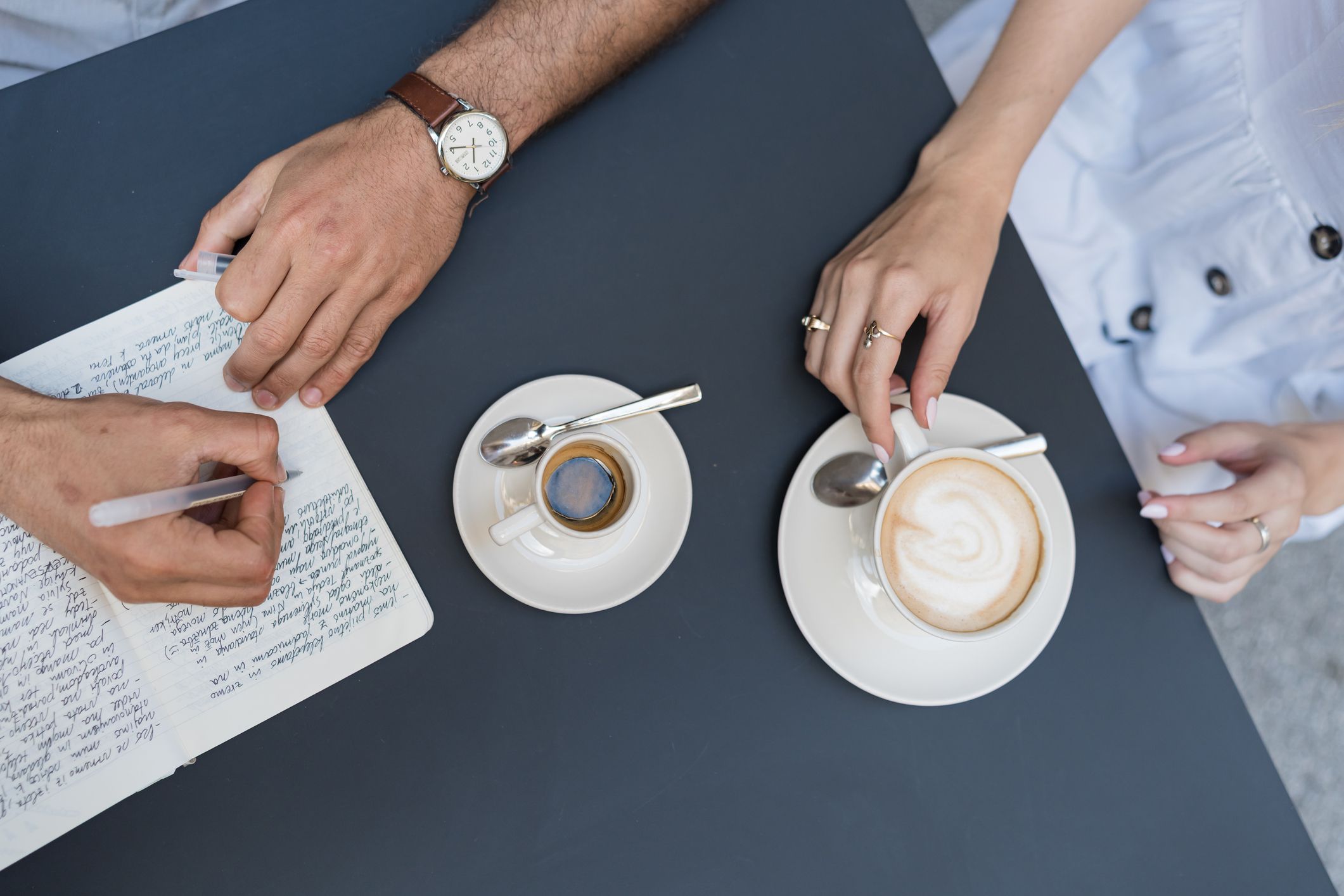
Trieste does not simply drink coffee, it administers it. This is the Italian city where Illy was founded and where the port once handled bean shipments for most of central Europe. Traders, sailors and bureaucrats all passed through with caffeine in their veins, and the city has never really come down.
You notice it first in the language. You can order “un espresso” like elsewhere in Italy and be understood, but locals have their own small dictionary. A “nero” is an espresso. A “capo” is a small cappuccino in a glass rather than a cup. Ask for a “capo in b” and you will be handed a short coffee in a glass with a lid of foam, given a once-over that checks you are not just parroting the phrase, then quietly accepted as someone who has done at least five minutes of research.
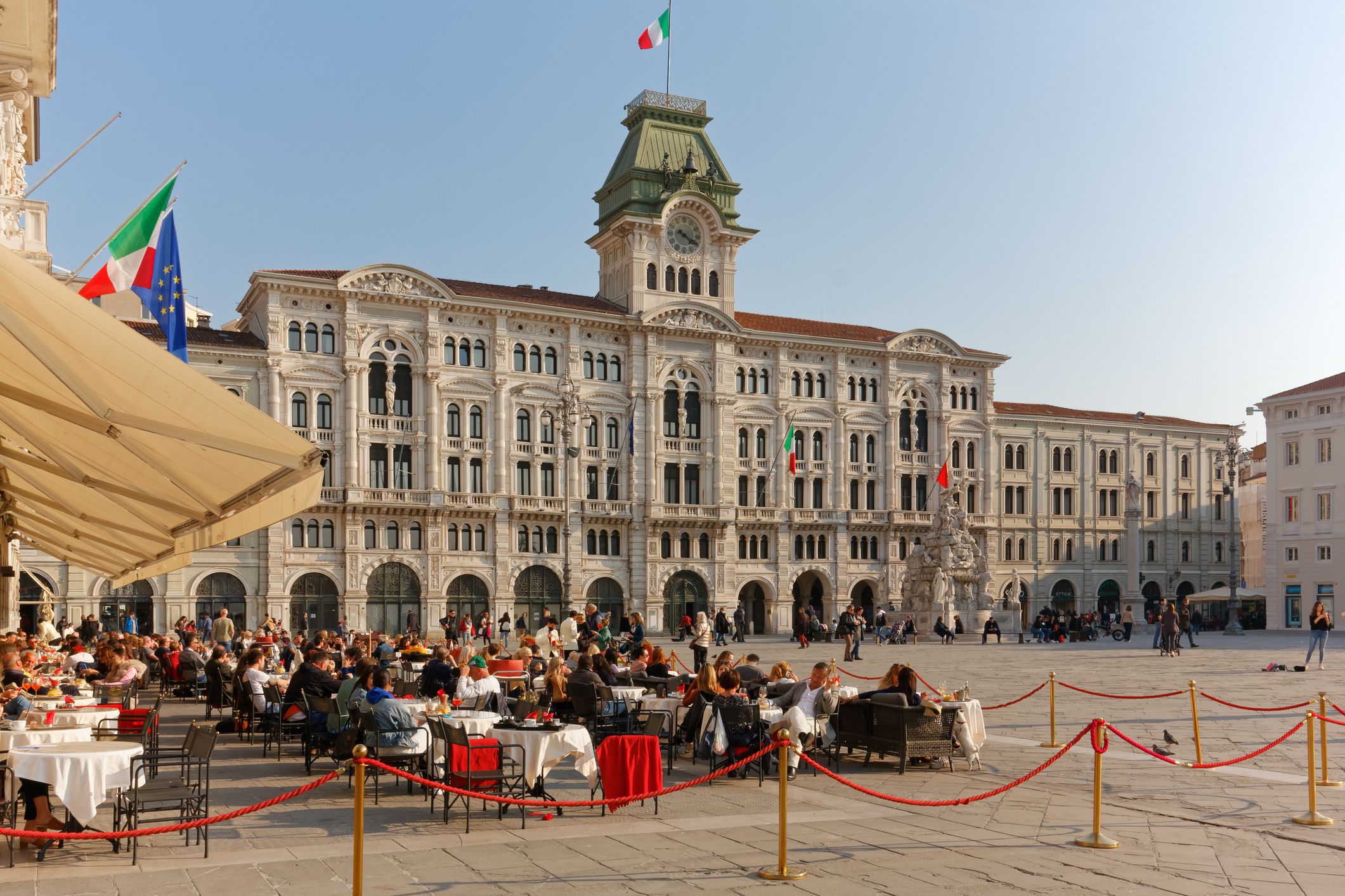
The grand old cafés are the easiest way into this culture. Caffè San Marco, opened in 1914, is a mix of wood panelling, stained glass and bookshelves. It has hosted everyone from students to writers in exile and manages that rare trick of feeling serious without being solemn. You can easily lose an hour here just watching the procession of locals and trying to decode the order patterns.
Caffè degli Specchi, on Piazza Unità d’Italia, offers a more theatrical version. Its mirrors and chandeliers have seen Habsburg officers, socialist pamphleteers and contemporary cruise passengers all lean on the same tables. Sit outside if the weather co-operates and you can calibrate your day’s sightseeing between sips. The square opens directly onto the sea, which helps with the “we are meant to be back on a ship later” sense of continuity.
If you want something quieter and more contemporary, there are smaller bars scattered through the side streets, each with its own regulars. The pleasure in Trieste is that none of them rush you. Coffee here is not a quick jolt between meetings so much as a sanctioned pause. Use it to look around and you start to see how many parts of Europe this city has borrowed from.
Midday: Habsburg echoes and a city that has never quite settled
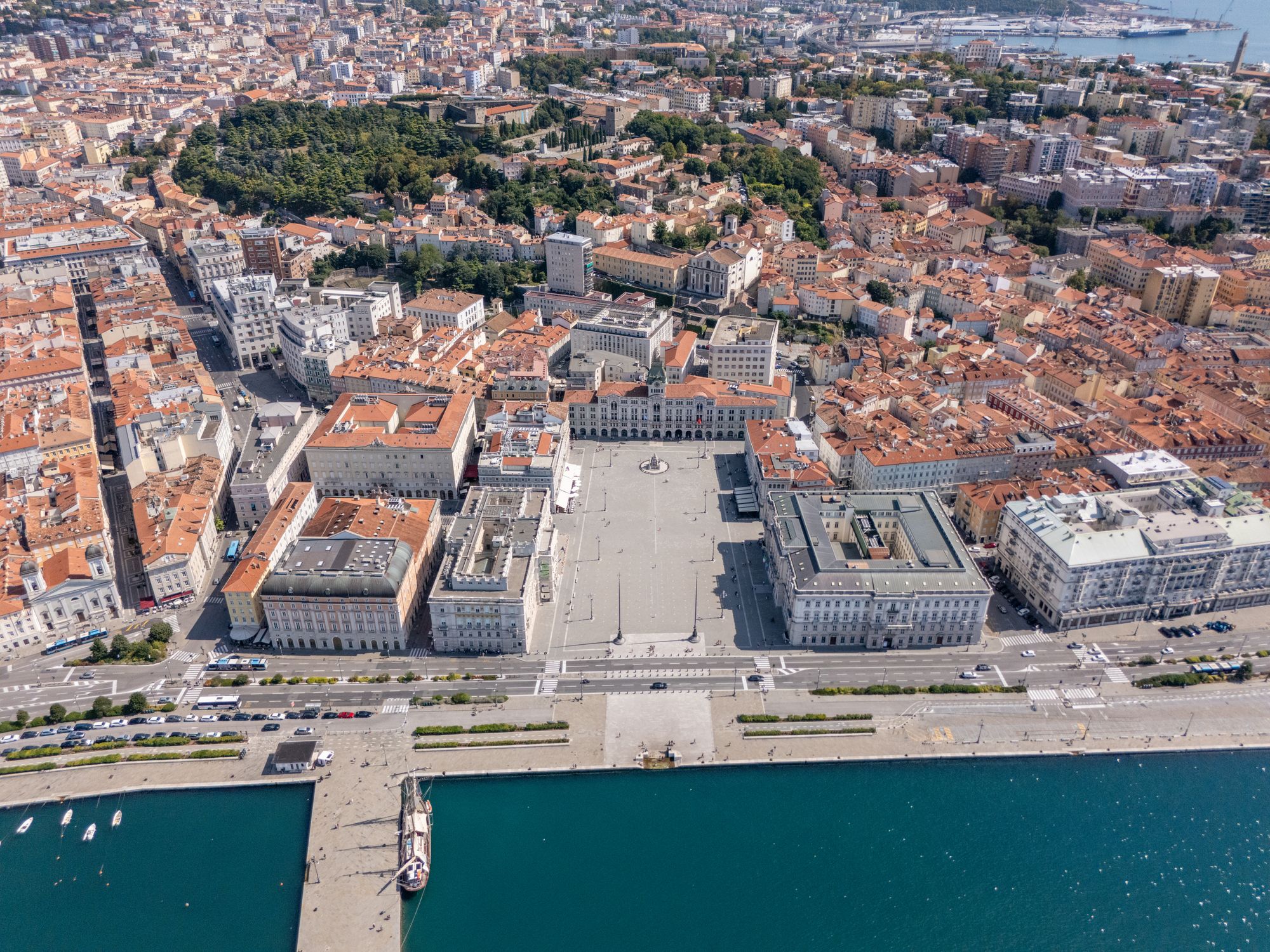
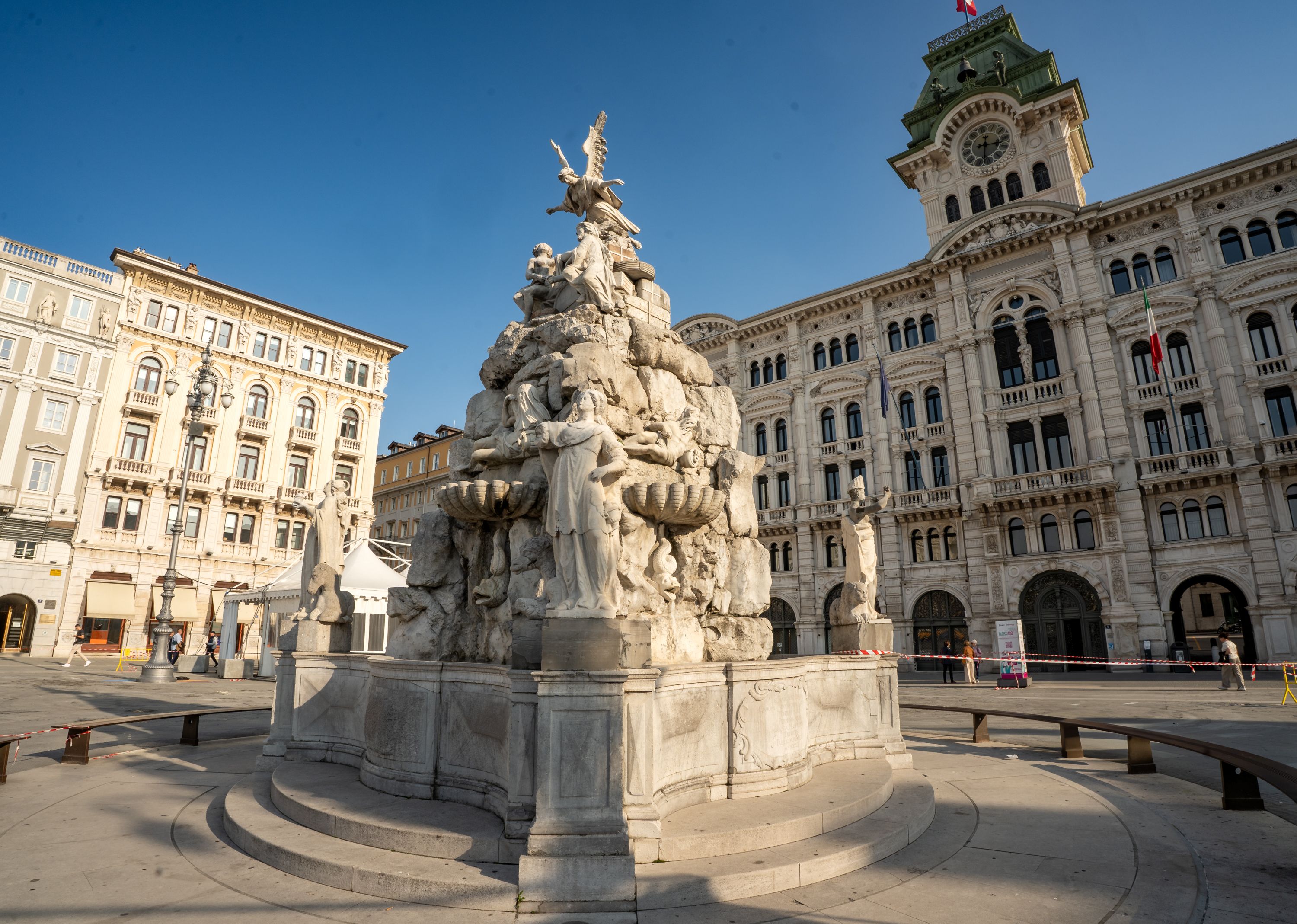
Trieste’s street plan is what happens when a Mediterranean port is given to central European administrators with graph paper. Piazza Unità d’Italia is the clearest expression of that. One side is open to the Adriatic, the other three are lined with palazzi in styles that would not look out of place in Vienna. In between you get municipal bravado, flags and a constant breeze.
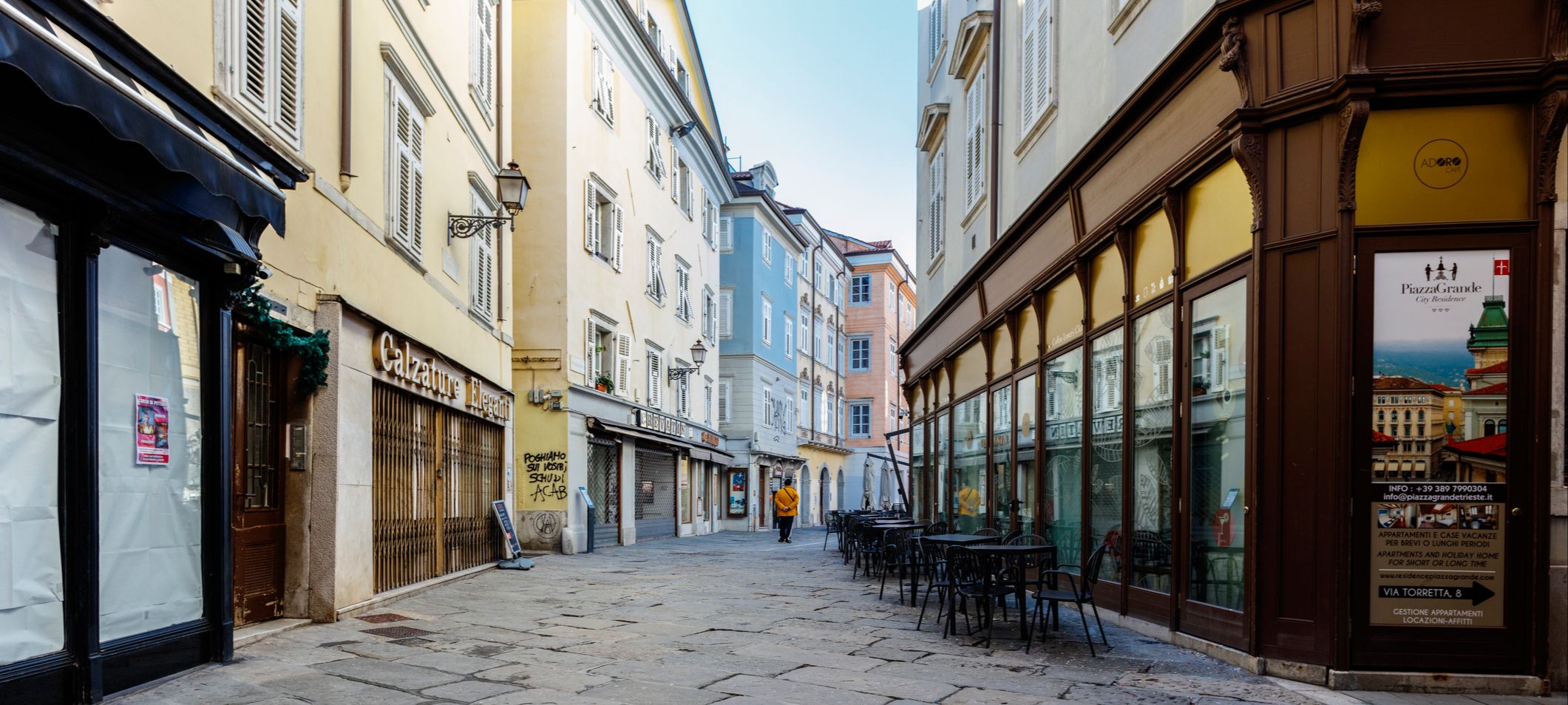
Walk inland from the square and the Austro-Hungarian footprint becomes more obvious. There are sober civic buildings, grand staircases, streets that run at clean angles until the hills force them to kink. It feels ordered and slightly formal, with just enough Italian chaos in the traffic to stop it becoming smug.
You can see why Trieste mattered so much to the Habsburgs. It was the main sea outlet for an empire that otherwise did a lot of land. Memories of that period are everywhere if you choose to look for them. The Teatro Verdi sits just behind the main square. Neo-classical façades crop up next to more modest Italian shops. Names on some doorbells look more Austrian or Slovene than Italian, a reminder that this has always been a border city that changed hands more often than is strictly relaxing.
For a more explicit view of that layered history, climb up to the hill of San Giusto. The route is not subtle. Streets wind upwards past apartment blocks and old walls until you reach the cathedral and castle. From here the whole city layout makes more sense: port, old town, newer suburbs and a curve of coastline that stretches away towards Slovenia.
The cathedral itself is an oddly modest patchwork of Romanesque and earlier structures, with thick walls that feel designed to shrug off both weather and politics. Step inside and you find the sort of mosaics that reward a slow look: gold, blue and slightly stern, like a Byzantine time capsule. Next door the castle is more about views than artefacts. Even if you skip the ticketed parts, the surrounding paths give you a clear sense of Trieste’s position as a place that always needed, and expected, watchtowers.
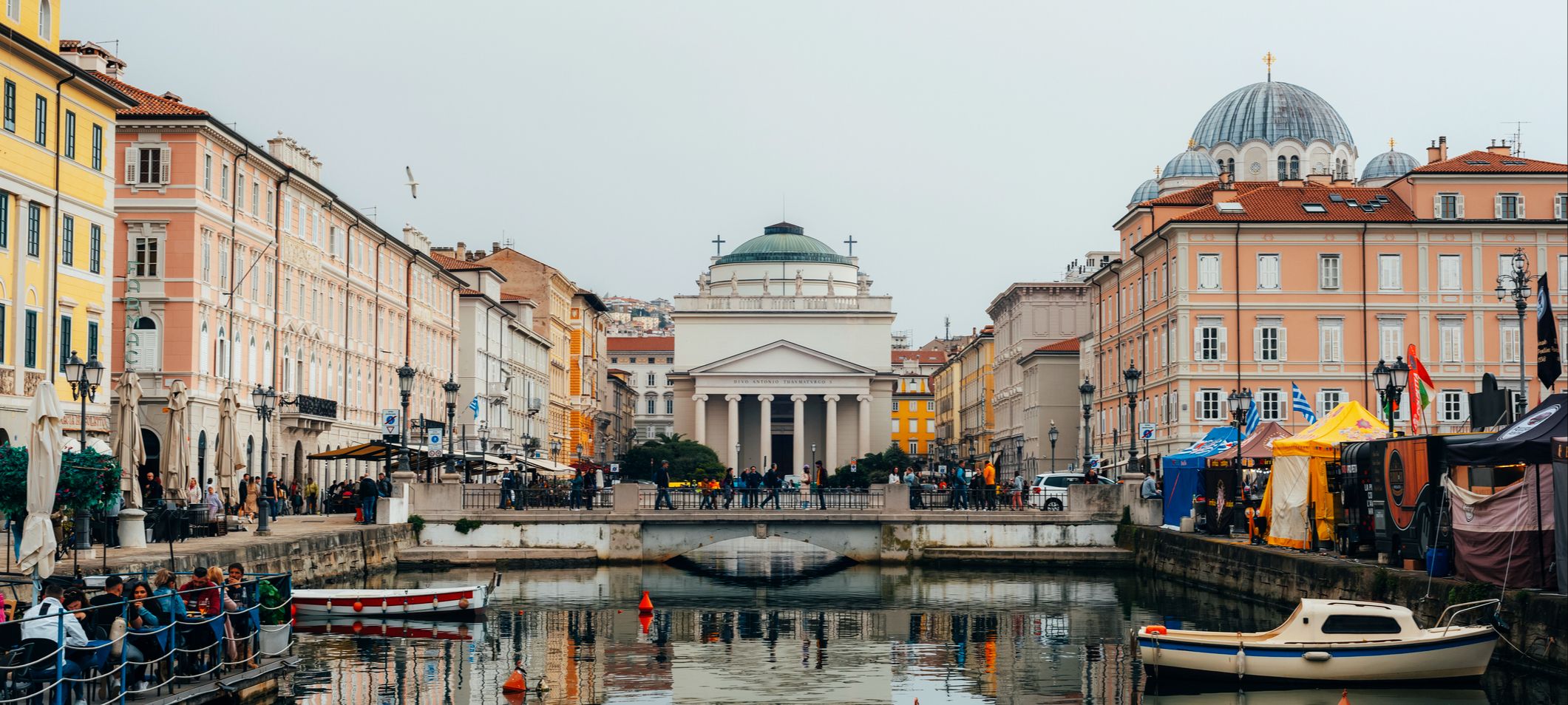
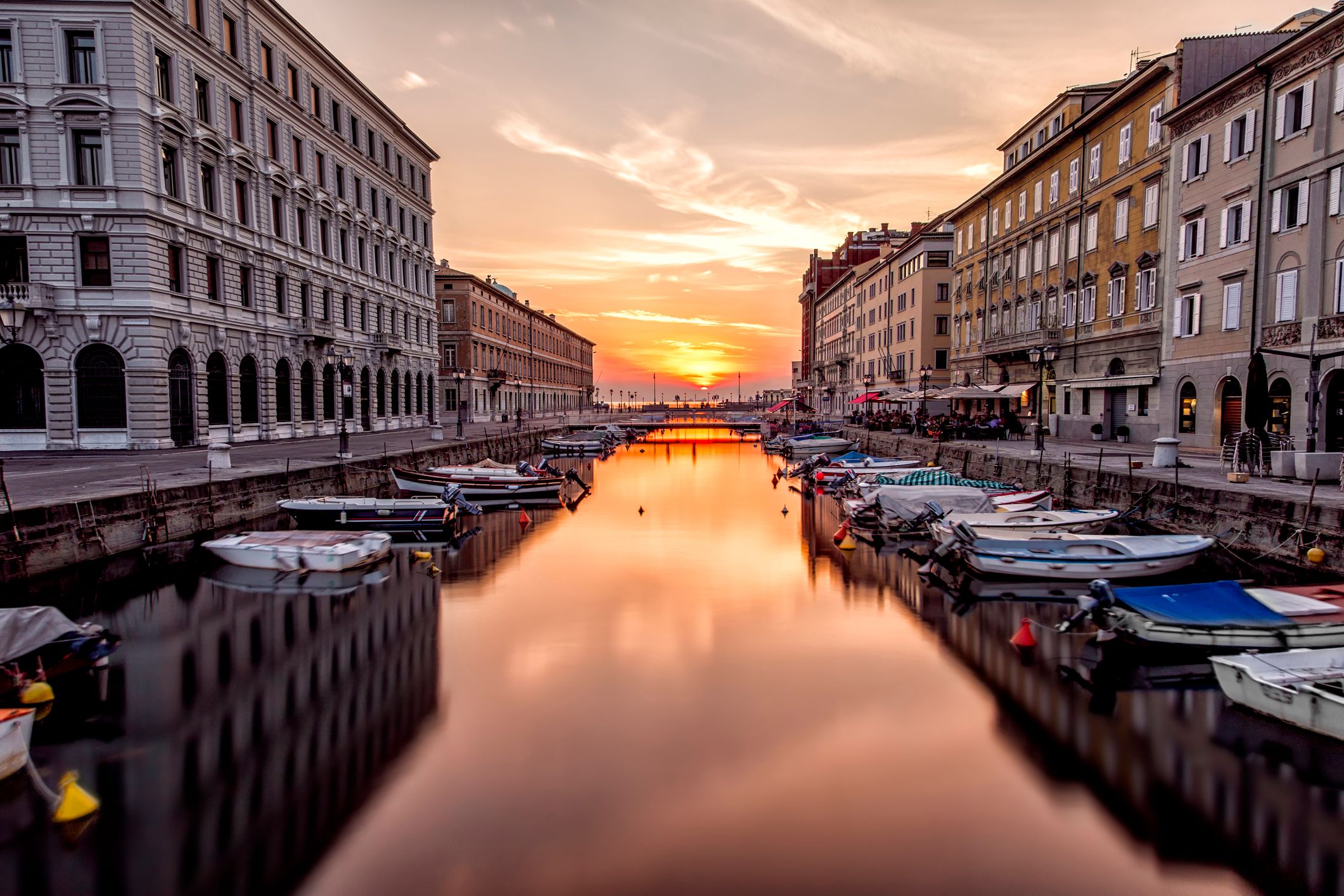
At ground level again, it is worth walking through the Borgo Teresiano district, a planned eighteenth century quarter built when the city was being reshaped as a proper imperial port. The Canal Grande reflects churches, apartment blocks and the odd statue in a way that feels more Mitteleuropa than Mediterranean. You can stand on the bridge, look at the boats bobbing gently against a backdrop of orderly façades, and understand why people still write slightly nostalgic essays about this place.
Afternoon: out along the coast for salt and stone
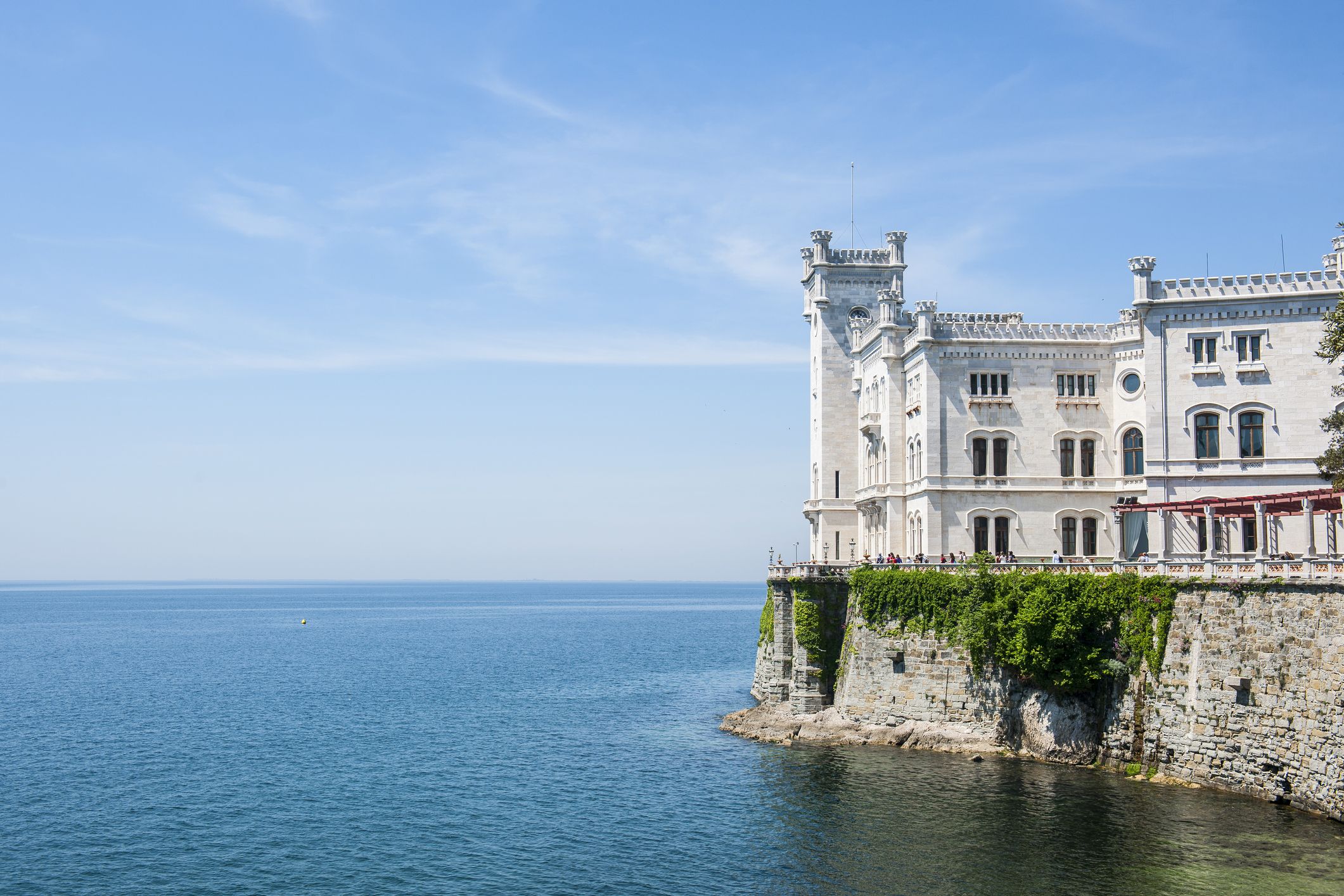
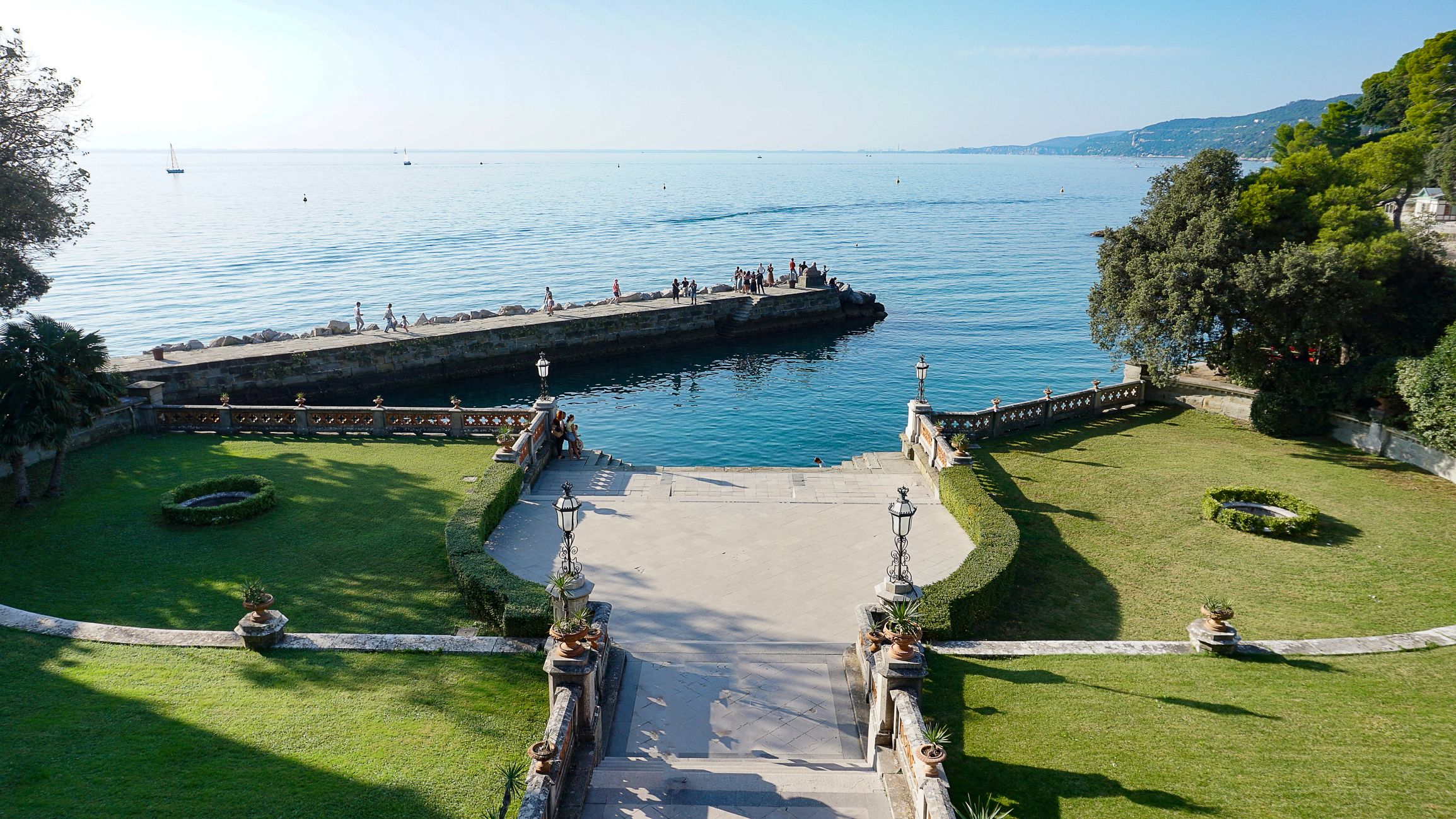
Even on a short stop, Trieste rewards a small escape along the shore. A straightforward option is to take a bus or taxi up to Miramare, the nineteenth century castle built for Archduke Ferdinand Maximilian and his wife Charlotte. The building itself is best described as “enthusiastic”. White walls, turrets, terraces and a slightly overcompensating position on a rocky promontory all tell you that subtlety was not the goal.
What makes it worth the trip, especially in cool weather, is the setting. The grounds run down through landscaped gardens to the sea, with paths under trees that give occasional views back to the city. On a crisp day the water is clear, the air has that faintly metallic quality of winter sea air, and you get the satisfying contrast between shipboard life and a strictly land-based residence.
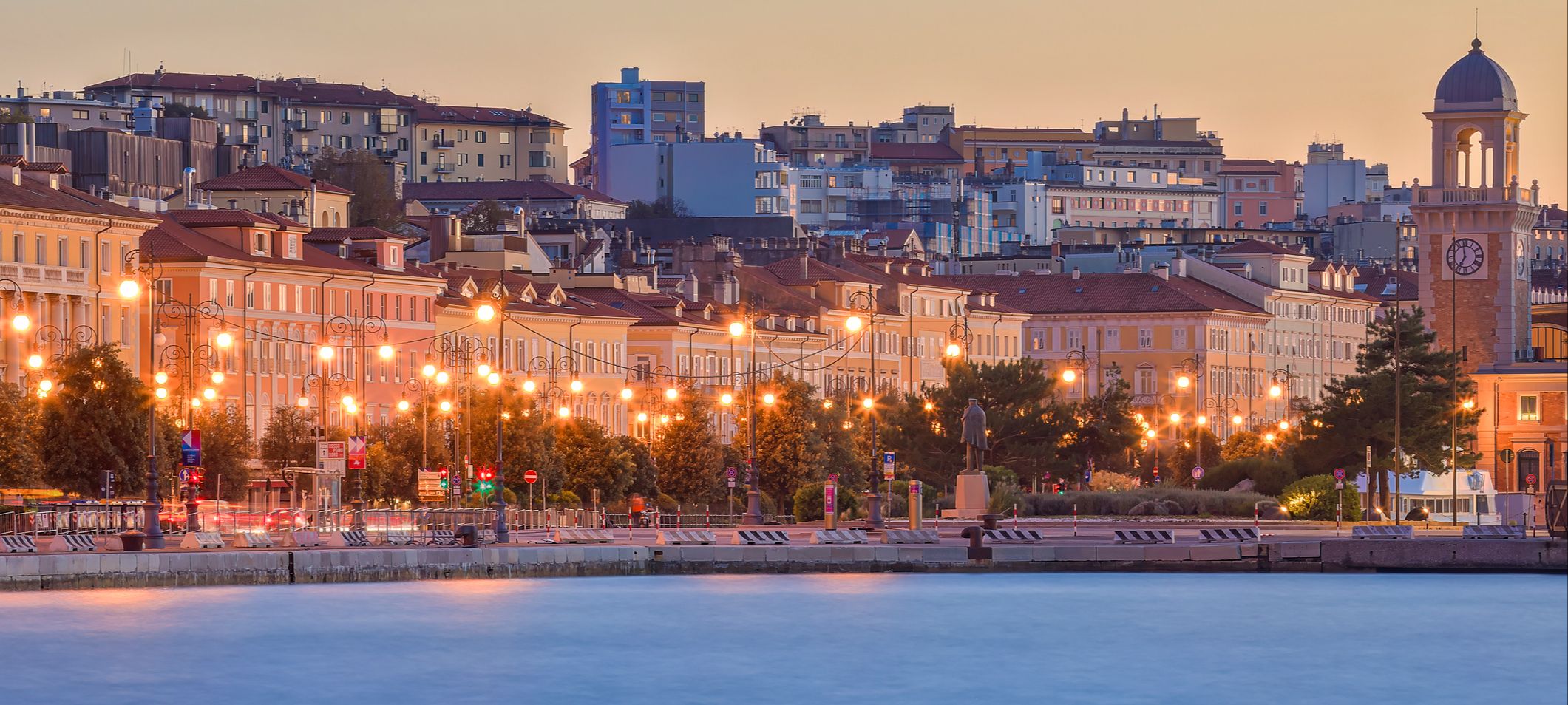
If you prefer something less ornamental, a wander along the Molo Audace in town offers a simpler, local version of the same sensation. This long stone pier stretches out into the harbour with no railings, no attractions and a very matter of fact attitude to the wind. In summer it is an evening promenade; in winter it is where people go to walk, think and occasionally sprint after a hat. From the end you can see the curve of the city, the hills behind it and, if the air is clear, the beginning of the Karst plateau that rises sharply to the north.
For a different perspective again, head up onto that plateau. Even a short trip to the edge of the Karst lets you look down on Trieste as a thin strip between rock and water. The land here feels more Balkan than Italian, with low stone walls, scrub and villages that face the interior rather than the port. It is a useful reminder that the city you are visiting was once the outlet for a much larger, landlocked world.
Evening: hilltop sunset and a last taste
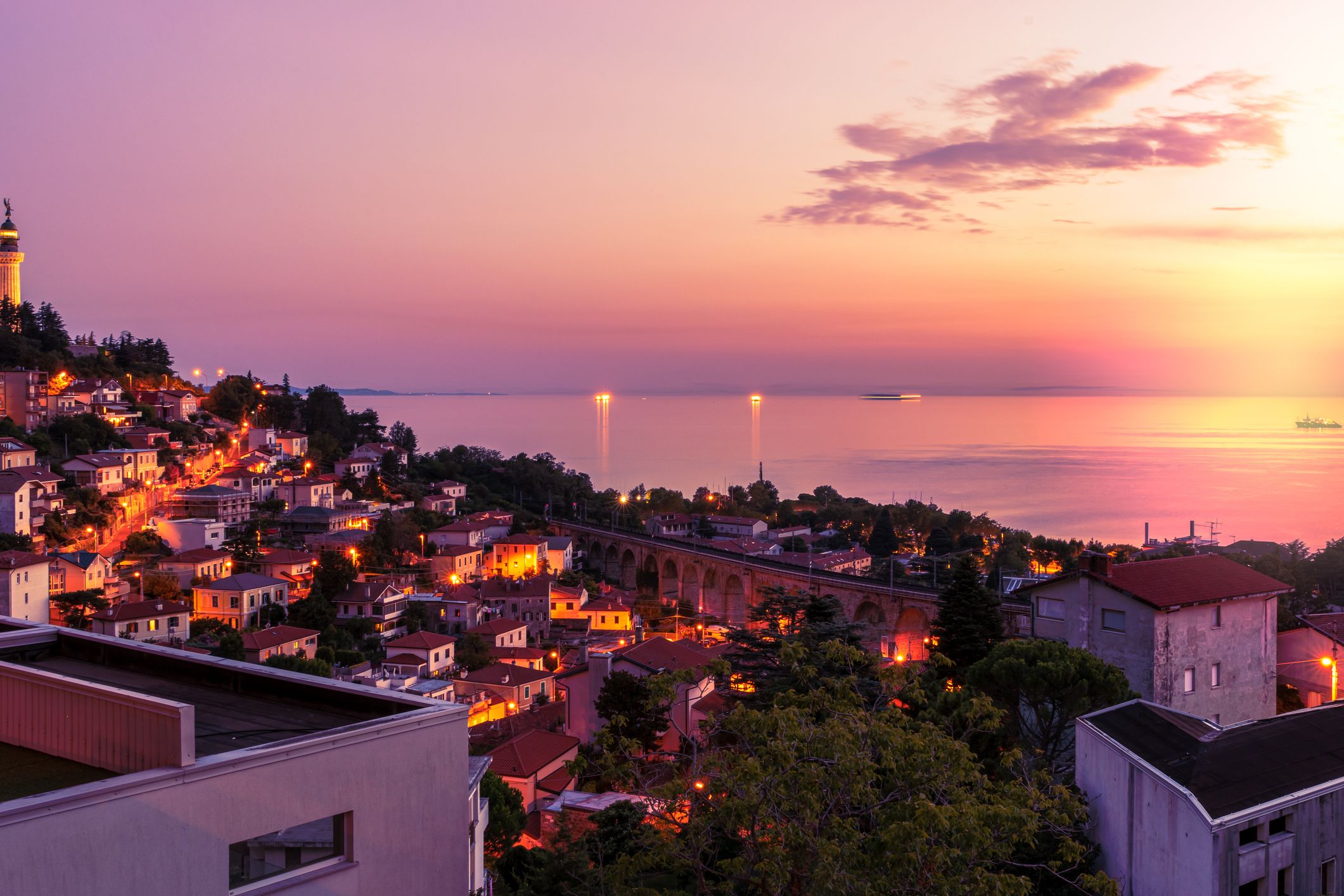
If your ship is staying late enough to see the day out, Trieste does sunsets properly. The hill of San Giusto is one option, especially if you did not rush it earlier. The light softens, the rooftops go from terracotta to something more muted, and the harbour cranes become silhouettes against the water. It is quietly dramatic, and you share it mostly with locals who have simply come up to walk the dog.
Another good spot is the Faro della Vittoria, the Victory Lighthouse, perched above the city. From here the view runs along the coastline, over the sea and back towards town. The lighthouse itself is a slightly stern piece of post war architecture, but the surrounding viewpoints soften it. On a clear evening the sky goes through a full gradient while the city lights blink on one district at a time.
Back down in the centre, this is your chance to put “three tastes” into practice. One more coffee is always defensible, especially if you have not yet tried the local habit of pairing it with something small and sweet. Aperitivo is treated with appropriate seriousness here too. A glass of local white from the nearby Carso vineyards or a simple spritz pairs well with the knowledge that your ship is only a short walk away.
Dinner, if you have time, shows how many directions Trieste looks in. Menus often include classic Italian pasta and fish, but also goulash, sausages, sauerkraut and strudel. It is as if the traditional cuisines of the Habsburg empire have been given visiting rights to an Adriatic kitchen. Even if you are just grazing on a plate of jota, the local bean and sauerkraut soup, you can taste that mixture of north and south.
As you walk back through Piazza Unità, the buildings lit up along three sides and open sea on the fourth, it is hard not to notice how neatly the city packs its contradictions into a single view. Italian flagstones under your feet, Austro-Hungarian façades at your back, Slovenian hills in the distance and a very present sense of the modern port in front of you.
For a cruise passenger, that is the quiet appeal of Trieste. In a few hours ashore you can drink coffee like a local, walk through the ghost map of a dissolved empire and watch the sun go down on a city that never quite agreed to be just one thing.