
When people talk about Danube river cruises, they tend to name-check Budapest and Vienna, maybe Belgrade as potential destinations and then politely trail off. The brochures show capitals. The reality, once you are actually on the river, is that your most interesting days often happen in places whose names you had to Google before boarding.
I sailed this route in early November, when the vineyards had gone from rusty to graphite and the Christmas lights were just beginning to be hung to warm things up. It turned out to be the perfect moment to discover that “beyond Vienna” is where the character of central Europe really kicks in.
Why the small stops are the most memorable
The Danube runs for almost 2,900 kilometres from Germany’s Black Forest to the Black Sea, threading ten countries together. It is an important river in a historical sense, but on a cruise it has another job: gently delivering you to places you would never book a city break in, but are very glad to meet for a day.
On our sailing the capital hits were wonderful, of course, but it was the “unsung” stops Linz, Dürnstein, Bratislava and Vilshofen that made the trip feel like a story I'd like to share (as opposed to a tick list). This is the quiet joy of river cruising. You go to Budapest deliberately. You end up in Vilshofen by accident.
Linz: steel, screens and a excellent cake
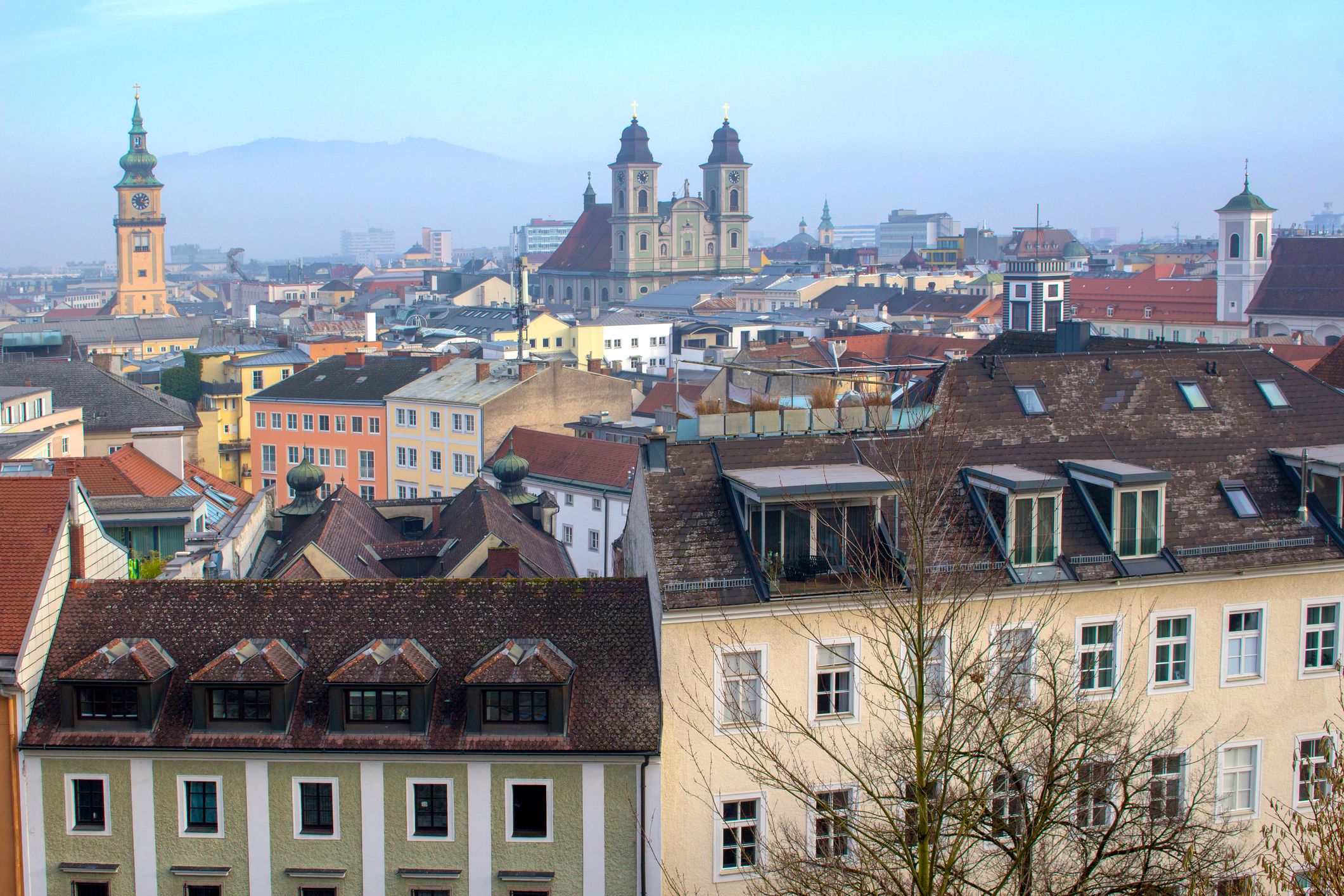
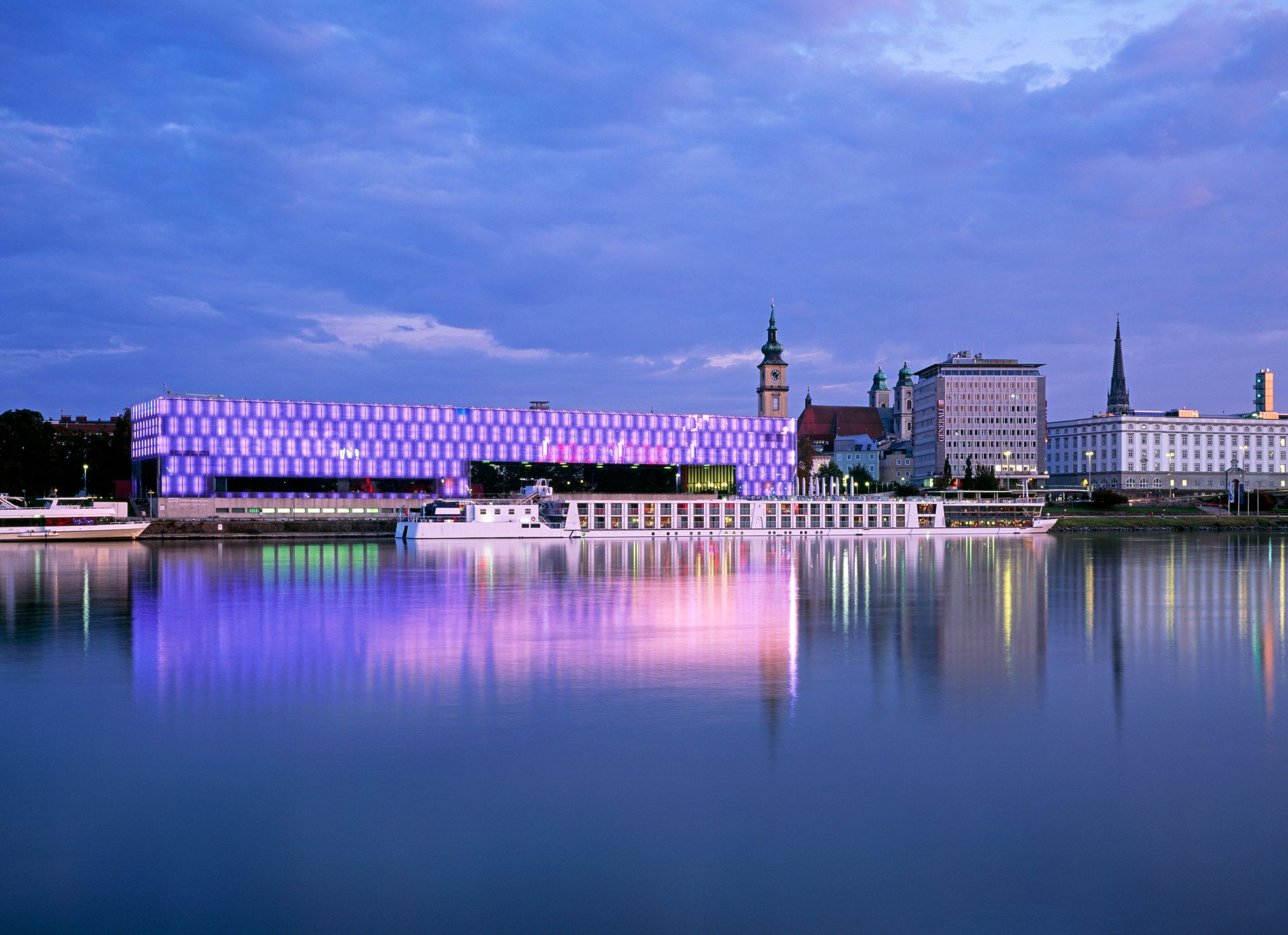
Linz has a slight PR problem. Say “Linz” and most people either think “Where?” or “Bit industrial, isn’t it?” Both are out of date. The city has spent the last couple of decades reinventing itself as a cultural and media arts hub, picking up the title of European Capital of Culture in 2009 and recognition as a UNESCO City of Media Arts along the way.
You see that shift as soon as you walk along the riverfront. Across the water, the Ars Electronica Center glows like a glass circuit board. Inside, it is part museum, part lab, with exhibitions on artificial intelligence, robotics and other things that make you question whether your phone is secretly running your life.
In November, my day in Linz started in a light drizzle, which is ideal weather for cosplaying a serious person who appreciates art and technology. We walked the old town first narrow streets, baroque facades, a main square that hosts a very respectable Christmas market later in the season then migrated steadily towards coffee and Linzer Torte, the city’s jam-and-pastry contribution to European wellbeing.
If you only have a few hours, the combination of a wander through the historic centre and a visit to Ars Electronica feels like enough. You get both sides of Linz: the traditional main square with its churches and cafés, and the modern city that spends its time thinking about the future. It's also the gateway to a day trip to Salzburg which formed the remained of my afternoon.
Dürnstein and the Wachau Valley: apricots, ruins and low cloud
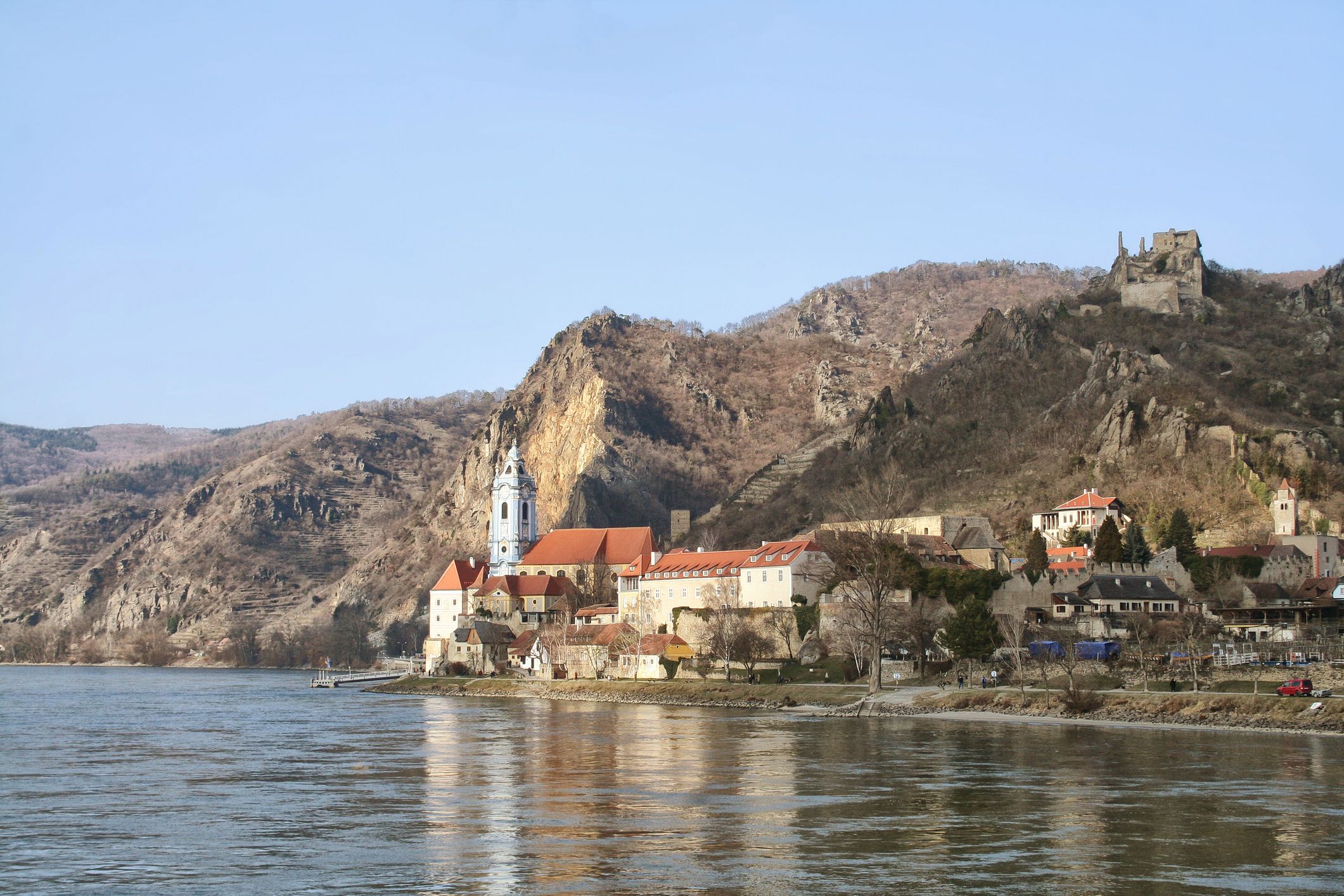
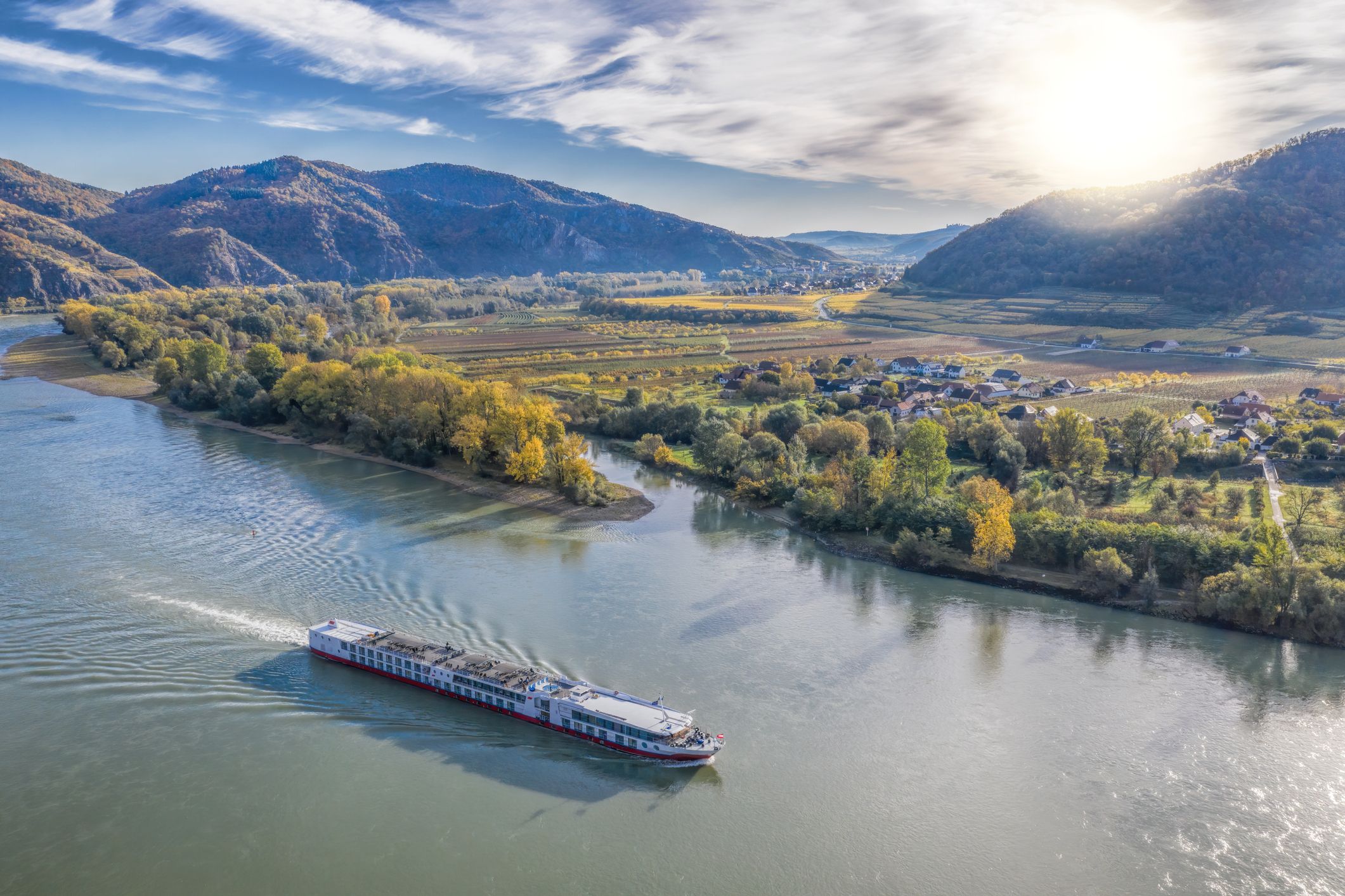
Further upstream, the Wachau Valley looks even better in person than it does in brochures. This 22 mile stretch between Krems and Melk is a UNESCO World Heritage Site, known for terraced vineyards, castle ruins and orchards that produce the apricots and light white wines that quietly fuel many a river cruise dessert menu.
Dürnstein is the stop everyone secretly waits for, even if they do not know it yet. The town is small and self contained, strung along the riverbank with a steep hill rising behind it. Simple enough. Then you step off the ship and see the blue and white tower of Dürnstein Abbey, baroque and slightly theatrical against the dark vines, with the ruins of a medieval castle perched just above.
The castle is where Richard the Lionheart was famously held captive in the twelfth century, which gives the climb a pleasing narrative: you are walking up to a place that once annoyed an English king. The path is steep in parts, but the view over the river and terraced slopes is the sort that makes you temporarily forget how sore your thighs are.
On my November visit, the Wachau felt like it was between seasons. The vines were bare, the apricot orchards stripped back to branches and the alleys in Dürnstein were quiet enough that you could hear your own thoughts, which is rare on a group holiday. Cafés were still serving marillen-based cakes, though, and there was just enough chill in the air to make a glass of local Grüner Veltliner feel like an entirely logical lunch decision.
This is the sort of place you almost certainly would not reach under your own steam from the UK. It is also the sort of place that lodges in your memory longer than another capital square.
Bratislava: an underrated capital
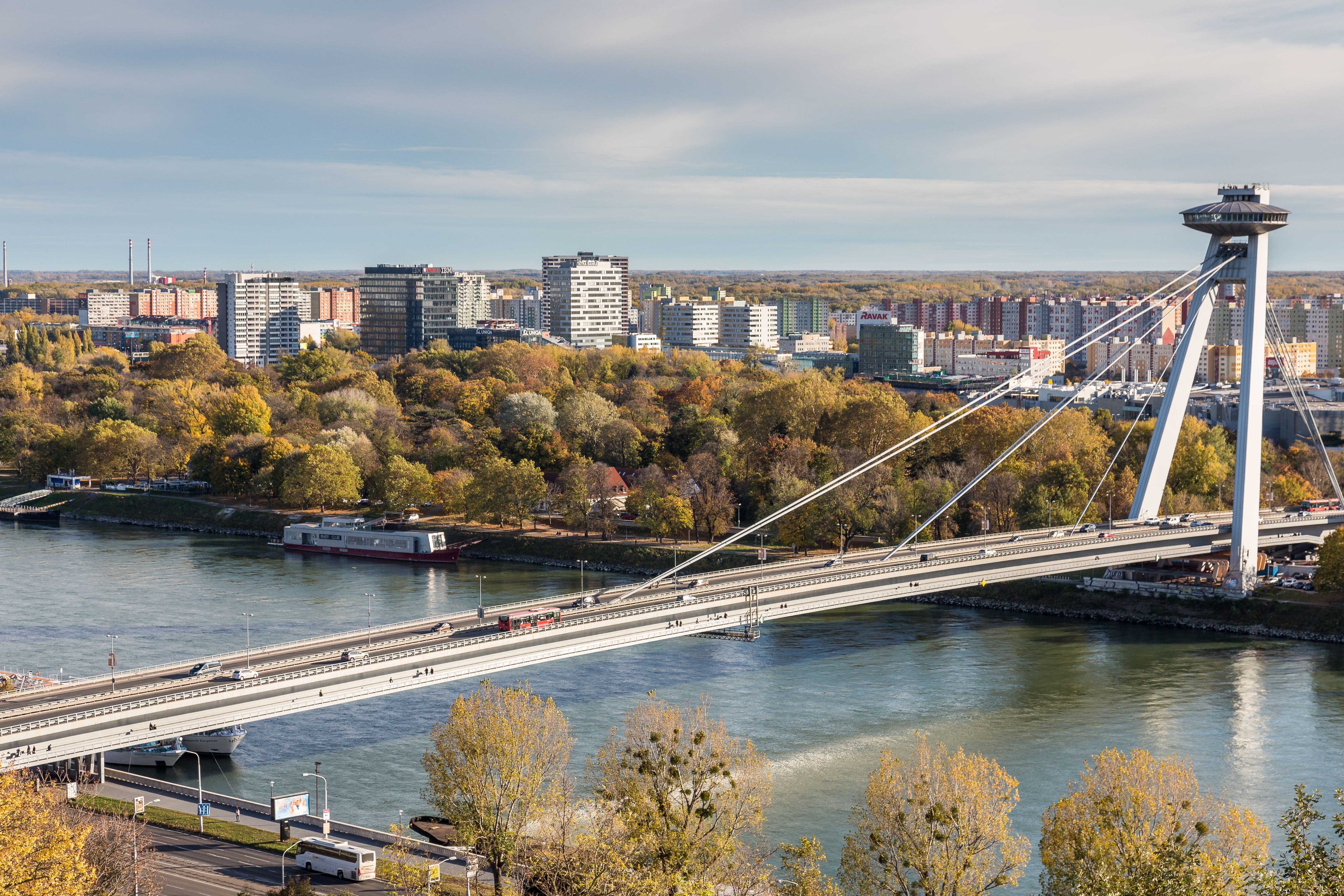
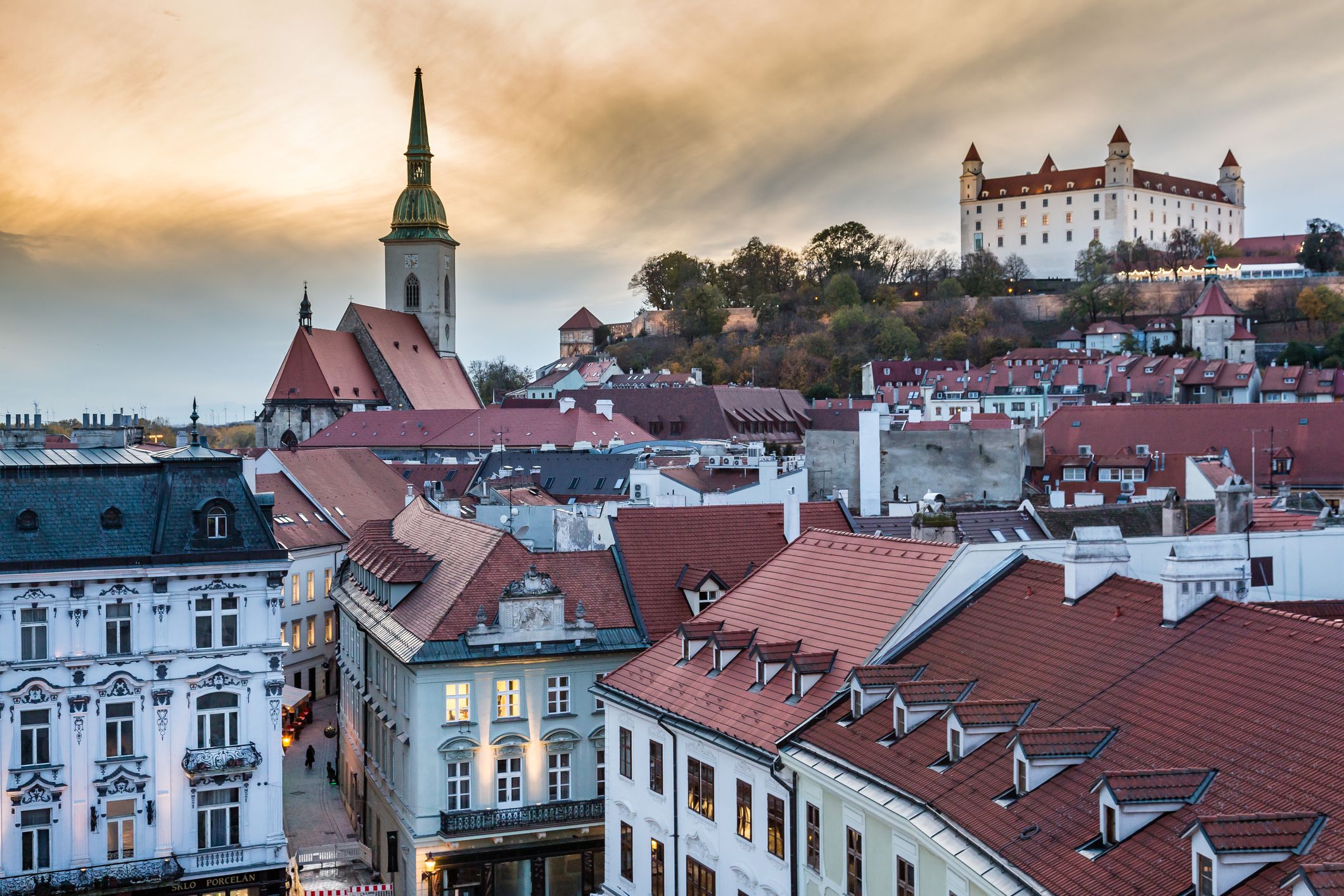
Bratislava's old town is compact, the walk from the river to the main square is short, and the castle sits obligingly on a hill that is high enough for a view but not high enough to count as a workout.
From the ship, it is an easy stroll into the historic centre, a tangle of lanes, pastel facades and cafés that make the place feel more like a university town than a capital city. For orientation, you look up. Bratislava Castle sits on a plateau above the river, a neat white rectangle that has seen enough history to justify its imposing stature. Walk up for half an hour and the reward is a wide view over the old town, the Danube and the rather more blunt modern skyline beyond.
Then there is the UFO. The city’s most distinctive modern landmark is the UFO Bridge, officially the Bridge of the Slovak National Uprising, with a flying-saucer shaped restaurant and viewing platform balanced over its main span. From the top you get another angle on the city and the river, it sort of feels as though someone's dropped a bit of 1950s sci-fi B-movie into your Central European landscape.
In November, Bratislava was beginning the shift into Christmas mode. Market stalls were going up in the main square, the castle was lit in the way cities reserve for winter's darkest days, and the air smelled faintly of things that might make your hands sticky. Several river lines run dedicated Christmas market cruises on this stretch between Vienna and Budapest, often calling at Bratislava for its emerging festive scene.
The beauty of Bratislava on a river itinerary is that you can do something satisfying in a single day without feeling you have missed anything out. Castle, bridge, old town, a café or two and you are done.
Passau: three rivers, one very determined climb
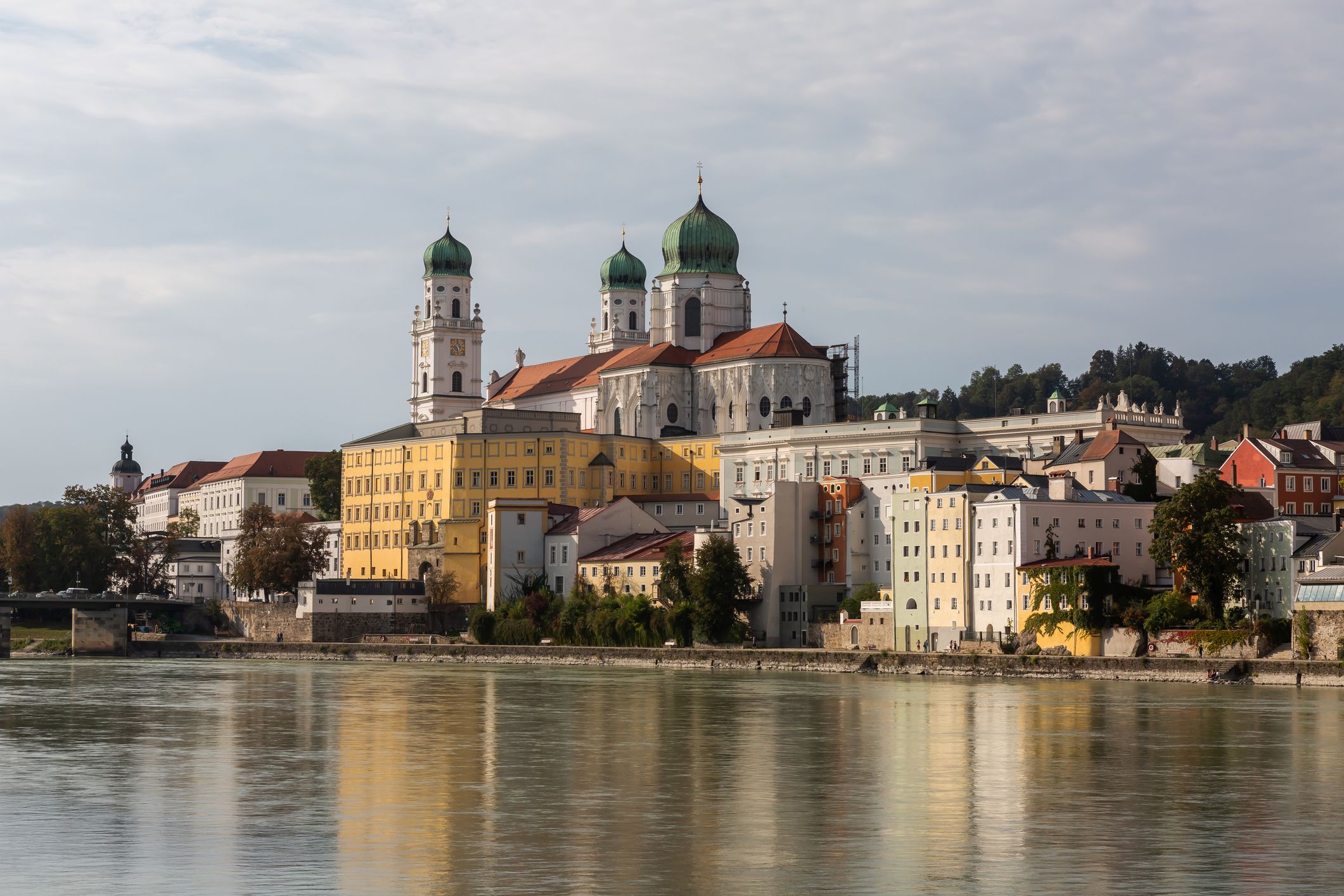

Before the Danube hands you over to Vilshofen, many itineraries slip in a stop at Passau. The town sits at the confluence of three rivers the Danube, Inn and Ilz hence the “City of Three Rivers” nickname and feels like someone has squeezed an entire baroque set piece onto a narrow tongue of land.
I decided to be my own tour guide here, which mostly involved walking towards anything that looked uphill. That inevitably led to Veste Oberhaus, the fortress perched on the ridge across the river. The climb is a mixture of lanes, steps and small moments of self-reflection about your fitness levels, but once you reach the top the view is worth every pause. From the ramparts you can see the old town laid out like a map and, on a clear day, the different colours of the three rivers as they merge below.
Coming back down, I did the civilised thing and went in search of the famous organ at St Stephen’s Cathedral. The church dominates the old town and the interior is extravagant even by European standards. At its centre sits an organ with more than 17,000 pipes, long billed as one of the largest church organs in the world, and when it plays you feel it in your chest as much as your ears.
The rest of Passau is made for wandering: narrow streets, river promenades, the odd beer garden still clinging on in late November.
Vilshofen and friends: the quiet end of the line
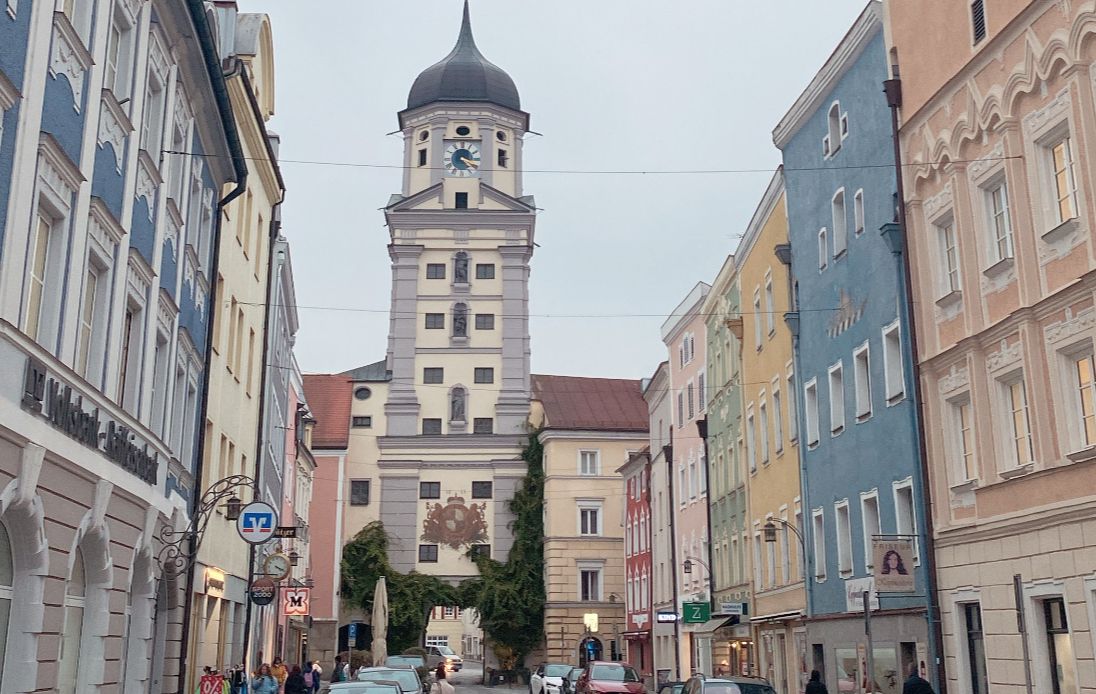
Vilshofen does not sound glamorous. The town sits in Bavaria on a pleasant bend of the Danube, where three smaller rivers flow in, and has a population of around eighteen thousand. Yet it has become an important embarkation and disembarkation port for river cruises that run between there and Budapest or further east.
From the quay it is a gentle walk into the main square. There is a church, a tower, some statues, a riverside promenade and a scattering of shops and cafés. Guides who specialise in the Danube cheerfully admit that Vilshofen is usually the quietest stop on the itinerary, and that is exactly its appeal.
On our trip, a sharp, cold evening in town felt like the reset button after the sensory overload of Budapest and Vienna. We explored the market, drank coffee we had not had to queue for and wandered back to the ship along the riverfront feeling more like temporary residents than tourists. Some lines stage a small-scale Oktoberfest style send off here, complete with beer, pretzels and brass band, which is not a bad way to say goodbye to a river.
Vilshofen is the sort of place that proves a point. You are not here for a bucket list landmark. You are here because the Danube goes past, and the ship stopped, and that is enough.
Late season, slow days
Cruising this stretch of the Danube in November is a different experience from a high summer sailing. Daylight is shorter, the hills are bare, and the air has an icy quality that makes you consider a hat. The upside is that the river feels quieter, Christmas markets are beginning to glow and you can stand on an open deck without also standing in a crowd. Many lines actively promote late November and December as a good moment to combine river cruising with festive markets, and they are not wrong.
For me, the late season suited these “beyond Vienna” stops. Linz felt like a functioning city rather than a stage set. Dürnstein, stripped of summer’s blossom and boatloads, showed its bones. Bratislava had just enough seasonal sparkle to be charming without yet being frantic.
The capitals will always get the cover shots. But if you want to know what the Danube is really like, pay attention to the days when you wake up, pull back the curtain and think, “Where on earth is this?” Those are the ones that stay with you.