
Michael Modzelewski belongs firmly in the second camp.
He is a Princess Cruises naturalist with the sort of presence that suggests you could drop him just about anywhere in the world with a penknife and some matches and he’d probably have set up some semblance of civilisation within a week. Within minutes of speaking to him, I had the distinct feeling that Alaska was not, in his mind, a destination so much as a corrective. A place that rinses the eyes, restores perspective, and makes most of the rest of the world look somewhat overbuilt and under-imagined.
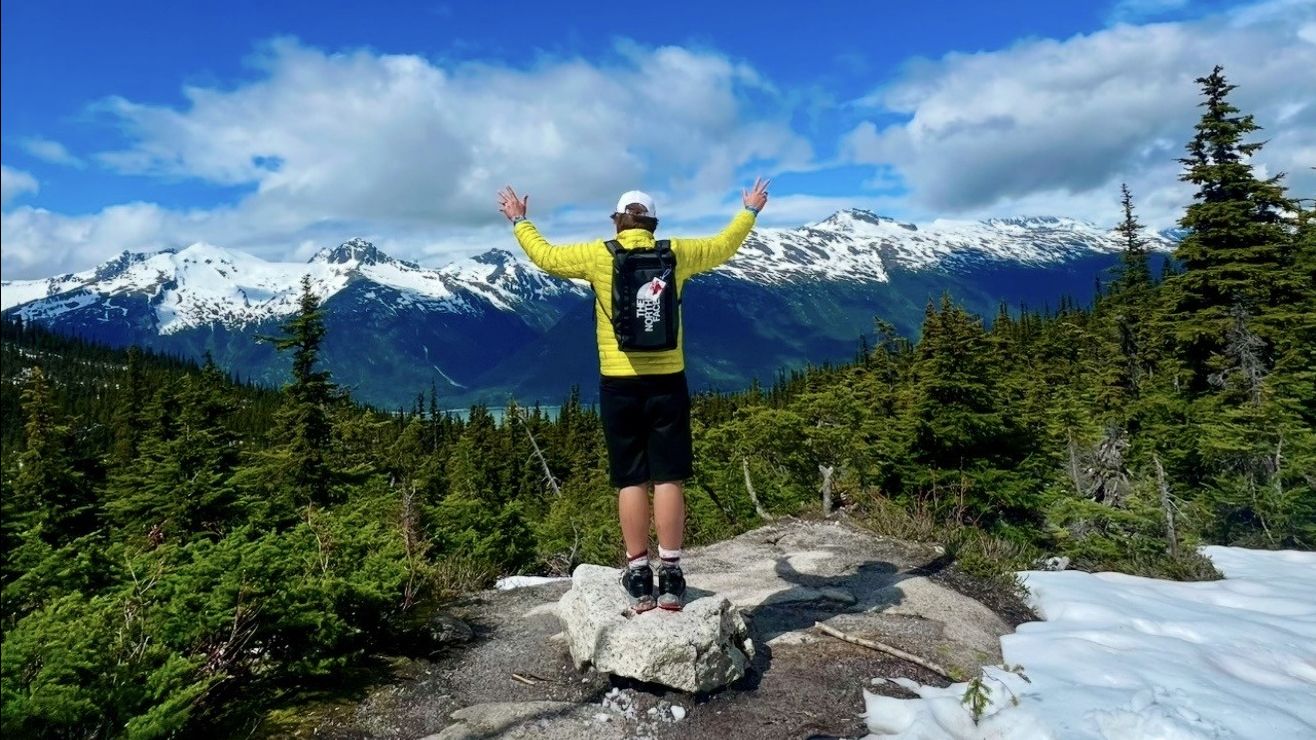
I should say at this point that I’ve never actually cruised Alaska myself, which may be why speaking to Michael had such an unfair effect on me. Within half an hour, he’d managed to make the whole thing sound less like a holiday and more like a necessary life correction.
Glacier Bay National Park and Preserve alone covers 3.3 million acres, and the National Park Service limits summer vessel traffic, including a maximum of two cruise ships per day, to protect the place and the experience of being in it. For cruise guests, that matters, because it means one of Alaska’s most cinematic landscapes is still approached with some restraint, not treated like a floating retail opportunity.
Michael, who’s spent years interpreting this part of the world from the decks of Princess’ ships, talks about Alaska in the way some people talk about religion, or first love, or football teams they’ve supported for most of their lives. He starts with reflections. Not the philosophical kind, though those arrive soon enough. The visual kind. The “what’s above is mirrored below” kind. The Inside Passage, he told me, can double everything: glaciers, sunset, even the Northern Lights if conditions are kind. You don’t so much look at Alaska as fall through it.
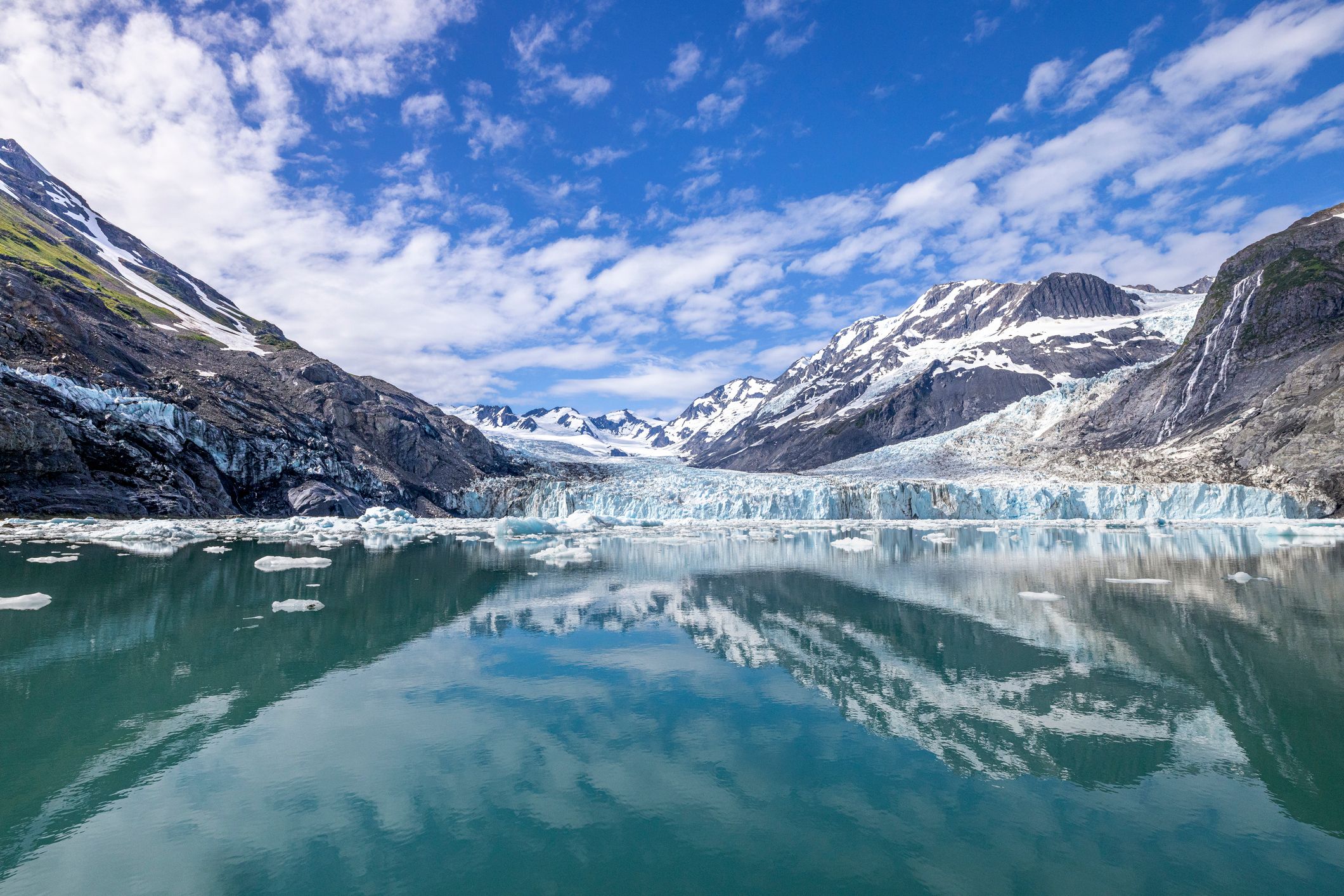
Reflections of a Tidewater Glacier
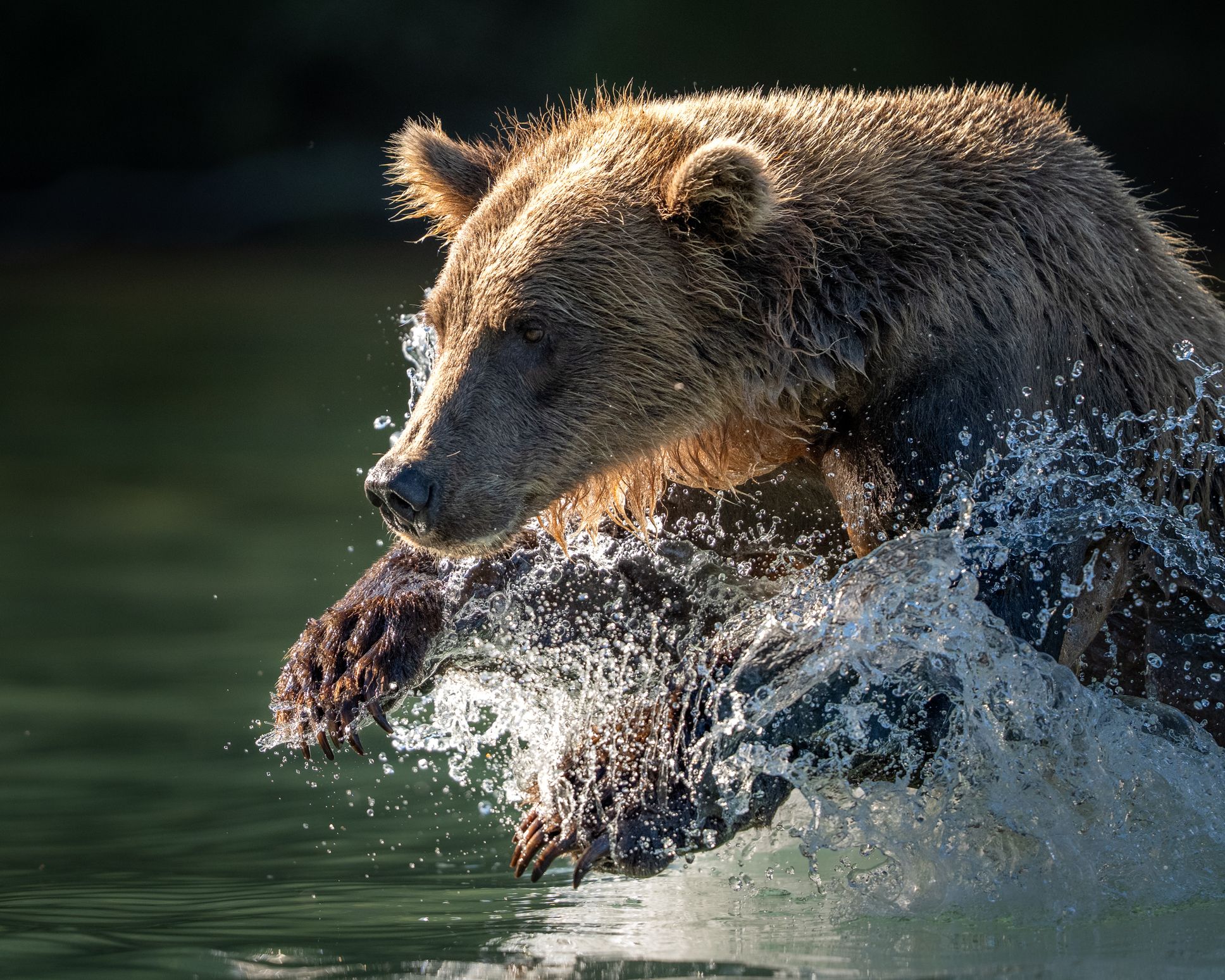
Brown bear fishing for salmon
And I think that’s right. Speaking to Michael, you get the impression that Alaska is a place that has a habit of making normal scale look silly.
Michael says one of the first adjustments passengers have to make is learning how to see again. In cities, he points out, our vision is constantly interrupted. Buildings block it, roads narrow it, life gets in the way of it. In Alaska, the eye suddenly has room to travel. From the ship, you can look clean across water and tree line and mountain face with nothing much getting in the way except your own ability to judge distance. He told me Alaska is so big it makes people disappear, literally, which may be both the best warning and endorsement I’ve ever heard in the same sentence.
This is one reason he’s so good with first-time Alaska cruisers. He understands the urgency. People arrive with a checklist in their heads: whales, bears, glaciers, Native culture, hiking, seafood, perhaps a flattering selfie with a blue chunk of ice behind them. Then they see the excursion options, lose perspective, and try to attack Alaska like it’s a checklist.
Michael’s view is refreshingly anti-strenuous. When people tell him they want to “see Alaska properly,” he says what they usually mean is that they want the essence of it. Wildlife. Glaciers. Trails. Local people. Food that tastes of the place. What they get wrong is the rush. Too many experiences. Too much “peak bagging” and “Instagram posting,” as he put it, and not enough savouring. Alaska, he believes, is a place people come back to because one trip rarely feels like enough. It is, in his words, “the most revisited place in the whole world.”
That’s not an official tourism slogan, to be clear, but it perhaps ought to be.
If Alaska has a big three, Michael says it’s whales, bears, and glaciers. But one of the most enjoyable parts of our conversation was how quickly he swerved away from the obvious stars. He wants passengers to look for ravens too. Not because they’re cute, which they absolutely aren’t, but because they’re clever, theatrical, and slightly uncanny. He spoke about their calls with the delight of a man who has spent some serious time listening. Bell-like chimes, low yodels, a whole vocal catalogue. He also mentioned their role as tricksters in Tlingit lore, which is exactly the kind of detail that makes a place feel inhabited rather than merely scenic.
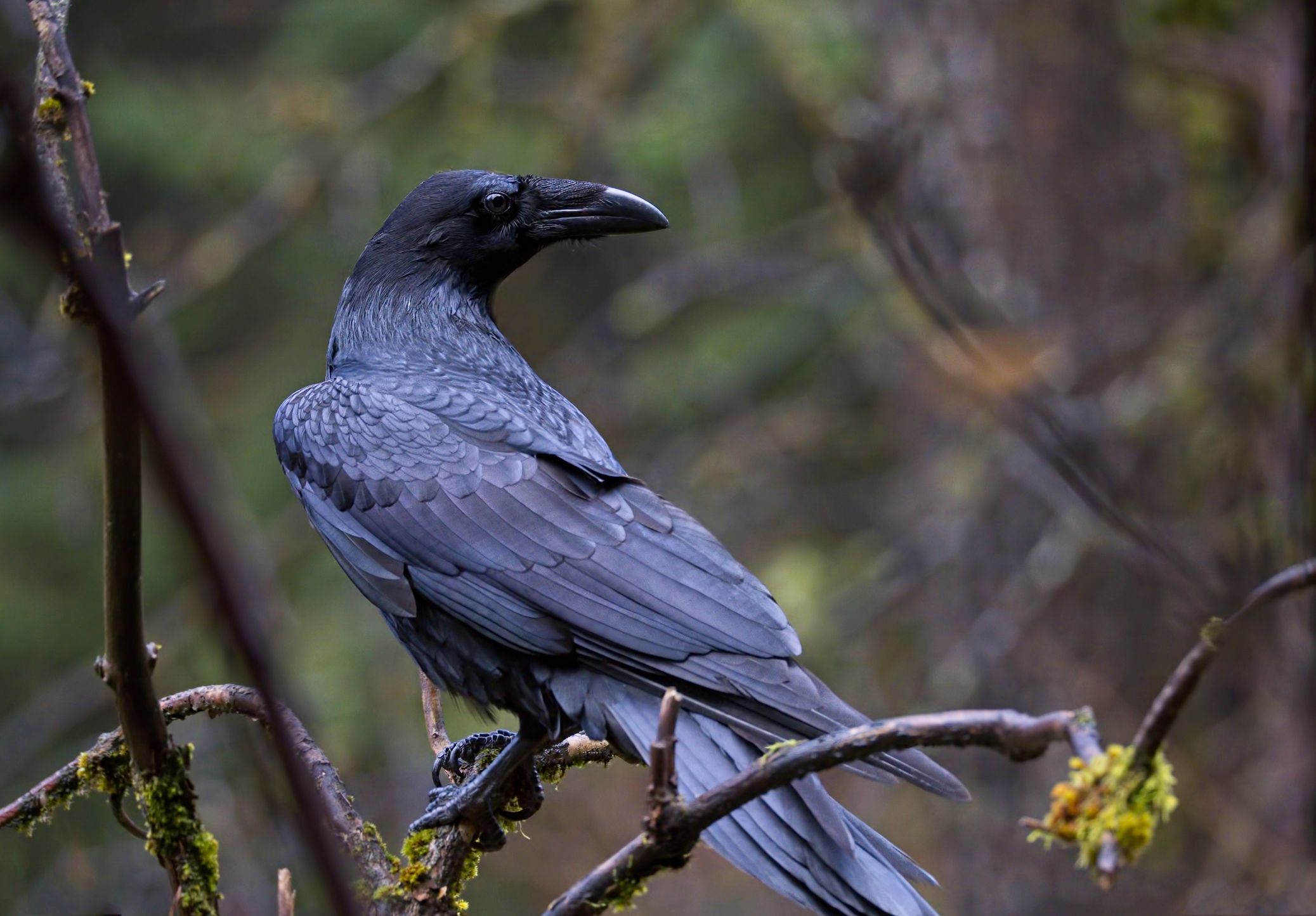
Common raven
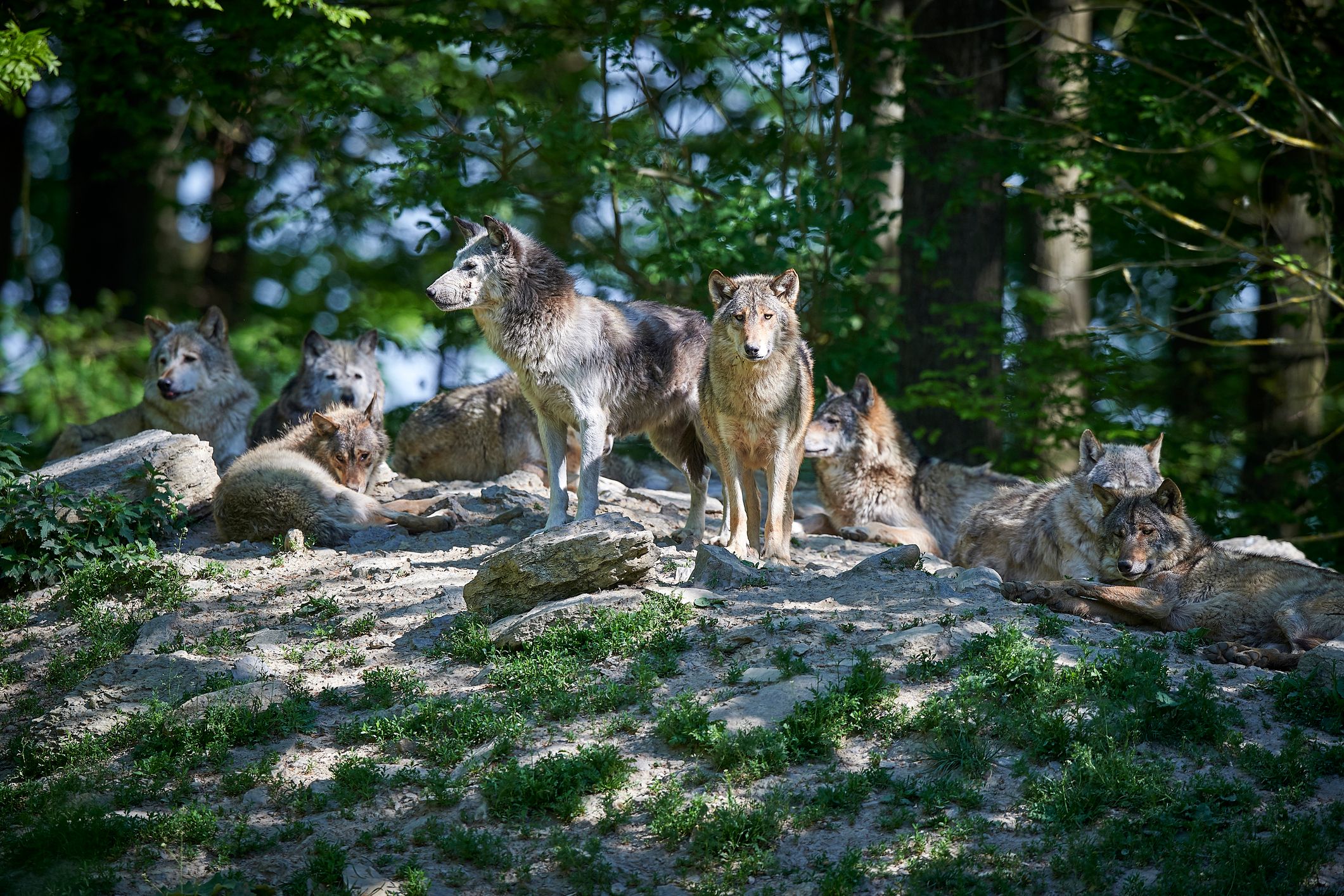
Pack of Alaskan timberwolves
The same goes for wolves. Michael has no time for Hollywood’s habit of turning them into panting menace machines. He described being watched by wolves while living on a wilderness island in northern British Columbia, sensing them before seeing them, their eyes catching the light before the rest of them emerged from the woods. Not once, he told me, did they threaten him. He makes the case for patience with wildlife in general, and it is a compelling one. Be still. Be quiet. Let the animal come to you. He told me about a grizzly mother bringing her cubs closer because he was sitting calmly, not pressing the moment. You don’t often hear a bear anecdote used in service of humility, but Michael makes it sound positively bucolic.
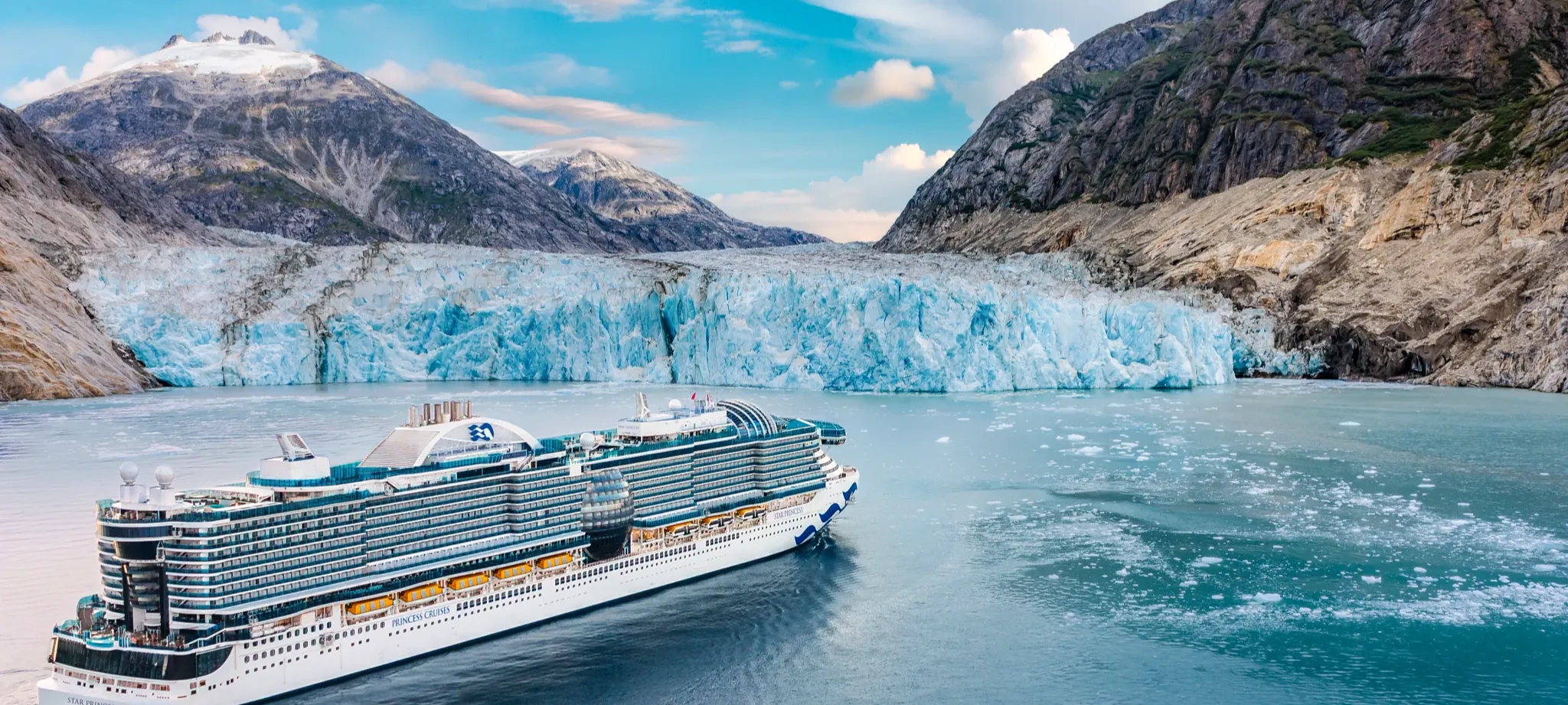
That calmness is part of what he believes cruise ships are uniquely good at in Alaska. He is not anti-land, obviously. He likes a high trail and a proper day out as much as anyone. But he keeps coming back to the specific luxury of ship-based wilderness access. Unpack once. Keep your bed, your hot shower, your dinner reservation. Then watch a whale breach beneath your balcony, or a bear walk a beach in a deep-water fjord while you’re still holding coffee. That balcony line could sound like brochure copy if it weren’t coming from someone so clearly, gloriously past brochure language.
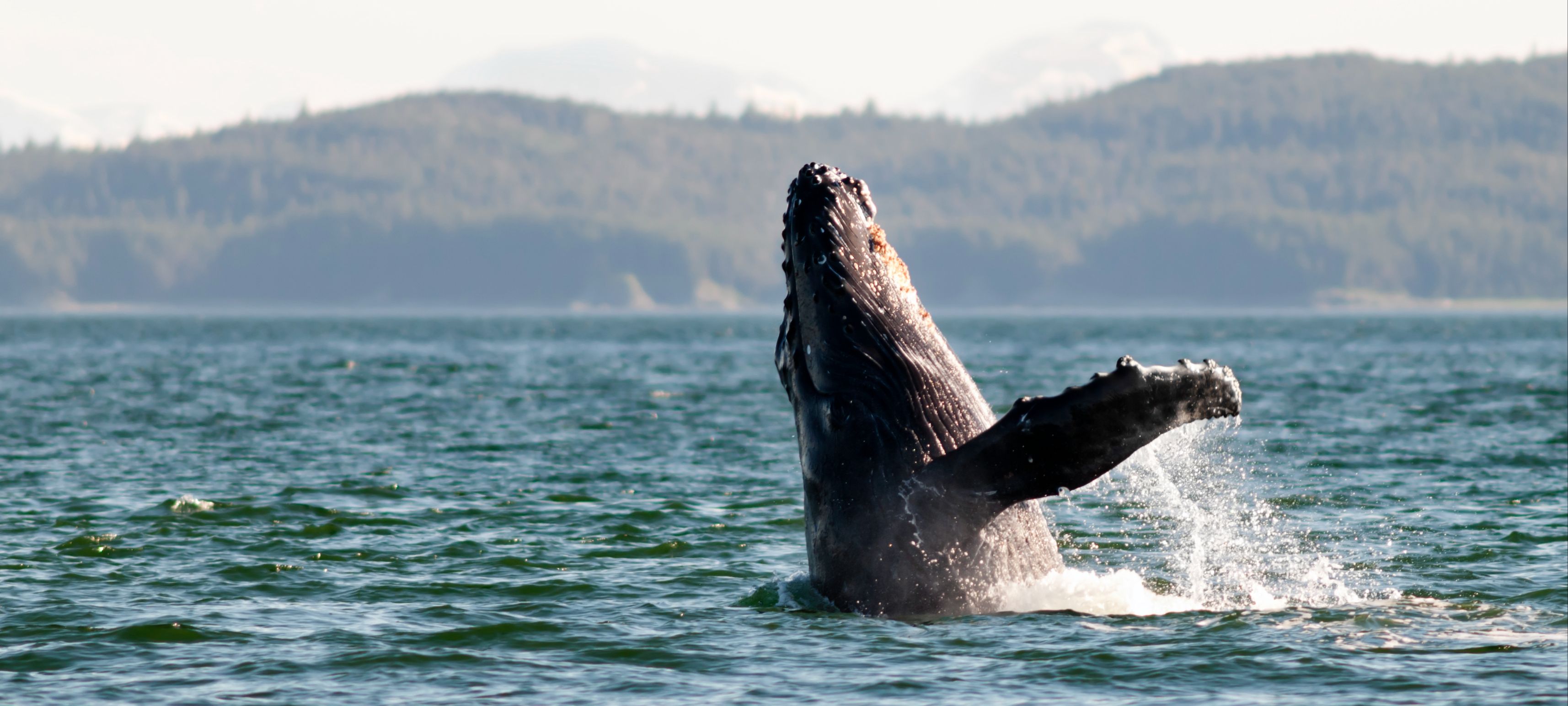
And the wildlife case stands up. In Juneau, humpback whales can be seen from April through November, with peak viewing from June through September, according to official Alaska travel guidance. Glacier Bay’s seasonal wildlife calendar also notes summer as the time to catch humpback breaches, while autumn brings late salmon runs that draw in predators. Michael’s own shorthand was simpler: whales on the Juneau days, glaciers in Glacier Bay, bears when the salmon are running, especially in August and September. Late August into September is also when places like Brooks River see bears returning in strong numbers to feed on weakening salmon, which helps explain why he circled the first week of September so emphatically when we spoke.
He is, it should be said, also handily knowledgeable about photography, which helps in a place this photogenic. But Michael reckons Alaska eats focal length. It simply swallows it. People bring heroic lenses, zoom in with missionary zeal, but still end up with a photograph where a bear looks like a punctuation mark. Consequently his advice is charmingly un-snobbish: smartphones are fine. Use pano for sunrise and sunset. Use night mode for the Northern Lights. Brace yourself against the ship. Exhale slowly when you press the shutter. Also, accept that the average Alaska cruiser will probably take about a thousand pictures, and only some of them need to be good.
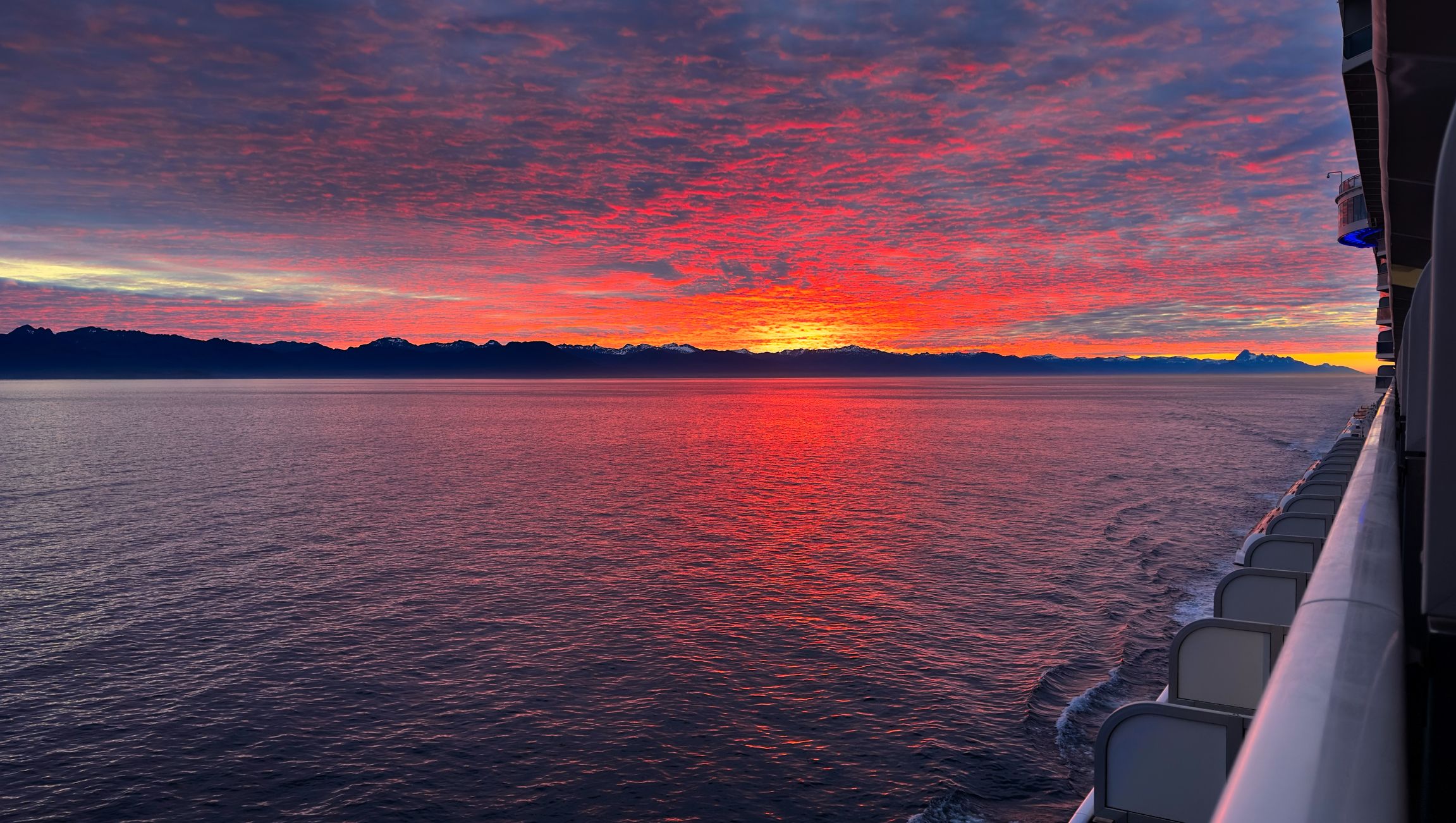
Sunset over mountains – Glacier Bay National Park
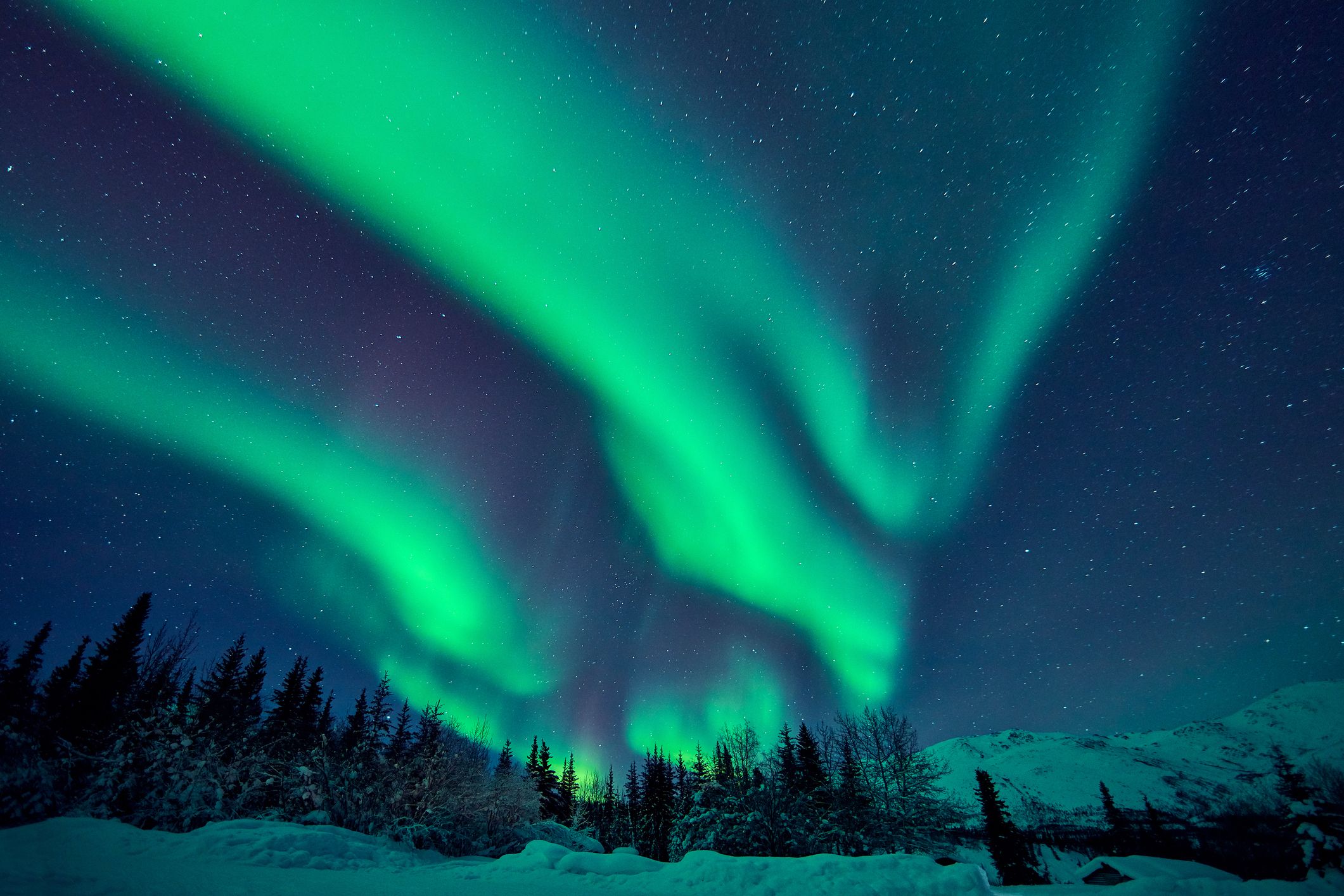
Aurora Borealis, Alaska
He’s also strong on a point that I suspect many first-time cruisers need to hear. Don’t hide in your cabin on the first morning after leaving Seattle or Vancouver. Get out on deck. Alaska doesn’t really do subtle arrivals, and you want to be there when the scale of it starts to announce itself. Michael talks about that early whale-watch call from the open decks as the moment passengers realise what they’ve signed up for.
And then there is Michael’s broader philosophy. He talks about water the way poets do, or perhaps the way poets would if they’d spent more time on expedition-style decks. He believes we live on a water world. He quotes Philip Larkin. He talks about Alaska as a place where “nature is more and man is less,” and says people often come away with a feeling of returning home rather than escaping.
This could all be unbearable in the wrong hands. In his, it’s persuasive, because it’s clearly lived. He grew up in Cleveland, the son of an NFL player who banned the word “can’t” from the house. He leads walking safaris in Africa as well as Alaska work, and he talks about the two places as if they’re distant cousins sharing the same wild bloodstream. “Africa is Alaska with heat,” he told me, which is one of those sentences you want to argue with for a second before realising, coming from someone who’s an expert on both, it’s probably true.

What I liked most, though, was that he never made Alaska sound easy. Beautiful, yes. Available, yes, especially by ship. But not tame, not tidy, and not something to be consumed in a frenzy. He kept returning to patience. To stillness. To letting the place come to you. Which I suspect may be the whole point.
Cruise marketing tends to reduce Alaska to the big three. Whales. Bears. Glaciers. Michael certainly doesn’t deny their appeal. He just makes a better case for everything around them. By the time our conversation ended, I had the distinct impression that Michael is one of those people who doesn’t merely work in a place. He carries it around with him. You meet him in a normal setting and Alaska follows him in, ten seconds later, trailing glacier light, raven chatter, and the faint suggestion that perhaps your life could do with a little more wilderness and a lot less ceiling.
He would probably say that’s exactly the lesson Alaska is so good at teaching.