Some Baltic cruises contain a sea day during which you spend most of it sailing through German farmland. This is considerably better than it sounds.
The Kiel Canal cuts across Schleswig-Holstein between Brunsbüttel on the Elbe and Kiel-Holtenau on the Baltic, saving ships an average of around 280 nautical miles compared with going around northern Denmark. For cruise passengers, that shortcut means hours of locks, villages, bridges, ferries, woodland and container ships passing startlingly close to fields. The United Canal Agency describes it as the world’s busiest artificial waterway.
It’s exactly the sort of itinerary detail that looks administrative when you book and turns out to be one of the most memorable parts of the voyage.
What happens on a Kiel Canal cruise?
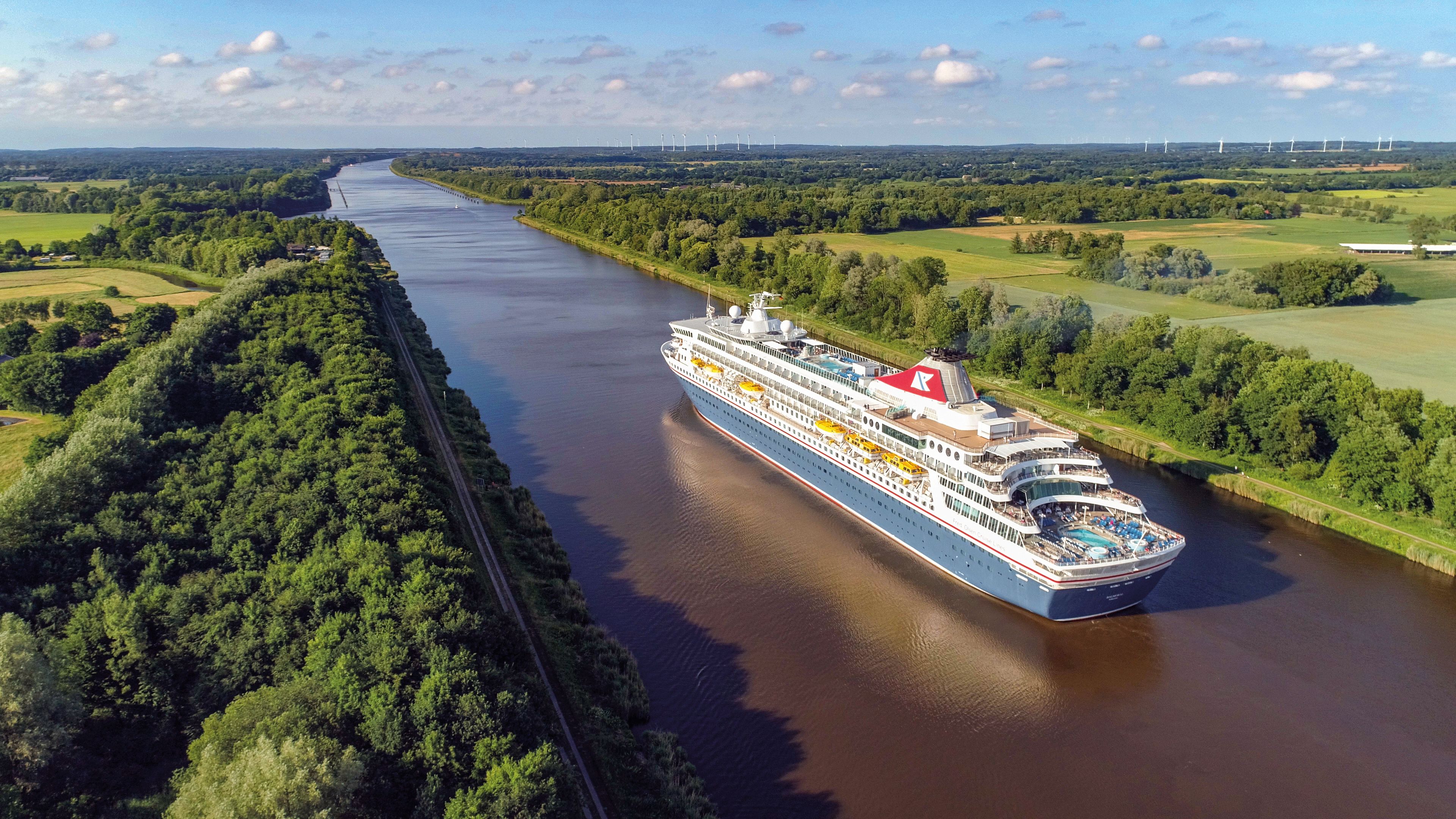
Your ship enters through the locks at either Brunsbüttel or Kiel-Holtenau, then spends most of the day crossing northern Germany before emerging into another sea. Unlike the Panama Canal, the Kiel Canal doesn’t need to lift ships high above sea level. The drama is much more understated: you enter a lock, pass beneath bridges and then spend hours sailing through an almost improbably ordinary landscape.
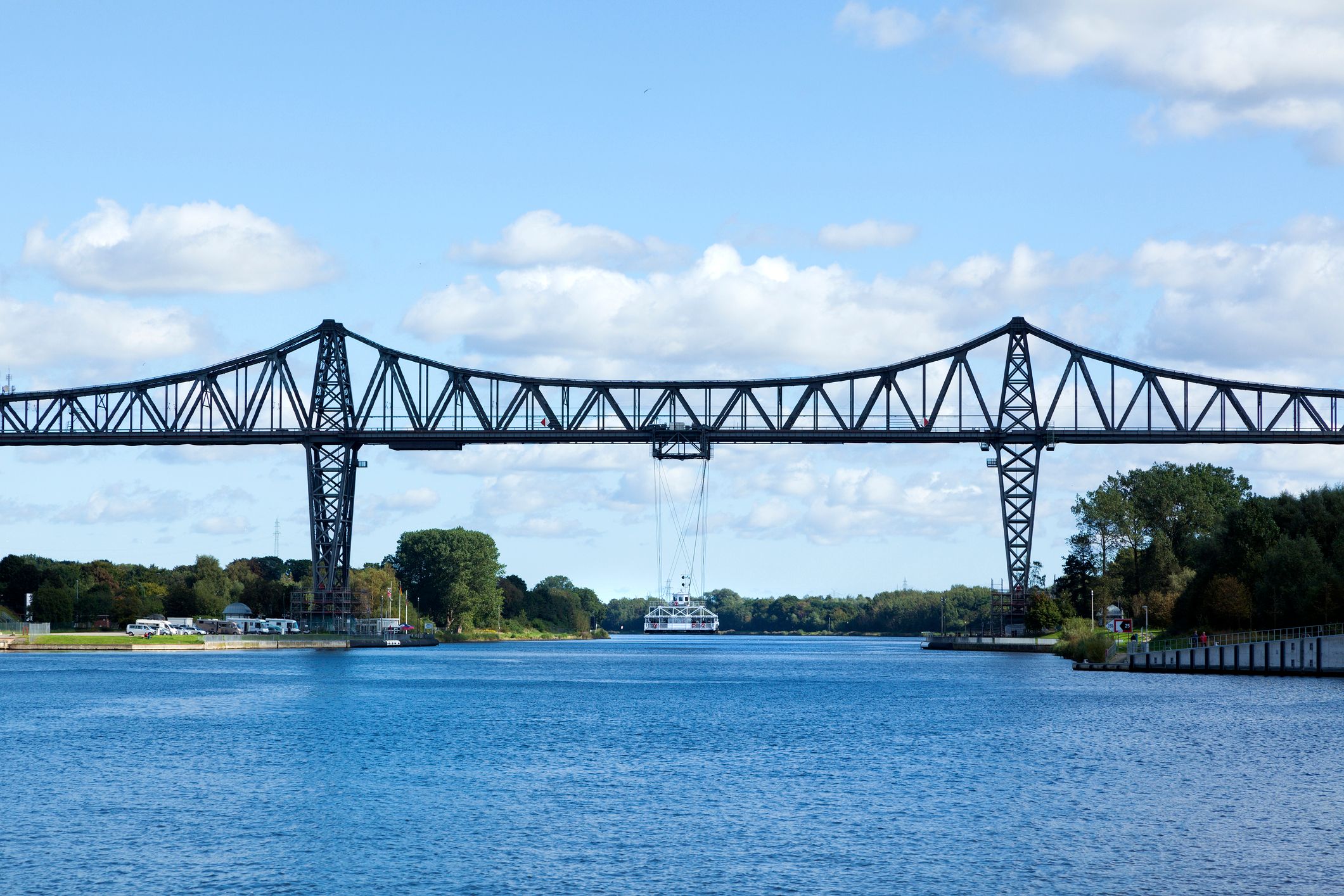
That contrast is what makes it work. Farms, cycle paths and small towns sit beside a route used by serious commercial shipping, so a quiet field may be followed a few minutes later by the side of a container vessel filling most of your view. At Rendsburg, the canal passes beneath a railway bridge around 2.5 kilometres long, one of the route’s great landmarks and the point at which people on the upper decks tend to develop a sudden interest in vertical clearance.
Why can only some cruise ships use the Kiel Canal?
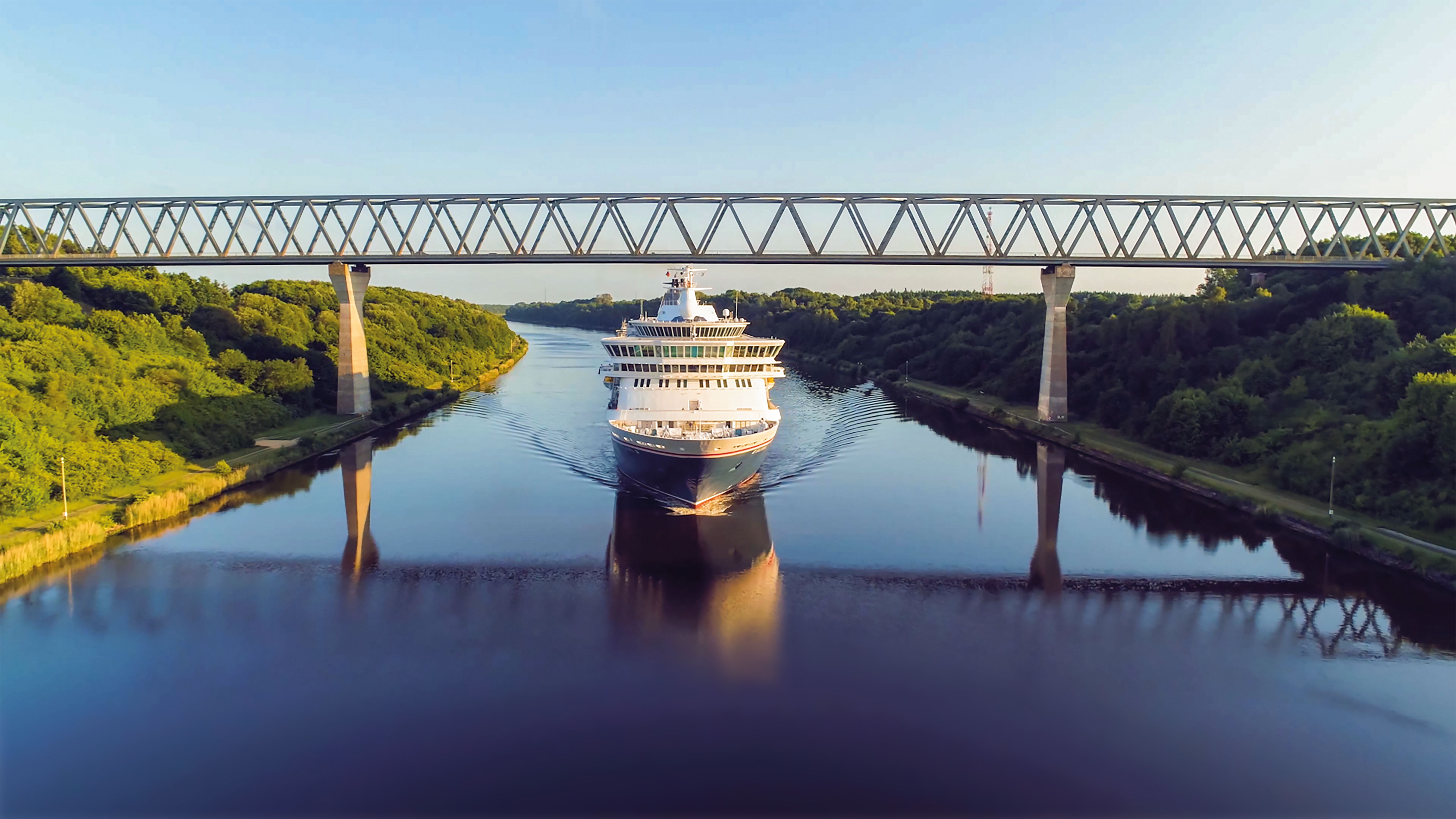
Size matters here in a genuinely useful way. The canal’s dimensions and bridge clearances rule out most modern megaships, which is why lines operating smaller vessels make such a point of their ability to use it. Fred. Olsen explicitly promotes Balmoral for its Kiel Canal access, noting that the ship can pass beneath the low bridges while larger vessels have to take the long route around Denmark.
That turns small-ship cruising into something more tangible than quieter lounges and fewer people at breakfast. A smaller vessel can literally take a route a larger one cannot.
Fred. Olsen currently has several 2027 Baltic cruises that transit the canal, including sailings from Rosyth and Southampton, while Azamara’s 2027 world-cruise programme includes a Kiel Canal crossing aboard Azamara Quest.
What do you actually see?
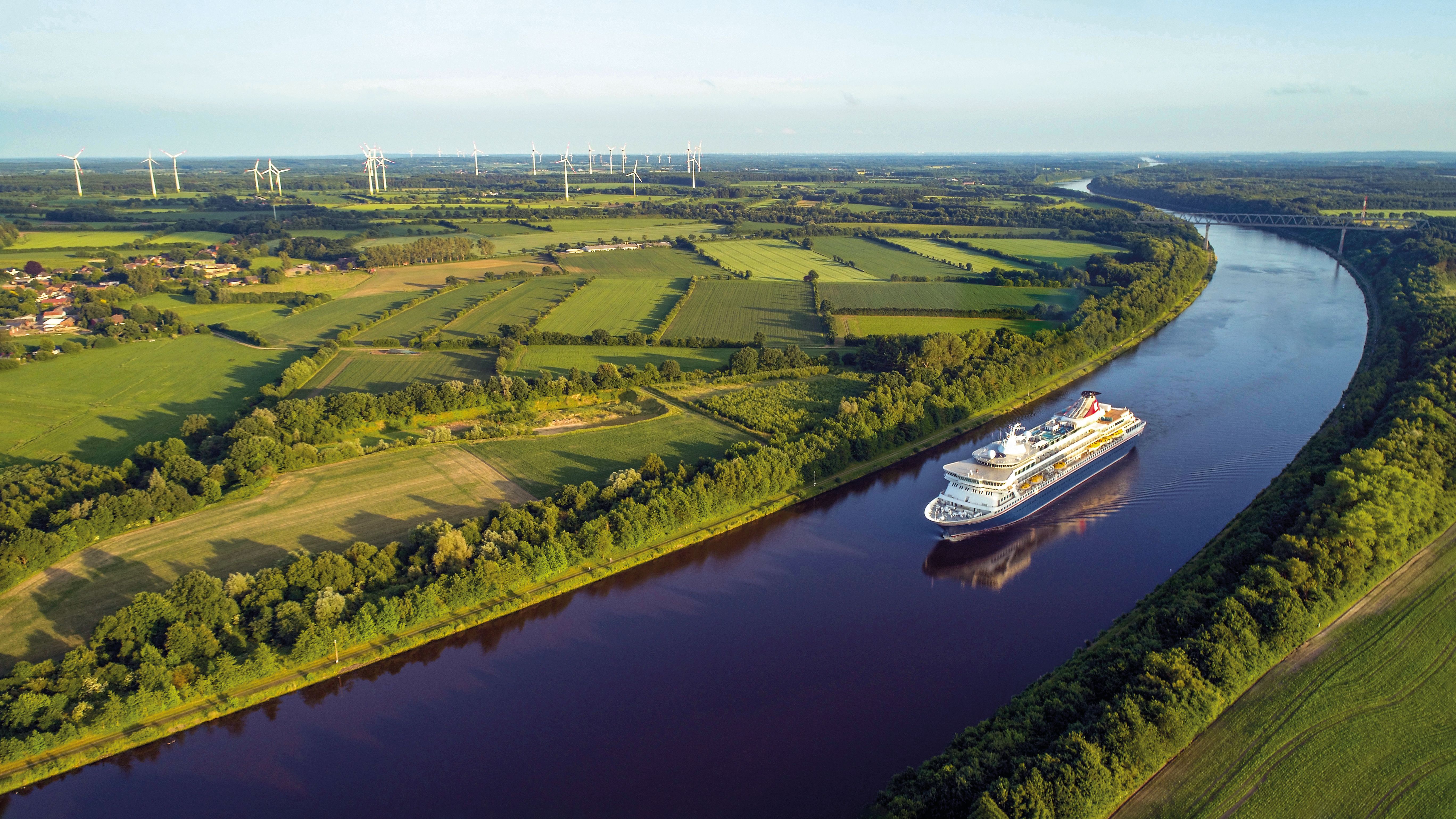
The appeal is not spectacular scenery in the usual sense. There are no glaciers, mountains or cliffside villages. Instead, the canal gives you a long sequence of very close, very ordinary northern European landscapes interrupted by bits of huge infrastructure.
You’ll see green fields, woods, houses, local ferries and towns along the banks, with commercial ships moving in the opposite direction. Rendsburg is the obvious midpoint landmark, but much of the pleasure comes from the slightly strange scale of the whole thing. An ocean-going cruise ship simply looks faintly wrong surrounded by farmland.
That is the canal’s charm. It feels less like crossing a continent and more like discovering that Germany has an extremely efficient maritime back entrance.
Is the Kiel Canal like the Panama Canal?
Not really, beyond the fact that both save ships a very long detour.
Panama is engineering theatre. Ships are raised around 26 metres through giant locks before crossing Gatún Lake. Kiel is flatter, quieter and much more domestic. Its achievement lies in letting North Sea and Baltic traffic cut straight across Schleswig-Holstein while local life continues a few metres away.
For a cruise passenger, that makes it unexpectedly intimate. Panama makes you think about the scale of global trade. Kiel makes you think about what it must be like to own a house whose garden occasionally contains a cruise ship in the middle distance.
Is the Kiel Canal worth choosing a cruise for?
If you already like unusual routes, absolutely. It turns what could have been a conventional North Sea or Baltic sea day into something much stranger: ten or so hours of locks, ferries, bridges, villages and working ships passing through the middle of northern Germany. Fred. Olsen even sells the canal itself as one of the highlights of its Baltic itineraries rather than simply treating it as the route between ports.
The Kiel Canal is not grand in the Panama sense. It is better described as wonderfully peculiar.
Your ship saves hundreds of miles by avoiding Denmark, and you spend the day watching Germany slide past at close range. For once, the shortcut is the destination.