Imagine going to bed on a Monday night and waking up on Wednesday morning. You haven't overslept, the ship's medical team hasn't been summoned and nobody's played an elaborate practical joke with the calendar. Tuesday has simply ceased to exist.
It's an entirely normal occurrence on certain transpacific cruises, thanks to one of geography's more peculiar inventions: the International Date Line.
Sail across it in one direction and you'll skip a calendar day. Travel the other way and you can experience the same date twice, which raises some interesting possibilities for birthdays, anniversaries and anyone who's ever wished for another Saturday.
You won't find this particular attraction on many Mediterranean itineraries. But on cruises between Alaska and Japan, Australia and Hawaii, or the islands of the South Pacific, a trip across the Date Line can be part of the adventure.
So how does it work, what happens to life onboard and do you really lose a day of your holiday?
What is the International Date Line?
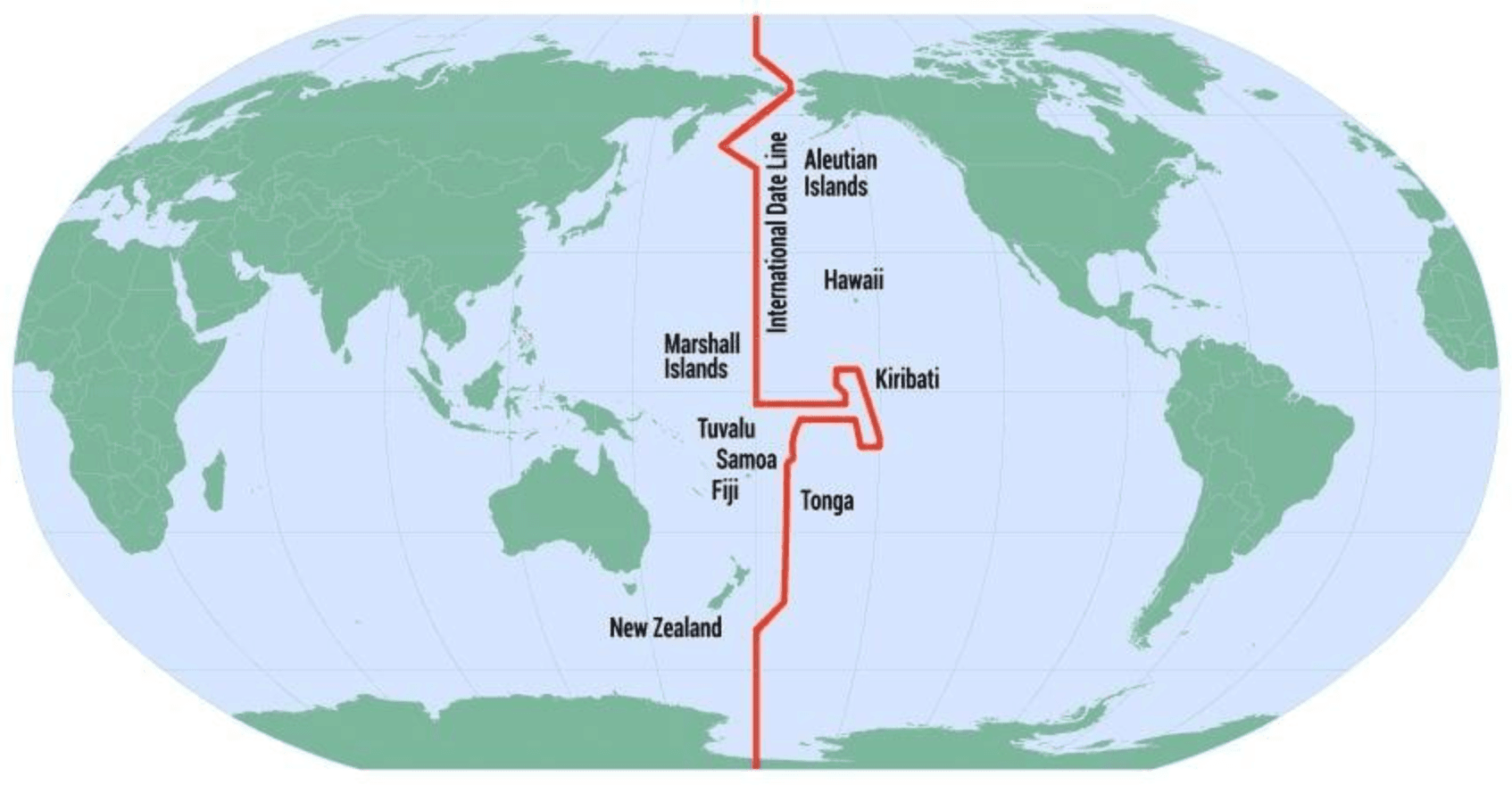
The International Date Line runs approximately north to south through the Pacific Ocean, roughly following the 180-degree meridian on the opposite side of the world from Greenwich.
It marks the boundary between two consecutive calendar dates. According to the US National Oceanic and Atmospheric Administration (NOAA), travelling west across the line moves you forward one day, while crossing east takes you back to the previous date.
In practical terms, imagine travelling from Hawaii towards Japan. As you cross the Date Line heading west, the calendar advances. Monday might be followed by Wednesday, with Tuesday omitted from the ship's schedule.
Sail from Japan towards Hawaii, however, and the opposite happens. You might enjoy a perfectly respectable Monday, go to bed and wake up to discover it's Monday all over again.
The important point is that you're changing the date, not travelling through time. Your body continues to age at its usual, frankly disappointing rate, and the ship doesn't suddenly arrive anywhere faster.
The line isn't perfectly straight, either. It bends around national borders and island groups to avoid dividing countries between different calendar days.
And despite its rather official-sounding name, it isn't established by a binding international law. Countries choose the dates and time zones they observe, which is why the line takes such an irregular course across parts of the Pacific.
Do you really lose a whole day on a cruise?
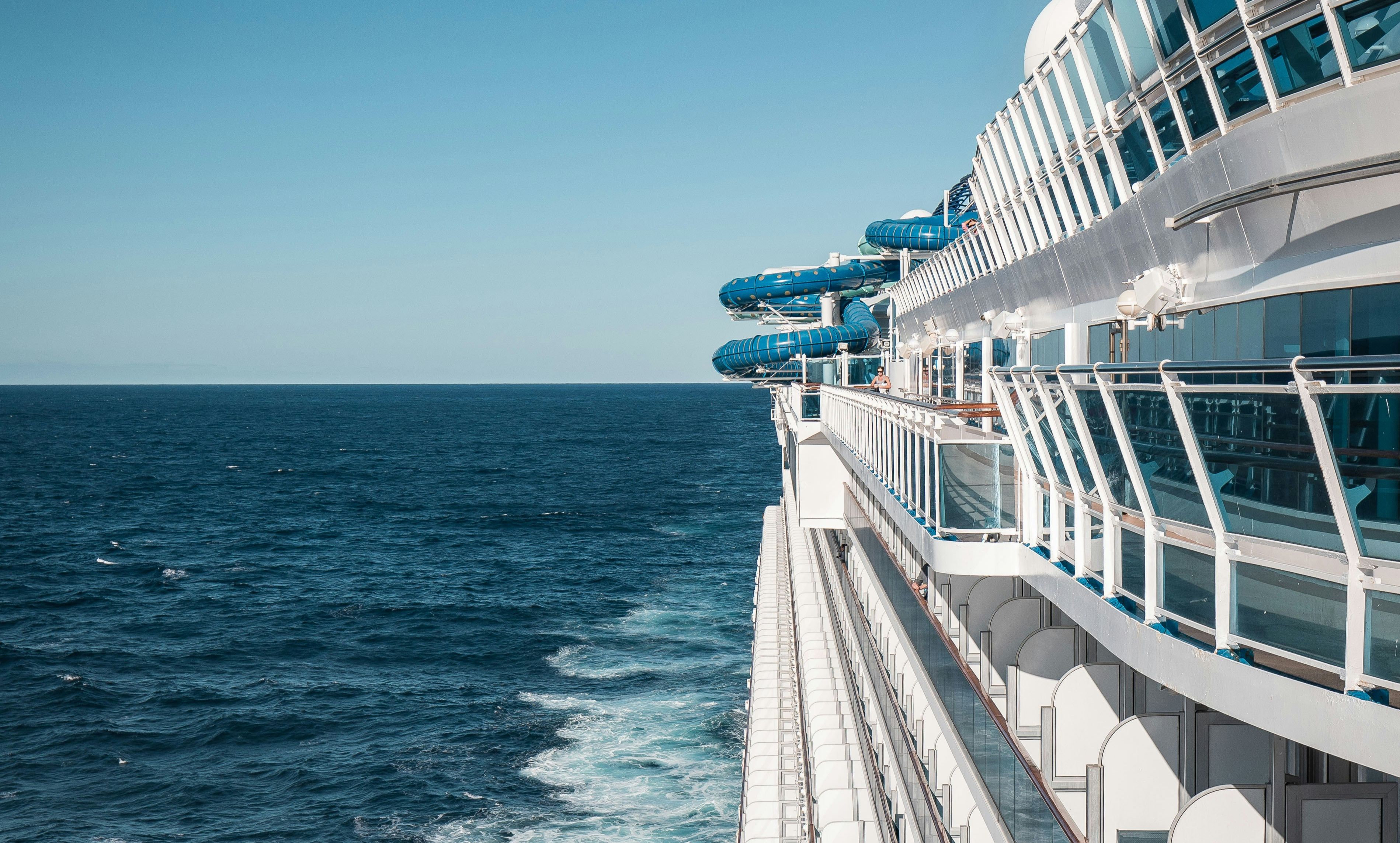
Yes, in terms of the calendar. No, in terms of the actual time you spend onboard.
Suppose you book a cruise heading west across the Pacific. During the voyage, the ship adjusts its official date to account for the International Date Line, so a particular date disappears from the daily programme.
You'll still have the same continuous experience of travelling aboard the ship. The sun rises and sets, meals are served and the captain remains responsible for getting everyone to the next destination.
Nobody turns off the lights for 24 hours and asks passengers to remain in their cabins until Thursday.
There's a slightly counterintuitive distinction here between the number of calendar dates appearing on an itinerary and the number of nights you actually spend aboard.
A westbound cruise can appear to cover one more calendar date than its physical duration would suggest. Conversely, an eastbound voyage can include a repeated date.
Cruise operators account for this when constructing and selling their itineraries. The crossing isn't an unexpected event that deprives passengers of a day's accommodation.
The essential thing is to look at the advertised number of nights, the departure and arrival dates, and the itinerary's Date Line notation rather than trying to calculate the holiday's duration simply by counting the dates on a calendar.
If you're feeling particularly aggrieved about losing Tuesday, you're welcome to complain to the Pacific Ocean. It has been receiving correspondence of this nature for some time.
What happens to restaurant bookings and daily activities when the date changes?

The ship continues operating to its published programme, although the official date and time have to be adjusted.
Cruise lines use a designated ship's time to coordinate everything from restaurant reservations to excursions and crew schedules. As the vessel travels between time zones, the captain decides when its clocks should change.
The ship's systems must also keep pace. Oracle's documentation for cruise ship management software explains how onboard clocks, point-of-sale systems and hotel management records can be updated together to maintain consistent dates and times across the vessel.
That's important when the calendar contains two Mondays. The restaurant still needs to know which booking belongs to which evening, and nobody wants to discover that their speciality dining reservation has accidentally been assigned to yesterday.
In practice, passengers should follow the dates and times shown in the cruise line's current daily programme or app. The precise handling of a repeated or omitted date can differ between operators, and it's worth confirming any important reservation with Guest Services.
If the ship repeats a Saturday, for example, that doesn't automatically entitle you to a second complimentary speciality meal or another allocation of onboard benefits. What you've purchased depends on the fare and its terms, not how often a particular weekday appears.
And don't rely entirely on your phone to tell you the time. Automatic time-zone changes can differ from the time being observed onboard. Disney Cruise Line's official guidance, for example, advises passengers to follow the captain's announced clock changes and check the ship's app.
Can you celebrate your birthday twice on a cruise?

Technically, yes. If your birthday falls on the date repeated during an eastbound crossing, you could experience that calendar date twice.
Imagine sailing from Japan towards Alaska and discovering that your birthday is happening again. You'd have an entirely legitimate excuse for ordering another slice of cake, although whether the crew agrees to organise a second birthday celebration is another matter.
You won't have aged a year less, but you'll have occupied your birthday date for considerably longer than usual.
Conversely, if your birthday is the date skipped on a westbound crossing, it could disappear from the ship's calendar altogether.
That's less appealing, although there's nothing preventing you from celebrating a day early or late. The International Date Line isn't known for its willingness to negotiate, but the restaurant staff may be more accommodating.
A passenger discussing an eastbound Royal Caribbean crossing on Cruise Critic even reported that their daughter enjoyed two days of birthday wishes after the same date occurred twice. It's an anecdote rather than an official company policy, but a rather lovely example of what the experience can mean in practice.
If you're planning something special, check the crossing date and arrange your celebrations in advance.
Which cruises cross the International Date Line in 2027?
You don't need to book a full world cruise to experience the phenomenon. Several transpacific sailings include a Date Line crossing, and operators sometimes list it as a distinct event in the itinerary.
P&O Cruises Arcadia: Southampton to Sydney
P&O Cruises has a 43-night voyage aboard Arcadia departing Southampton on 6 January 2027 and arriving in Sydney on 19 February.
The route travels via the Caribbean, Panama Canal, San Francisco and Hawaii before crossing the International Date Line on its way to Samoa, Fiji and Australia.
P&O lists the crossing on day 35 of its itinerary. Intriguingly, the voyage's itinerary displays 45 numbered days despite being sold as 43 nights, reflecting the westbound calendar adjustment.
It's an excellent real-world illustration of why simply subtracting the departure date from the arrival date isn't always the best way to understand how long a transpacific cruise lasts.
Carnival Luminosa: Sydney to San Francisco
Carnival's 23-day Tahiti & Pacific Islands Transpacific voyage departs Sydney on 6 April 2027 and arrives in San Francisco on 28 April.
The itinerary includes Fiji, Tahiti, Moorea and Hawaii, with an eastbound crossing of the International Date Line between Fiji and French Polynesia.
That makes it a particularly appealing choice for anyone who'd prefer to gain a calendar date rather than lose one.
It's worth remembering, though, that the repeated date is an effect of the ship travelling east into an earlier time zone, rather than a promise of an additional free night aboard.
Silversea Silver Moon: Vancouver to Tokyo
For something combining an Alaskan itinerary with an ocean crossing, Silversea's Silver Moon sails from Vancouver on 2 September 2027 and arrives in Tokyo on 19 September.
The 16-day voyage visits destinations including Ketchikan, Sitka and Kodiak Island before crossing the Pacific towards Japan.
Silversea explicitly identifies the International Date Line crossing as part of the voyage, giving passengers a chance to experience the calendar jumping forward as they travel west.
These are published itineraries rather than guarantees that every advertised detail will remain unchanged. Confirm the final schedule and date-line arrangements with the cruise line before booking.
Why doesn't the International Date Line follow a straight line?

You'd think something called a line could manage to be straight. The International Date Line has other ideas.
Although it broadly follows the 180-degree meridian, it bends around islands and national borders so that communities sharing the same government or close economic relationships can observe the same calendar date.
In 2011, Samoa took this logic to an extraordinary conclusion. The country changed which side of the Date Line it observed to bring its working week into closer alignment with major trading partners, including Australia and New Zealand.
The result was that Friday 30 December 2011 never happened in Samoa. Residents went directly from Thursday 29 December to Saturday 31 December.
Anyone who'd been planning an important appointment on the Friday was presumably obliged to reconsider.
Kiribati made a similar adjustment in the 1990s, bringing its widely scattered islands onto the same side of the Date Line and helping establish its eastern islands among the first inhabited places to welcome a new calendar year.
These changes reveal something rather wonderful about our system of timekeeping. The Earth's rotation is perfectly real, but the boundaries between dates are arrangements we've invented to make international life manageable.
And sometimes, even a country can decide it would rather skip Friday.
Is crossing the International Date Line worth experiencing on a cruise?
Absolutely, particularly if you're drawn to the unusual geographical experiences that longer voyages make possible.
You won't see anything dramatic happen to the ocean. There are no signs floating in the Pacific, no mysterious change in the colour of the water and certainly no sudden appearance of yesterday on the horizon.
The enjoyment comes from the sheer oddity of what you're experiencing. It's one of the few occasions when geography makes itself felt in the most ordinary parts of daily life, from the date on your breakfast menu to the strange realisation that you've already lived through this particular Wednesday.
Before booking, check which direction the voyage travels, when the date change occurs and how the operator lists the number of nights. If you're planning a birthday, anniversary or other special occasion, confirm the arrangements in advance.
And when you're onboard, follow the ship's clock and daily programme rather than assuming your phone has understood the situation.
Ultimately, the International Date Line offers something relatively rare in modern travel: a small piece of genuine wonder that requires absolutely no special equipment, expensive excursion or physical exertion.
You can go to sleep, wake up and discover that the calendar has performed a trick.
Which, depending on your feelings about Mondays, might be the most appealing shore excursion you never had to leave the ship for.