A proper fish market tells you things a glossier waterfronts never will. It tells you what local people actually eat, when the city wakes up, how close the harbour still is to daily life, and whether the local seafood culture has been carefully preserved. There’s theatre, but not the polished sort, rather it's the kind that involves rubber boots, crushed ice, shouting, a suspiciously large monkfish and someone who knows exactly how to fillet something effortlessly.
For cruise travellers, these ports are a gift. You can step off the ship into places where the seafood story is unfolding in public: auction halls, morning stalls, fishmongers, oyster streets, harbour cafés and restaurants where the menu seems less “curated” than “landed six hours ago”. The trick is to go early and accept that at some point you may find yourself eating shellfish before 11am. Worse things have happened at sea.
Bergen fish market, Norway
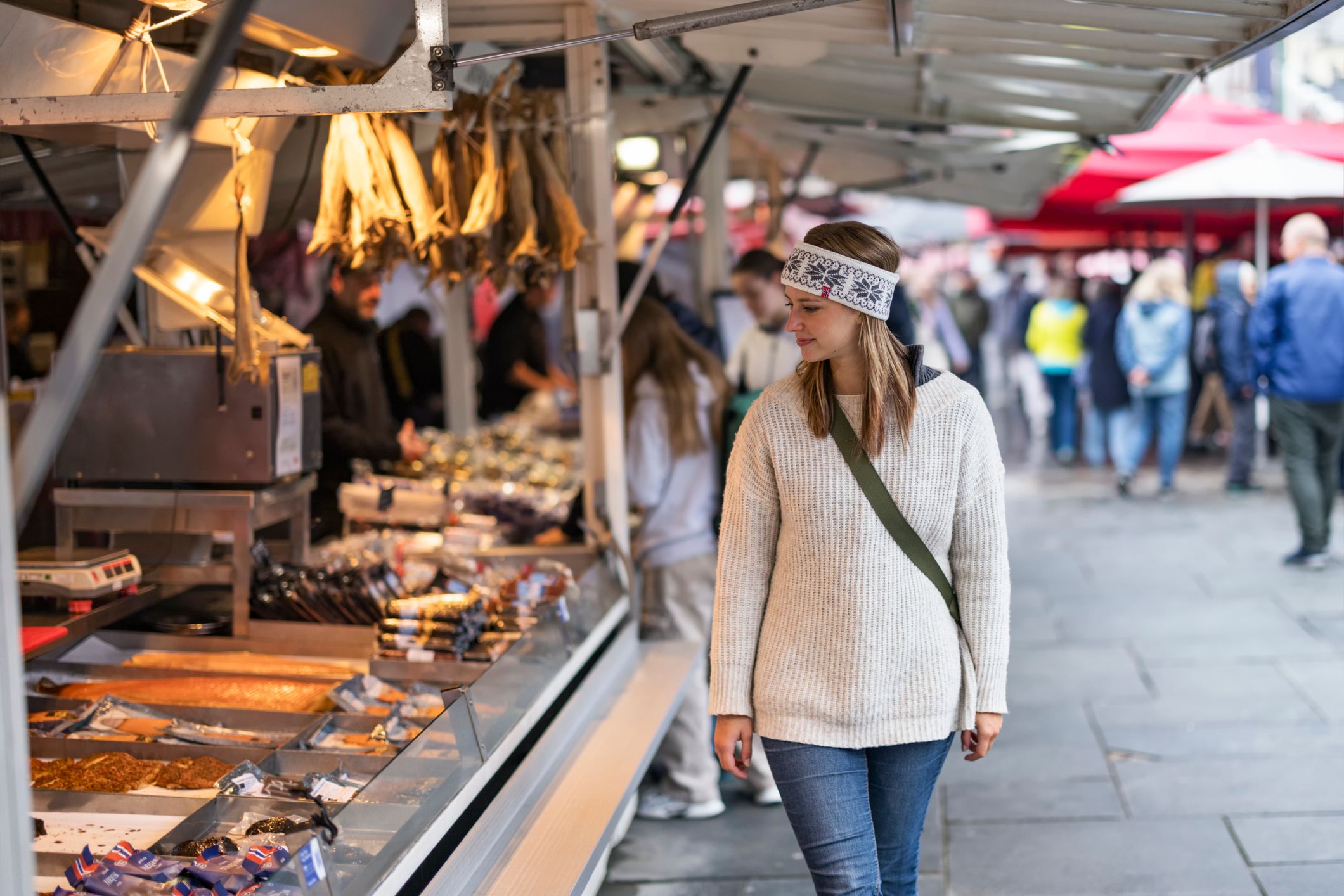
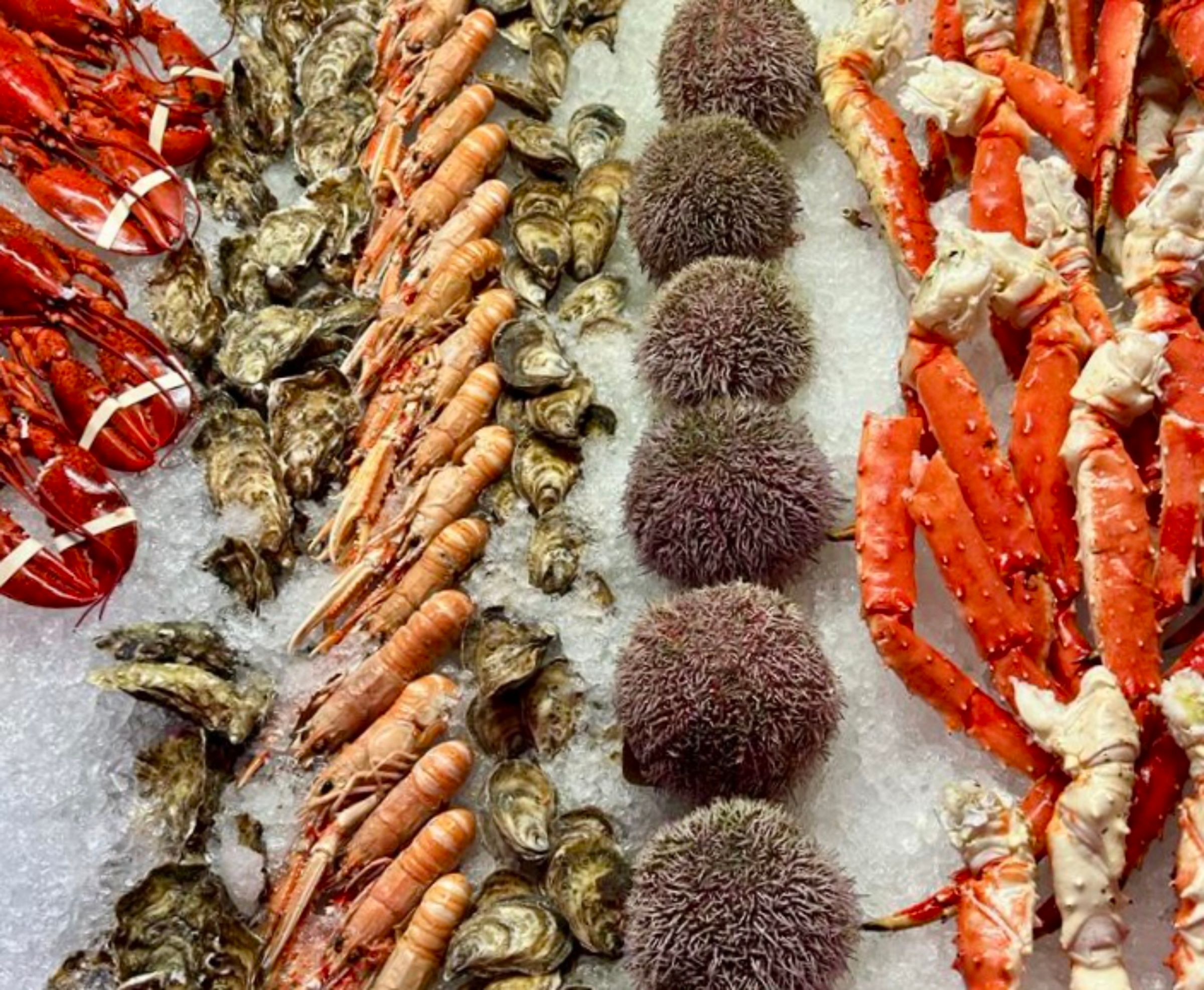
Bergen has the sort of waterfront that seems almost unfairly designed for cruise passengers: mountains behind, harbour in front, painted wooden buildings and the smell of seafood drifting about as if it's been planned especially for visitors. The city’s fish market has been trading since the 1200s and was historically a meeting point for fishermen, farmers and townspeople, with fish once sold directly from boats along the quay.
That history matters because Bergen’s seafood scene never feels like an attraction invented for visitors. The market sits close to Bryggen, the famous Hanseatic wharf, so a port day can move neatly from timbered maritime history to king crab, prawns, smoked salmon or fish soup without requiring much more planning than “walk towards the harbour and bring your appetite”.
Go early if you want the market at its most purposeful, then allow time for a bowl of fish soup before the weather changes its mind, which, being Bergen, it may well do.
Vigo fish market and O Berbés, Spain
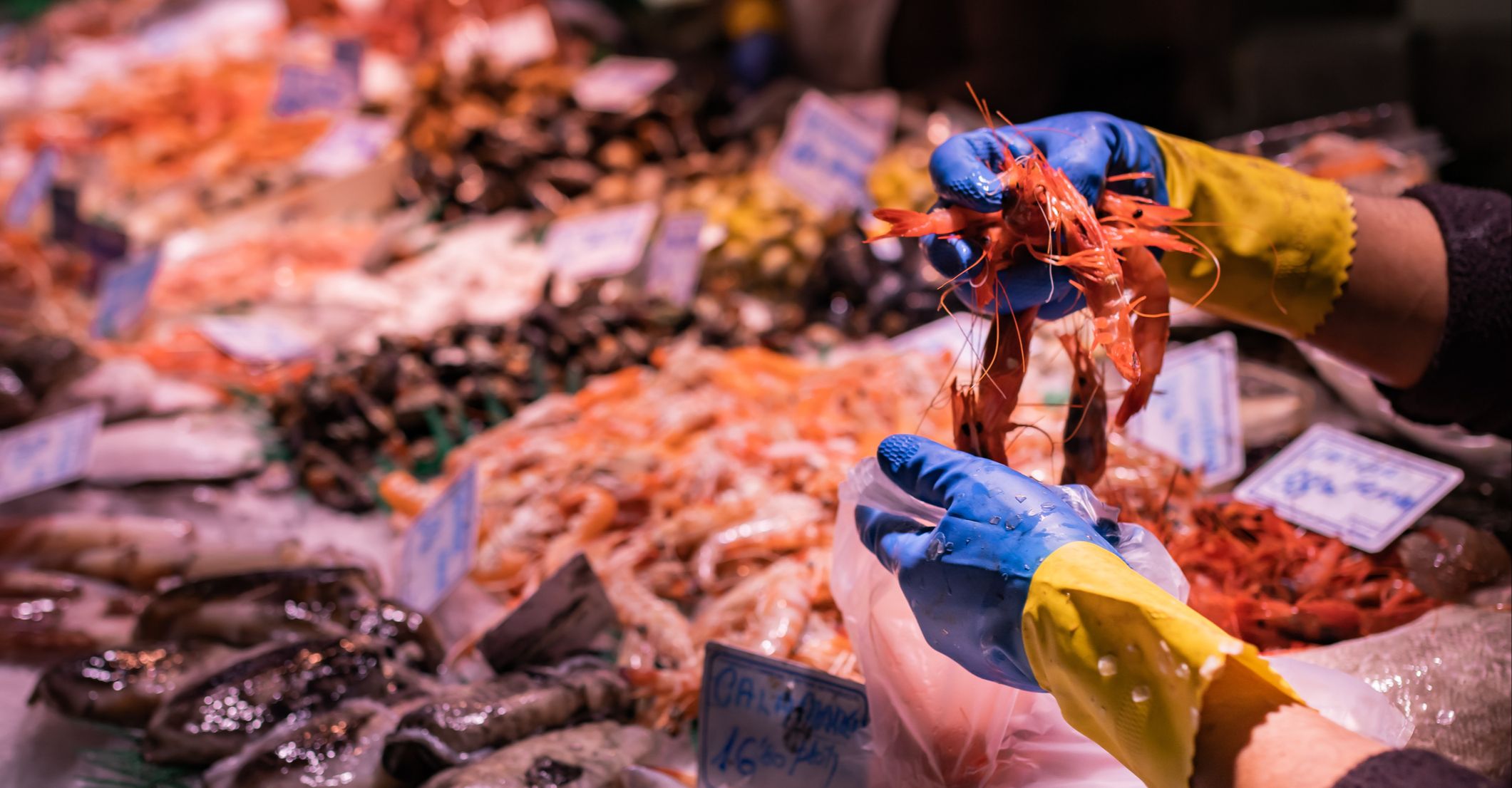
Vigo is not subtle about its relationship with the sea. The port handles the largest quantity of fresh fish in Europe, with a major morning auction sending fish onwards to markets across the continent.
Vigo’s fish auction is industrial, serious and not designed primarily for visitors, which is precisely why it’s so interesting. The port authority notes that the fishing port contains five fish markets, covering deep-sea fishing, coastal fishing, large fish, inshore fishing and seafood, with unloading, handling and auction activity all taking place within the port ecosystem.
You don’t need to watch an auction to feel the effect. O Berbés, the old fishing quarter and market area, still stands out for fish and seafood, and its streets lead easily into the Old Town, where appetite can be dealt with in the proper Galician fashion: oysters, octopus, mussels, hake, clams and something cold and white in a glass.
Vigo is the port for people who don’t want seafood prettified into a lifestyle accessory. It’s Atlantic, workmanlike and confident. You can practically hear the city muttering that if you wanted a decorative harbour, you should have gone somewhere less busy feeding the people of Europe.
Marseille Vieux-Port fish market, France
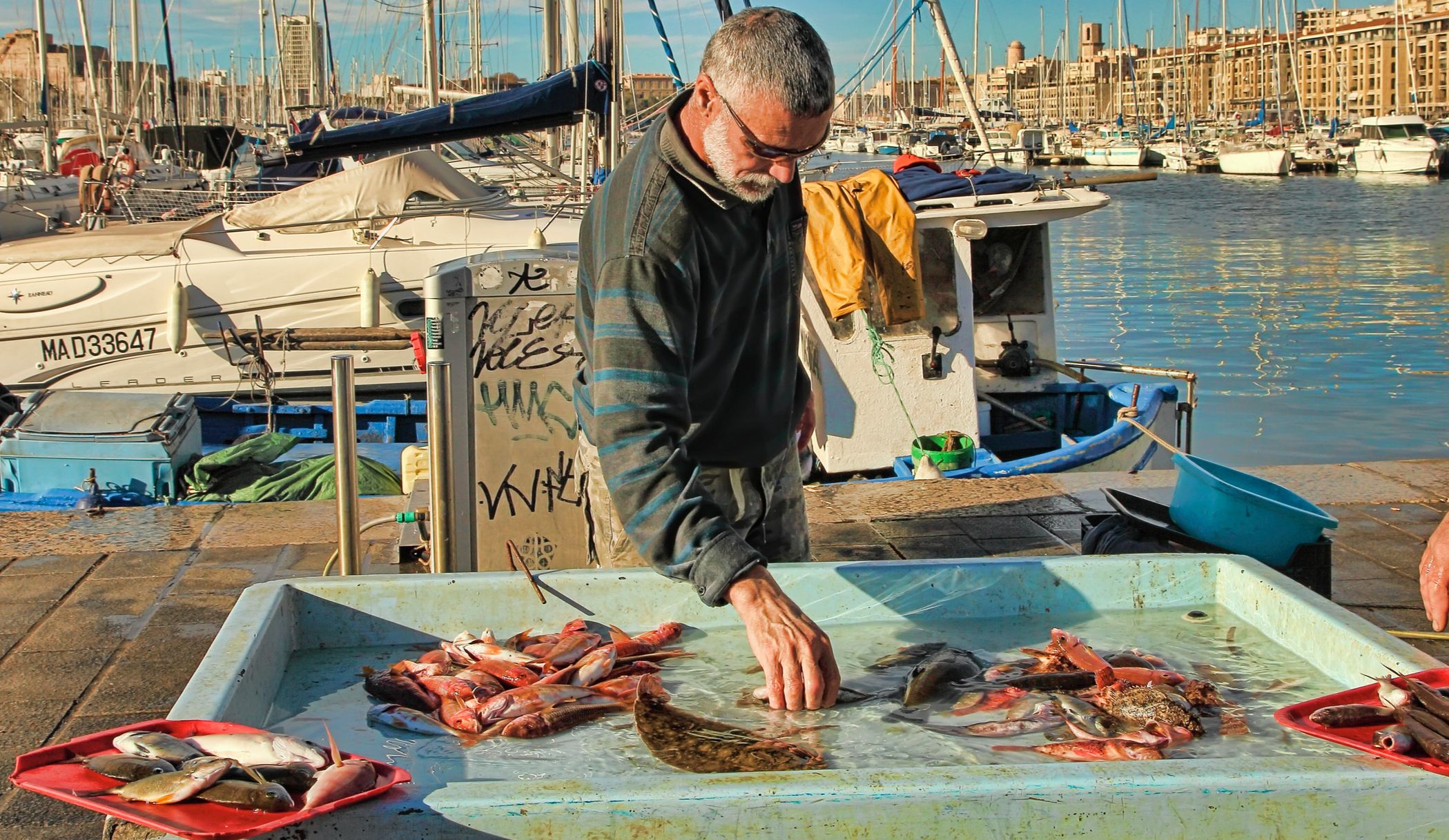
Marseille’s fish market has a pleasing lack of interest in looking like a postcard. It sets up on the Quai de la Fraternité in the Vieux-Port, where fishermen sell the morning’s catch against a backdrop of masts, limestone hills and a city. This is the place to catch a properly Marseillais atmosphere, with fishermen calling out to passers-by and fresh fish laid out in the old port.
This is the ideal seafood port day if you like a market that still feels attached to small boats. The market also gives you the correct emotional preparation for bouillabaisse, which is less a soup than a Marseille civic identity test. You don’t have to commit to the full ceremonial version if your ship leaves before dinner. A simpler seafood lunch near the harbour will do nicely, especially if it involves grilled fish, mussels or anything garlicky enough to make your cabin-mate reconsider a balcony room.
Go in the morning. By afternoon the market has done its thing, and the Vieux-Port becomes more about strolling, boats and apéritifs. None of which is a hardship, obviously, but you won't find any fish.
Catania La Pescheria, Sicily
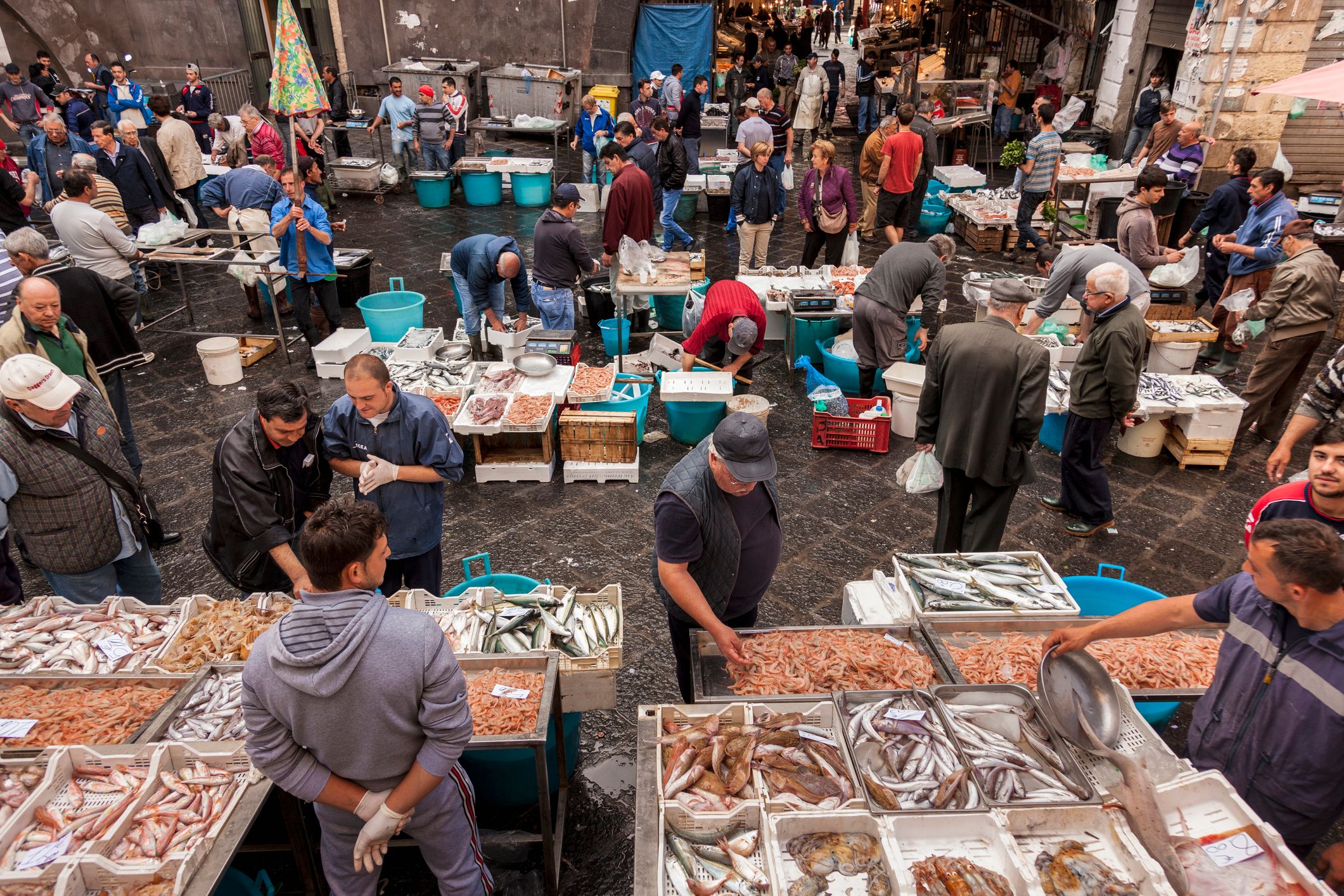
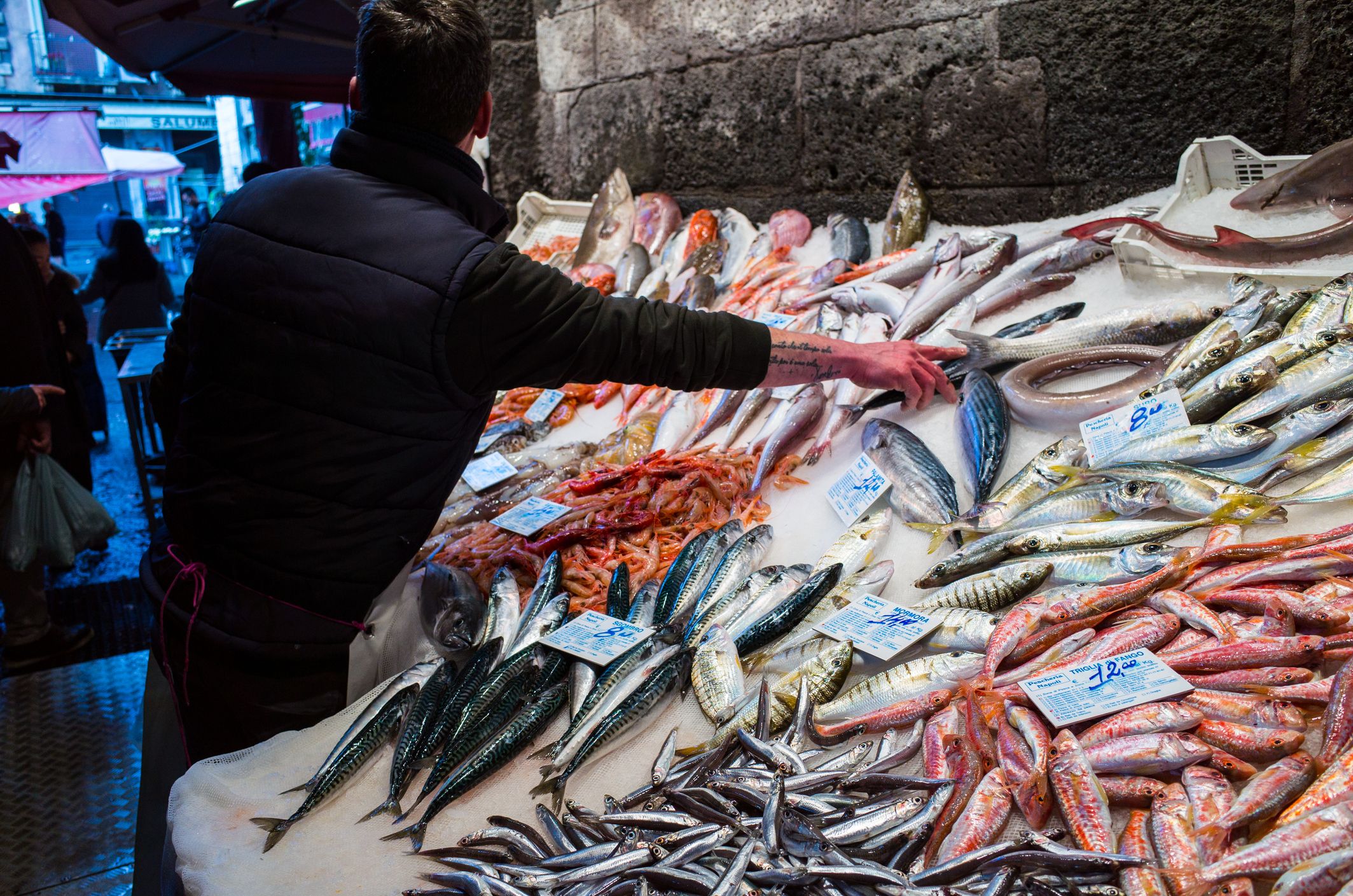
Catania’s La Pescheria is not a gentle market. It doesn’t greet you with soft lighting and a tasteful chalkboard. It announces itself, in the the typical Italian style: loudly. Vendors shout, fish glisten, swordfish heads stare accusingly, and the whole thing unfolds just off Piazza del Duomo with the kind of operatic confidence only Sicily can make look normal.
La Pescheria, known locally as Piscaria, is Catania’s old fish market, still preserving the city’s folklore. It's here fishermen and fishmongers have long sold the morning’s catch, with the Amenano river and old marina arches shaping the market’s historic setting.
For cruise passengers calling at Catania, this is one of the great sensory port mornings. You can walk from the ship into a city built in dark lava stone, pass baroque churches and suddenly find yourself in a fish market.
The right way to approach it is to visit before lunch, then eat nearby. Around La Pescheria, restaurants and street-food counters turn the market’s raw spectacle into something more immediately tasty: fried seafood cones, pasta with clams, grilled fish, anchovies, octopus and whatever the day has decided to provide. It’s not polished. It’s better than polished. It’s alive, messy, theatrical and likely to make every carefully styled food hall you’ve visited feel slightly embarrassed.
Busan Jagalchi Market, South Korea
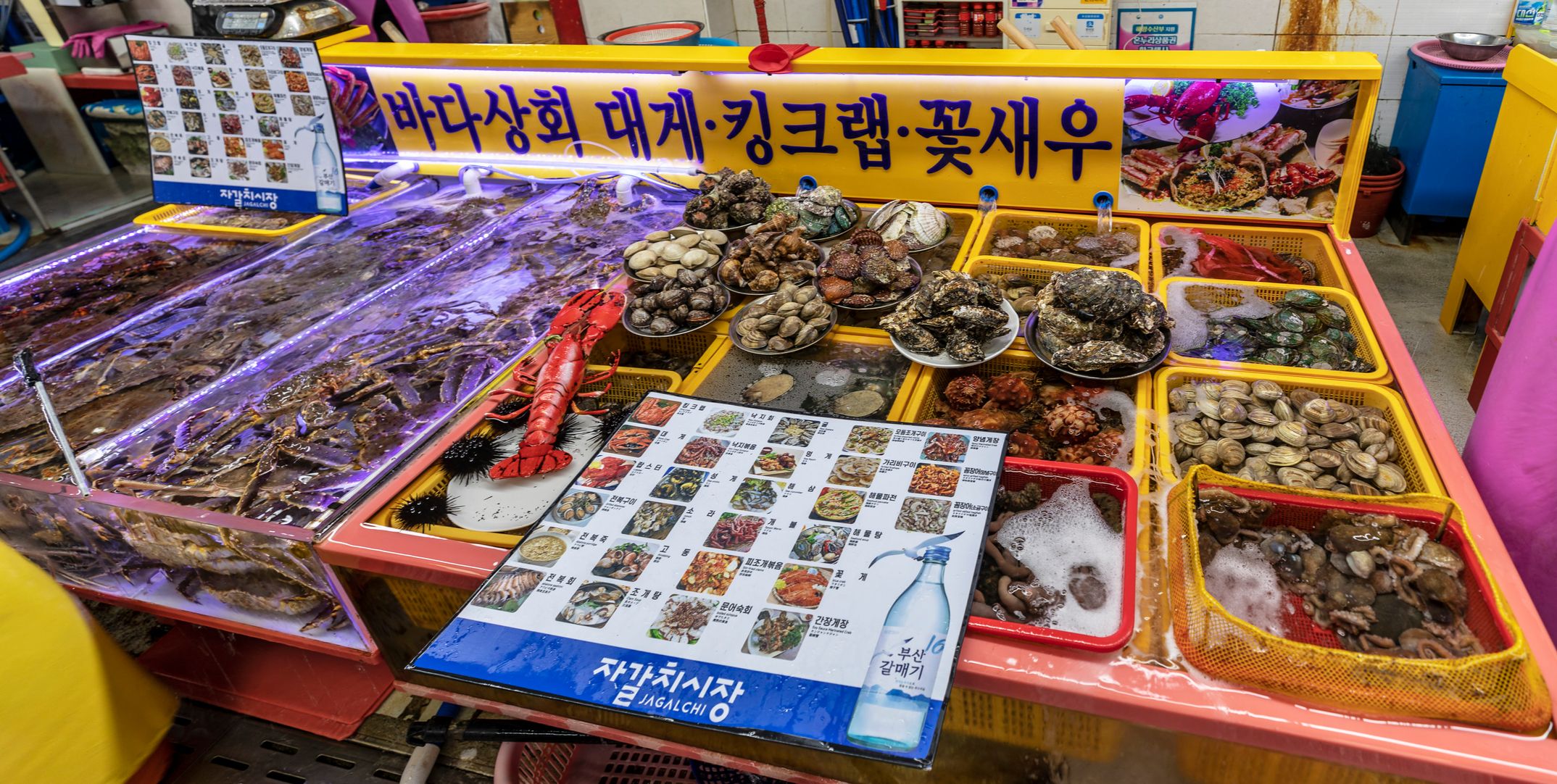
Busan is a port city with scale, confidence and a seafood market that understands spectacle. Jagalchi Market sits on the seaside road in Jung-gu and is one of Korea’s largest seafood markets, selling both live and dried fish. The market became firmly established after the Korean War and that many of its vendors are women, known locally as Jagalchi Ajumeoni.
That detail gives the place a human centre. Jagalchi is not just tanks of crab and trays of fish, though there are plenty of both. It is a city institution shaped by traders, cooks, customers and the particular energy of a port that takes seafood seriously enough to let it occupy several floors and a considerable amount of conversation.
For a cruise call, this is a brilliant food-first day because the market makes the process unusually direct. You can choose seafood downstairs and have it prepared upstairs or nearby, which is both thrilling and faintly intimidating. There are live octopus, crabs, shellfish, eels, dried fish, sashimi counters and more types of sea creature than most of us are prepared to identify before coffee.
Tokyo Toyosu Market, Japan
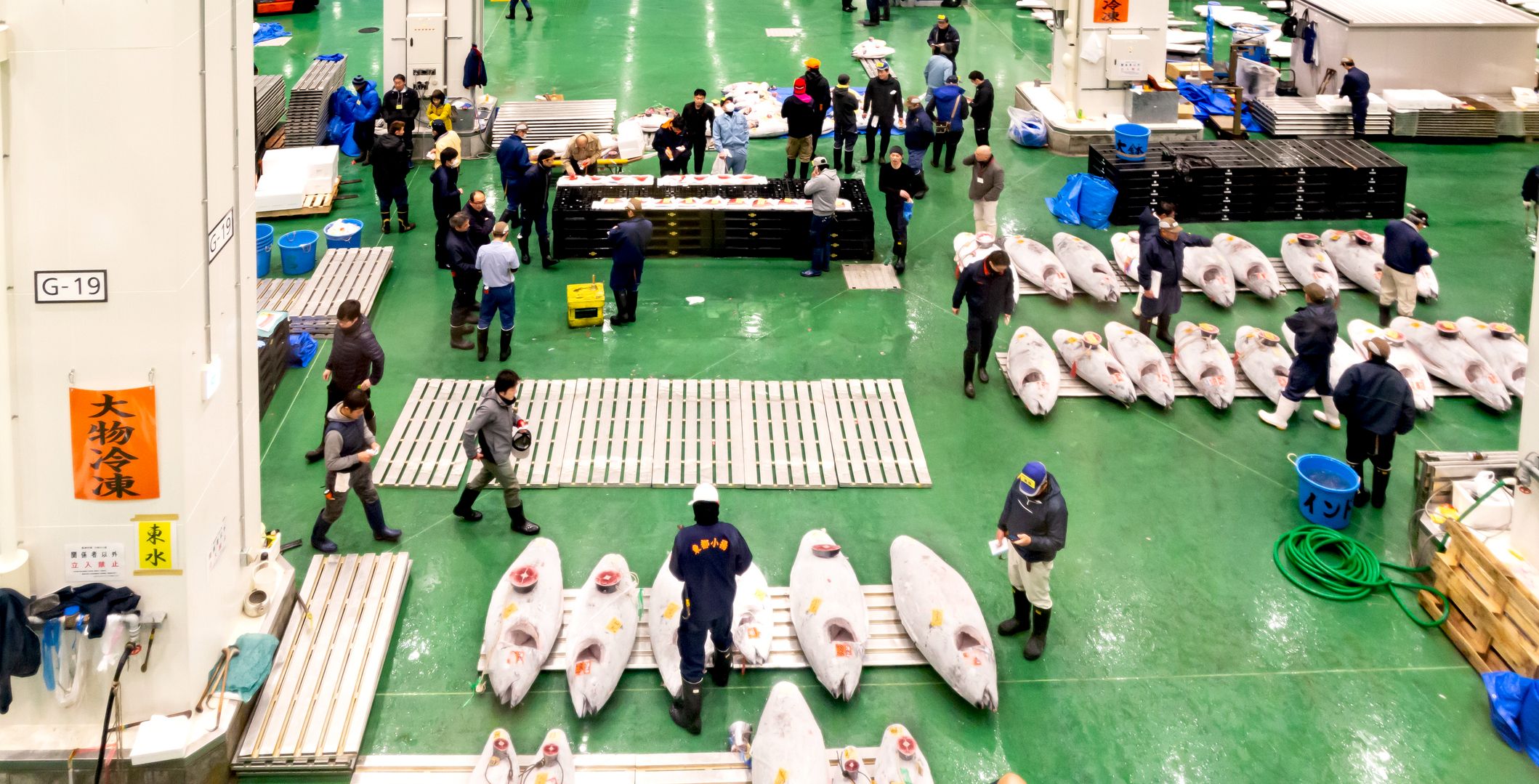
Toyosu is the market for people who believe breakfast should occasionally involve industrial logistics and very good sushi. It replaced Tsukiji’s wholesale market as Tokyo’s great seafood engine, and visitors can see the famous tuna auctions, buy fresh produce and eat breakfast at the market.
The tuna auction is the big draw, partly because it feels like watching capitalism conducted through the medium of very large fish. Access to the closer early-morning tuna auction viewing area is managed by advance lottery for specific dates, so cruise passengers need to plan rather than assume they can drift in after a relaxed buffet breakfast and witness a tuna change hands for the price of a flat.
Toyosu isn’t a quaint market. It is clean, controlled and vast, with viewing decks, restaurants and a sense of precision that makes many other fish markets look chaotic by comparison. If your cruise calls at Tokyo or Yokohama and timings allow, this is one of the world’s great seafood mornings: tuna auction, sushi breakfast, then perhaps a wander through the outer food areas where knives, pickles, tamagoyaki and small edible mysteries compete for attention.
Sydney Fish Market, Australia
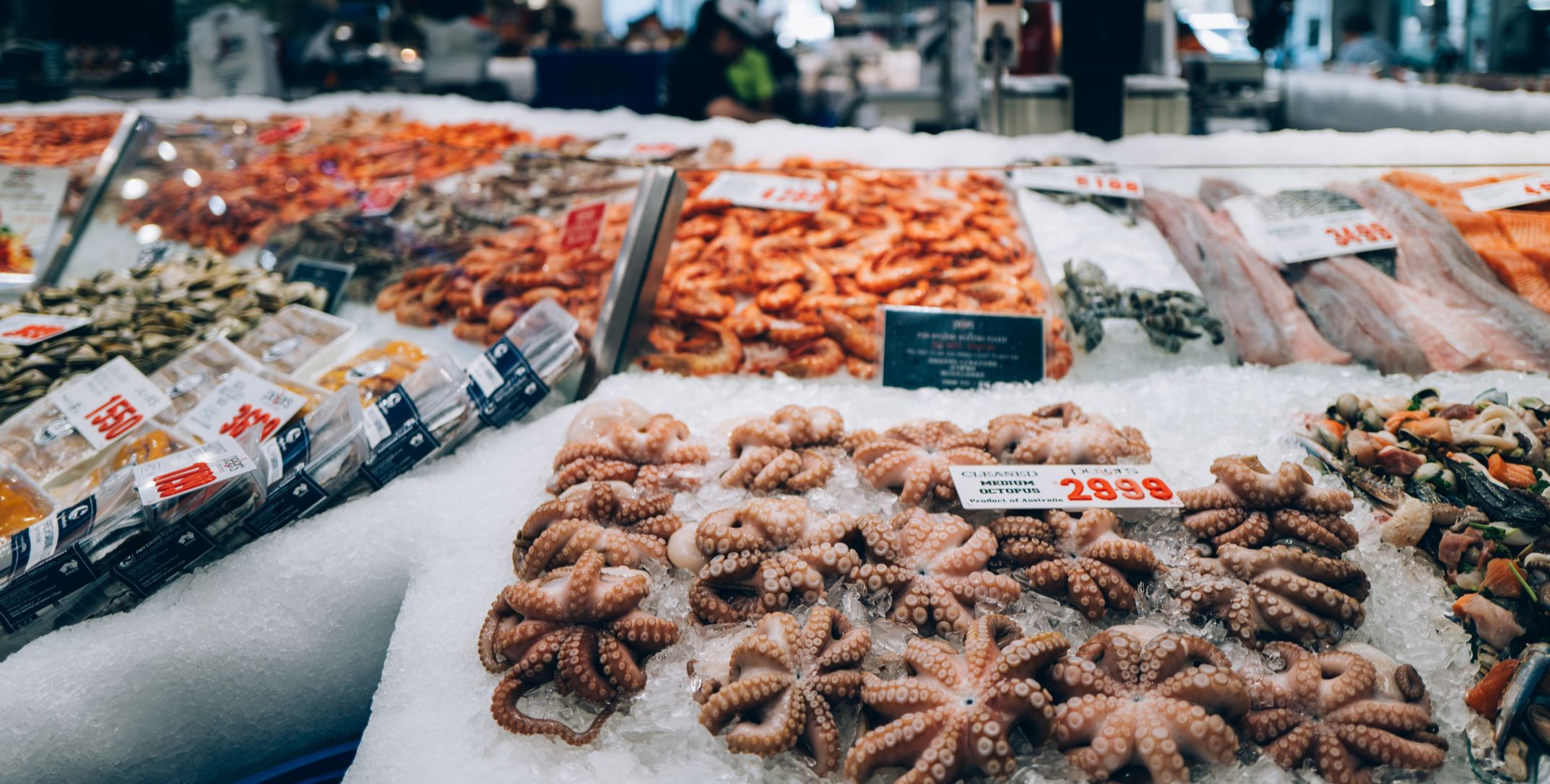
Sydney understands seafood can be both produce and performance. Its fish market has long been one of the city’s great food stops, and the new Sydney Fish Market on Blackwattle Bay officially began seafood trading with its first auction in January 2026. The site spans more than 26,000 square metres, with 42 retailers, 19 seafood wholesalers, fresh produce, dining and retail under one roof.
For cruise travellers, especially those starting or ending in Sydney, this is the sort of place that can turn a spare half-day into a very convincing argument for staying longer. It is part market, part working seafood hub, part eating opportunity, and the setting on Blackwattle Bay means you can enjoy the pleasant illusion that ordering oysters counts as waterfront cultural research.
The best way to approach it is greedily but with structure. Browse first, because buying immediately is how you end up eating prawns while staring wistfully at scallops you have no remaining capacity for. Then choose: sashimi, oysters, fish and chips, grilled seafood, something from the retailers, or a more serious sit-down meal if time allows.
Seattle Pike Place Market, USA
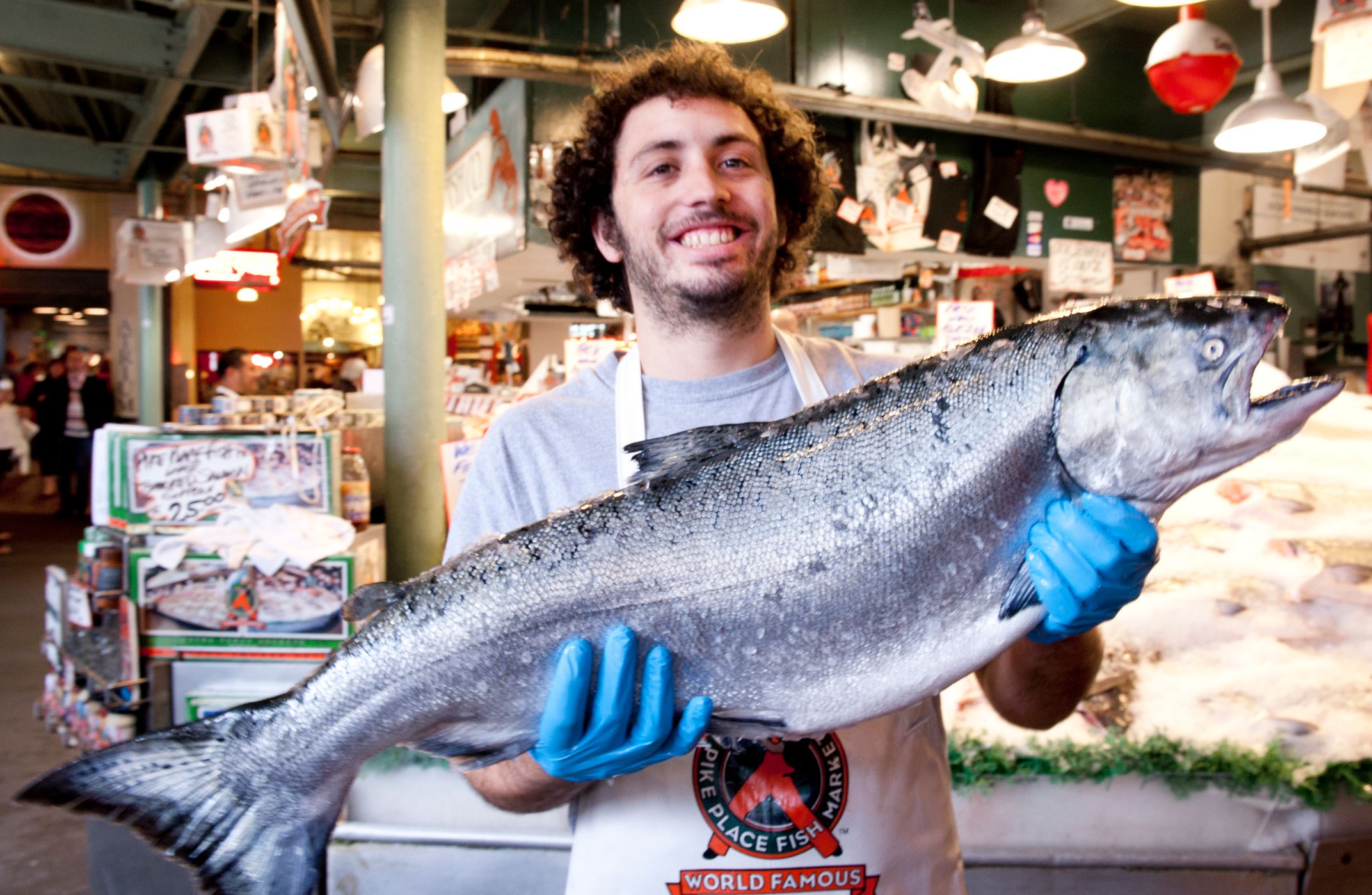
Seattle’s Pike Place Market is not a fish market in the pure working-harbour sense, but it earns its place here because few cruise ports have made seafood quite so theatrical. The Pike Place Fish Market has been in the market since 1930 and is famous for fresh wild Pacific seafood and, yes, the fish throwing.
There is a danger, with Pike Place, of dismissing it as tourist theatre. That would be a mistake, or at least a joyless use of a morning. The market itself is one of the oldest and largest continuously operating public markets in the United States, according to its own history, while Visit Seattle describes it as one of the city’s most popular draws, attracting locals and visitors with produce, flowers, shops, restaurants and serious people-watching.
For Alaska-bound cruisers, Seattle often acts as embarkation or disembarkation city, which means Pike Place is perfect for the day when you’re between suitcase, ship and airport and need the city to feed you quickly. Wild salmon, halibut, crab, chowder, oysters and fish sandwiches all make their case.
Hamburg Fish Market, Germany
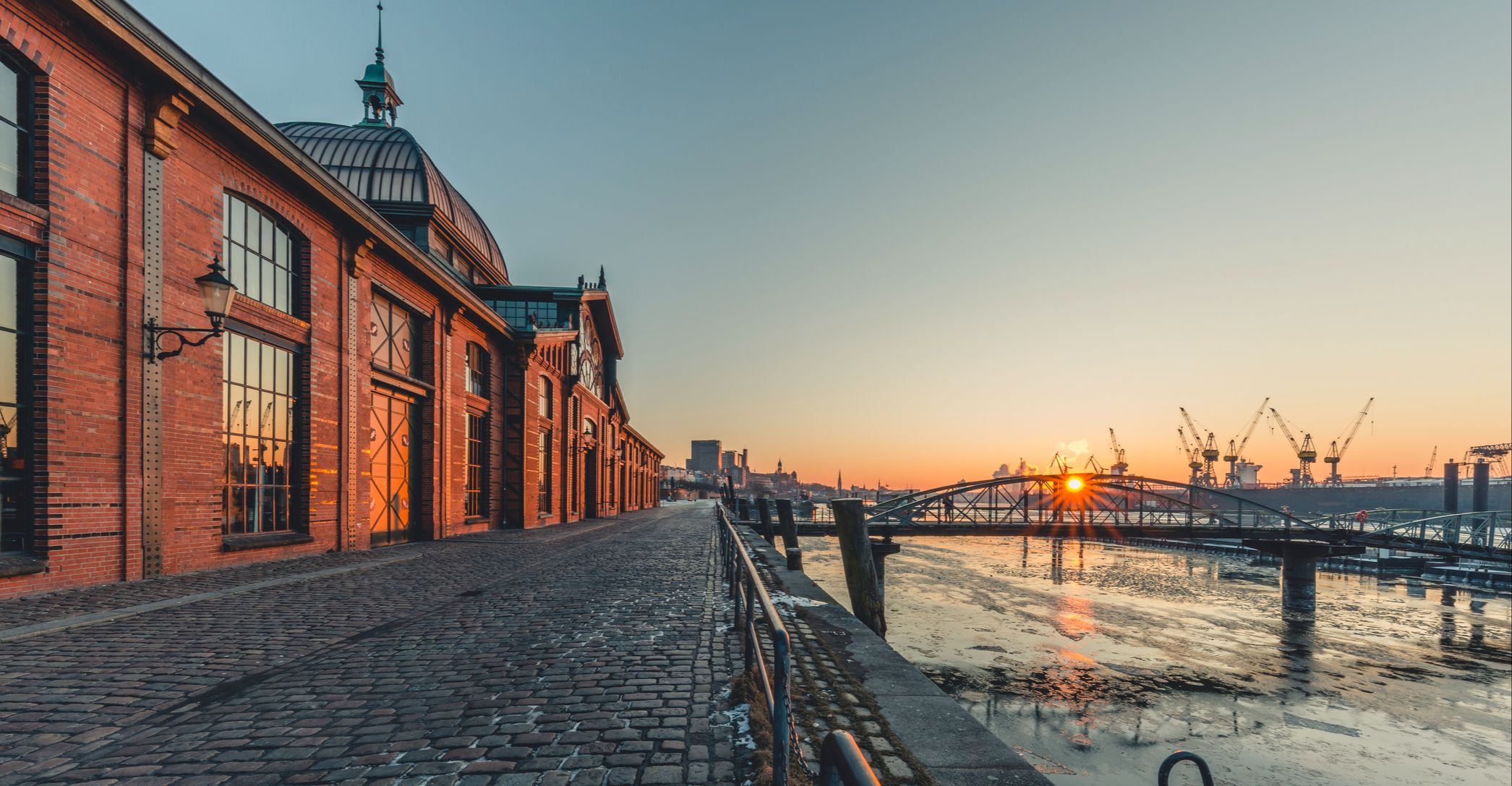
Hamburg’s fish market is for people who don’t mind their seafood arriving with a side order of sleep deprivation. Every Sunday morning, the market by the Elbe gathers early risers, night owls and people whose relationship with Saturday night has become administratively unclear. Hamburg’s official visitor site describes it as an institution since 1703, where fish, fruit, flowers, clothes and souvenirs all appear along the riverfront.
The hours are part of the drama. Hamburg Travel lists summer opening from 5am to 9.30am on Sundays, and winter opening from 7am to 9.30am, with the historic Fish Auction Hall from 1896 adding live music and breakfast options to the experience.
This is not always an easy fit for a cruise itinerary, unless your ship is overnighting or you are staying before or after the sailing. But if the timing works, it is one of Europe’s great market mornings. The fish rolls alone make a case for setting an alarm that feels personally unfair. Matjes, smoked fish, fried fish, prawns and strong coffee all appear in the half-light, while vendors perform the ancient ritual of making everyone feel they’re getting a deal, whether or not they are.
How to plan a seafood-first cruise port day
The first rule is to go early. Fish markets are morning creatures. By the time many cruise passengers have finished negotiating with the buffet toaster, the best of the market may already have been sold, cleaned, cooked or carted away by someone who understands urgency better than you do.
The second rule is to check the day. Some markets close on Sundays or Mondays. Some auction halls require advance booking or only open to visitors at specific times. Some are public markets with restaurants attached, while others are working wholesale spaces where you’re there as a respectful observer, not the main character with a phone.
The third rule is not to confuse looking with eating. A great fish market doesn’t automatically mean lunch on site, though it often helps. Sometimes the better move is to watch the landings, wander the stalls, then eat nearby in a restaurant that buys from the same harbour. That way you get the working-place atmosphere without attempting to turn a wet market into your personal tasting menu.
Most of all, remember that these places are not props. They’re where people work, haggle, carry boxes, sharpen knives, feed cities and occasionally tolerate visitors standing in the way of an octopus. Go gently. Ask before taking close-up photographs of traders. Don’t prod the fish. Don’t block the person who is clearly trying to buy lunch for an actual restaurant.
Do that, and a fish market can become the best part of a cruise port day: a quick, vivid education in where you are, what the sea gives up there, and how a city behaves before it has had time to smooth itself out for visitors. It’s travel at its most useful and least airbrushed. Also, with any luck, there are oysters.