You can spend six months choosing the right ship, three evenings comparing cabin diagrams and an unhealthy portion of your working day deciding whether a drinks package represents “good value”. Then the entire holiday is handed over to a 55-minute connection at Frankfurt.
Flights are often the least enjoyable part of a fly-cruise, but they’re also the part most capable of undoing everything else. When the ship leaves Barcelona at five, it doesn’t become sentimental because your aircraft is still circling somewhere above France.
Booking your flights through the cruise line can give you valuable protection and a human being to call when things go wrong. Booking independently usually gives you more control and, sometimes, a better price. The right choice depends less on whether you’re a “savvy traveller” and more on the complexity of the journey, your tolerance for disruption and how strongly you feel about spending seven hours in an airport you never intended to visit.
How cruise line flights work
Cruise lines don’t generally fly you themselves, which is probably for the best. They sell seats with established airlines through programmes such as Flights by Royal, Flights by Celebrity, Princess EZair and Norwegian Cruise Line’s air services.
Depending on the operator, you may be able to choose your airline, timings, cabin and route much as you would through a normal booking site. Some programmes also offer negotiated fares, delayed payment or more flexible cancellation terms. Princess, for example, markets flexible EZair fares that can be changed or cancelled without fees before the cruise’s final-payment date, while Celebrity offers both refundable and non-refundable options with different payment and amendment conditions. These benefits vary by country, fare and departure, so the reassuring logo at the top of the page isn’t a substitute for reading the terms beneath it.
At the other end of the spectrum are promotional air packages where much of the itinerary is selected for you. Norwegian says some flight details aren’t ticketed until around 30 days before embarkation, and its standard arrangements may include up to two connections on international journeys. Passengers wanting a particular carrier, route, upgrade or layover have to request a customised quote, which may not be compatible with the original air promotion.
In other words, “cruise line flights” can mean anything from a fully chosen British Airways itinerary to learning shortly before departure that your route to Rome has developed an unexpected interest in Toronto.
The biggest advantage of booking flights through your cruise line

The strongest argument is what happens when the journey starts unravelling.
Royal Caribbean says passengers using Flights by Royal receive help from an emergency travel team if a flight is disrupted through no fault of their own. The team can rebook travel to get passengers aboard on time or, where permitted, at a later port, with related hotel and transport costs covered under its stated protection. Celebrity similarly offers 24-hour disruption support through its Assured Arrival benefit and says that if it can’t get a passenger to the ship, it will refund the flight and provide a future cruise credit.
Princess promotes “Next Port Protection” through EZair, alongside support for passengers whose flights are delayed or cancelled. The precise remedy depends on the programme’s terms and the circumstances, but the broad benefit is straightforward: the people dealing with your flight can also see the cruise booking it needs to connect with.
That doesn’t mean the captain will keep several thousand passengers waiting while your replacement aircraft taxis towards the gate. Cruise ships run to fixed port slots, tides and itineraries, and may have to leave without late passengers. Princess explicitly warns that ships won’t wait, while Royal Caribbean notes that joining at a later port may be restricted by the itinerary, your nationality or local law. The protection is generally about helping you catch up, not persuading the ship to linger outside the terminal with its hazards on.
Even so, having a specialist team work on the problem can be a considerable advantage. Without it, you may be simultaneously speaking to an airline, insurer, cruise line and hotel while trying to establish whether Genoa is a legally permissible place to join the ship. That’s a great deal of administration for someone who packed specifically to avoid administration.
Does booking flights with the cruise line give you more financial protection?
For UK travellers, it can, but you need to check exactly what you’re buying.
When a cruise and flights are sold as an ATOL-protected flight-inclusive package, you should receive an ATOL Certificate showing what is covered and which company is responsible for the protection. ATOL is primarily financial protection if the organiser fails, rather than a general insurance policy for every delay, cancellation or bad decision made at an airport bar.
The Package Travel and Linked Travel Arrangements Regulations also make the organiser responsible for the proper performance of the services included in a qualifying package contract. If your flight and cruise genuinely form one package, that gives you a clearer contractual relationship than two entirely separate bookings.
Don’t assume that adding a flight somewhere within the cruise line’s website automatically creates the same protection in every case. Check your paperwork. If a UK company has sold you an ATOL-protected flight or flight-inclusive holiday, the CAA says you should receive a certificate when you first make a payment. If one doesn’t arrive, ask the seller why.
The convenience of one booking

Cruise line air is particularly appealing when the itinerary is complicated. A Mediterranean sailing beginning in Athens and ending in Rome is manageable enough. A repositioning cruise beginning in Tokyo and ending in Vancouver requires two different airports, a one-way long-haul fare and the sort of browser history that makes you look as though you’re planning an escape.
Cruise lines can sometimes access one-way or open-jaw fares that compare favourably with public prices, particularly on long-haul routes. They may also coordinate airport transfers, although these aren’t always included. Royal Caribbean offers transfers between selected airports and ports, while Norwegian states that transfers through its Air Choice programme cost extra.
There may also be useful flexibility around payment. Princess allows eligible flexible EZair fares to be reserved without immediate payment and changed before the final cruise balance is due. Celebrity’s arrangements differ by market, with some fares payable alongside the cruise and non-refundable options requiring immediate payment.
This can make budgeting easier, although “pay later” should never be confused with “somehow free”. The flight will eventually emerge on the balance, looking refreshed and very much expecting to be paid.
The disadvantages of booking flights through the cruise line
The main sacrifice can be control.
When booking directly, you can choose the exact departure time, airline, aircraft, connection, airport and ticket type. That matters if you have airline status, want a particular seat, need generous baggage allowances or simply know that changing terminals at Heathrow in 70 minutes is incompatible with the peaceful start you had pictured.
Cruise line programmes vary sharply here. Celebrity allows passengers to request seats where the airline makes them available and says loyalty members can still collect miles. Norwegian’s Air Choice passengers must arrange seats directly with the airline, can’t redeem miles through the programme and may need a customised booking to secure a preferred airline or route.
Promotional air can also produce awkward schedules. Norwegian’s published standards allow for late return flights, overnight services and alternative airports depending on availability. For a Southampton sailing, for example, passengers may be routed through Heathrow or Gatwick rather than Southampton Airport, with ground transport charged separately.
None of this makes cruise line air inherently bad. It means you need to inspect the schedule rather than admiring the package price from a respectful distance. A fare that saves £80 but introduces two connections, an airport change and a six-hour wait has made a very particular judgement about the value of your time.
Changes can also be less direct. If the airline alters your schedule, you may need to work through the cruise line or its air department rather than managing everything immediately through the airline’s app. Celebrity says its specialists will work with airlines when schedules change, but passenger-requested amendments remain subject to the applicable fare conditions and airline penalties.
When booking your own cruise flights makes sense
Independent booking is often the better choice when the route is simple and you know exactly what you want.
Perhaps there’s a convenient direct flight from your nearest airport. Perhaps you want to use Avios, retain airline status benefits or spend a few days in the departure city before boarding. Perhaps the cruise line’s suggested itinerary contains a 5.45am departure, and you’ve decided that no holiday should begin with an alarm time normally associated with livestock.
Booking directly can also make it easier to manage your reservation. You usually deal with the airline rather than an intermediary, which can be useful for seat selection, upgrades, schedule changes and app-based rebooking.
The trade-off is that the flight and cruise remain separate arrangements. If the airline cancels, it may owe you care, rerouting or a refund under UK261 where the rules apply. That airline duty doesn’t automatically make the cruise line responsible for your missed sailing, nor does it compel the ship to wait.
This is the important distinction. The airline may successfully fulfil its legal duty by putting you on a flight the following morning. Your cruise may successfully fulfil its contract by departing the previous evening. Everyone has technically performed quite well, apart from you, who is now in an airport hotel eating a vending-machine dinner.
Should you fly on the same day as your cruise?
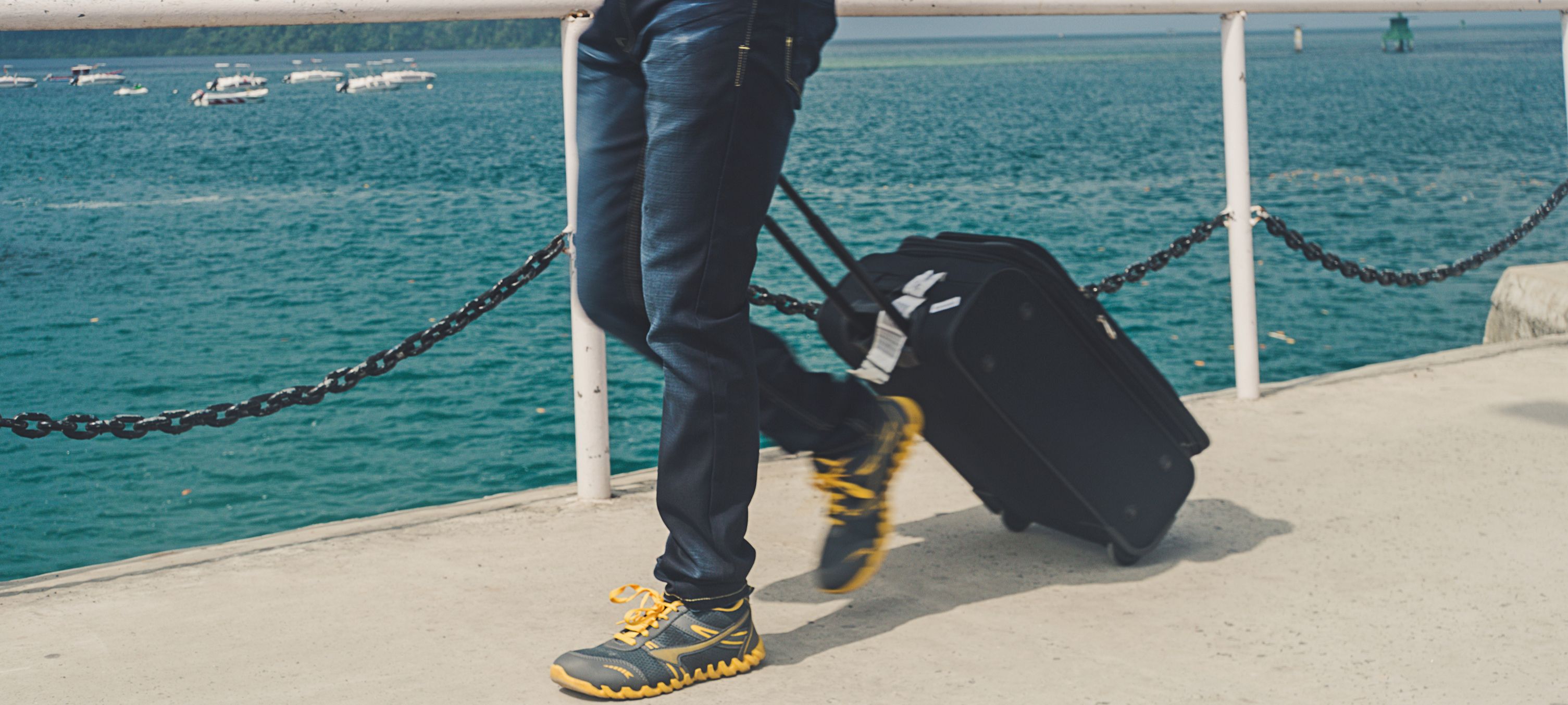
Preferably not, regardless of who books the ticket.
Celebrity and Princess both recommend arriving at least one day before embarkation to create a buffer for delays and cancellations. Norwegian went further in January 2026 and began requiring passengers using its air services to arrive at least a day before sailing.
A pre-cruise hotel adds to the cost, but it also turns a flight delay from a full-scale holiday emergency into an irritating evening. You gain time to recover from jet lag, replace delayed luggage and reach the terminal without spending the taxi journey staring at the clock like someone defusing a bomb.
For short European routes with plentiful alternative flights, some travellers will still accept a same-day journey. If you do, an early nonstop flight is much safer than a connection arriving shortly before check-in closes. Princess publishes minimum flight-arrival guidance for individual ports, but those times should be treated as final limits rather than an exciting target to aim for.
Travel insurance matters whichever option you choose

Cruise line flight protection doesn’t replace suitable travel insurance, and neither does ATOL.
Look for a policy that covers cruises and includes missed departure or missed connection protection at a level sufficient to buy replacement transport and accommodation. MoneyHelper notes that missed-departure cover can pay additional travel and hotel costs when you miss a flight, boat or train because of circumstances outside your control, but it generally won’t help if you simply failed to leave enough time.
Read the definition carefully. Some policies cover public transport failure but not an independently booked incoming flight. Others limit the amount available or exclude joining the cruise at a later port. ABTA also advises checking for cruise-specific provisions, including medical treatment, missed ports and cabin confinement.
Insurance terms are not thrilling reading, but neither is purchasing a walk-up flight to Iceland while your original cabin sails north without you.
Who should book flights through the cruise line?
Cruise line air is usually the stronger option for first-time cruisers, nervous flyers and anyone who doesn’t want to coordinate several suppliers during a disruption.
It also makes sense for complicated long-haul journeys, one-way itineraries, unfamiliar embarkation ports and cruises where the next legally permissible joining point may be difficult to reach. Passengers with accessibility requirements may value having one travel company aware of the wider itinerary, although assistance should still be confirmed separately with the airline and airports involved.
It’s particularly attractive when the cruise line offers a sensible direct flight at a competitive total price and includes meaningful arrival protection. In that situation, booking independently merely to save a very small sum can feel like accepting a second job as your own emergency travel department.
Who should book cruise flights independently?
Book your own flights when control matters more than consolidation.
Confident travellers who want a specific airline, direct service, premium cabin, loyalty redemption or extended stay will often prefer arranging everything themselves. The same applies when an independent fare is substantially cheaper after baggage, seats and transfers have been included, or when the cruise line’s proposed itinerary is unnecessarily elaborate.
Independent booking is most sensible when you’re willing to arrive early, have appropriate insurance and understand that disruption before embarkation is primarily yours to resolve.
The best way to compare your cruise flight options

Price the trip both ways before committing. Compare the exact flight numbers, airports, connection times, baggage allowance, seat costs, transfer arrangements, payment date and cancellation terms. Then establish what the cruise line’s arrival promise actually covers and whether your booking will be issued as an ATOL-protected package.
A cruise line fare that costs slightly more may be worthwhile if it includes flexible payment and meaningful help during disruption. An independently booked direct flight arriving two days early may be safer than a protected itinerary involving three airports and a same-day arrival.
The answer isn’t automatically “book with the cruise line” or “do it yourself”. It’s to choose the arrangement with the fewest realistic ways to ruin your holiday.
For an easy short-haul route and a pre-cruise stay, independent flights often win. For a complex long-haul itinerary where one cancellation could leave you chasing the ship across a continent, the cruise line’s air programme can earn its place before you’ve even reached the gangway.