Australia’s east coast is often reduced to one famous harbour. Sydney gets the bridge, the opera house and the photograph from the balcony. Farther north, Queensland offers a very different cruise route.
Cairns sits between rainforest and reef. Townsville combines a working tropical city with Magnetic Island just offshore. Airlie Beach opens onto the Whitsundays, an archipelago of 74 islands scattered through the Coral Sea.
The Great Barrier Reef connects all three ports, but they aren’t interchangeable. Each offers a different way into northeast Queensland, and each presents the same practical challenge: deciding what not to do.
Cairns cruise port: Great Barrier Reef or Kuranda rainforest?
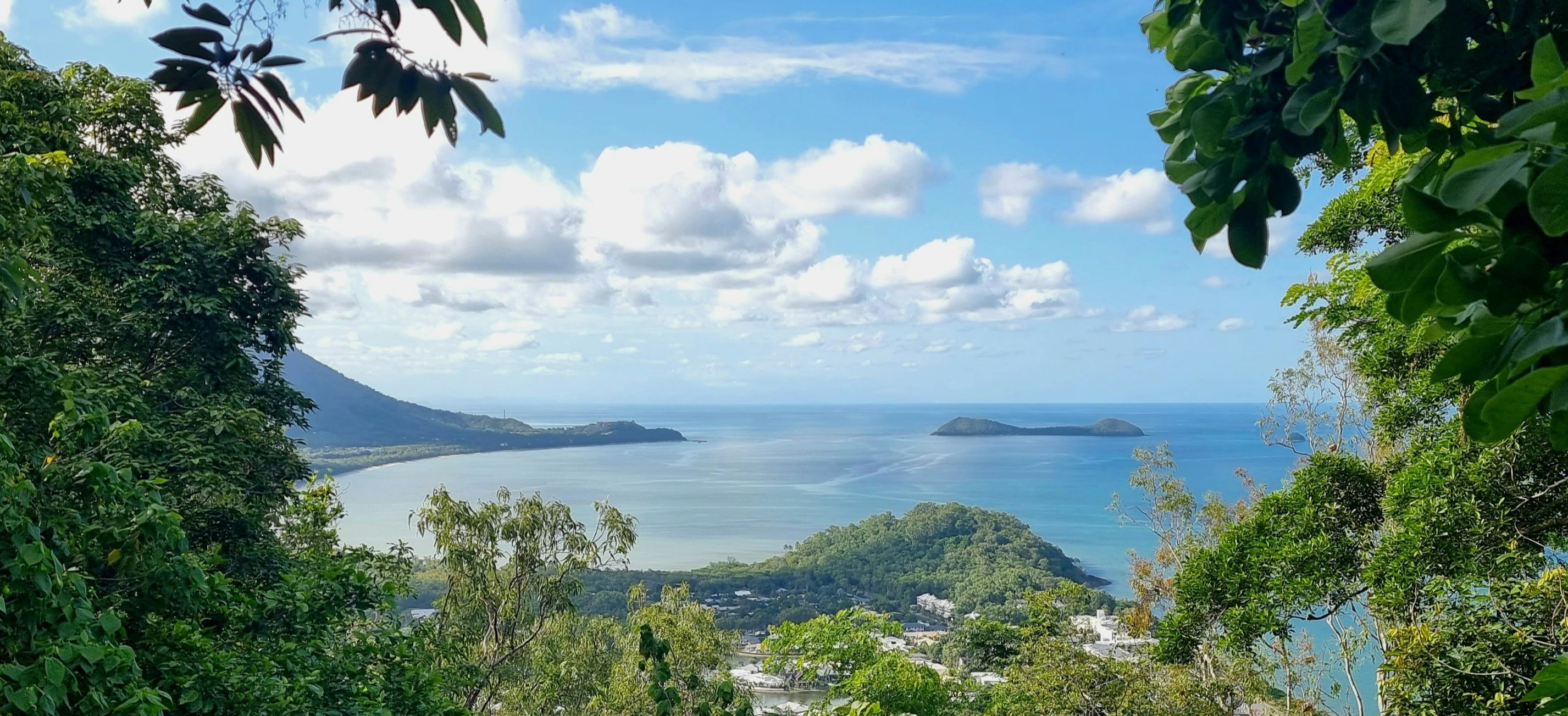
Cairns lies between two UNESCO World Heritage areas. Offshore is the Great Barrier Reef, while the Wet Tropics rainforest stretches along the coast and into the mountains behind the city.
Exploring both properly during one cruise call is rarely realistic. The first decision is therefore reef or rainforest.
Before planning either, check where the ship will dock. Smaller and medium-sized vessels may berth at the Port of Cairns, close to the marina, Esplanade and city centre. Larger ships sometimes anchor off Yorkeys Knob, where passengers tender ashore before transferring into Cairns. The itinerary may use the same port name, but the available time on land can be quite different.
Visiting the Great Barrier Reef from Cairns
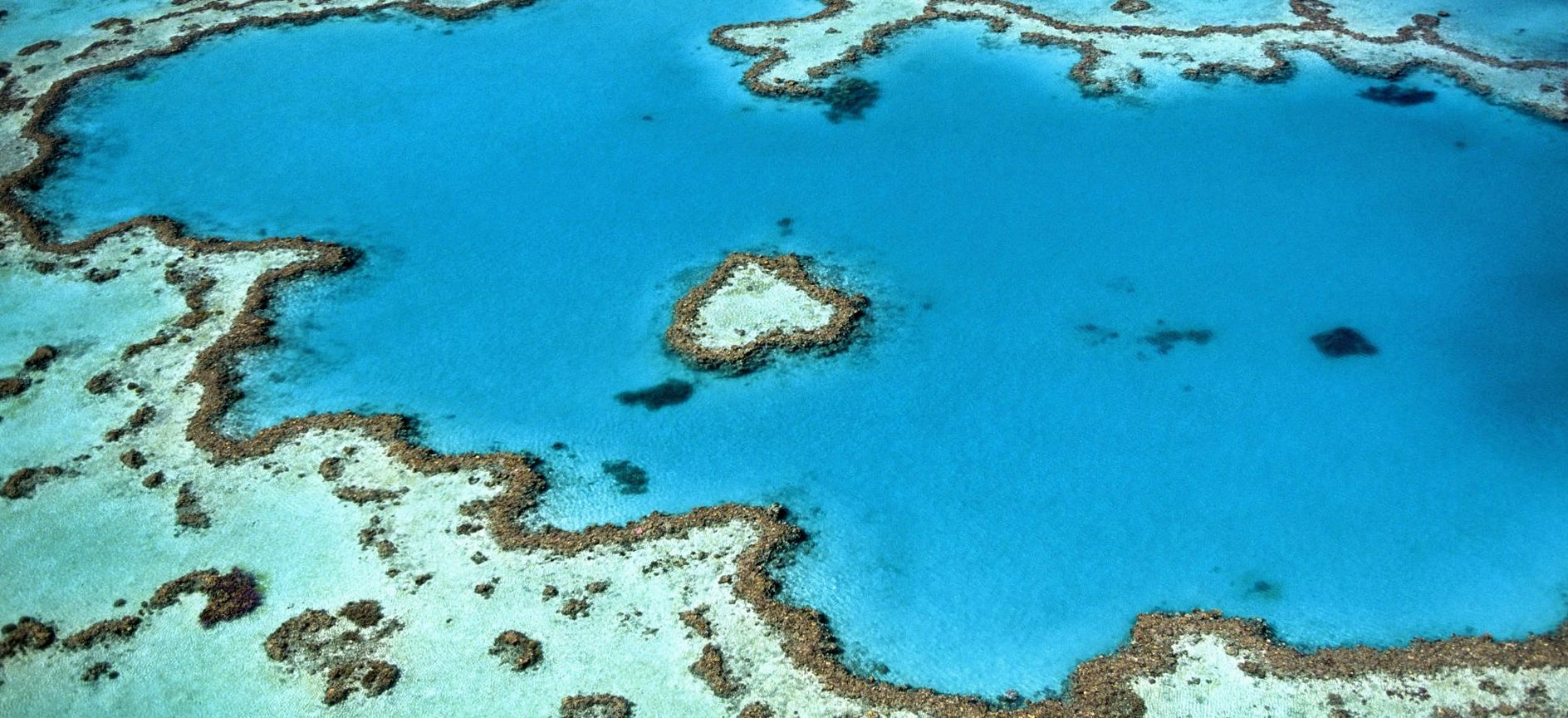
The Reef Fleet Terminal beside Cairns Marlin Marina is the departure point for many snorkelling, diving and sightseeing trips. Options range from nearby islands to outer-reef pontoons reached on longer journeys.
Green Island combines fringing reef with a small rainforest-covered coral cay. Fitzroy Island offers beaches, walking trails and snorkelling close to shore. Outer-reef excursions generally provide access to deeper reef systems, often with pontoons, underwater viewing areas and equipment for less confident swimmers.
Choose an established operator and compare its departure and return times carefully with the ship’s schedule. The Great Barrier Reef is an enormous network of reefs, islands, seagrass beds and marine habitats, not one convenient attraction sitting directly outside the harbour. Getting there takes time, as does returning from it.
Taking the Kuranda Scenic Railway
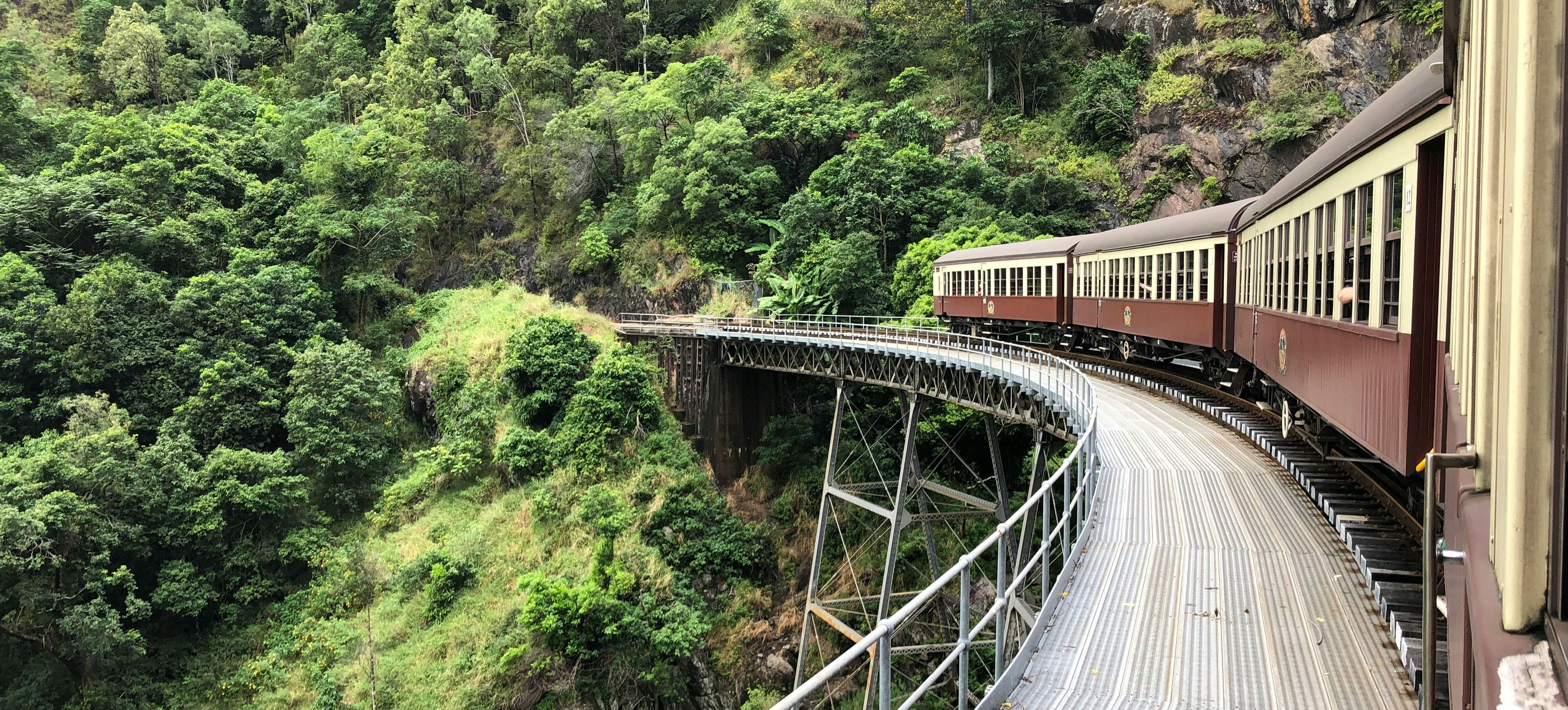
The principal inland alternative is the Kuranda Scenic Railway. The 34-kilometre line climbs more than 320 metres from Cairns through Barron Gorge and the Wet Tropics rainforest.
Opened in 1891, the railway crosses dozens of bridges and passes through 15 hand-cut tunnels. The journey takes roughly two hours each way, with views of rainforest, waterfalls and the gorge.
Many excursions combine the train in one direction with another form of transport for the return, leaving time to explore Kuranda’s markets, cafés and wildlife attractions. The railway itself remains the main event, particularly when it curves around the mountainside and the carriages ahead briefly appear through the trees.
A ship-organised excursion can be sensible when the call is short, as railway schedules and transfers leave less margin for improvisation.
A quieter day in Cairns
Passengers staying in the city can walk the Esplanade, visit its parks and public art, or swim in the large saltwater lagoon. The lagoon provides a safer alternative to the local sea, where marine stingers and crocodiles place limits on spontaneous bathing. It is closed for maintenance until 16 August 2026, so check its status before visiting.
Cairns Botanic Gardens are a short bus or taxi journey from the centre. Their collections include tropical species, native plants and an Aboriginal Plant Use Garden.
Cairns rewards restraint. Choose one substantial excursion, then allow enough time to experience it without turning the day into a sequence of transfers.
Townsville cruise port: tropical city life and Magnetic Island
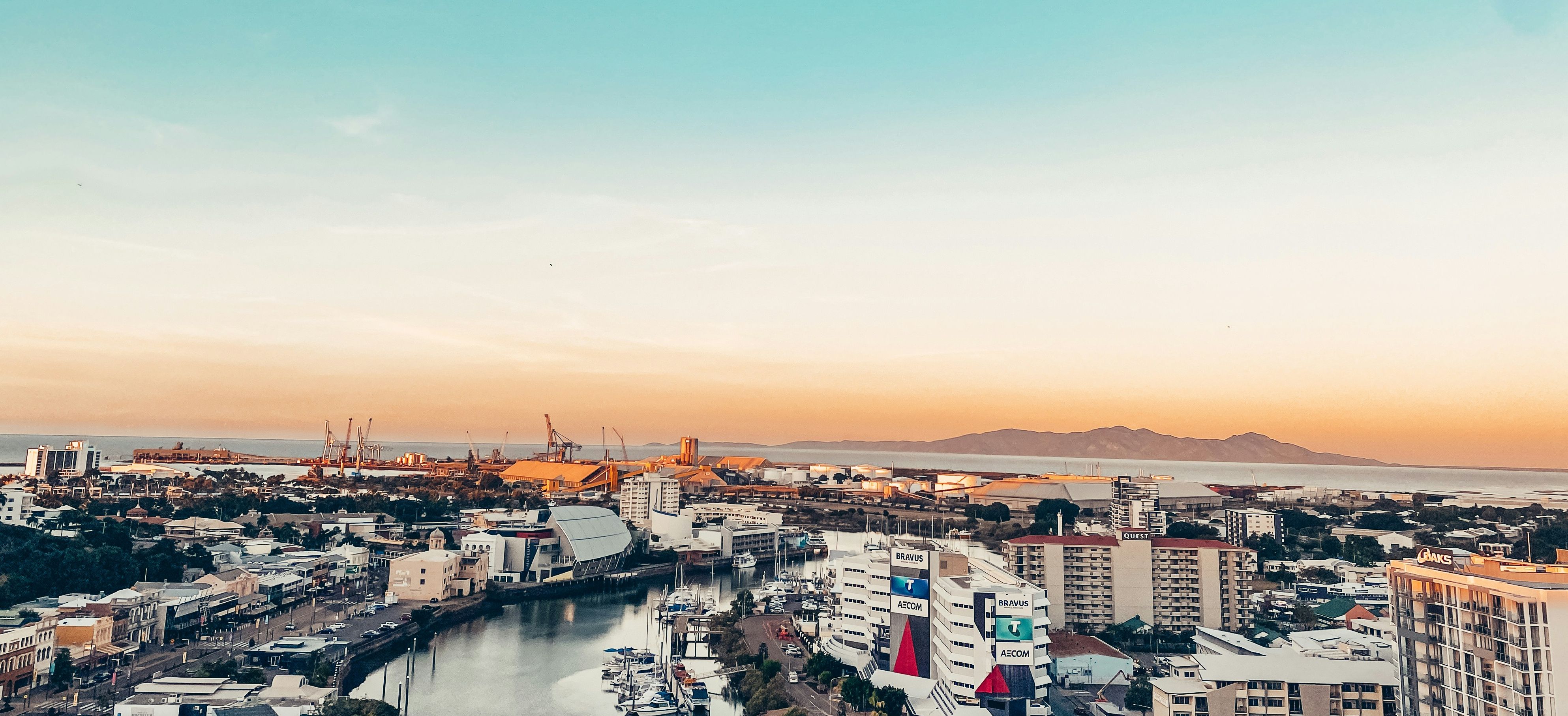
Townsville receives less international attention than Cairns or Airlie Beach. That’s part of its appeal.
This is a working regional city with a commercial port, military history, university and waterfront suburbs. Cruise ships use the Quayside terminal, where taxis and buses are available for arriving passengers.
Townsville doesn’t reorganise itself completely around tourism. Its waterfront, museums and public spaces are used by local residents, which gives the city a more natural rhythm than many resort ports.
Walking Townsville’s Strand
The Strand is a 2.2-kilometre waterfront promenade lined with palms, cafés, beaches, playgrounds and swimming areas. It runs along Cleveland Bay with views towards Magnetic Island.
At its northern end, Jezzine Barracks occupies a 15-hectare heritage precinct at Kissing Point. Walking paths, public art and interpretation cover both military history and the heritage of the area’s Traditional Custodians. Restored fortifications and coastal viewpoints look across the bay.
Castle Hill rises behind the city and provides the best view of Townsville, its port and Magnetic Island. It can be reached by road or on foot. Track conditions sometimes change after bad weather or maintenance, so check access notices before attempting the climb. As of July 2026, the Goat Track had reopened, while the Cudtheringa Track remained closed.
Queensland Museum Tropics offers an air-conditioned alternative, with displays on North Queensland’s reef, rainforest and natural history. Its collections also cover the wreck of HMS Pandora, the Royal Navy ship sent to capture the Bounty mutineers.
Taking the ferry to Magnetic Island
Townsville’s most popular day trip is Magnetic Island, known as Yunbenun to its Wulgurukaba Traditional Custodians.
Passenger ferries take around 20 minutes from Townsville’s Breakwater terminal to Nelly Bay. The island lies within the Great Barrier Reef World Heritage Area and combines beaches, granite headlands, eucalyptus woodland and small residential communities.
The Forts Walk is its best-known trail. The four-kilometre return route takes approximately two hours and leads to Second World War fortifications with broad coastal views. Koalas are sometimes seen in the surrounding trees, providing a useful incentive when the weather becomes warm and the path continues upwards.
Local buses connect Nelly Bay with settlements, beaches and walking areas. For a cruise call, the ferry, bus journey, Forts Walk and return trip can occupy most of the day. Trying to add Townsville’s museums, Castle Hill and a lengthy lunch usually produces more transport than sightseeing.
Stay in the city for a relaxed waterfront day, or cross to Magnetic Island for walking and wildlife. Both are worthwhile, and neither feels like a lesser substitute for Cairns.
Airlie Beach cruise port: Whitehaven Beach and the Whitsunday Islands
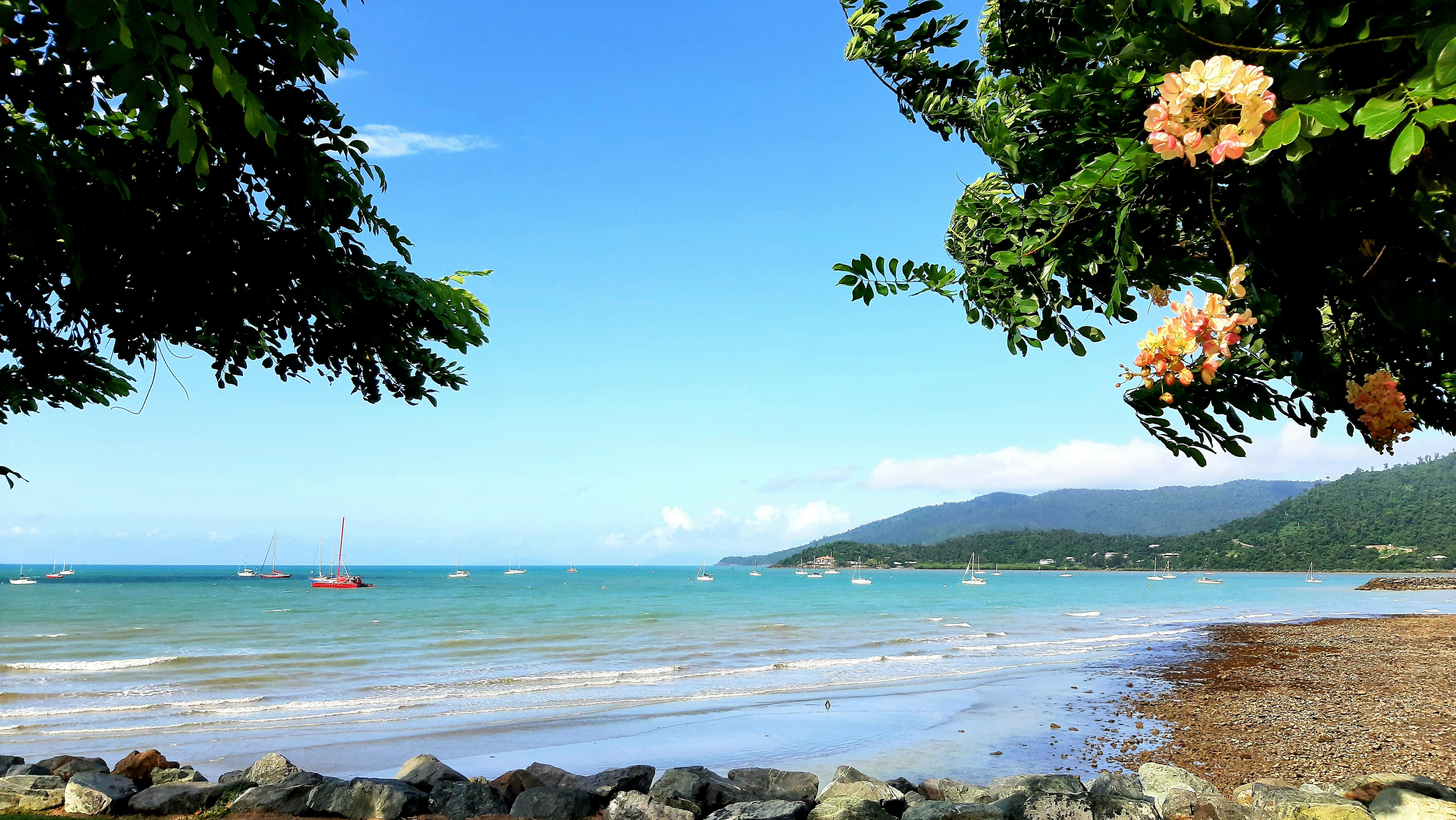
Airlie Beach functions as the mainland base for the Whitsundays. Marinas fill the waterfront, tour operators advertise reef and island trips, and cafés open early for passengers carrying towels with serious intent.
Cruise ships generally anchor offshore and tender passengers ashore. Tendering adds time at both ends of the visit and can be affected by sea conditions, so allow a generous margin when booking independent boat trips.
Beyond the town are 74 Whitsunday islands. Most are uninhabited and protected as national park, with only a small number developed as resorts. Their forested interiors, sheltered channels, beaches and fringing reefs give this part of Queensland a distinct identity within the wider Great Barrier Reef region.
Visiting Whitehaven Beach and Hill Inlet
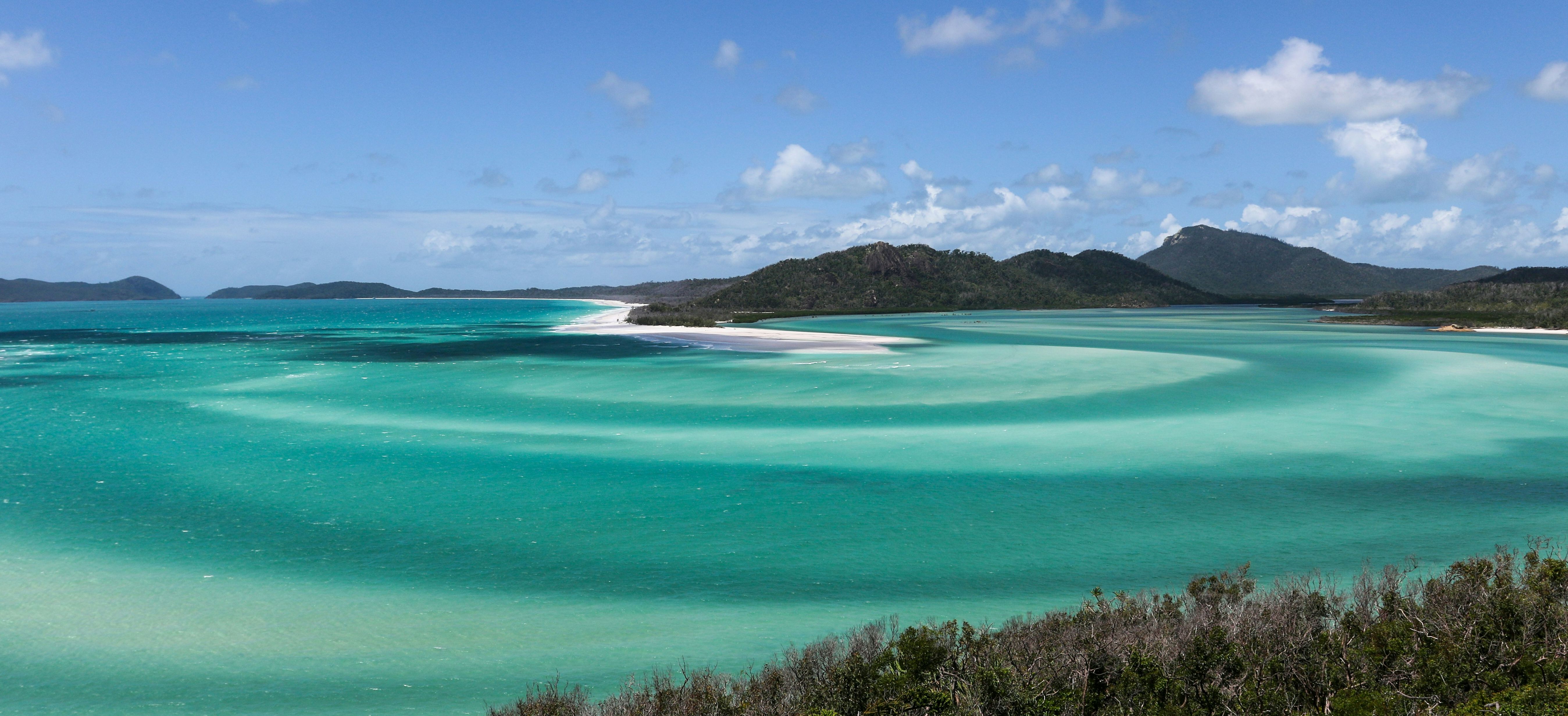
Whitehaven Beach is the best-known excursion from Airlie. Its seven kilometres of white silica sand run along Whitsunday Island, while Hill Inlet at the northern end creates shifting patterns of sand and turquoise water as the tide moves.
Visitors reach it by ferry, fast boat, yacht or aircraft. The most satisfying trips include both time on the beach and access to the Hill Inlet lookout. Whitehaven is striking at ground level, but the view from above explains why it appears so frequently in Australian tourism campaigns and other people’s phone backgrounds.
These excursions often involve several hours on the water. Compare the operator’s return time with the ship’s final tender and build in more margin than you think necessary.
Reaching the outer Great Barrier Reef
Some full-day excursions continue beyond the islands to outer-reef sites such as Hardy Reef. The journey can cover around 39 nautical miles each way before reaching a permanently moored pontoon.
Activities may include snorkelling, underwater observatories and semi-submarine trips. It’s one of the most substantial excursions available from Airlie Beach and should be booked only when the port call comfortably allows for tendering, the outward journey and the return.
Passengers already visiting the reef from Cairns may prefer to use Airlie Beach for the Whitsundays. The reef is the common thread along the coast, but repeating a similar excursion in every port misses what distinguishes each place.
Ngaro culture in the Whitsundays
The Whitsundays form part of Gia and Ngaro Country. The Ngaro People have longstanding cultural connections to the islands and surrounding sea.
The Whitsunday Ngaro Sea Trail links sites on Whitsunday, Hook and South Molle islands. At Nara Inlet, rock art and archaeological evidence record a much longer history than the region’s familiar image of yachts, resorts and white beaches might suggest.
Tours vary in how much cultural interpretation they include, so it’s worth checking the itinerary rather than assuming every island excursion covers the same ground.
Spending the day in Airlie Beach
Airlie itself is a good option for passengers who don’t want another full-day excursion.
The public lagoon offers a safe place to swim away from seasonal marine hazards. From there, the foreshore and boardwalk connect the town centre with beaches, marinas, cafés and restaurants.
A few hours spent walking, swimming and watching boats leave the harbour may sound modest beside Whitehaven or the outer reef. It becomes considerably more appealing when the afternoon tender queue begins to form.
How to plan a northeast Queensland cruise
Port names don’t tell the whole story. Check whether Cairns means a city berth or Yorkeys Knob, how passengers will tender into Airlie Beach and how much time remains ashore once transfers are included.
It also helps to assign each port a clear purpose.
Cairns has the best-established infrastructure for choosing between the Great Barrier Reef and the Wet Tropics rainforest. Townsville offers a more relaxed tropical city, with Magnetic Island close enough for an independent day trip. Airlie Beach provides the most direct access to the Whitsunday Islands, Whitehaven Beach and Hill Inlet.
That approach avoids repeating similar reef excursions and gives each destination room to show its own character.
Sydney may offer Australia’s famous arrival, but northeast Queensland reveals itself more gradually. Here, the coast is understood through rainforest railways, public waterfronts, island ferries and long journeys across the Coral Sea.