
Some time around your fourth ecclesiastical interior of the day, staring at another vaulted ceiling, you might start wondering whether there is more to Europe's architectural history than churches. I say this with respect. Cathedrals have done a lot for Europe. But port cities have many other architectural pleasures, and many of them are far more revealing about how a place actually made its money, transported its people and worked around its geography.
If you like lifts, stations, exchanges, converted industrial hulks and the sort of modernist bravado that only seems to happen near water, cruise ports can be extraordinarily rewarding. A harbour city has to solve practical problems. How do you get people uphill from the quays? Where do you store all the goods? What do you do with a redundant power station, fire station or warehouse once the city has decided that cultural endeavours are its raison d'être? These questions tend to produce much better architectural answers than another pious façade with a gift shop.
Lisbon and Genoa: funiculars, lifts and harbour engineering
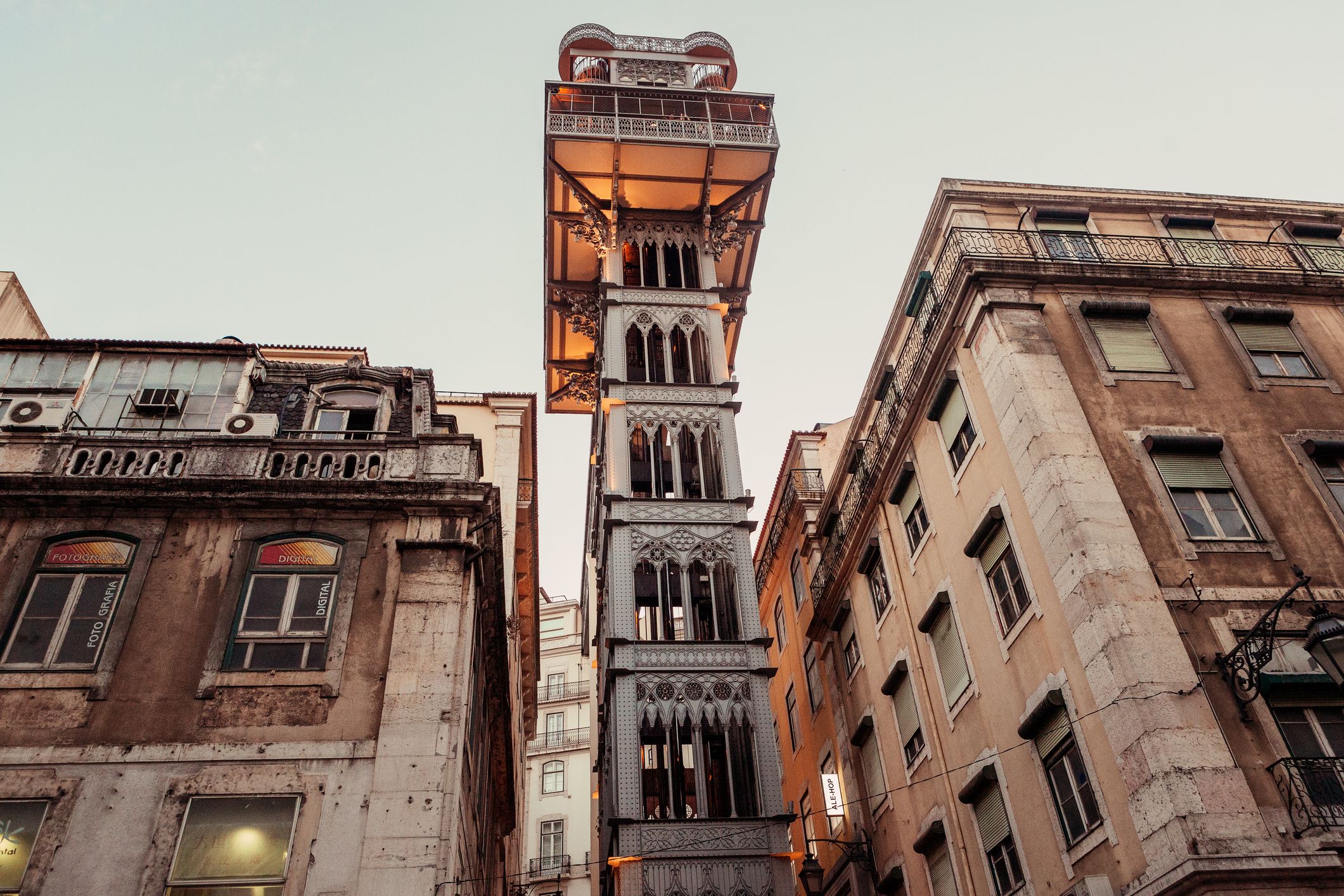
Lisbon is a strong opening argument for port architecture because it's built on hills that necessitate engineering with a little flair. The Elevador de Santa Justa, designed by Mesnier du Ponsard, links Rua do Ouro to Largo do Carmo in a neo-Gothic structure that is gloriously overqualified for the simple act of going up a hill. It's one of the city’s most famous sights and its panoramic view from the top over Baixa, the Tagus and the Carmo ruins is among the best you'll find.
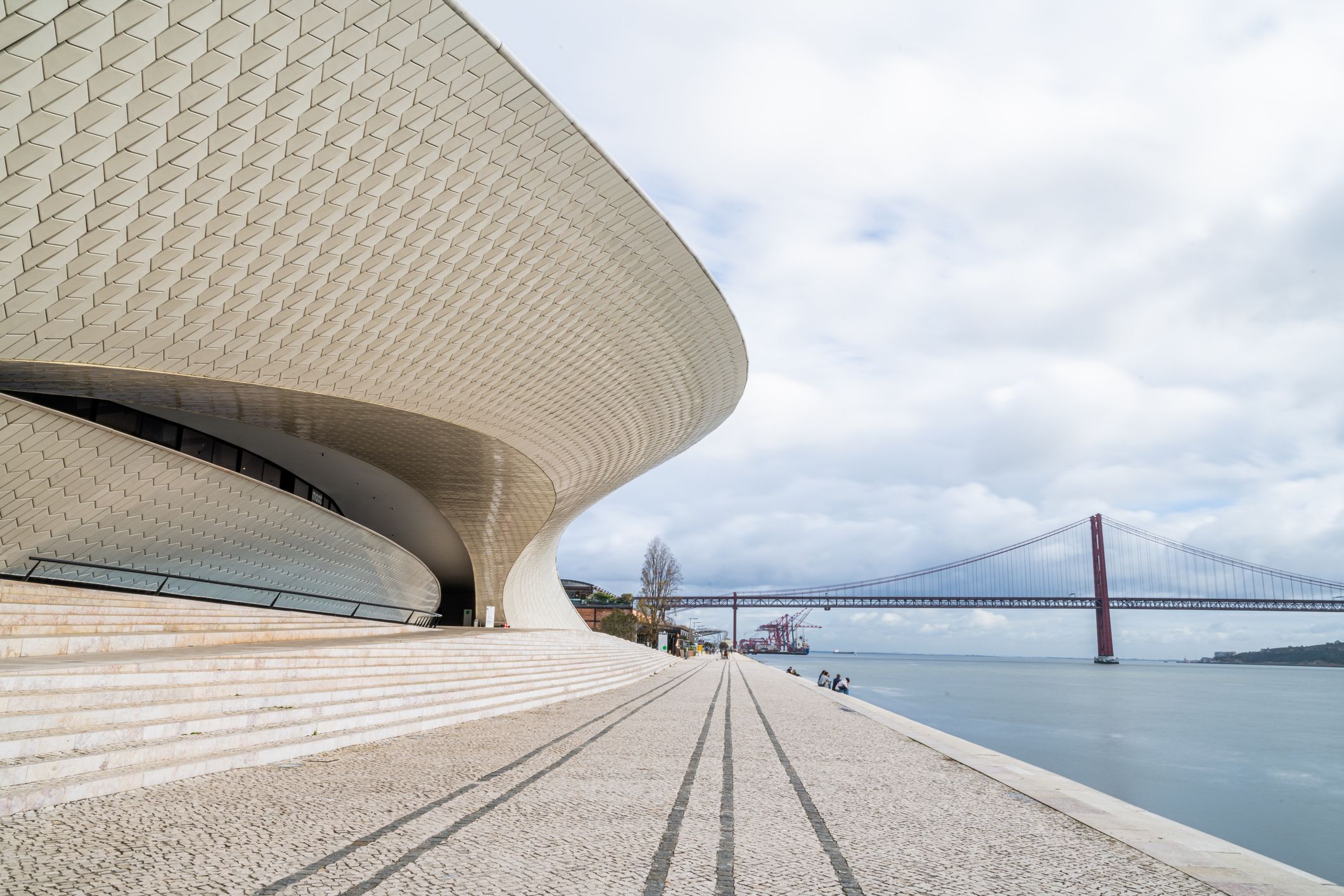
Then, down by the river, there is MAAT, Amanda Levete’s rippling white museum in Belém, which connects its new building with the old Central Tejo power station, one of Portugal’s most prominent examples of early 20th-century industrial architecture. This is exactly the sort of thing port cities do well: retaining the industrial muscle and adding a sculptural contemporary counterpart.
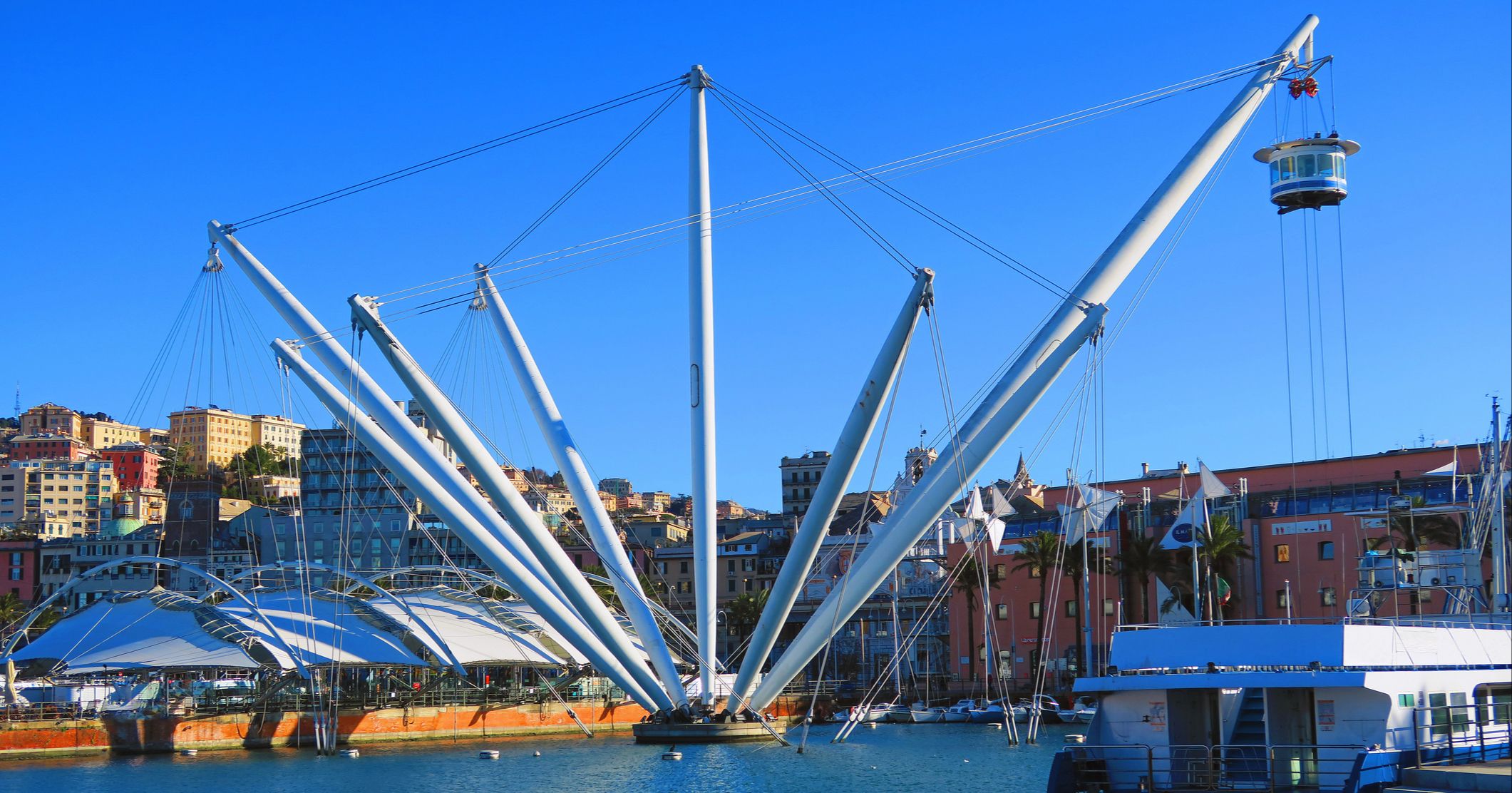
Genoa solves the same hill-meets-harbour problem with less polish and more eccentricity. The city’s mix of lifts and funiculars helps people overcome steep streets and reach panoramic views over the city and the roads descending to the sea, which is a diplomatic way of saying Genoa is very vertical. Down in the Porto Antico, the Bigo by Renzo Piano gives the whole business a more theatrical twist. It was designed to evoke the shape of a ship-loading crane, lifting passengers 40 metres for views over the harbour and city. If a port city is not allowed one slightly mad bit of waterside engineering, what are we even doing here.
Porto: tiled stations and stock exchange grandeur
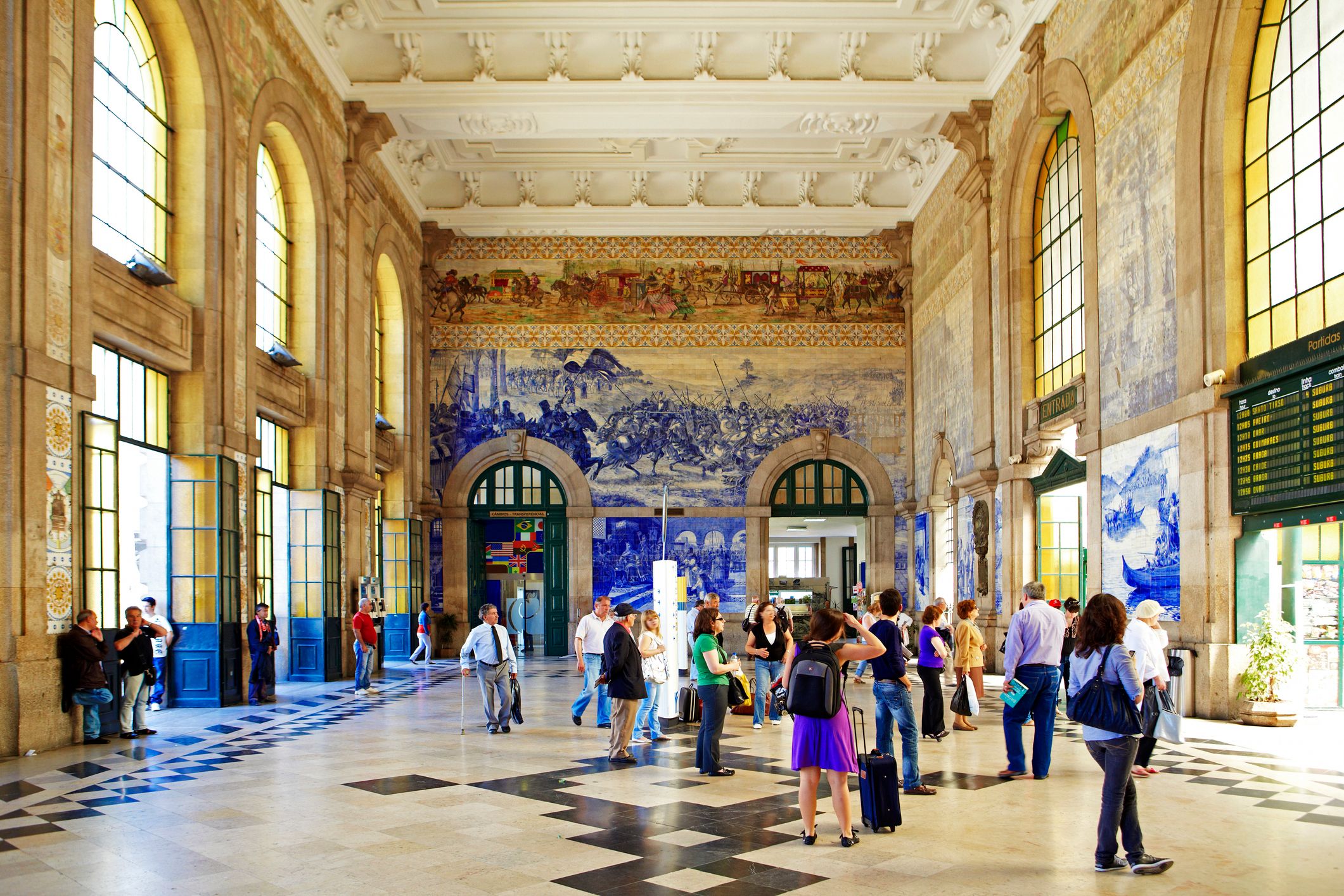
Porto is home to São Bento station, which was built at the start of the 20th century to a design by Marques da Silva, and its vestibule is decorated with 20,000 tiles by Jorge Colaço showing Portuguese history and the evolution of transport. It's the sort of train station that could make you briefly resent every commuter journey you have ever taken. This is Porto's operatic tiled essay on national identity before you have even reached the platform.
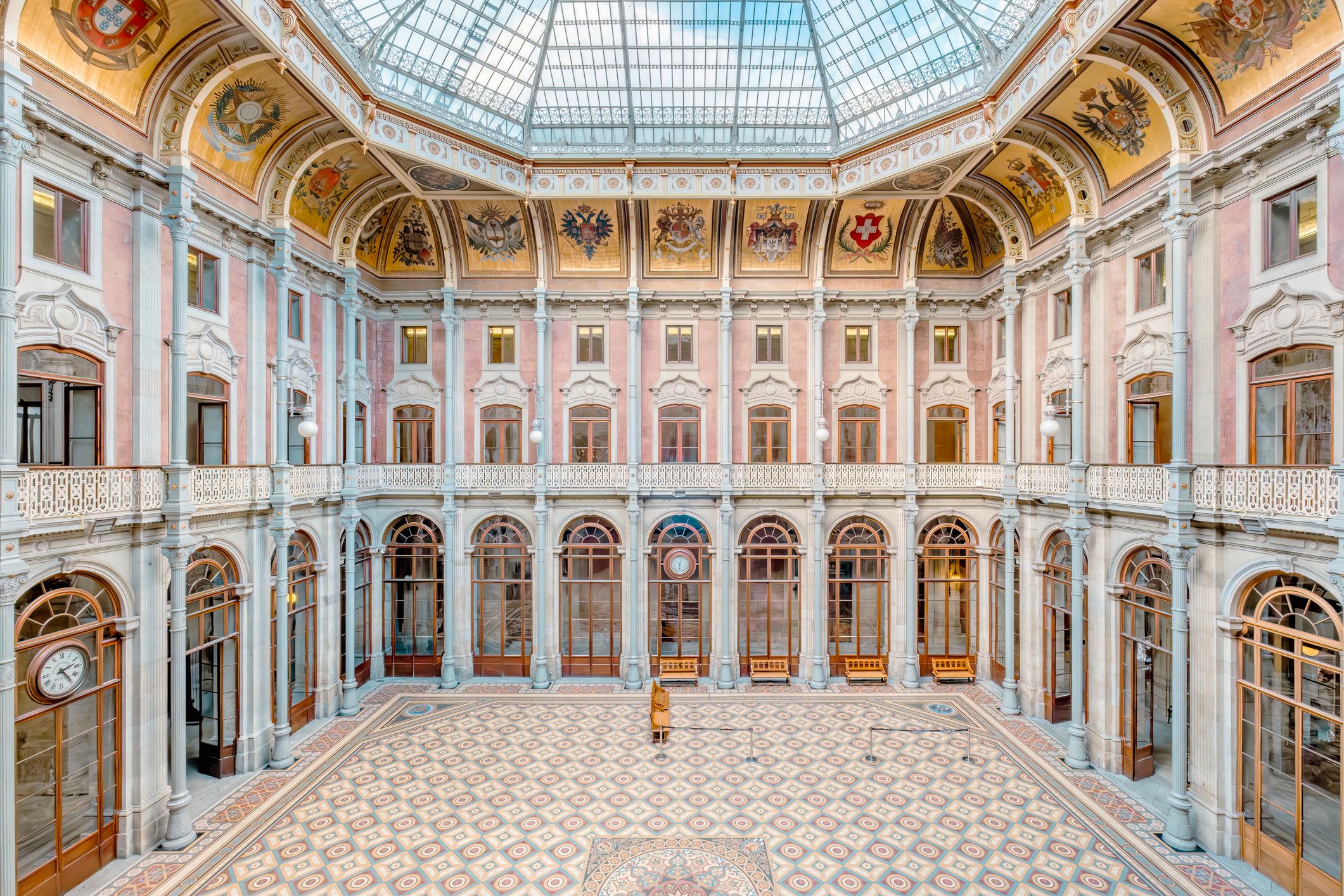
A short walk away, Palácio da Bolsa makes the same point in a more mercantile register. The palace construction began in 1842 because the closure of the stock exchange had obliged Porto’s traders to discuss business out in the open air, which, it turns out, is a magnificent reason to build something imposing. This is the architecture of commerce and today it remains one of Porto’s major monuments and official reception venues.
Hamburg and Antwerp: harbour warehouses and industrial conversions
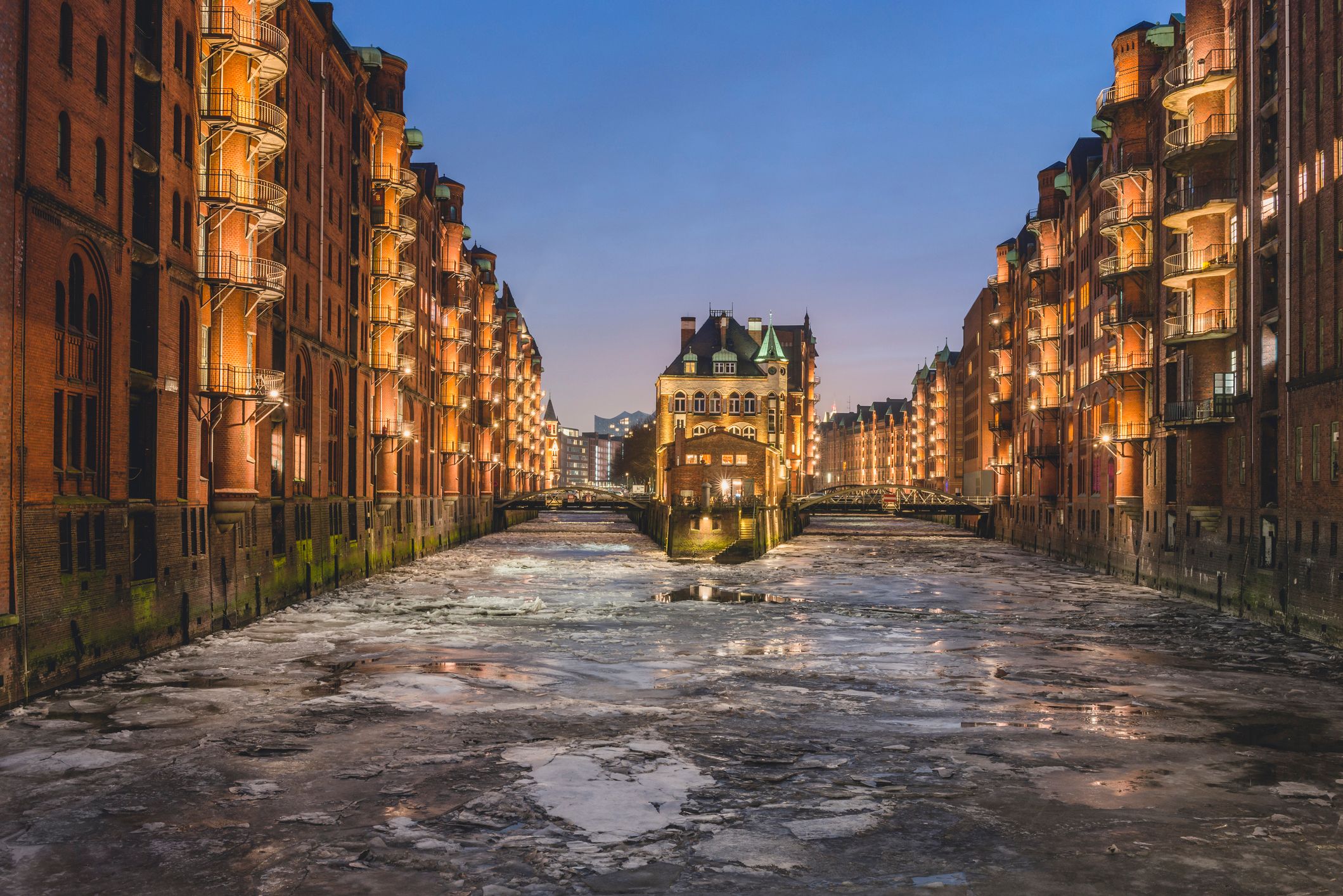

Hamburg is one of Europe’s great secular architecture cities because it's never really stopped worshipping at the altar of trade. The Speicherstadt area of the city is one of the largest coherent ensembles of port warehouses in the world, developed on islands in the Elbe between 1885 and 1927, while the adjoining Kontorhaus district housed port-related businesses in huge office blocks built from the 1920s onwards.
Then Hamburg did the thing port cities now frequently do with large ex-industrial areas, which is to give them a cultural glow-up so dramatic the area itself becomes a landmark. This includes the Elbphilharmonie, a concert hall built on a former warehouse, essentially this is a glass wave planted on top of a quayside storehouse that also happens to have excellent acoustics. The genius of the scheme is that it keeps the warehouse there, like a stubborn reminder that all this elegance began with goods arriving by water.
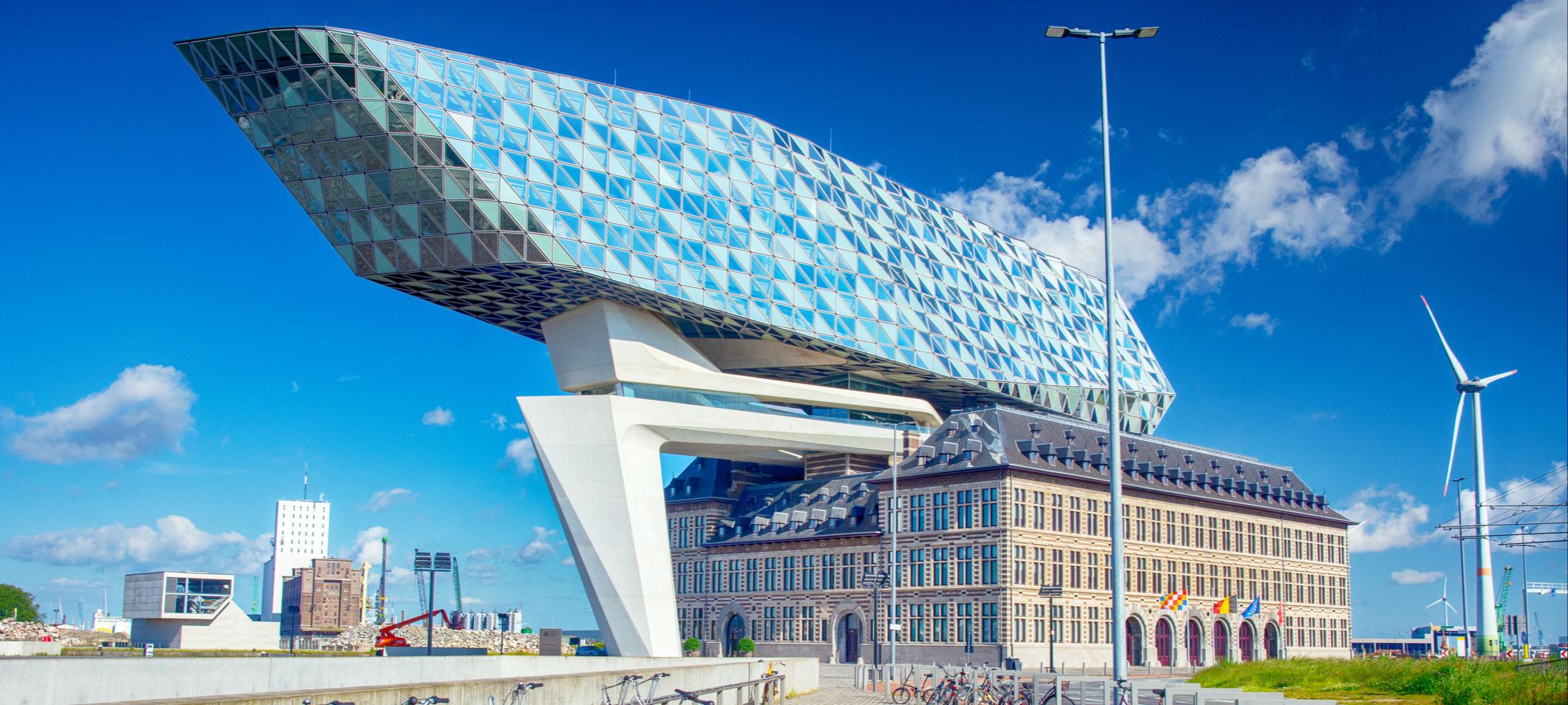
Antwerp has played the same game too. The MAS is a museum that describes itself as a huge modern warehouse based on the 19th-century warehouses typical of its district, with stacked volumes and a spiralling boulevard leading up to panoramic views over city, harbour and river. Not far away, the Port House goes even further. Zaha Hadid Architects repurposed and extended a derelict fire station into a headquarters for the port, with the new structure floating above the old building, pointing like a ship’s bow towards the Scheldt and using faceted glazing that nods to Antwerp’s diamond trading identity. It's a wonderfully port-city piece of swagger. And as a statement of confidence, it is admirably free of self-doubt.
Le Havre: modernist port architecture worth getting off the ship for
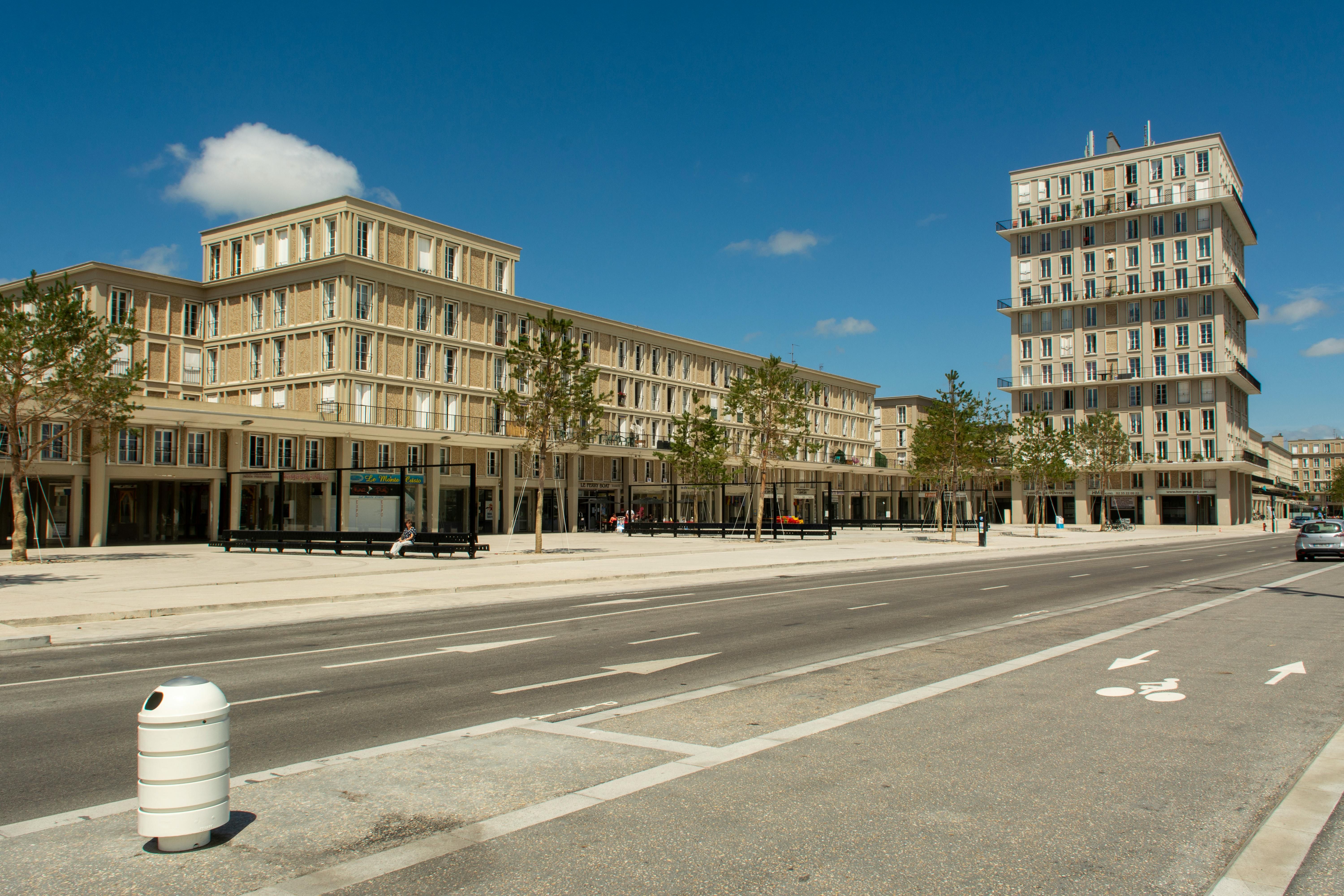
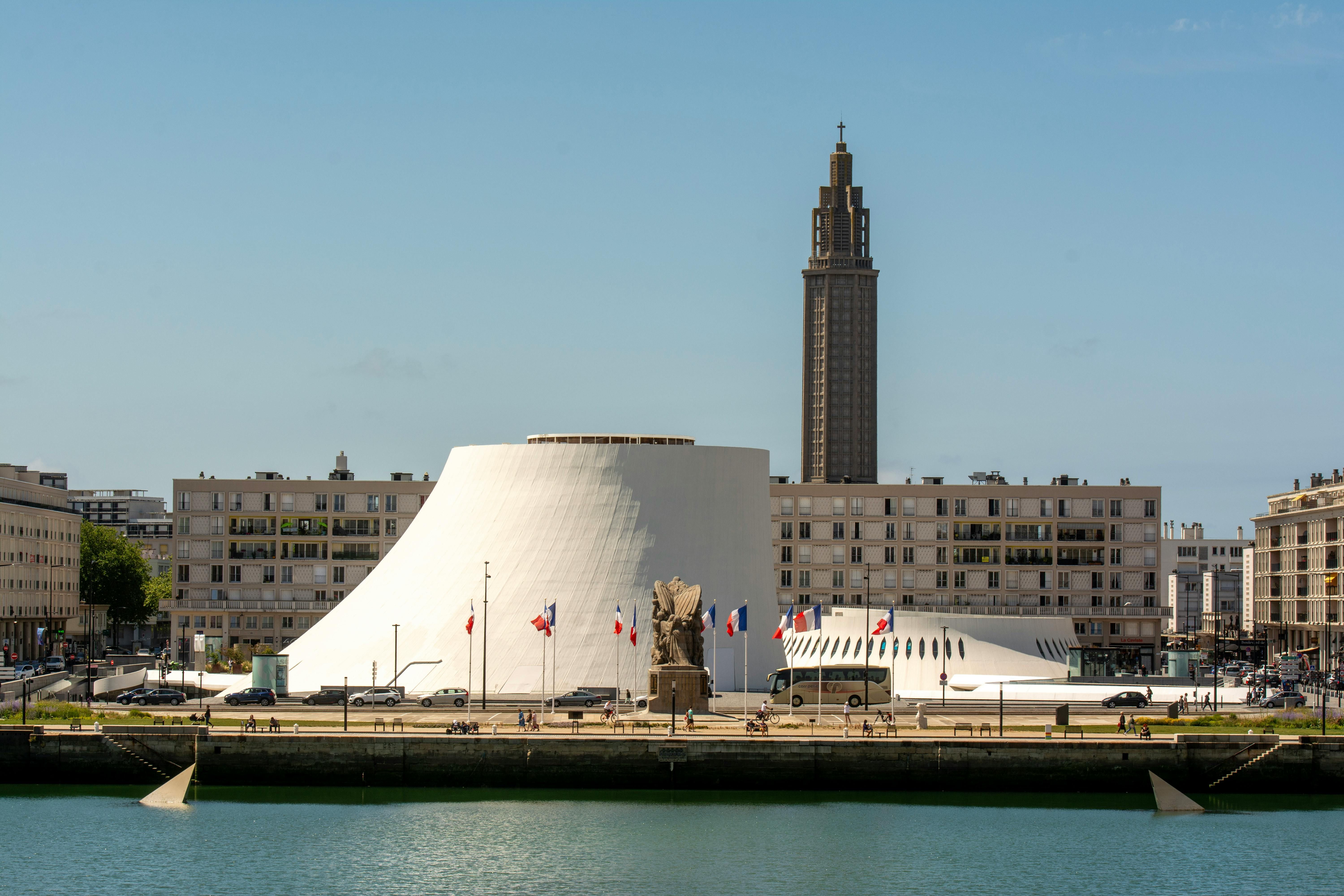
Then there is Le Havre, a city cruise passengers often treat as a transfer point on their way somewhere else, which is a shame because its architecture is half the reason to get off the ship. The WW2 bombed centre was rebuilt between 1945 and 1964 according to the plan of Auguste Perret’s team and it's an outstanding post-war example of urban planning and architecture, notable for its unity, modular grid and innovative use of concrete. If you still think concrete is inherently joyless, Le Havre will either cure you or confirm your prejudice so thoroughly that at least you will at least leave with some conviction.
And just when Perret’s strict post-war order has settled into your brain, along comes Le Volcan, Oscar Niemeyer’s great white intervention at Place Gambetta. This cultural complex looks like a modernist shrug rendered at civic scale, and I mean that as praise. In a port city rebuilt from devastation, the embrace of a Brazilian architect’s sculptural flourish, results in an oddly moving place.
Why port cities make better architecture days than you think
What I like about these places is that they remind you that architecture in a port city is not chiefly about faith or monarchy or historical winners. It's about slopes, cargo, weather, labour, money and the stubborn desire to turn practical problems into handsome ones. Sometimes that gives you a tiled station. Sometimes it gives you a warehouse district, a stock exchange palace or a lift masquerading as a crane. All are preferable, in the right mood, to being herded reverently into another dark nave while secretly wishing you were outside looking at a weird customs house.