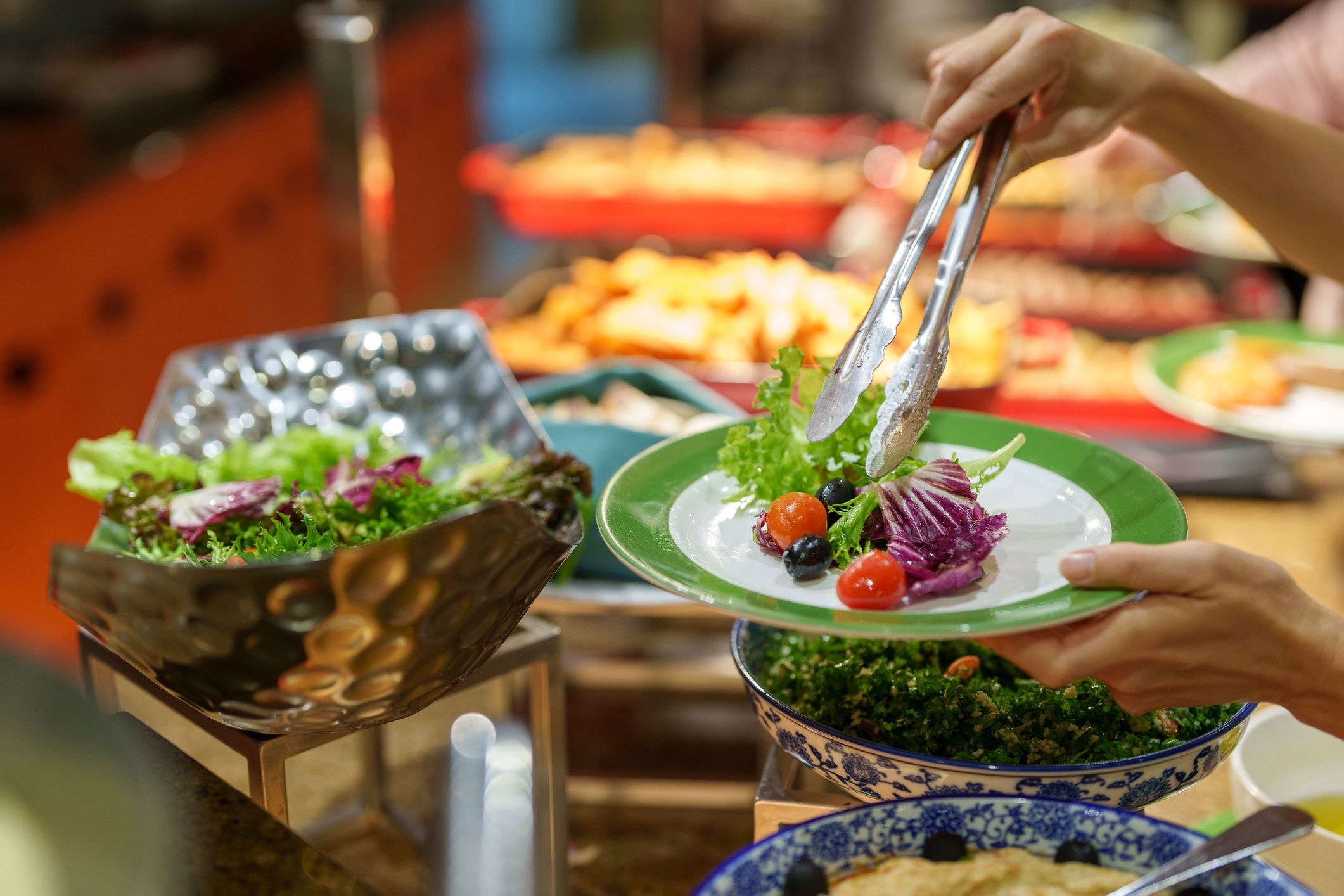
Cruise-ship breakfast has an unnerving ability to seemingly appear from nowhere. At 7am there are eggs, fruit, pastries, yoghurt, bacon and several suspiciously specific varieties of bread waiting across restaurants, buffets and room service, despite the fact that the nearest supermarket may now be several hundred miles away.
Behind it is a provisioning operation closer to supplying a small town than running a restaurant. Large ships can produce tens of thousands of meals a day for passengers and crew, which means deciding what everyone is likely to eat, getting it aboard in time, storing it safely and making sure the ship doesn’t discover halfway through the Atlantic that 4,000 people have developed an unexpected enthusiasm for salmon.
How does food get onto a cruise ship?
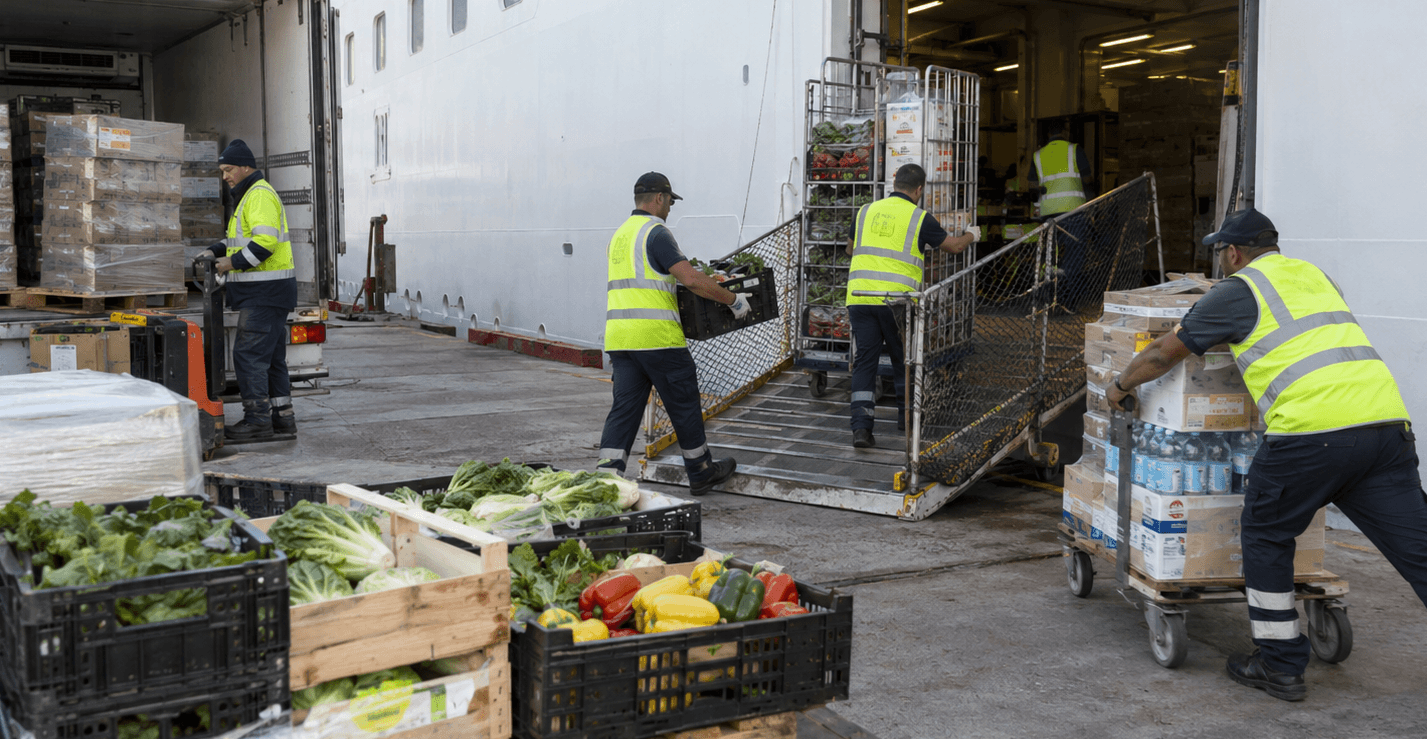
Most of the heavy lifting happens on turnaround day, when one set of passengers is leaving and another is arriving. While cabins are being cleaned upstairs, trucks and pallets are gathering on the quayside below with meat, fish, dairy, fruit, vegetables, frozen goods, drinks and enough dry food to make a warehouse club look understocked.
Deliveries are checked against orders and inspected before being accepted onboard. Refrigerated food has to arrive at safe temperatures, frozen products must still be properly frozen and anything that doesn’t meet the ship’s standards can be rejected. From there, supplies disappear into a network of cold rooms, freezers and dry stores, with meat, fish, dairy and produce kept separately and stock rotated so older supplies are used first.
The people overseeing this are the ship’s provisions team, who manage what comes aboard, where it goes and how quickly it’s being used. They are, in effect, responsible for preventing the sentence “we’ve run out of potatoes” from ever becoming a maritime emergency.
How much food does a cruise ship need?
This is where the numbers become mildly absurd.
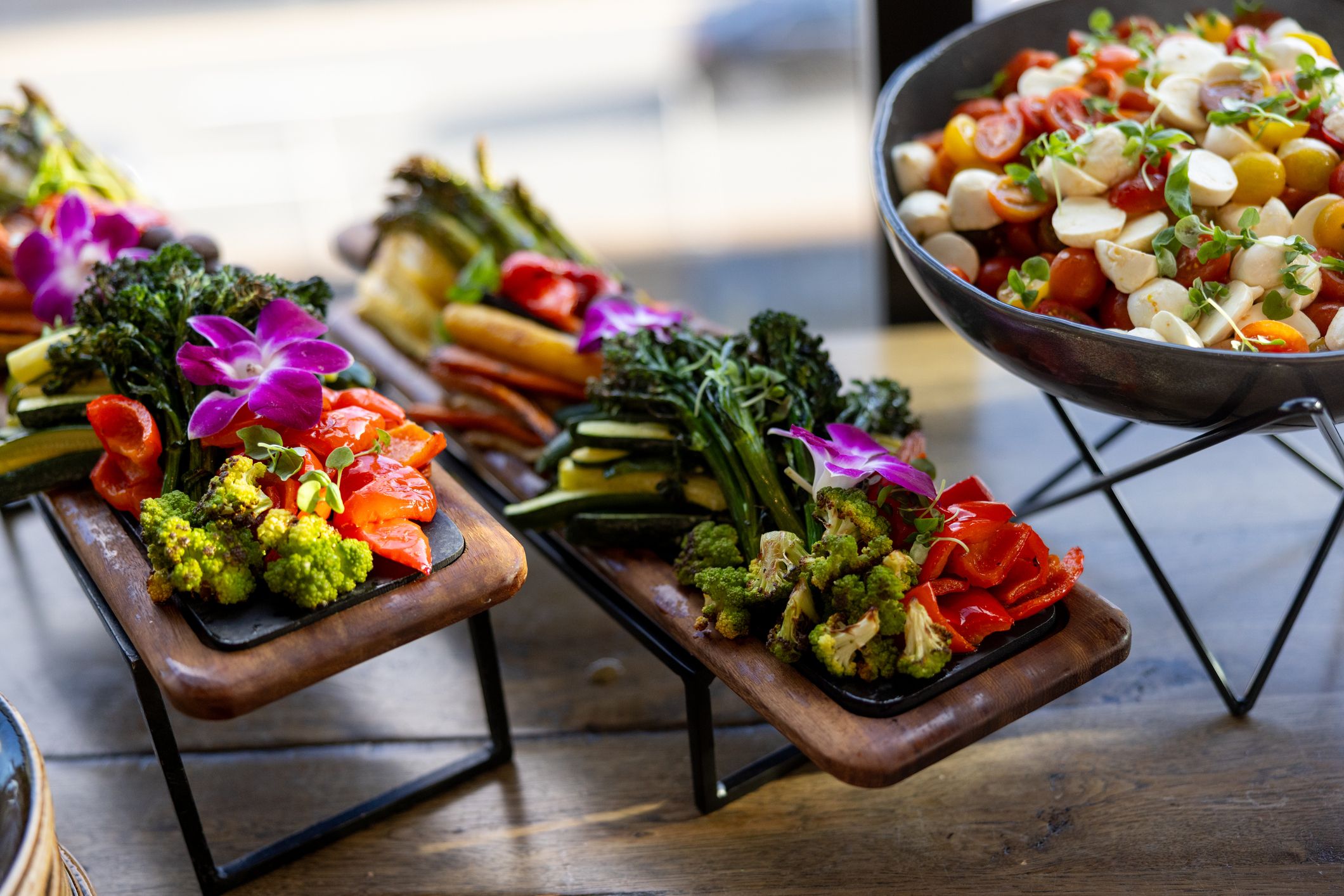
Princess has previously published figures for Island Princess showing daily consumption of roughly 4,700lb of fruit, 1,700lb of vegetables, 1,400lb of bread, 1,100lb of fish, 900lb of potatoes and around 2,400 eggs. That’s on a ship considerably smaller than today’s biggest vessels.
Exact quantities vary enormously according to ship size, itinerary and passenger mix, but the challenge is the same: ordinary appetites multiplied by several thousand people. Crew also need feeding, often adding well over a thousand more diners to the equation.
This is why cruise lines increasingly use detailed forecasting systems rather than relying on somebody remembering that people ate quite a lot of yoghurt last Tuesday. Royal Caribbean, for example, uses data on passenger demand, itineraries, inventory and actual orders to help calculate what should be purchased and prepared.
At this scale, breakfast is partly a catering exercise and partly applied mathematics.
Where does cruise ship food come from?
There isn’t one enormous depot supplying every cruise ship in the world. Lines use networks of suppliers around their operating regions, with major provisioning hubs handling the bulk of what ships need and local producers sometimes supplying fresh or regional ingredients along the route.
MSC says roughly three quarters of its food and drink purchasing is sourced close to the regions where its ships are operating. Other lines make a point of bringing local produce onboard, whether that means Alaskan seafood, European cheeses or fruit and vegetables purchased in Mediterranean ports.
How much of that happens depends heavily on the ship. A 6,000-passenger vessel following a weekly Caribbean circuit needs a highly predictable industrial supply chain. Smaller ships have more freedom to buy locally and in smaller quantities, particularly on longer or destination-led itineraries.
The romantic idea of the chef strolling into a Provençal market each morning with a wicker basket is therefore mostly optimistic. But the tomato on your plate also hasn’t necessarily been travelling with the ship since Southampton.
Does a cruise ship restock during the voyage?

Yes, although the biggest load usually happens at a regular homeport where suppliers and dockside operations are set up to handle it efficiently.
Ships can then take on additional provisions during longer itineraries or at suitable ports along the way. Fresh produce makes this particularly useful because lettuce has yet to recognise the operational importance of a 14-night itinerary.
Longer or more remote cruises require more planning and greater reserve stocks, while a ship running the same seven-night itinerary every week can forecast demand with much more confidence. Either way, extra supplies are normally carried as a buffer in case weather, itinerary changes or delayed deliveries interfere with the next planned load.
The aim isn’t simply to have enough food. It’s to have enough fresh food at the right stage of freshness, which is a considerably more irritating problem.
How does all that food reach the restaurants?
Once supplies are onboard, individual galleys don’t simply raid the storerooms whenever somebody needs an onion. Ingredients are issued against internal requests so the provisions team can track what is being used and what remains.
Large ships then divide food production between dedicated areas for meat, vegetables, pastry, cold dishes and other preparation before ingredients reach restaurant kitchens. That allows several thousand meals to move through the ship without every chef simultaneously attempting to chop vegetables in the same room.
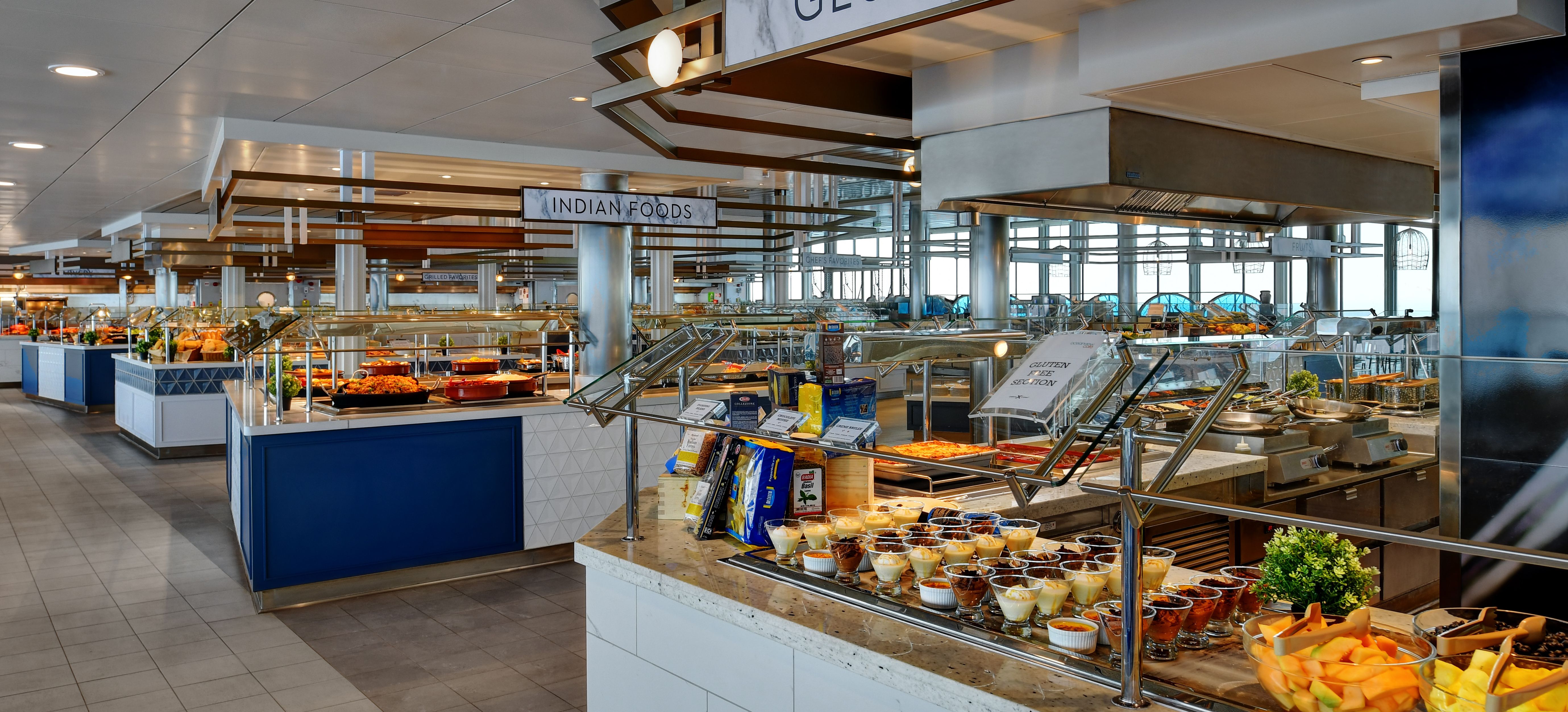
Passengers see only the final few metres of this process. A waiter emerges from the galley carrying dinner and everything looks reassuringly normal. The ingredients may already have passed through procurement teams, refrigerated transport, dockside inspection, cold storage, inventory control and several kitchens before reaching the plate.
The parsley garnish has had quite an administrative day.
What happens to leftover food on a cruise ship?
This is another area where simply producing enormous quantities and hoping for the best is expensive as well as wasteful.
Cruise lines increasingly track what passengers actually eat so kitchens can adjust production. Royal Caribbean has introduced systems connecting orders, inventory and galley preparation partly to reduce unnecessary food production, while similar forecasting tools are now common across the industry.
Waste that remains is processed onboard according to strict maritime rules rather than simply disappearing over the side after dinner. Depending on the vessel and location, food waste can be pulped, dehydrated, processed through biodigesters, landed ashore or disposed of at sea only where international regulations permit it.
Which makes the most impressive part of cruise catering perhaps less glamorous than the dining room suggests. Feeding thousands of people every day depends on forecasting, temperature logs, stock rotation, purchasing systems and somebody being remarkably attentive to how many eggs remain in a refrigerated room several decks below you.
Upstairs, meanwhile, you pick one up from the buffet and wonder whether you fancy another.
That is probably exactly how the system is supposed to work.