The good news is that there is. The better news is that you do not have to abandon cruising to find it. You just have to pick itineraries that swap choreographed sunsets for proper atmosphere, and mega-ships for vessels that can squeeze into smaller harbours without blotting out the town behind them.
Here are four islands that feel like the second album to Santorini’s greatest hits. They are all regular fixtures on 2025 and 2026 itineraries, particularly for smaller and mid-sized ships, and each one rewards the cruiser who is more interested in café tables and swimming coves than in recreating an influencer’s reel.
Milos: lunar coves and evenings that actually feel like Greece
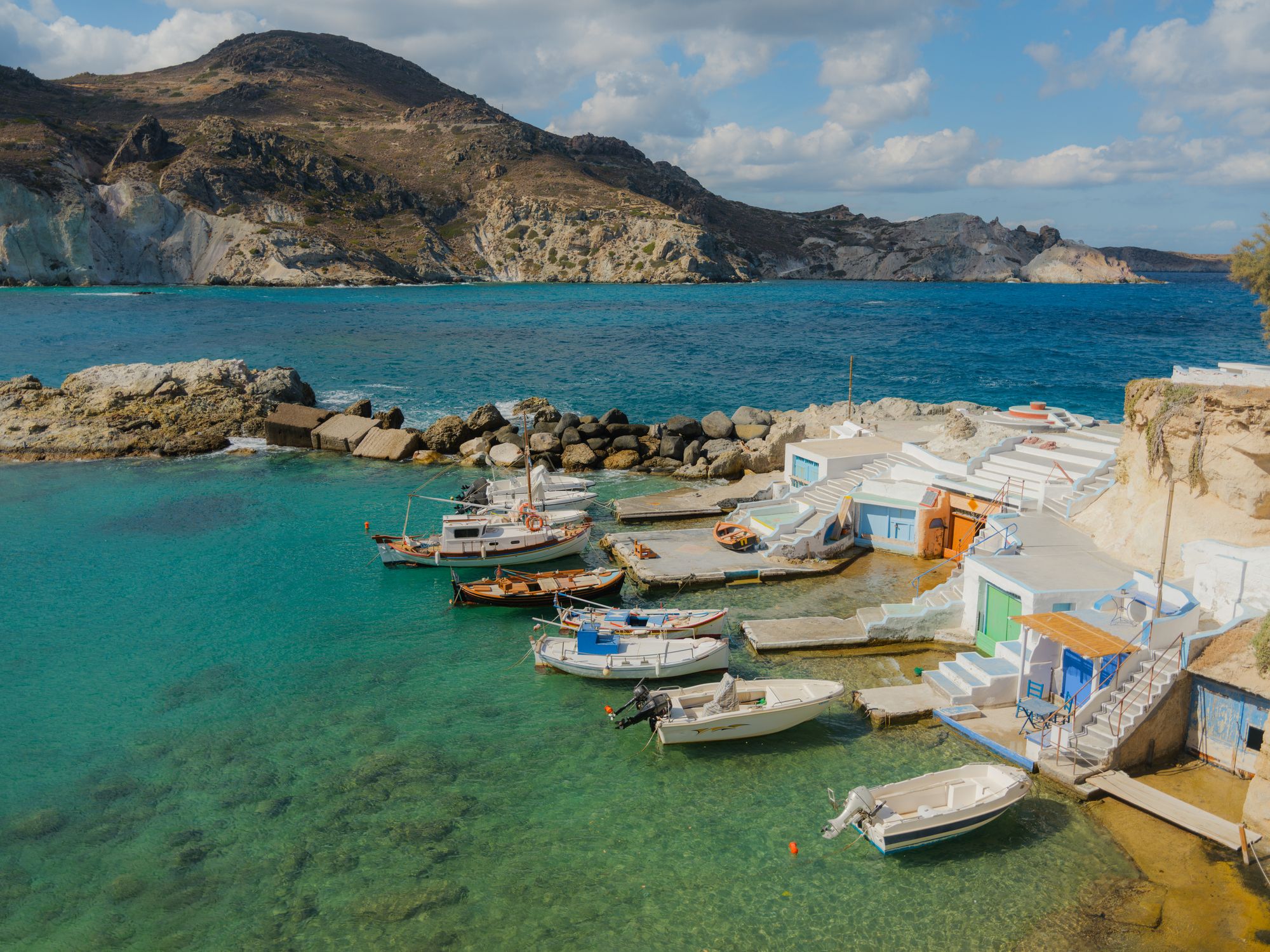
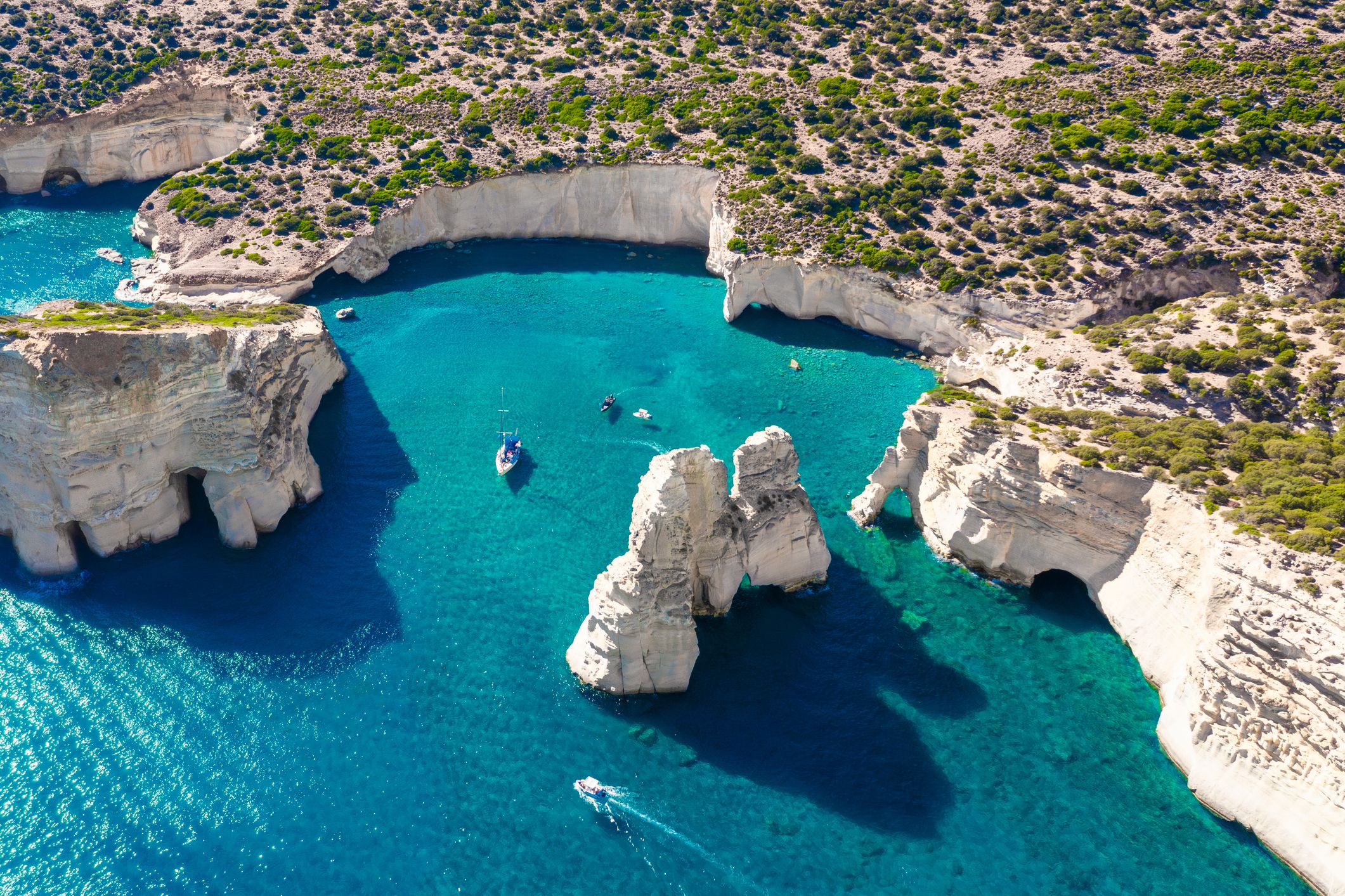
If Santorini is the island that launched a thousand engagement shoots, Milos is the one that quietly gets on with being interesting.
You sail in past low cliffs and fishing villages where boats still live in brightly painted garages, not on tote bags. Klima, with its boat houses painted in ice-cream colours, looks like a film set that never bothered to leave the water. Inland, Plaka climbs the hill in whitewashed steps, rewarding the climb with a proper sunset from the kastro that does not need a ring light.
The showstopper is Sarakiniko. You have probably seen it without realising, all chalk-white rock and curved inlets that look like someone dropped a slice of the moon into the Aegean. In person it is stranger and lovelier than the photos suggest, especially if you get there early enough that the only sound is other people working out if they dare jump in. Nearby boat trips out to Kleftiko deliver sea caves, swimming stops and that very satisfying feeling of your ship shrinking to a dot behind you.
Milos is firmly on the radar for lines that like smaller ports. Celestyal builds it into week-long “Idyllic Aegean” itineraries from Athens, which also tick off the usual suspects. Explora Journeys sends Explora II through here on longer Mediterranean routes, mixing Milos with places like Dubrovnik, Fiskardo and Patmos for a pleasantly odd mix of pretty harbours and serious history.
If you want even quieter, look at yacht-style or small-ship specialists rather than the biggest names in the brochure. The ships are smaller, the beaches are easier to reach, and you stand a fighting chance of finding a taverna where nobody has heard of spritzes with glitter in.
Naxos: the big island that feels like a village
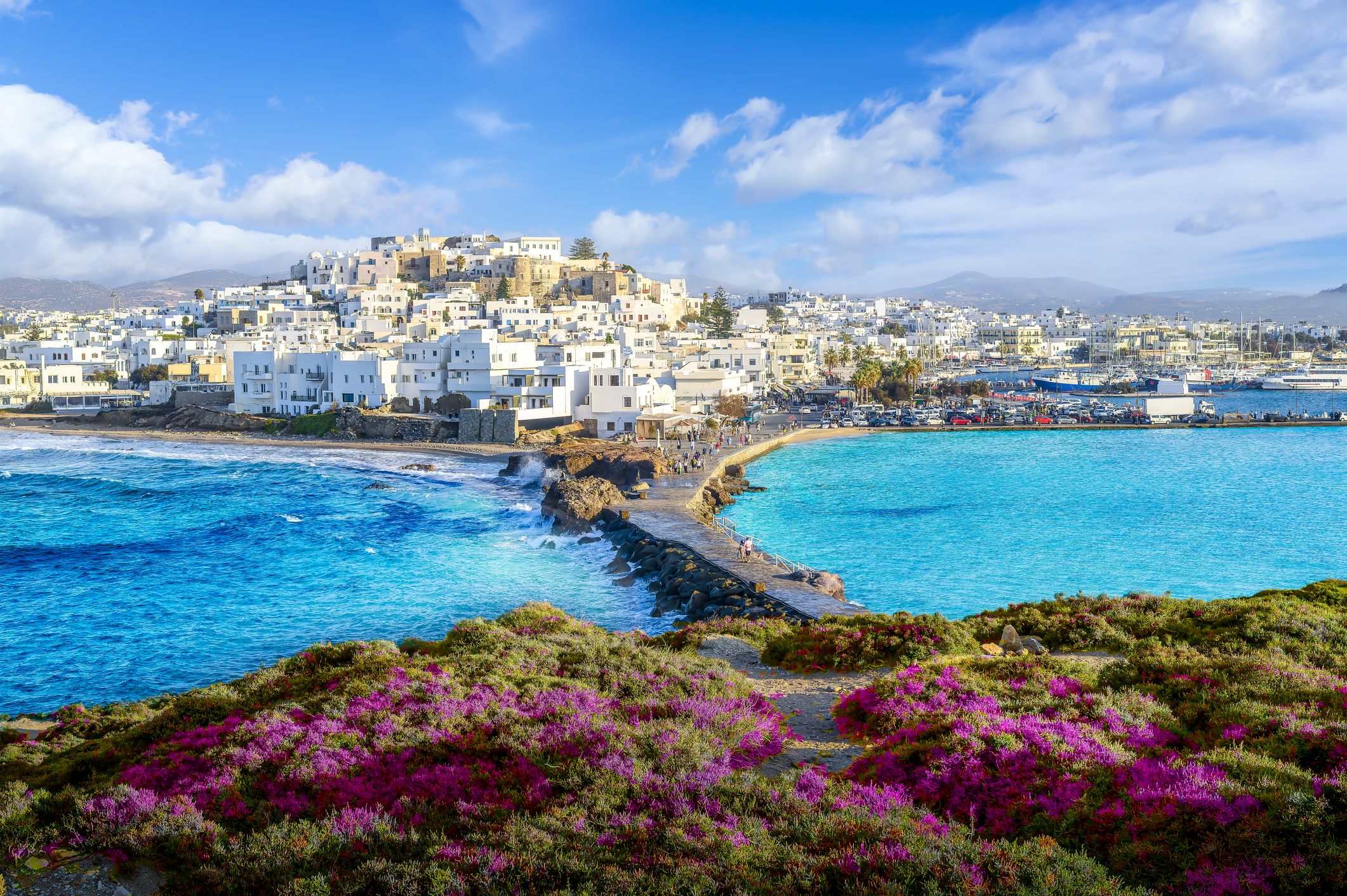
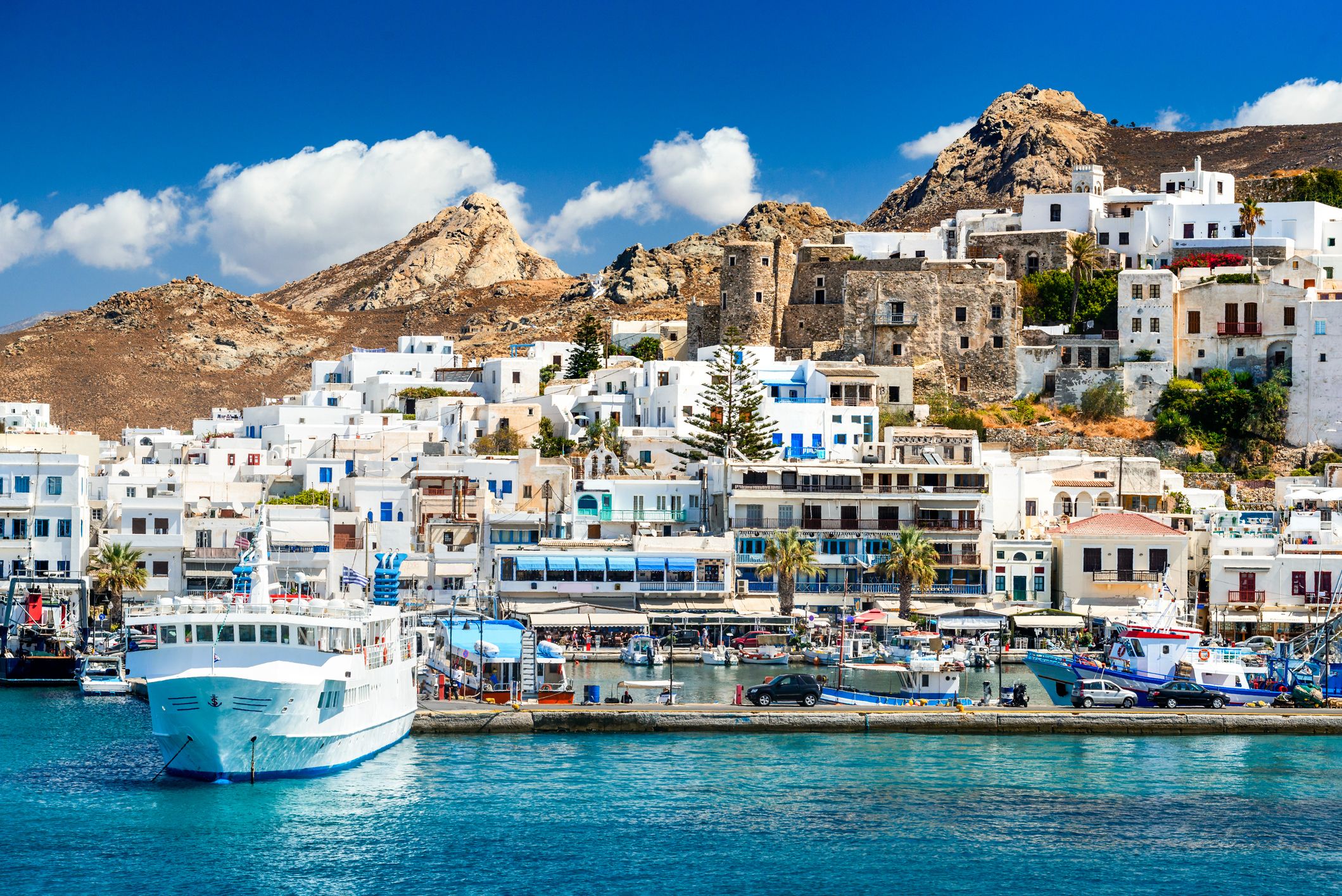
On paper Naxos is one of the largest Cyclades, with farmland, mountains and enough beaches to keep an entire Scandinavian nation supplied with screensavers. In person it feels like a single, slightly sprawling village that happens to have very good bus services.
You dock beside the old town, with the Portara, the chunky marble doorway from an unfinished temple, framing the harbour like a deliberate postcard. From there you can lose an afternoon wandering lanes under the Kastro, dodging cats and working out how many times you can justify stopping for coffee. If you want sand, the long beaches at Agios Prokopios and Plaka are a short taxi or bus ride away and feel like actual seaside, not a backdrop.
The trick on Naxos is to leave the coast for at least an hour. The bus or a ship excursion up to villages such as Apeiranthos or Halki swaps beach bars for kafeneia, marble alleyways and old men arguing over cards. It feels almost rude to get back to the ship at the end of the day.
Because Naxos has a relatively small harbour, it is mostly the preserve of small-ship and yacht lines rather than the biggest resort vessels. Windstar and other yacht-style operators include it on “off the beaten path” Cyclades routes, often pairing it with Folegandros, Paros or tiny coves that require an actual gangway rather than a floating pier. Hapag-Lloyd and other German-speaking lines also pop in on more elaborate Aegean cruises.
If you spot Naxos in an itinerary, it usually means the rest of the schedule is worth a look too.
Syros: the Aegean city break
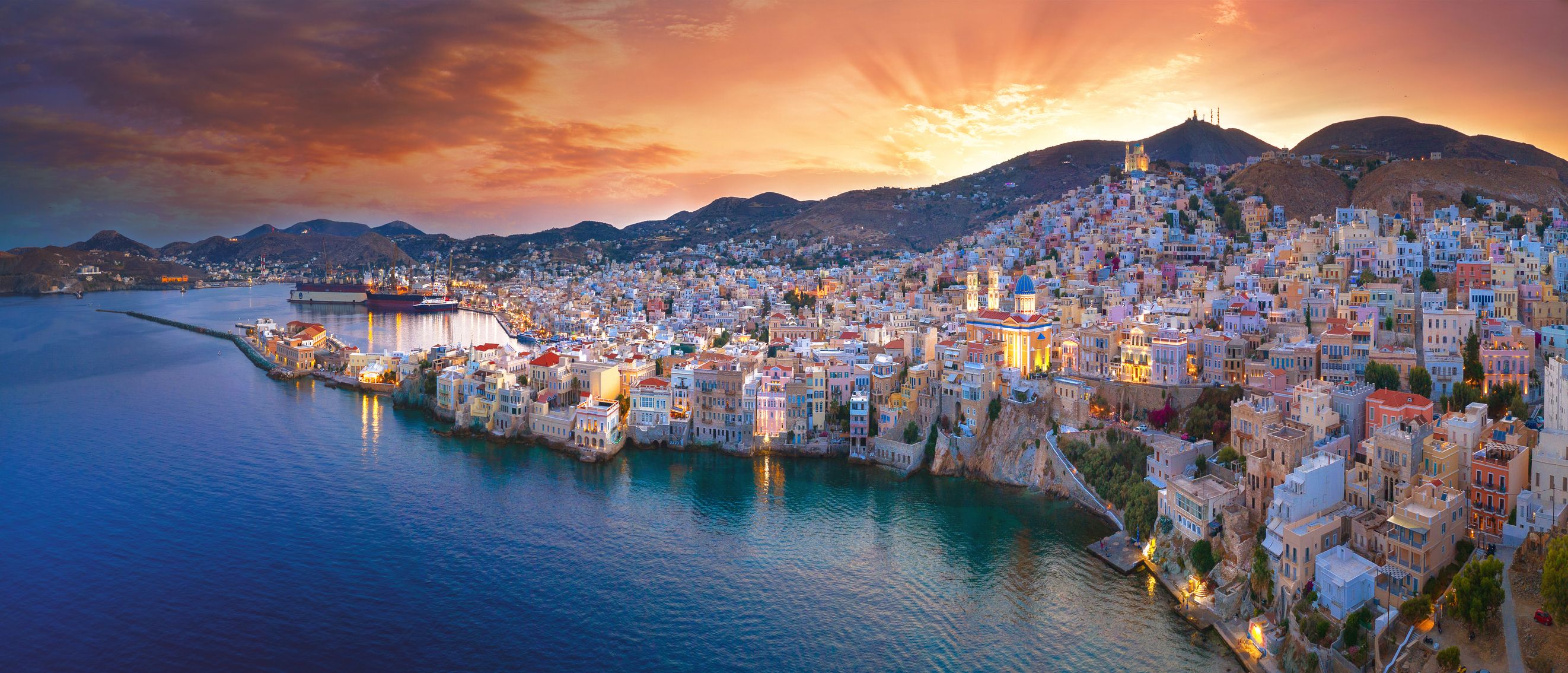
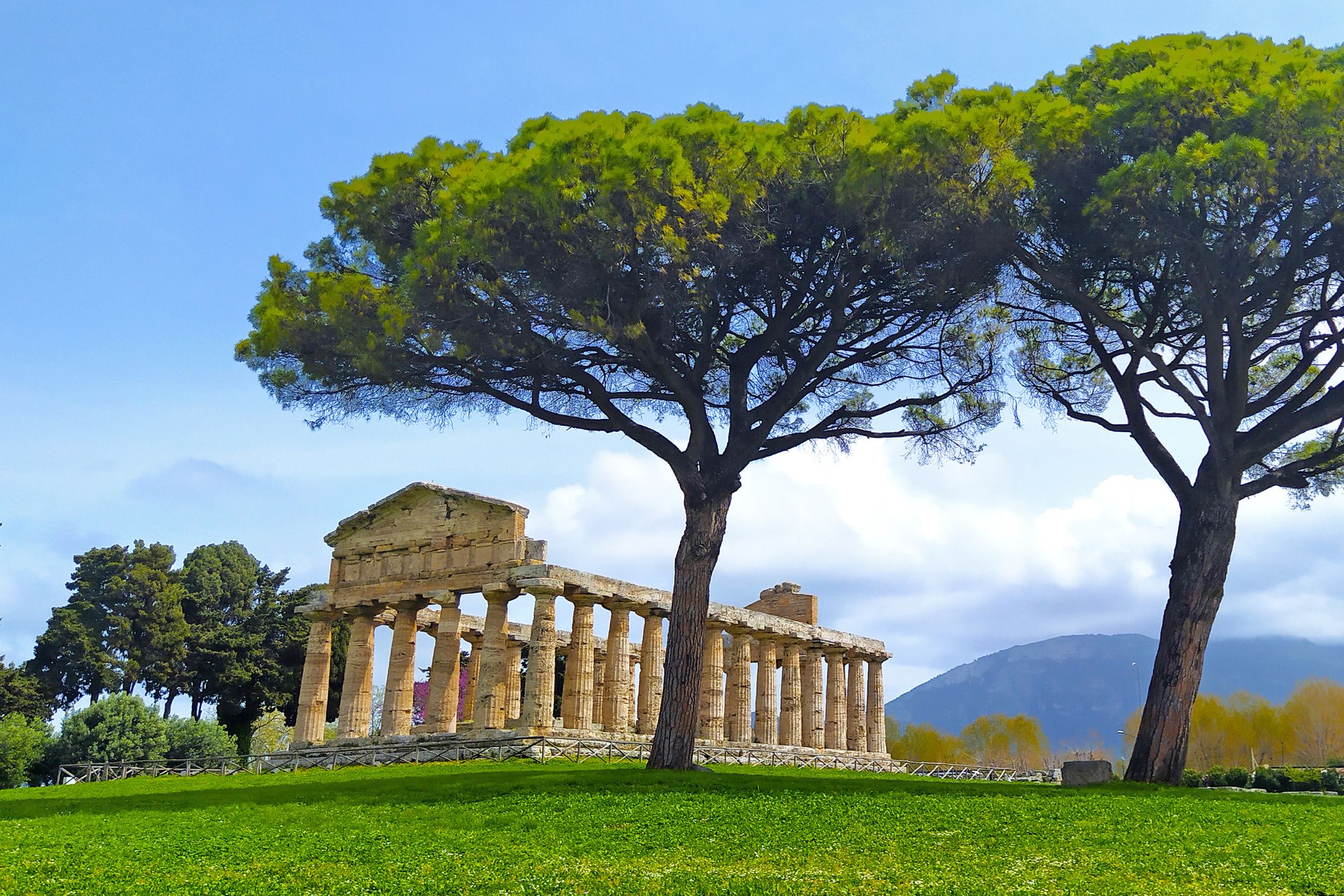
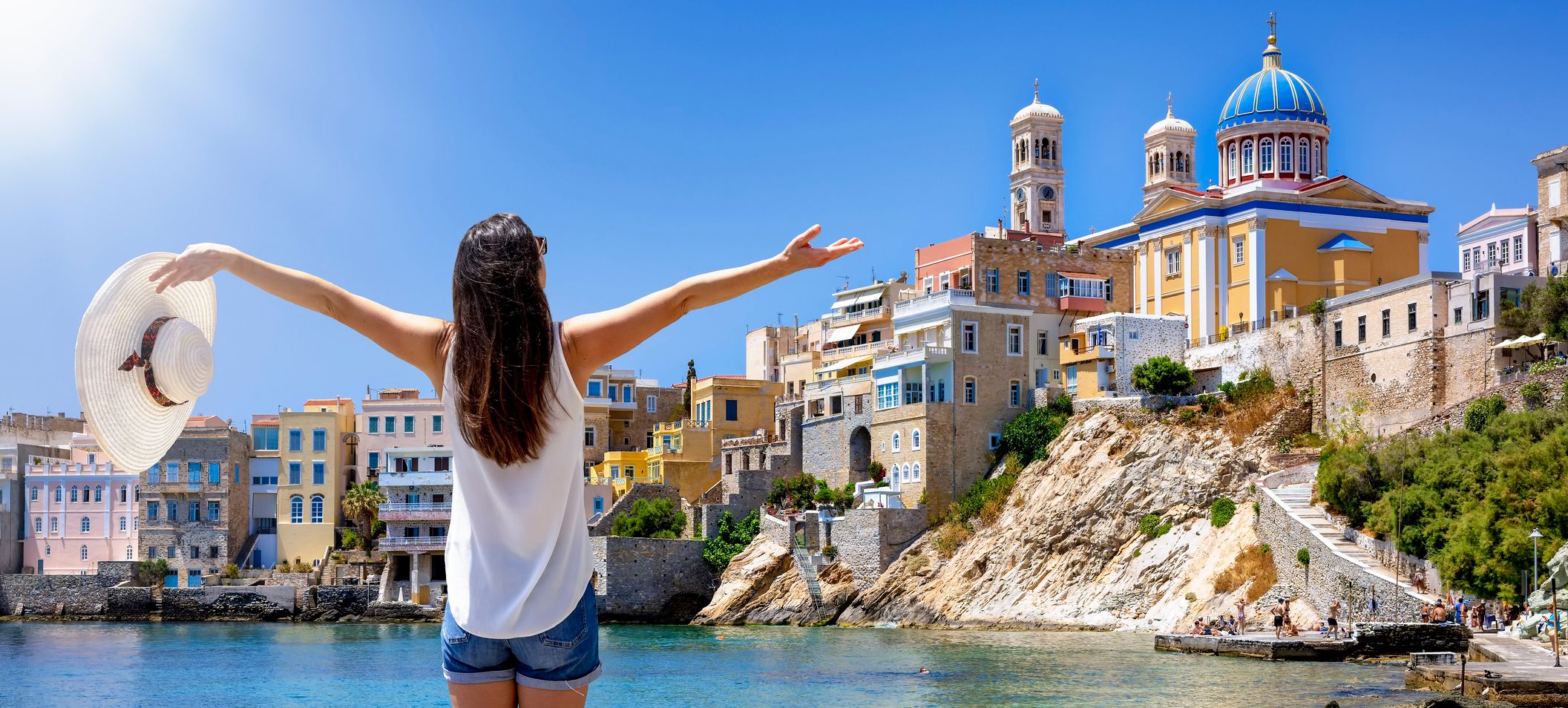
Syros is the island that Greeks point to when they want to prove that the Cyclades are not all sugar cubes and sarongs. You pull into Ermoupoli, a proper working town with shipyards on one side and layered neoclassical streets climbing the hill on the other. It looks, at first glance, more like a small Italian city that has mislaid its cathedral.
From the port you can walk everywhere. Miaouli Square sits at the heart of Ermoupoli, bordered by a town hall that looks as if it should be hosting international summits rather than paperwork. Behind it, narrow lanes climb towards Vaporia, a district of old captains’ houses where balconies lean out over the sea and café tables crowd the rocks. The Apollon Theatre hides just off the main drag, a pocket-sized opera house loosely modelled on La Scala and considerably easier to get into.
For something slower, Ano Syros, the old Catholic quarter up on the hill, rewards the climb with views across half the Cyclades and enough alleyways to get pleasantly lost in. You can still do a swim stop at one of the beaches, but the joy here is the island behaving like itself rather than an outdoor studio.
Syros is attracting more lines that want somewhere with culture, cafes and a port that drops you straight into town. MSC has built it into Aegean sailings which also feature Mykonos and Santorini, while small-ship and luxury brands such as Azamara, Seabourn and Explora Journeys call here on longer Mediterranean itineraries.
If you like the idea of a Greek island that can supply both good espresso and a theatre matinee, this is your port.
Patmos: monasteries, sea views and a slower kind of shore day
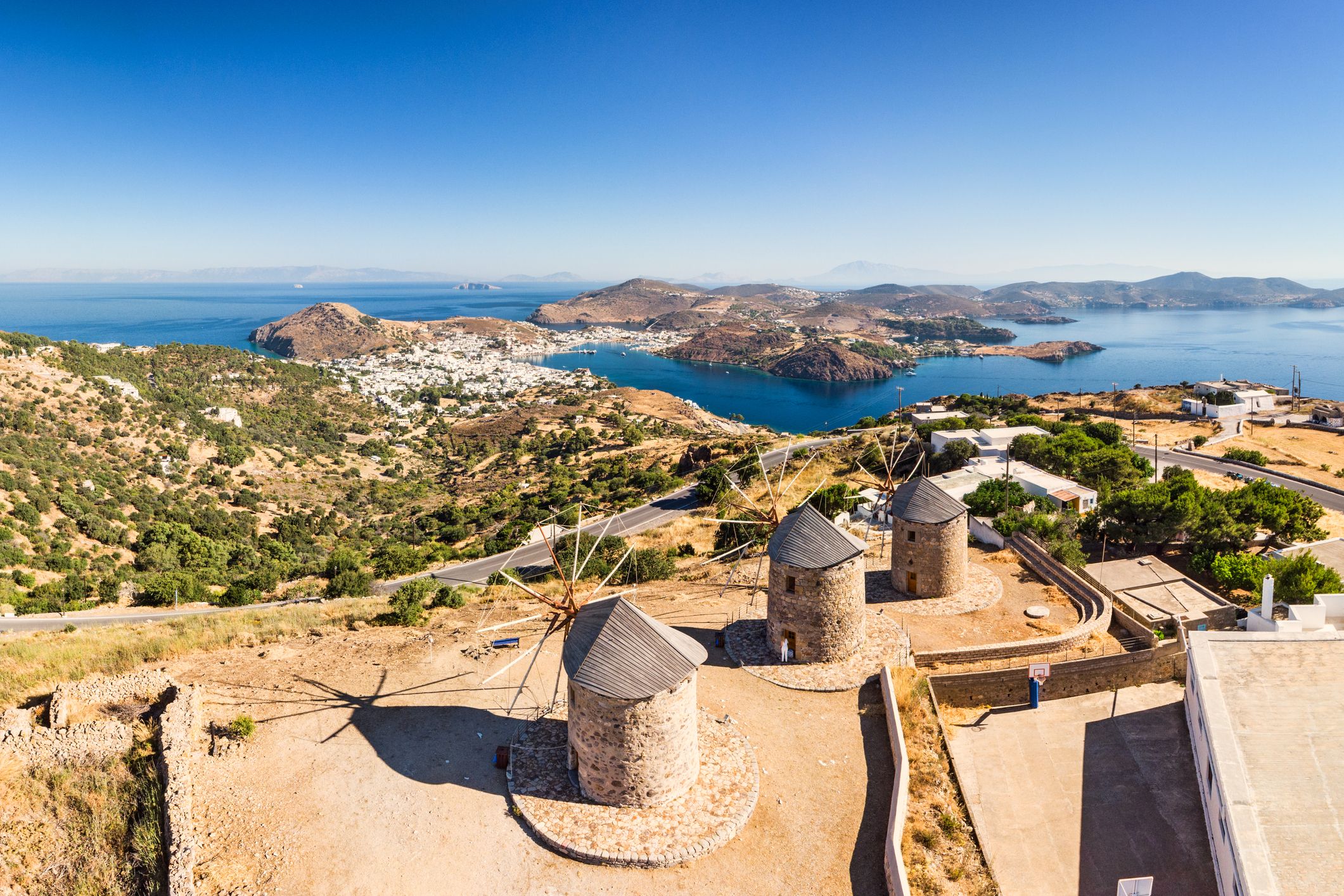
Even if you could not put Patmos on a map, you have probably heard of the Revelation bit. This is the island where St John is said to have received the visions that became the final book of the New Testament. The Cave of the Apocalypse and the Monastery of St John now form a UNESCO site, which sounds suitably solemn until you realise the views are outrageous and the local buses are full of people in flip-flops.
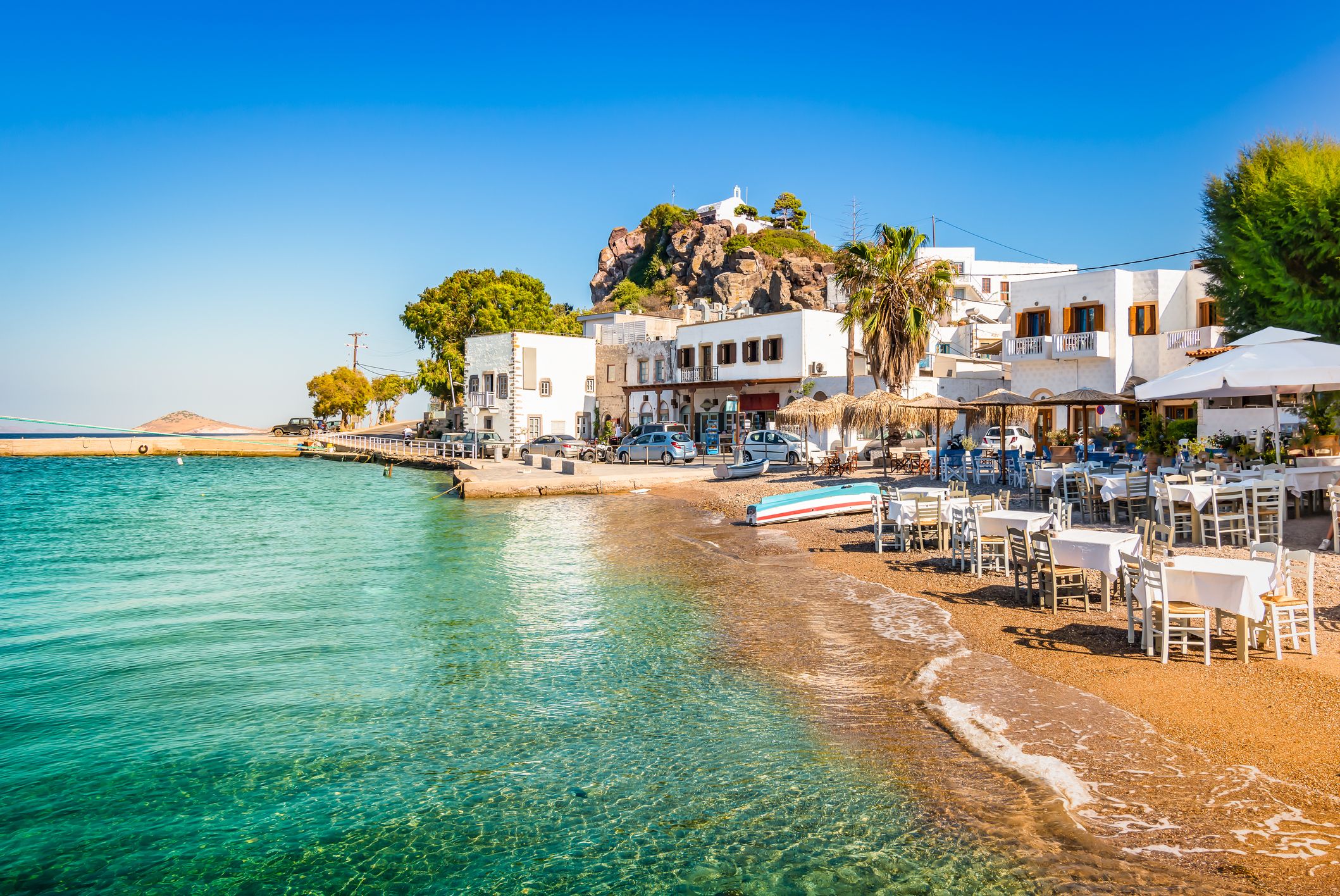
Ships usually anchor off Skala, the main harbour, and tender you ashore. Depending on the line, you either join an organised excursion up to Chora and the monastery or make your own way on the local buses and taxis, which is perfectly doable if you are happy reading timetables with a bit of guesswork.
Chora itself is a tangle of lanes and white houses built around the monastery walls, with glimpses of the sea around every corner. Even if religious history is not your thing, the combination of old stone, quiet courtyards and the occasional bell is pretty hard to resist. Back down at sea level there are small beaches within a short ride of Skala, most with a taverna that appears deeply suspicious of the idea of rushing.
Patmos has become a favourite of lines that specialise in “intensive” Greek itineraries. Azamara pairs it with Syros and Paros on ten-night voyages from Lavrion, giving you a run of islands that all feel very different from one another. Explora II calls here on longer Venice to Athens routes, and you will also see Patmos on schedules from Windstar, Seabourn and Marella among others.
On paper it is the serious, spiritual island. In practice it is one of the most relaxing days you can have off a ship.
How to actually get to these islands on a cruise
If you want more Patmos and Syros and fewer tender queues in Fira, the homework sits in the itinerary details rather than the brochure cover.
Look for smaller or mid-sized ships rather than the true giants. Brands that pitch themselves as “destination focused” or “yacht style” are more likely to sneak into the harbours listed above. Celestyal, Windstar, Azamara, Explora Journeys, Seabourn and various British and German small-ship specialists all build Milos, Syros, Naxos or Patmos into their 2025 and 2026 programmes, often in combination.
Pay attention to where the cruise actually starts and ends. Athens and Istanbul give you better odds of quirky ports than a simple round-trip from a big western Mediterranean hub. Check for phrases like “intensive Greek isles”, “off the beaten path Cyclades” or “small islands of the Aegean” in the itinerary description, which are usually marketing shorthand for “we can’t fit a megaship in here”.
Most importantly, do not panic if Santorini still appears on the schedule. Think of it as the familiar headliner on a festival bill where the support acts, this time, are the reason you bought the ticket.
If you step off in Milos, Syros, Naxos or Patmos this summer and your first thought is “I cannot believe a ship comes here,” then the plan has worked.