You know that glossy Riviera fantasy: pastel harbours, superyachts, and lots of white linen trousers. France’s Atlantic coast is not that. This is still France, but with more authentic charm and a touch less of the glamour of the Cote D'Azur and we think it's all the better for it.
What sets the Atlantic arc apart
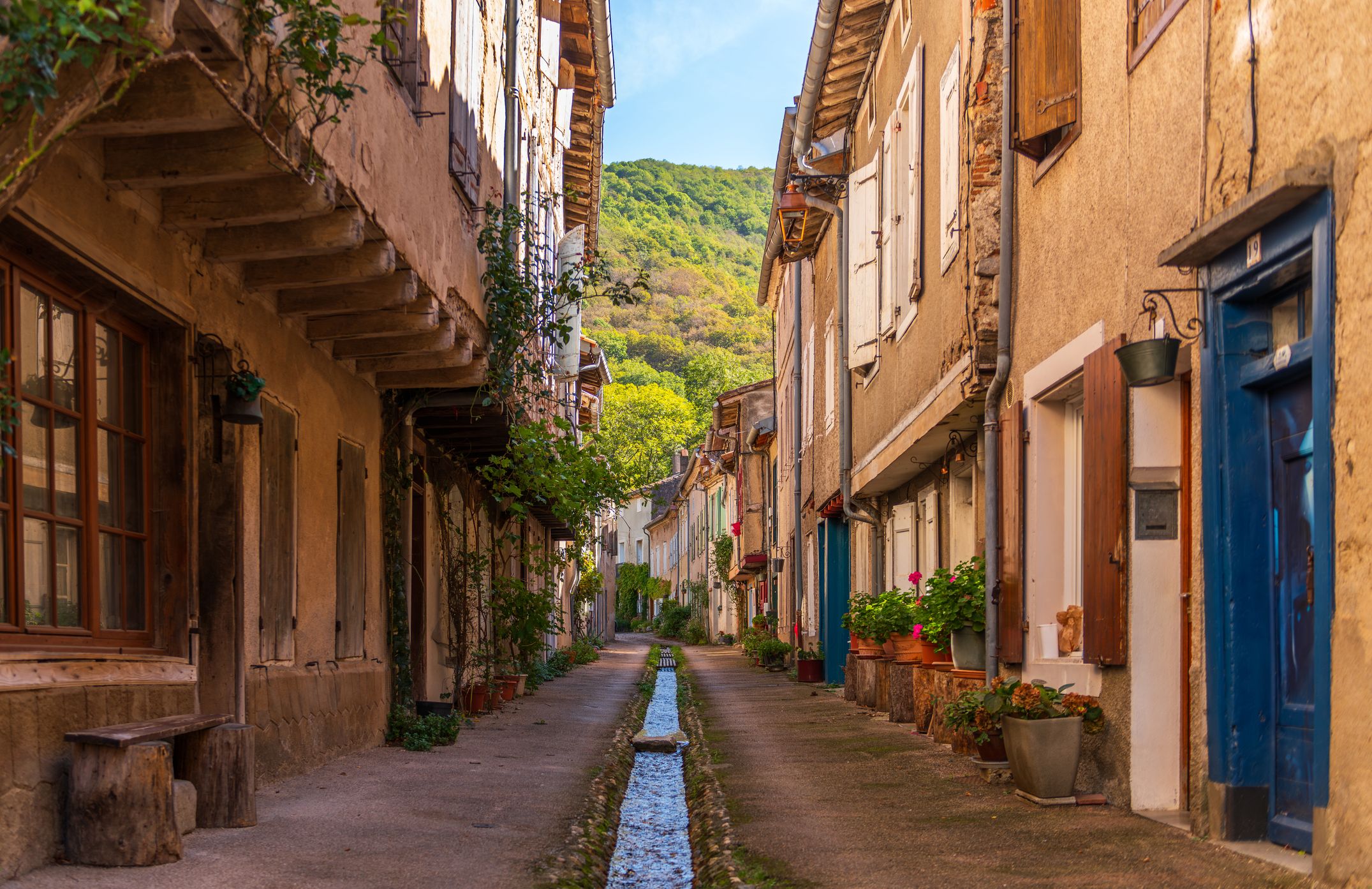
Cruise lines are finally stringing together itineraries that run from the Gironde estuary up through La Rochelle, Belle-Île, Saint-Malo and, often, Brest, before turning for the Channel or London. Windstar’s new “Impressionist France” route is the most obvious example, sailing from Bordeaux to the UK with overnights in Bordeaux, Saint-Malo and Paris and calls in La Rochelle and Belle-Île along the way.
It feels like a single story: wine country becoming oyster country becoming sea-spray and granite, with each port a different chapter.
Bordeaux: quays, wine and long evenings
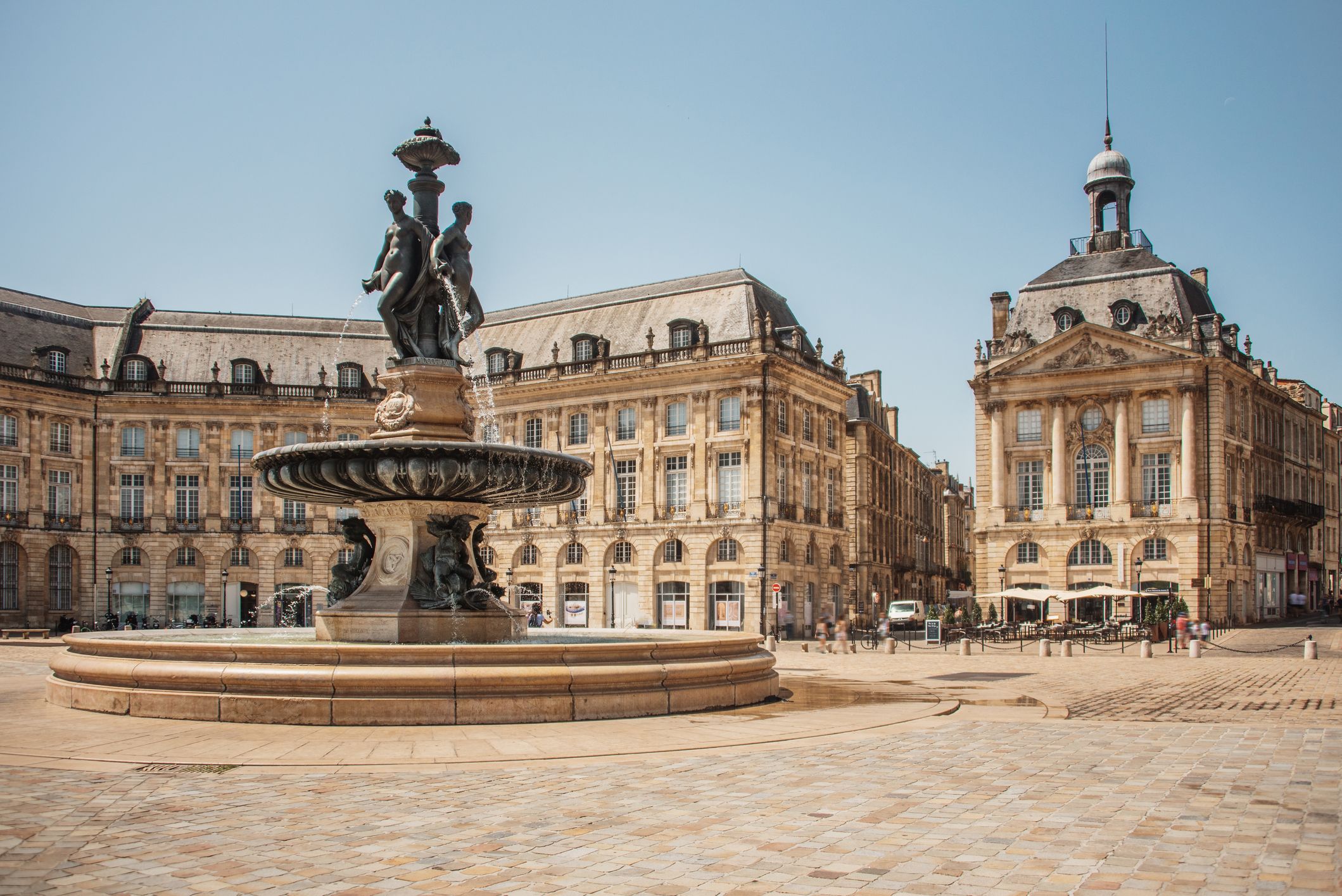
Arriving in Bordeaux is wonderfully deceptive. Technically you are on a cruise, but the ship is parked right in the city, along the Garonne quays that once handled half of France’s colonial trade. Many itineraries overnight here, which means you can wander straight off the gangway into a grid of 18th-century streets, wine bars and galleries.
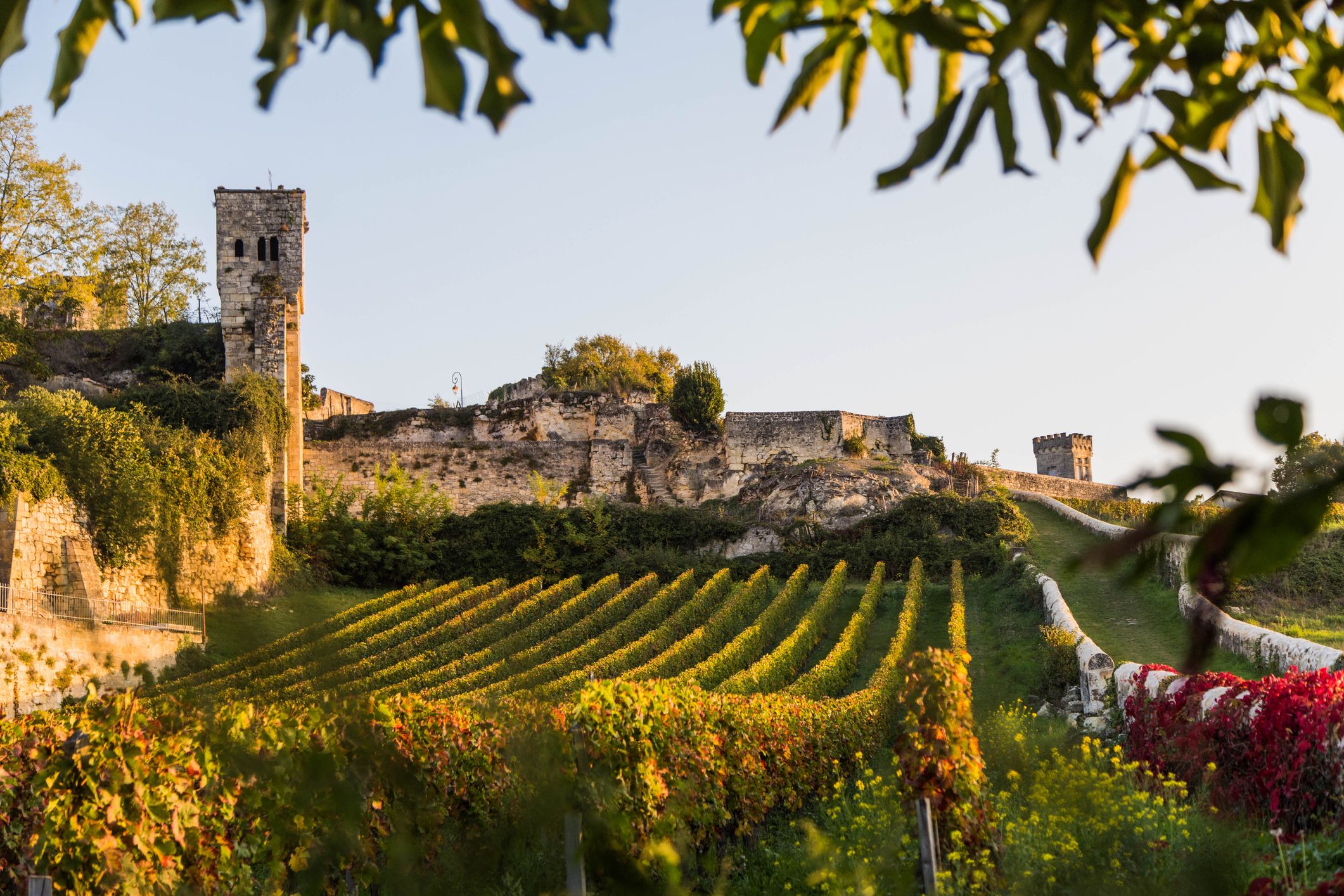
By day, people head out to Saint-Émilion or Médoc châteaux, tasting reds in barrel rooms that look suspiciously like Instagram sets. Back in town, the riverfront has gone from industrial to showpiece. Joggers dodge children on scooters, and it can be quite hard to remember that your bedroom floats.
It is an unusually gentle start to an Atlantic voyage: more grand café than high seas.
La Rochelle: white stone and sea air
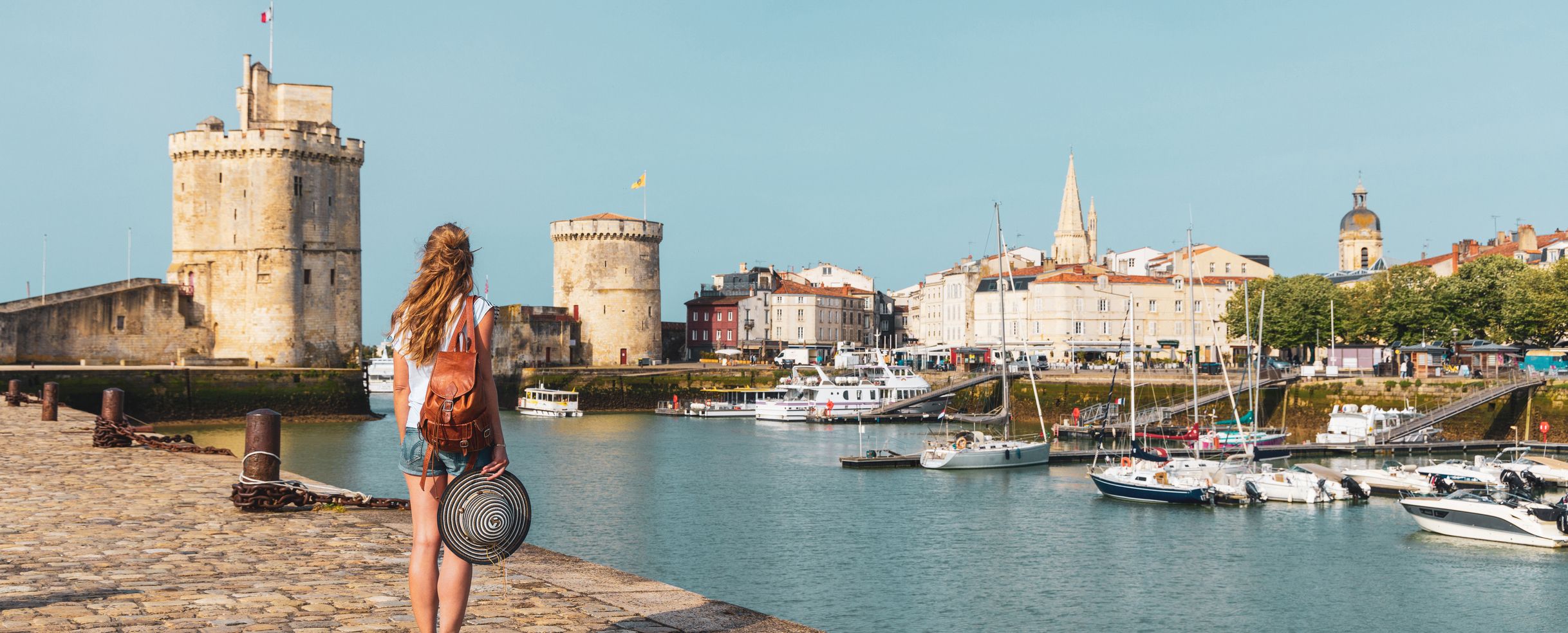
Further north, La Rochelle has the decency to look exactly like an old port should. Two medieval towers guard the harbour mouth, the arcaded streets behind them are the colour of seashells, and every second doorway seems to conceal either a crêperie or a bike shop. The city has been a sailing hub for centuries and is now one of France’s busiest yacht marinas.
Cruise passengers step straight into all this, then fan out. Some head across the bridge to Île de Ré, a flat, sun-bleached island of salt pans, cycle paths and villages where the shutters all seem to have agreed on the same tasteful shade of sage green. Others stay in town for the aquarium, the market hall or, very simply, a plate of just-opened oysters and a glass of something local.
This is the stretch of coast where you start to feel the Atlantic properly. The light sharpens. So does the wind.
Belle-Île: big cliffs, small island
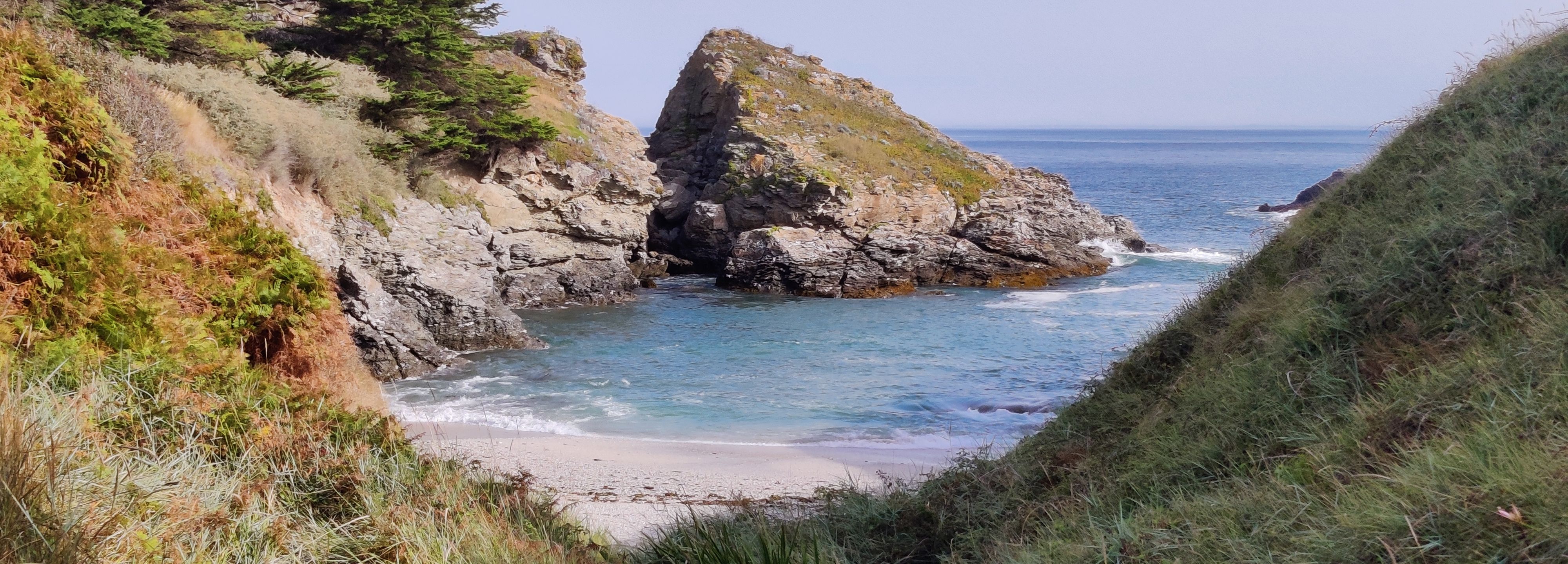
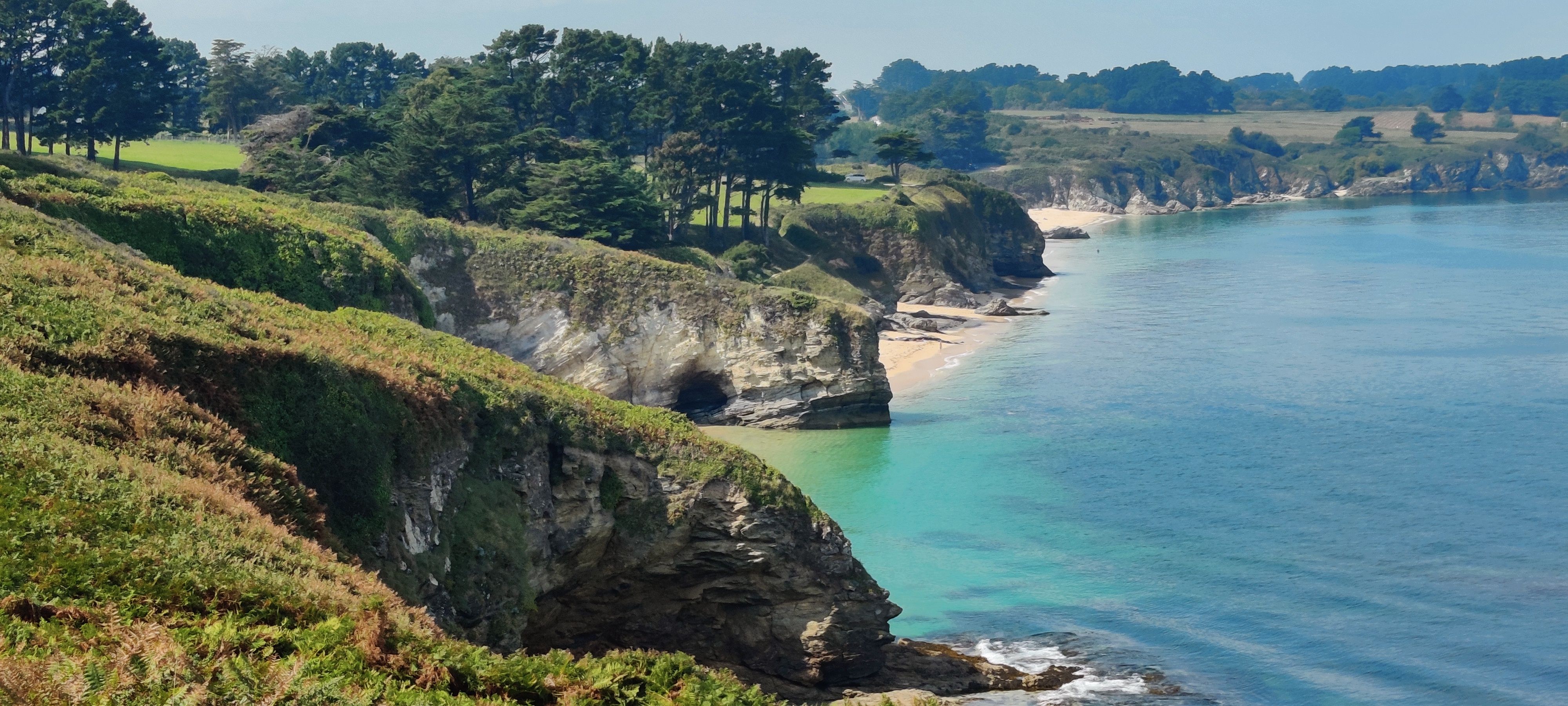
Belle-Île-en-Mer sits far enough off the Brittany coast to feel like a small escape within an already remote coastline. Small ships anchor off Le Palais or Sauzon and tender ashore, which only adds to the adventure. Lines like Ponant use it as a calling card on their Brittany itineraries, often pairing it with other islands in the îles du Ponant group.
On land, the name makes instant sense. Sarah Bernhardt had a clifftop house here; Claude Monet painted its Côte Sauvage over and over again, trying to pin down the colour of the spray as waves hit the rocks. The island is all sweet harbours and wild interior: pastel houses in Sauzon, gorse-covered headlands and beaches that feel borrowed from somewhere much further south.
This is the point where even hardened Med loyalists start admitting that the Atlantic has a certain drama the Riviera simply cannot compete with.
Saint-Malo: corsairs, crepes and tides that go on for miles
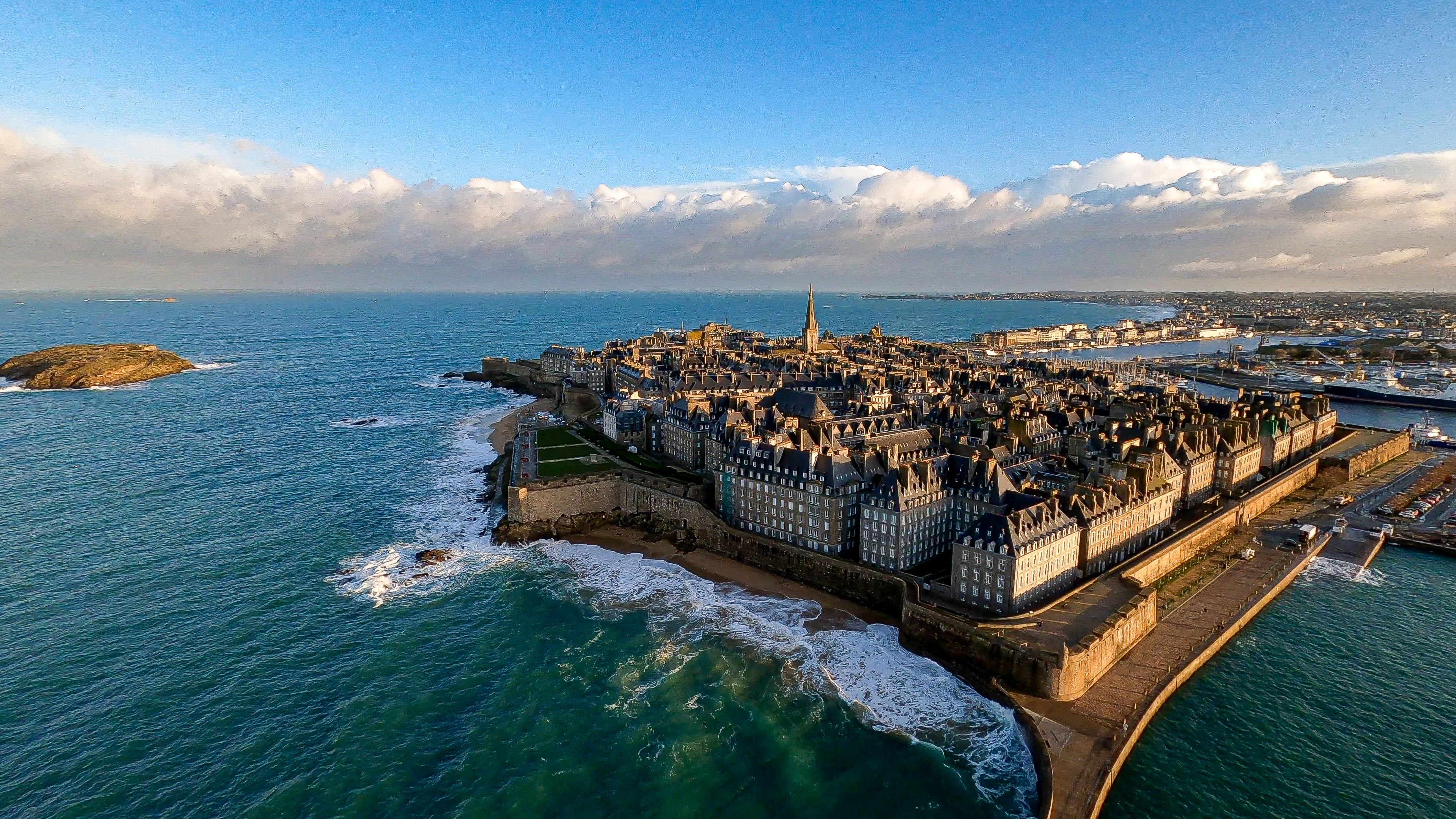
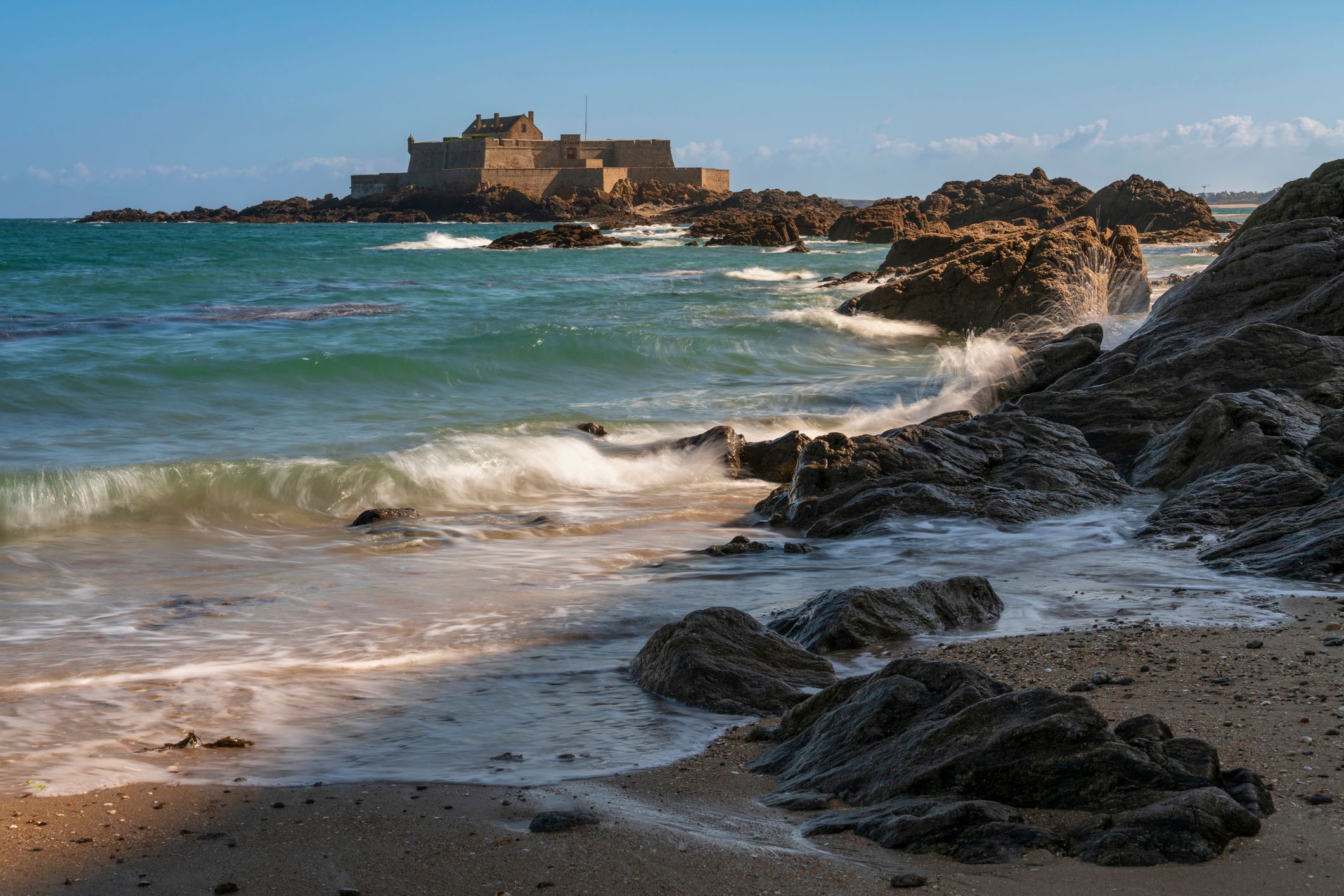
By the time you reach Saint-Malo, the coastline has turned full-on Breton. The approach alone is worth staking out a rail for. Ships thread between islets crowned with forts, then pull up under the city’s immense stone ramparts. Saint-Malo was once a corsair stronghold, cheerfully semi-independent from the French crown and making a fortune from “regulated” piracy.
Today the walled city is packed with creperies, bookshops and cafés, but still feels slightly roguish. Walk the ramparts at high tide and it seems as if the waves are trying to storm the walls. Come back at low tide and the sea has vanished for hundreds of metres, leaving bare sand, sea pools and ranks of wooden breakwaters sticking up like old teeth.
From here, cruise excursions fan out to Mont-Saint-Michel, Dinan or Cancale’s oyster farms, but there is a strong case for ignoring all of them and simply drifting around town with a hot galette in hand, feeling privately pleased with your choice of holiday.
Brest and the end of the map
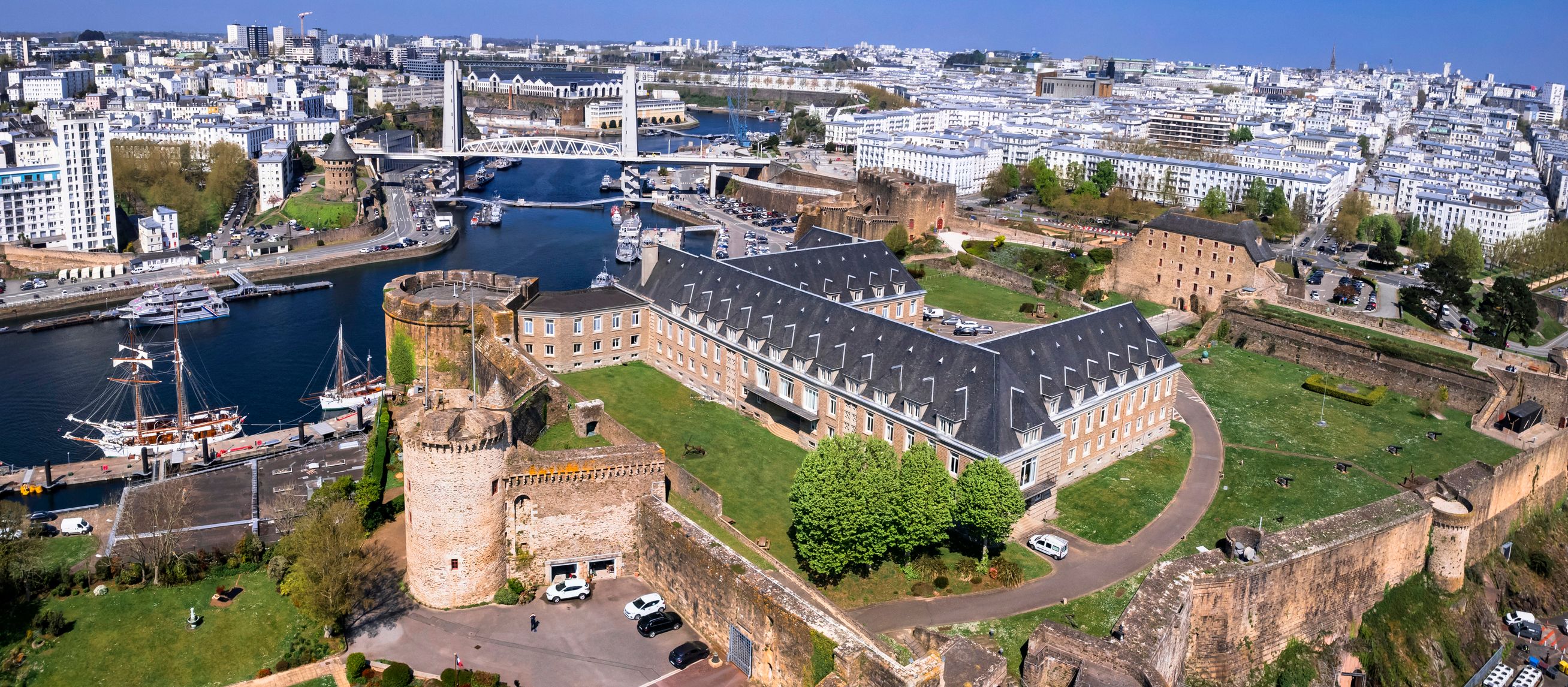
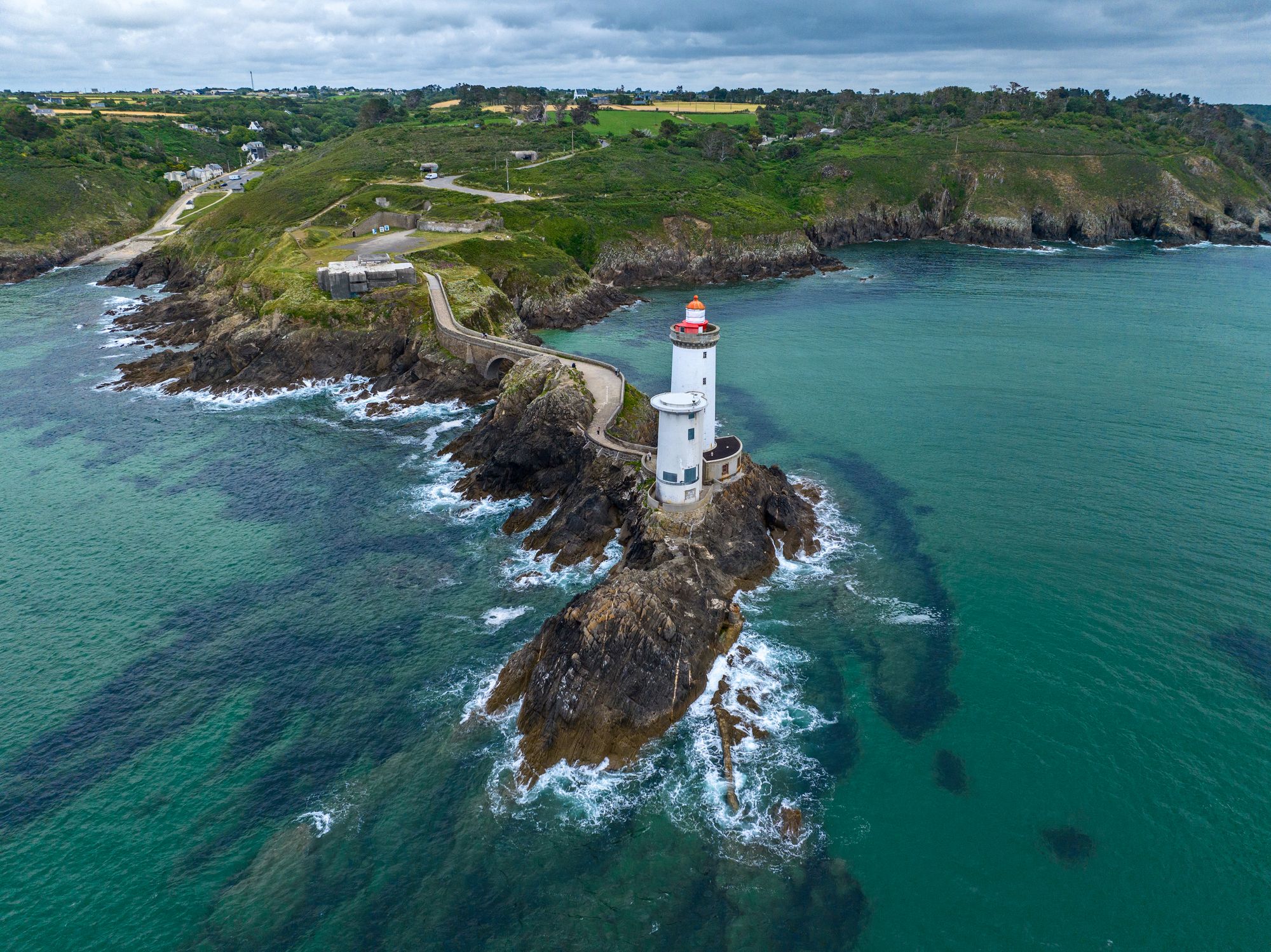
Brest is not pretty in the conventional, fridge-magnet sense. Flattened in the war and rebuilt with more enthusiasm for concrete than romance, it can be a surprise stop for anyone expecting another walled medieval postcard. That is partly why it works so well.
The harbour is still a major naval base, so ships share the bay with grey hulks, tugs and ferries. Ashore, there is a very good maritime museum in the old castle and Océanopolis, a marine science centre that the shore excursion teams love because families always come back cheerful and slightly windswept.
What Brest offers, above all, is a sense of geography. Stand on the harbour wall and the next substantial thing across the water is North America. The Atlantic feels like a real ocean again, not just a theatrical backdrop.
How to sail France’s Atlantic arc
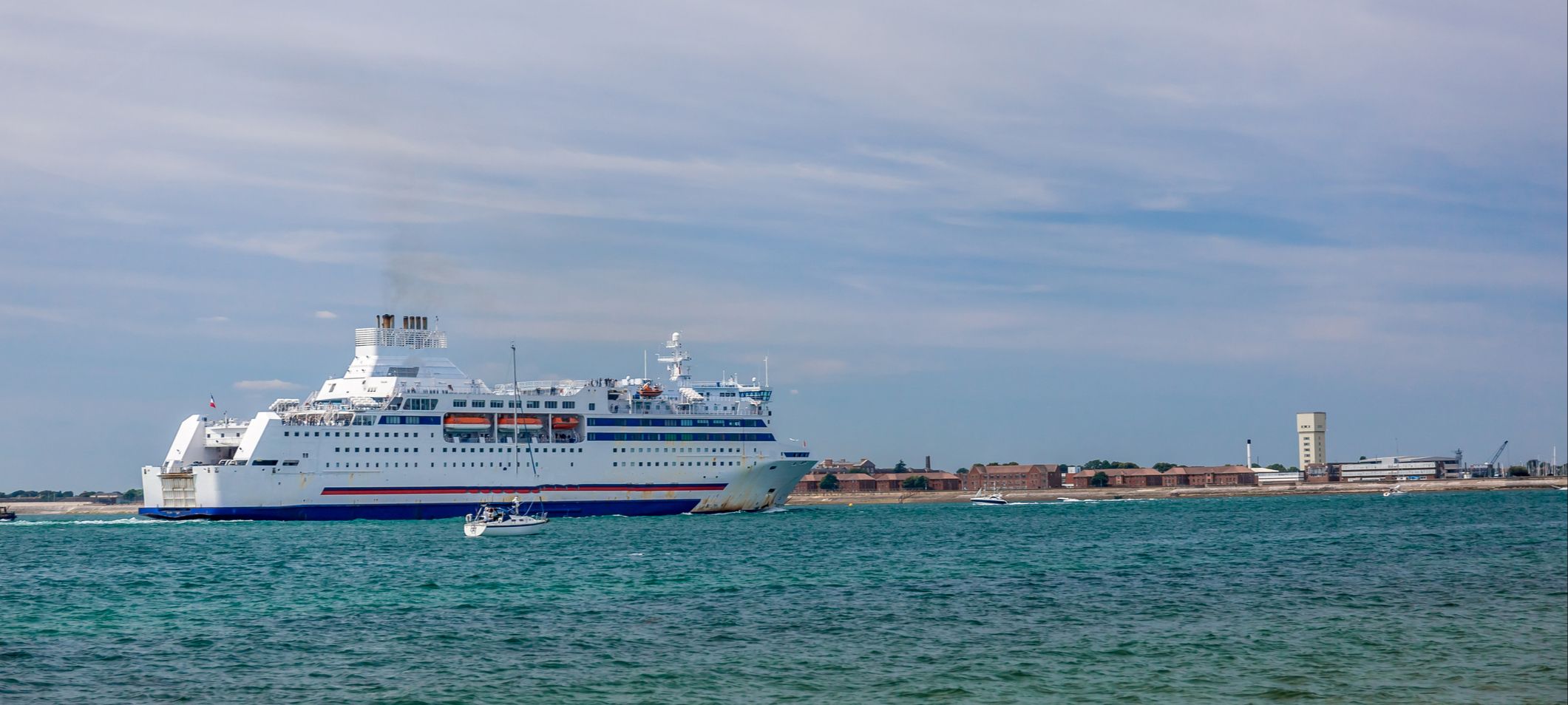
For now, this is an itinerary more loved by small and mid-sized ships than megatonnage. Windstar is the most obvious specialist, with that Bordeaux-to-London route threading together Bordeaux, La Rochelle, Belle-Île and Saint-Malo, plus a day on the Seine.
French line Ponant crafts more compact Brittany-focused journeys that zigzag between Lorient, Belle-Île and the îles du Ponant, sometimes calling at Brest or nearby Roscoff. Ocean ships from larger brands occasionally call at Saint-Malo or La Rochelle as part of wider Western Europe loops, but they tend to skim the story rather than dwell on it.
Whichever ship you choose, the pattern is similar. Days are spent stepping between wine culture, working ports and islands where the ferry terminal is basically half the town. Evenings are for tasting yet another local white, watching the weather roll in and wondering why on earth it took the cruise world so long to remember that France has an entire coastline facing away from the Med.
If you like your France with more salt than gloss, its Atlantic arc is where things start to get interesting.