It's approaching midnight somewhere off the Norwegian coast. The mountains have disappeared into the darkness, the sea is almost black and you've reluctantly decided that another hot chocolate might be a more productive use of your evening than staring at the sky.
Then somebody spots something green above the horizon.
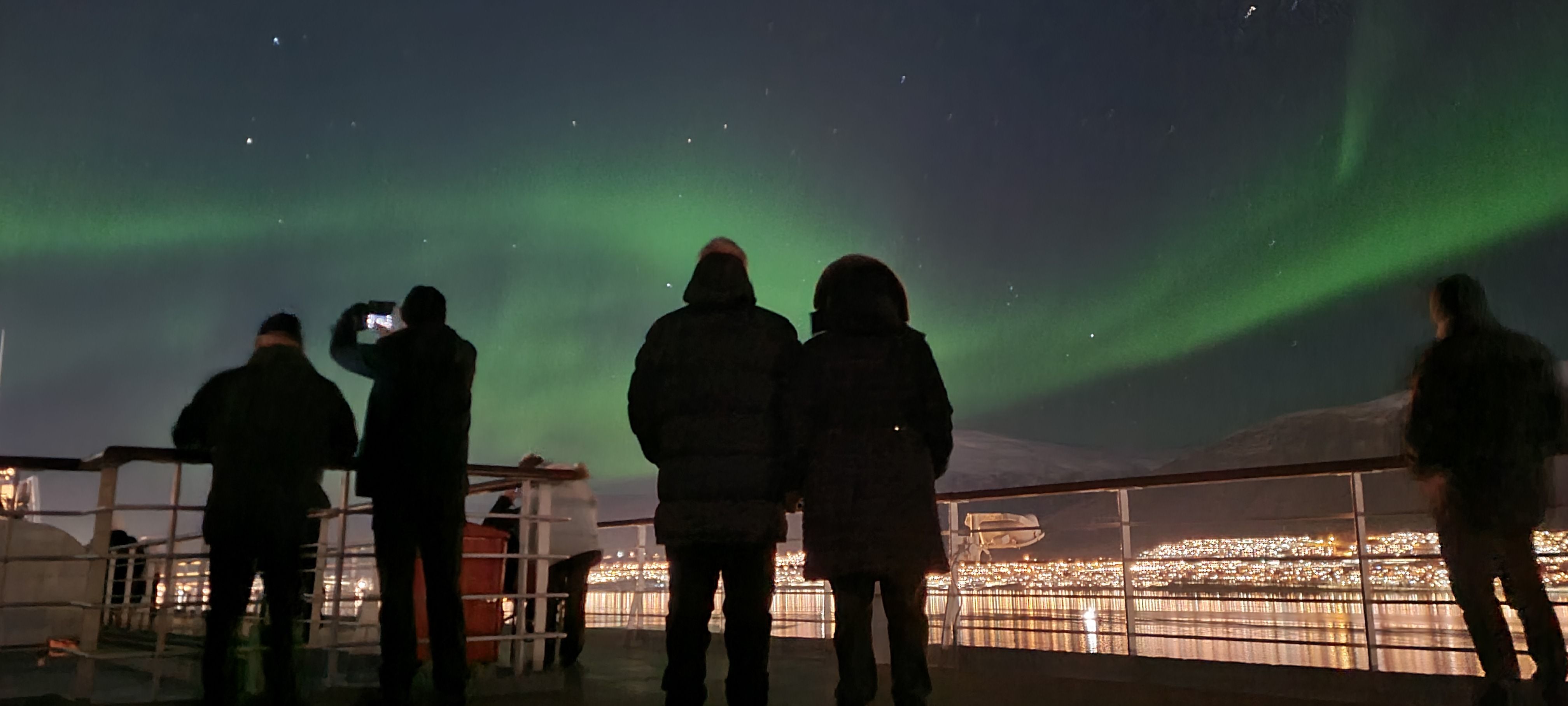
Within minutes, you're standing on deck, watching enormous curtains of light ripple across the Arctic sky. The mountains are silhouettes, the stars are out and even the people who normally narrate everything on their phones have gone quiet.
It's the sort of experience people travel thousands of miles hoping to have. And although the Northern Lights can be seen from land, there's a compelling argument for looking for them from a cruise ship.
You can travel through some of Norway's most spectacular scenery, spend several nights within the auroral zone and, on certain voyages, receive an alert whenever the lights appear.
The only passenger who refuses to cooperate is the aurora itself.
Why is a cruise ship such a good place to see the Northern Lights?
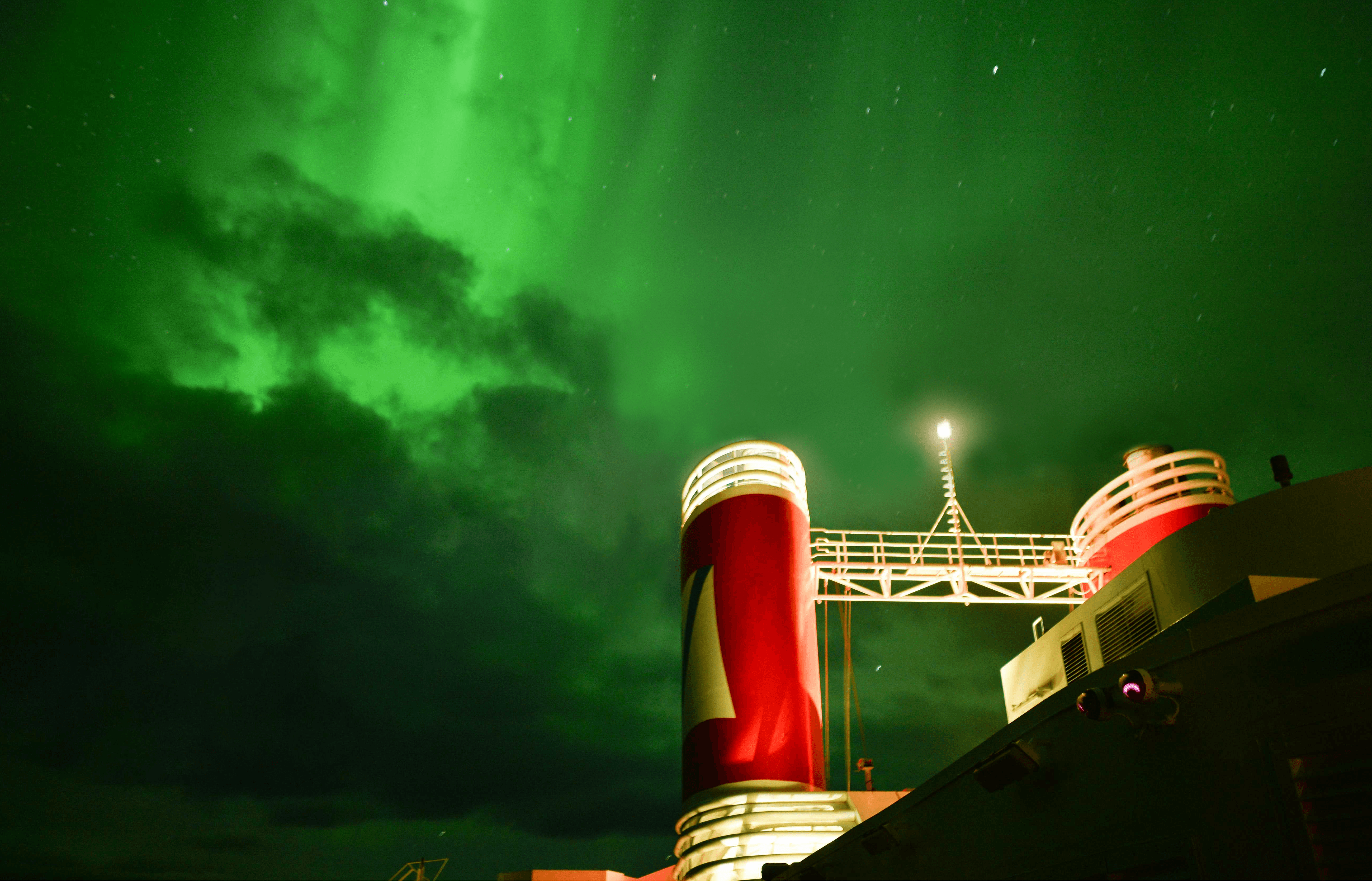
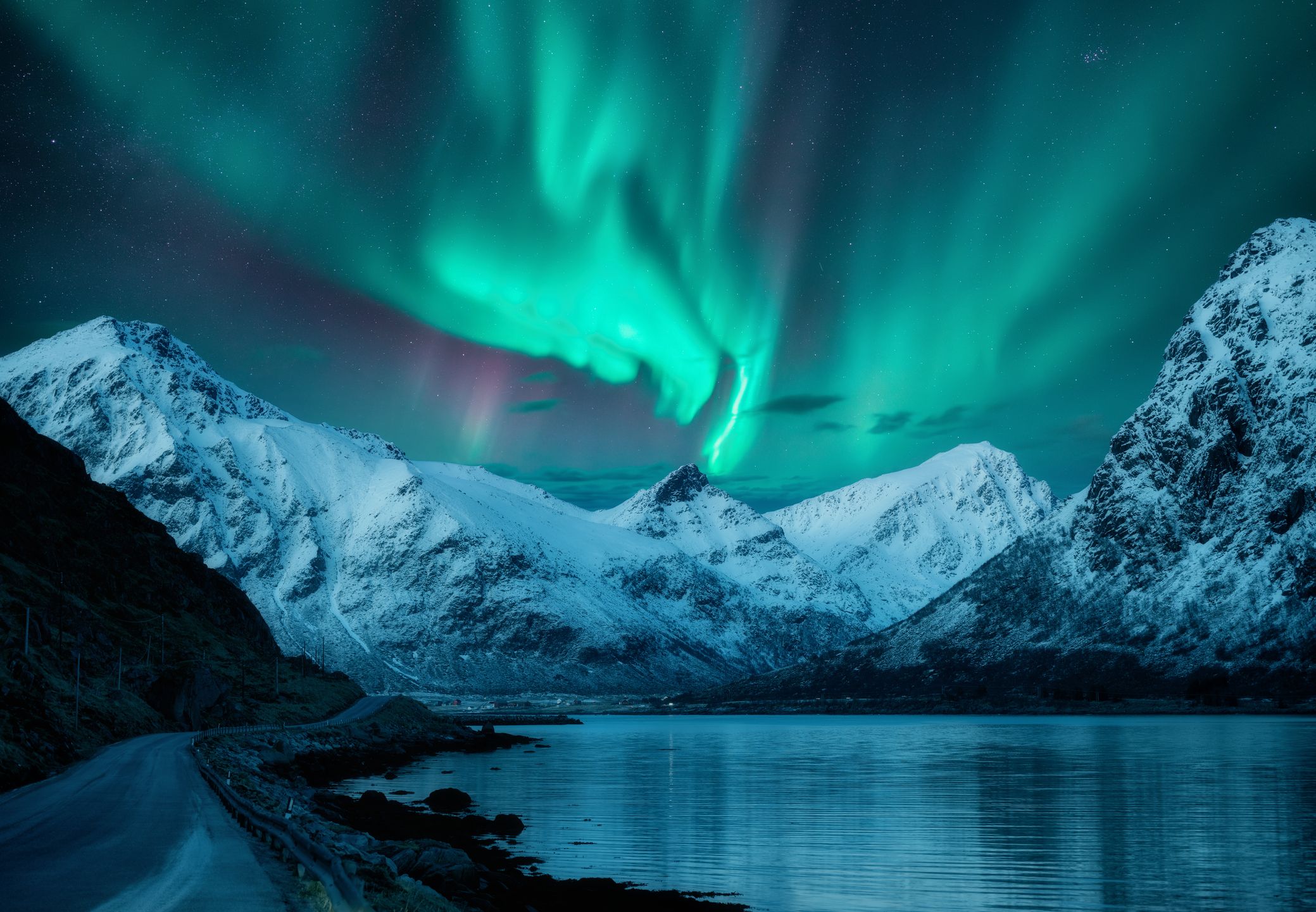
The Northern Lights, or aurora borealis, occur when charged particles from the Sun interact with Earth's magnetic field and atmosphere, producing luminous displays that can range from faint green arcs to extraordinary moving curtains.
They're most frequently observed within the auroral oval, a region surrounding Earth's magnetic poles. Northern Norway, particularly around Tromsø, Alta and the waters farther north, sits in an excellent position for sightings.
A cruise travelling through these regions can provide several advantages over a short holiday based in one place.
Away from large towns, there's often less artificial light to interfere with your view. Ships also offer unobstructed stretches of sky, particularly from open observation decks.
And because you're travelling, the scenery changes constantly. You might see the lights above the jagged peaks of the Lofoten Islands one evening and across the dark waters of a northern fjord the next.
Hurtigruten's Norwegian coastal route is particularly well suited to this experience, travelling between Bergen and Kirkenes, beyond the Arctic Circle and through communities where the Northern Lights are a familiar part of winter life.
Of course, being at sea doesn't automatically mean perfect darkness. Ships have deck lighting, and their routes are determined by navigation and scheduled ports rather than wherever the sky happens to be clearest.
But when the conditions come together, the experience is difficult to beat.
When is the best time to see the Northern Lights in Norway?

The aurora occurs throughout the year, but you need darkness to see it.
In northern Norway, the main viewing season generally runs from September to March or early April, when nights are sufficiently dark. The long days of Arctic summer might be wonderful for sightseeing, but they're considerably less helpful for aurora watching.
December and January offer the longest periods of darkness. February combines substantial nighttime hours with the gradual return of daylight, while March can be particularly rewarding thanks to increased geomagnetic activity around the spring equinox.
According to the US National Oceanic and Atmospheric Administration (NOAA), auroral displays often become more active around the spring and autumn equinoxes, although this doesn't guarantee a sighting on any particular night.
For a cruise, February and March offer an appealing balance: enough daylight to appreciate the coastline and plenty of darkness to watch the sky.
But the most important factor is usually one you can't control.
Can you see the Northern Lights if it's cloudy?
Unfortunately, no amount of spectacular activity above the atmosphere will help if there's a thick layer of cloud between you and the sky.
The Met Office identifies clear skies and low light pollution as essential conditions for observing the aurora. The strength of geomagnetic activity matters too, but even an impressive solar storm can be completely hidden by cloud.
A ship may occasionally sail from cloudier conditions into clearer weather, improving the chances of seeing a display. It can't, however, simply abandon its itinerary to pursue a promising forecast.
This is one reason longer voyages can be attractive. Spending several nights in northern waters gives you more opportunities than relying on a single evening.
It's also worth managing expectations about what the aurora actually looks like.
Those extraordinary photographs of electric-green skies are often taken using long exposures, which reveal colours and details that the human eye struggles to distinguish in low light.
The Met Office notes that faint auroras may look much paler in person, sometimes appearing as a greyish glow. Brighter displays, however, can reveal vivid colour and movement without any photographic assistance.
So if your first sighting resembles a faintly illuminated cloud, don't immediately assume you've been given the budget version. It may become considerably more dramatic.
Will your cruise ship tell you when the Northern Lights appear?

This is one of the most useful advantages of choosing a voyage specifically designed around aurora watching.
Hurtigruten allows passengers to opt into Northern Lights announcements in their cabins and suites. When the crew spots a display, an announcement can alert guests who might otherwise be asleep or enjoying the warmth of the ship's interior.
It's a rather effective way of avoiding the difficult decision between staying outside in freezing temperatures and risking missing the whole thing.
Hurtigruten also operates its Northern Lights Promise on eligible voyages of 11 days or more departing during the auroral season, between 20 September and 31 March.
If no official sighting is recorded during an eligible voyage, passengers can claim a complimentary six- or seven-day Coastal Express voyage, subject to the offer's conditions.
There's an important distinction: an official sighting means the lights have been observed, recorded by the ship's officers and announced onboard. The promise doesn't guarantee that every passenger will personally see them, nor does it refund the original holiday.
Other cruise companies may arrange aurora announcements or onboard talks, but don't assume every sailing offers the same service. It's worth checking before booking.
Which Northern Lights cruises can you take in 2027?
There are several confirmed options for travellers hoping to see the aurora in 2027, although the experience differs depending on where you embark.
Hurtigruten: Norway's original coastal route
Hurtigruten operates its year-round Coastal Express between Bergen, Kirkenes and Bergen, with regular departures throughout the winter.
One particularly interesting option is its 12-day Astronomy Voyage, which combines the coastal journey with lectures from an expert astronomer and a visit to Tromsø's planetarium.
Confirmed 2027 departures include 28 February and 28 March, with astronomer Dr John Mason MBE scheduled to accompany both voyages.
Travellers can learn about the science behind the aurora while exploring the Norwegian coast, with the chance to witness the phenomenon from the ship itself.
These are Norwegian coastal departures, so UK travellers need to arrange transport to Bergen. Hurtigruten also offers selected packages with flights, but its standard coastal voyages shouldn't be confused with cruises departing directly from Britain.
Fred. Olsen: Northern Lights cruises from Newcastle
For travellers who would rather avoid flying, Fred. Olsen Cruise Lines has several Northern Lights itineraries departing from UK ports.
Its 10-night In Search of the Northern Lights voyage aboard Bolette departs Newcastle on 4 March 2027.
The itinerary includes Ålesund, an Arctic Circle crossing, an overnight stay in Harstad, Sortland in the Vesterålen archipelago and Molde.
The overnight in Harstad is especially appealing, offering an extended opportunity to watch for the aurora without the distraction of a tightly scheduled departure.
The itinerary is also designed to showcase northern Norway's spectacular winter scenery, with its islands, fishing communities and snow-covered mountains.
Ambassador: Arctic adventures from Tilbury
Ambassador Cruise Line also has two confirmed Northern Lights departures in March 2027.
Its 17-night Norway's Land of the Northern Lights voyage departs London Tilbury aboard Ambience on 1 March, while Ambition follows on an equivalent 16-night itinerary on 8 March.
Both are designed around northern Norway, including opportunities to explore destinations such as Tromsø and Alta.
The 8 March sailing includes an overnight stay in Alta, allowing passengers more time in one of Norway's best-known aurora destinations.
Unlike Hurtigruten's regular coastal service, these voyages begin and end in the UK. That makes them attractive to passengers who prefer a no-fly holiday, although several days will be spent travelling to and from northern Norway rather than within the prime aurora-viewing region.
All three operators' published itineraries are subject to change, and remaining cabin availability will need checking before booking.
How can you improve your chances of seeing the Northern Lights at sea?
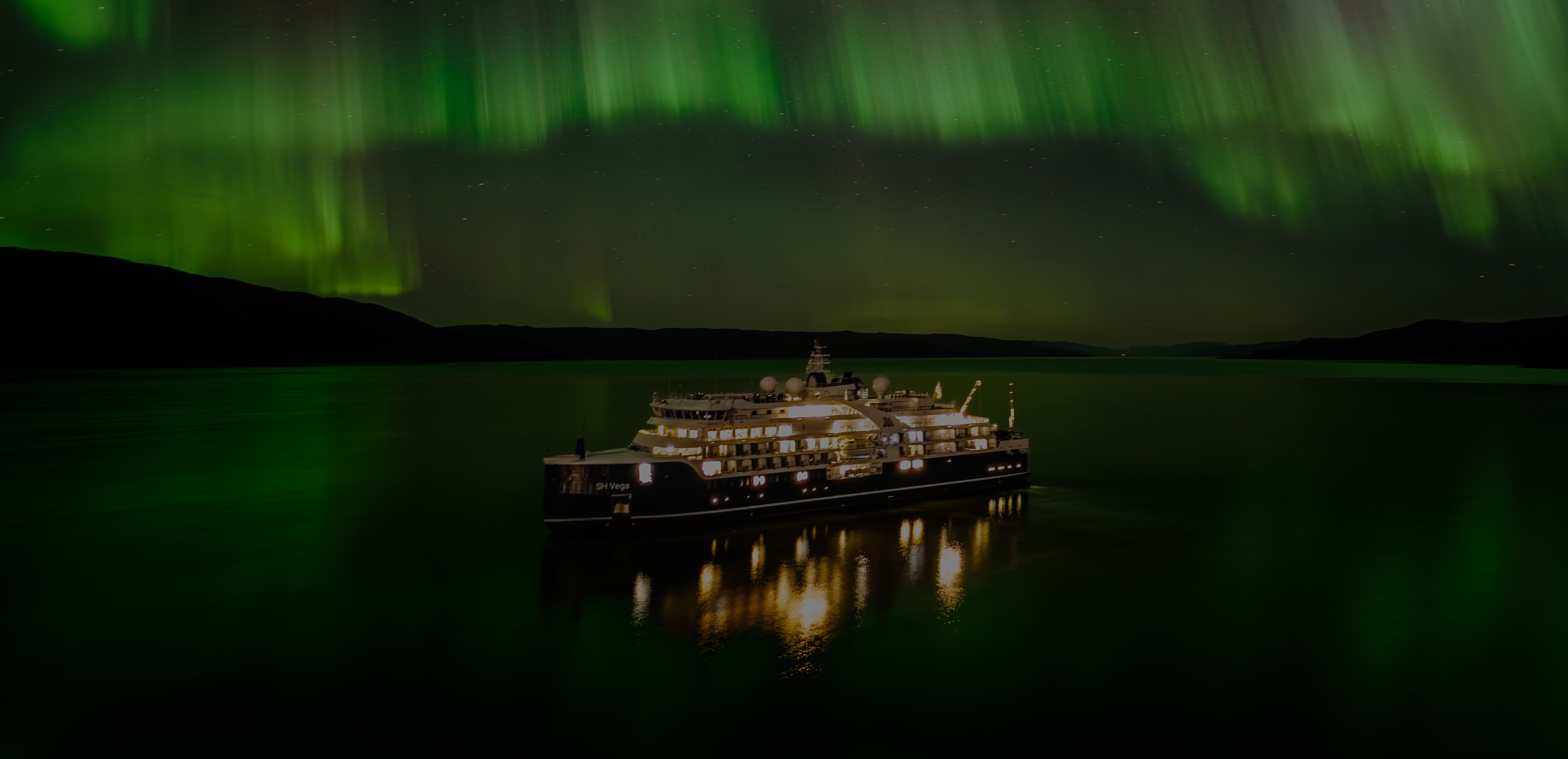
There's no reliable way to guarantee a sighting, but a little preparation can help.
Choose a voyage that spends several nights in northern Norway rather than simply crossing the Arctic Circle briefly. The longer you're in the auroral zone during darkness, the more opportunities you'll have.
Check whether your ship offers Northern Lights alerts, and make sure they're switched on if it does.
Dress for considerably colder conditions than you might expect from looking out of a heated observation lounge. Thermal layers, a windproof jacket, gloves and a warm hat will make spending time outdoors much more pleasant.
You'll also want to find a relatively dark area of the ship, away from bright deck lighting, while remaining within designated passenger areas.
If you're hoping to photograph the lights, a smartphone with a night mode can produce surprisingly good results. However, photographing from a moving ship presents additional difficulties for long exposures, even when the sea appears calm.
And if the lights do appear, consider putting your camera away for a moment.
There's an awful lot to be said for watching one of the world's most remarkable natural phenomena without spending the entire experience wondering whether you've got the exposure right.
Are Northern Lights cruises worth it?
If seeing the aurora is your only reason for travelling, it's important to understand that even a carefully planned voyage could end without a sighting.
But a winter cruise along Norway's coast offers plenty to enjoy regardless.
There are the mountains rising directly from the sea, fishing villages illuminated against the snow, winter excursions into the Arctic wilderness and the extraordinary experience of travelling through a region where the seasons shape almost every aspect of daily life.
And then, perhaps, on an otherwise unremarkable evening, somebody notices a pale green glow beyond the ship's railings. For a few minutes, the entire deck turns its attention upwards. No shore excursion required.