Rivers are not railway tracks. They rise, fall and, during an especially dry summer, begin revealing stretches of sand that weren’t necessarily mentioned in the brochure.
Europe’s river-cruise industry is dealing with precisely that problem. As of early August 2026, parts of the Rhine and Danube are experiencing exceptionally low water. Viking and AmaWaterways have warned that selected itineraries may be altered, while Avalon Waterways has cancelled a small number of departures. On 28 July, Viking Ullur encountered a sandbank on the Danube near Vidin in Bulgaria. Its 186 passengers were safely taken ashore, with Viking confirming that nobody was injured.
That incident was dramatic, but it wasn’t the usual outcome. More commonly, low water leads to a changed berth, an unexpected coach journey or a transfer between ships. Most holidays continue in some form, although the amount of actual cruising can vary considerably.
Here’s what low water means in practice, what operators can do about it and where you stand if your carefully chosen river voyage develops an unadvertised enthusiasm for motorways.
Why low water disrupts river cruises
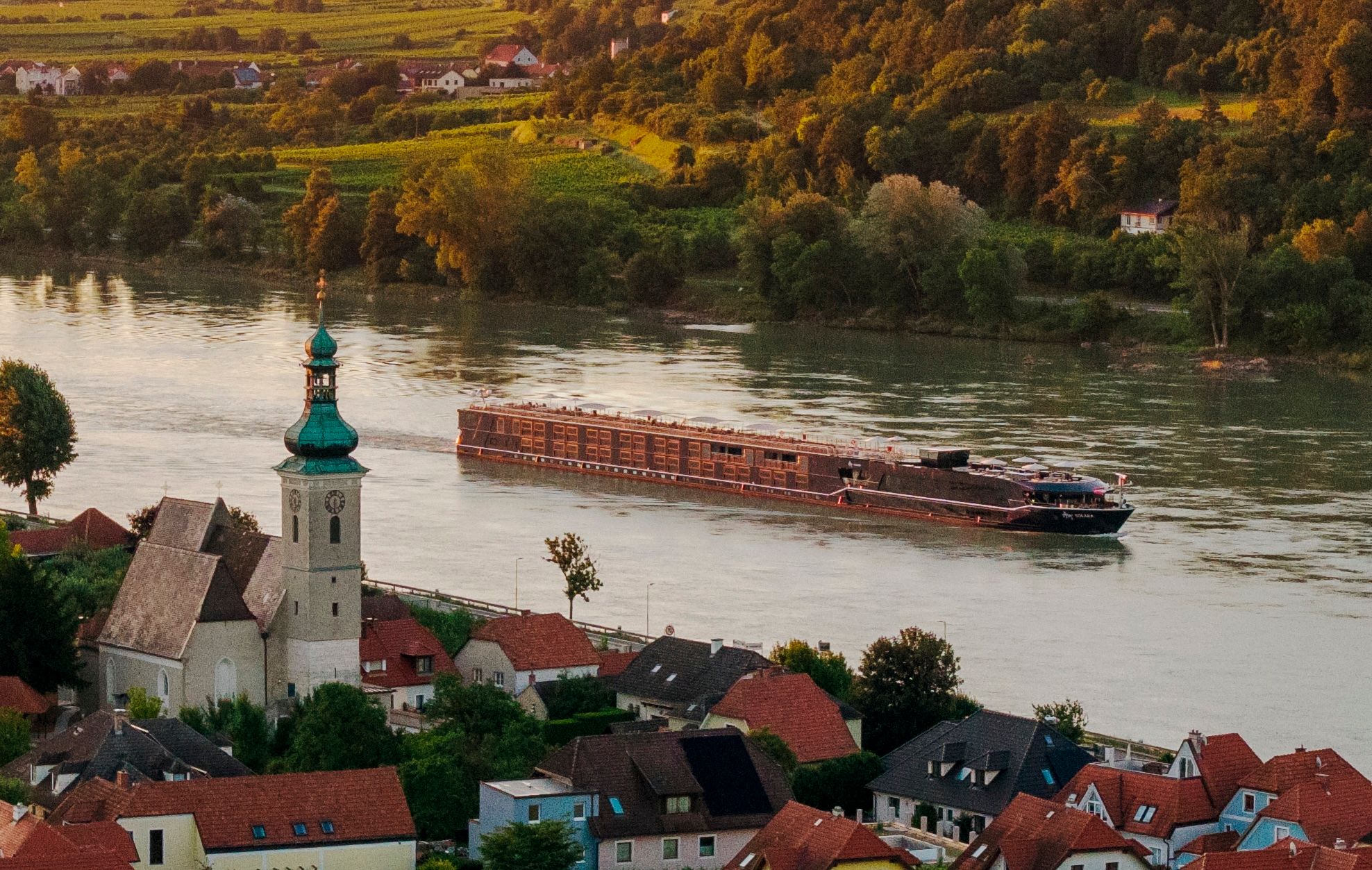
A river ship sits partly below the surface, a measurement known as its draught. As the water drops, there may no longer be enough depth beneath the hull to pass safely through shallower sections.
The difficulty is rarely uniform along an entire river. One section may remain navigable while another becomes a bottleneck because of its channel, riverbed or current. On the Rhine, the gauge at Kaub is closely watched because it sits on a particularly important stretch of the Middle Rhine. A gauge reading is a navigation reference rather than a literal measurement of the river’s depth, so a report of 25 centimetres doesn’t mean passengers could cross to the opposite bank without getting their shorts wet.
Conditions can also change quickly and locally. Rain falling far upstream may improve one section several days later while doing little for another. Operators therefore monitor gauges, forecasts, vessel positions and the draught of individual ships rather than making decisions from a photograph of an unusually exposed riverbank.
In July, the Danube at Budapest came within eight centimetres of its previous record low. Ships were left waiting in ports north and south of the city, while the Rhine also approached record-low levels at important navigation points. Both Viking and AmaWaterways describe the current problem as affecting particular sections rather than every mile of both rivers.
Your itinerary may continue with smaller changes

The least disruptive response is simply to adjust the schedule.
A ship might use a different berth, visit ports in another order, arrive later than planned or replace one stop with somewhere the vessel can still reach. Embarkation and disembarkation may also move to another town, with passengers transferred by coach.
AmaWaterways says its current adjustments may include changes to ports, ship schedules and embarkation or disembarkation locations. A holiday advertised as beginning in Budapest, for example, could begin with a coach from Budapest to wherever the ship has managed to position itself. The city remains on the paperwork, but the gangway may have developed other ideas.
A minor timetable change won’t necessarily affect the substance of the trip. A different berth and a 20-minute transfer are irritating rather than catastrophic. The calculation changes when several destinations disappear or long stretches of sailing are replaced by roads.
You may be transferred between two river ships
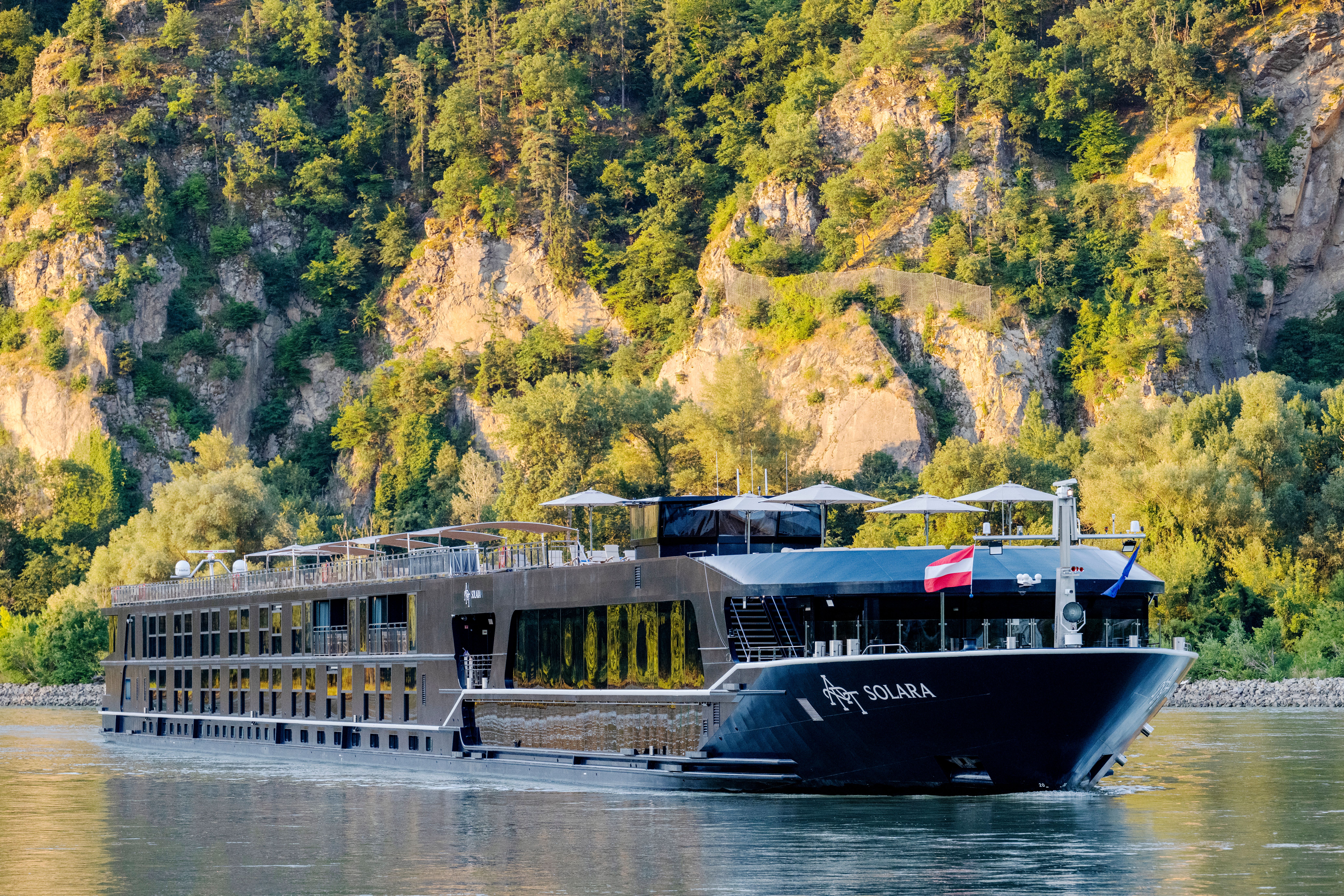
One of the most effective solutions is a ship swap.
This normally involves two vessels operating the same itinerary in opposite directions. Each sails as far as the shallow section allows. Passengers disembark, travel around the obstruction by coach and join the other ship on the opposite side.
Viking says it positions identical sister ships on certain routes so guests can transfer to the same cabin number on the second vessel. Luggage is moved separately, sparing passengers the task of dragging a suitcase through a vineyard while maintaining a positive attitude.
When it works well, a ship swap preserves most of the itinerary. The accommodation, restaurants and facilities should be very similar, and passengers may lose only part of a day to the transfer.
It still changes the rhythm of the holiday. Packing, even when the luggage is handled for you, interrupts the settled feeling that river cruising is supposed to provide. Guests with limited mobility may also find the transfer more demanding than an ordinary excursion, particularly if it involves coaches, temporary docking points or more than one gangway.
Not every operator has identical vessels conveniently approaching from the other direction. Even within a large fleet, ships may be the wrong size, already committed elsewhere or stranded on the same side of the problem. A ship swap is an option, not a magic trick available whenever the river becomes uncooperative.
Part of the cruise may become a coach tour

When the ship can’t move but the destinations remain accessible by road, operators may continue the itinerary by coach.
Passengers might stay aboard a stationary vessel and travel out each day, or move between the ship and hotels farther along the route. Avalon’s published itinerary terms warn that water-level problems may require a programme to operate by motorcoach or include hotel overnights.
This preserves visits to places such as Vienna, Regensburg or Budapest, but it provides a fundamentally different experience. River cruising is attractive partly because the hotel moves while you sleep. Replacing that arrangement with packing, road transfers and hotel check-ins removes one of the format’s principal advantages.
There’s no universal point at which an altered river cruise becomes a coach holiday. One transfer around an unnavigable section may be a sensible rescue operation. Several consecutive days on the road, accompanied by regular hotel changes, are harder to present as a small adjustment.
Nobody expects a cruise line to refill the Rhine. They can reasonably expect a clear account of how much cruising remains.
The sailing may be cancelled
If too much of the route is inaccessible, suitable ships aren’t available or the logistics become unworkable, the operator may cancel the departure.
Avalon confirmed in July that it had cancelled a small number of Rhine and Danube sailings because of low water. Other operators have continued with modifications, but their current notices make clear that further changes remain possible.
Decisions may come frustratingly close to departure because river conditions are volatile. Cancelling weeks ahead could prove unnecessary if rain arrives, while waiting for an improvement risks leaving passengers uncertain about flights, hotels and annual leave.
Viking says it contacts affected guests and travel advisers proactively before departure. AmaWaterways says passengers on altered sailings will be contacted individually by email. Make sure the operator and travel agent have the correct contact details, including a mobile number you’ll use abroad. This isn’t the week to discover that all updates have been sent to an email address last checked during the coalition government.
Can you get a refund for a changed river cruise?

For bookings made in the UK, a cruise is generally treated as a package holiday and most cruises are protected by the Package Travel and Linked Travel Arrangements Regulations 2018.
If the operator cancels the holiday before departure, you should be offered an alternative where available or a full refund. Package-holiday refunds are due within 14 days. The company can offer credit or a replacement sailing, but you don’t have to accept a voucher instead of money.
The position becomes less automatic when the cruise is going ahead in an altered form.
If the organiser makes a significant change to the main features of the package before departure, you should be given the choice of accepting it, taking a suitable alternative if one is available, or cancelling without a termination fee. There’s no single legal test that declares a particular number of coach hours unacceptable. The revised arrangements are considered in the context of the holiday as a whole.
Moving the embarkation point a short distance may not be significant. Replacing most nights aboard with a series of hotels, removing several headline destinations or converting a large part of the sailing into coach travel could present a stronger argument that the holiday has substantially changed. What matters is what was promised, what will now be delivered and whether the revised trip can reasonably be regarded as the same package.
If problems arise after departure and a significant proportion of the contracted services can’t be provided, the organiser must offer suitable alternatives at no extra cost. If those arrangements are of lower quality, an appropriate price reduction should be offered. The regulations also provide for price reductions during periods when the package doesn’t conform to the contract.
Additional compensation is a separate matter. An operator may not have to pay damages if it can show that the disruption resulted from unavoidable and extraordinary circumstances beyond its control. Severe weather and exceptional river conditions may fall into that category. That doesn’t remove the right to a refund when the operator cancels, or necessarily the right to a price reduction when a diminished version of the package is delivered.
Don’t cancel the cruise yourself too quickly
Seeing an alarming river gauge and cancelling independently is unlikely to be the best approach.
Unless the operator has announced a significant change or cancellation, your normal booking conditions may still apply. Cancelling because you suspect that the itinerary might be affected could leave you paying the usual termination charges. Package travellers can cancel for any reason, but a full refund isn’t automatically due when the decision is simply their own.
Contact the cruise line or travel agent and ask for the current position in writing. If the operator says the sailing is expected to operate normally, ask when the next review will take place. Keep copies of emails, revised itineraries and any expenses caused by later changes.
Don’t book your own replacement hotel, train or transfer without checking who will pay for it. A perfectly reasonable solution can become less charming when an insurer and cruise company both explain that nobody authorised it.
What should you ask before departure?
Begin with the question that matters most: how much of the advertised journey is still expected to take place by ship?
Ask which sections of the river are affected, which ports have changed and whether the ship can reach the planned embarkation and disembarkation points. Find out whether the alternative involves a short coach transfer, a ship swap, repeated road journeys or hotel accommodation.
For a ship swap, ask whether the second vessel is identical, whether you’ll keep the same cabin category and who will move the luggage. If hotels are involved, establish their standard, location and which meals remain included. A night in central Vienna and a night beside a ring road may both be described as accommodation, but only one allows you to walk out for cake with any dignity.
Passengers with mobility requirements should ask about coach access, walking distances, gangways and luggage handling. The original vessel may be suitable while a temporary landing stage or replacement hotel is not. Make sure any agreed special requirements appear in the booking record.
You should also ask what choices are being offered. Can you transfer to another date? Is there an alternative itinerary? Can you cancel for a refund if the revised arrangements are significant? When will the final decision be made, and how will you be contacted?
The useful answer is specific. “We’re monitoring the situation” is understandable several weeks before departure. Two days before travel, it begins to feel less like an update and more like a weather-themed holding pattern.
Will low water ruin your river cruise?
Not necessarily.
Many affected sailings continue with manageable alterations. A changed berth, adjusted timetable or single transfer needn’t spoil the trip. Operators with suitable vessels and local infrastructure can work around shallow sections remarkably effectively.
Problems arise when the workaround removes too much of what passengers paid for. A river cruise includes cities and excursions, but it also includes unpacking once, watching the landscape pass and waking somewhere new. Those aren’t decorative extras. They’re the point.
Low water is beyond the control of the cruise line. The quality of its communication, the practicality of its alternative arrangements and the fairness of the choices offered to passengers are not.
The river is allowed to be unpredictable. Your explanation shouldn’t be.