
The Red Sea has always been one of cruising’s more persuasive propositions. You get Aqaba for Petra, Safaga for Luxor, a bit of desert drama, a bit of coral-water beauty, and and a gratifying dose of antiquity to boot. It's also, unfortunately, a regions where travel has recently become more complex. So if you're wondering whether Egypt and Jordan are about to feel properly cruiseable again, the short answer is: not in the mass-market, “book now and forget about it” way just yet. The longer answer is yes, but with a couple of caveats.
The destinations themselves remain hugely appealing. Petra is still one of the world’s richest archaeological sites, half-built and half-carved into red sandstone, while Ancient Thebes and its necropolis amount to one of the great concentrations of ancient civilisation anywhere. Aqaba, meanwhile, is Jordan’s southern beach town on the Red Sea, and Safaga is still the practical maritime gateway for Luxor. The complexity comes from changing confidence around the route being completely straightforward.
Why the Red Sea matters to cruise lines
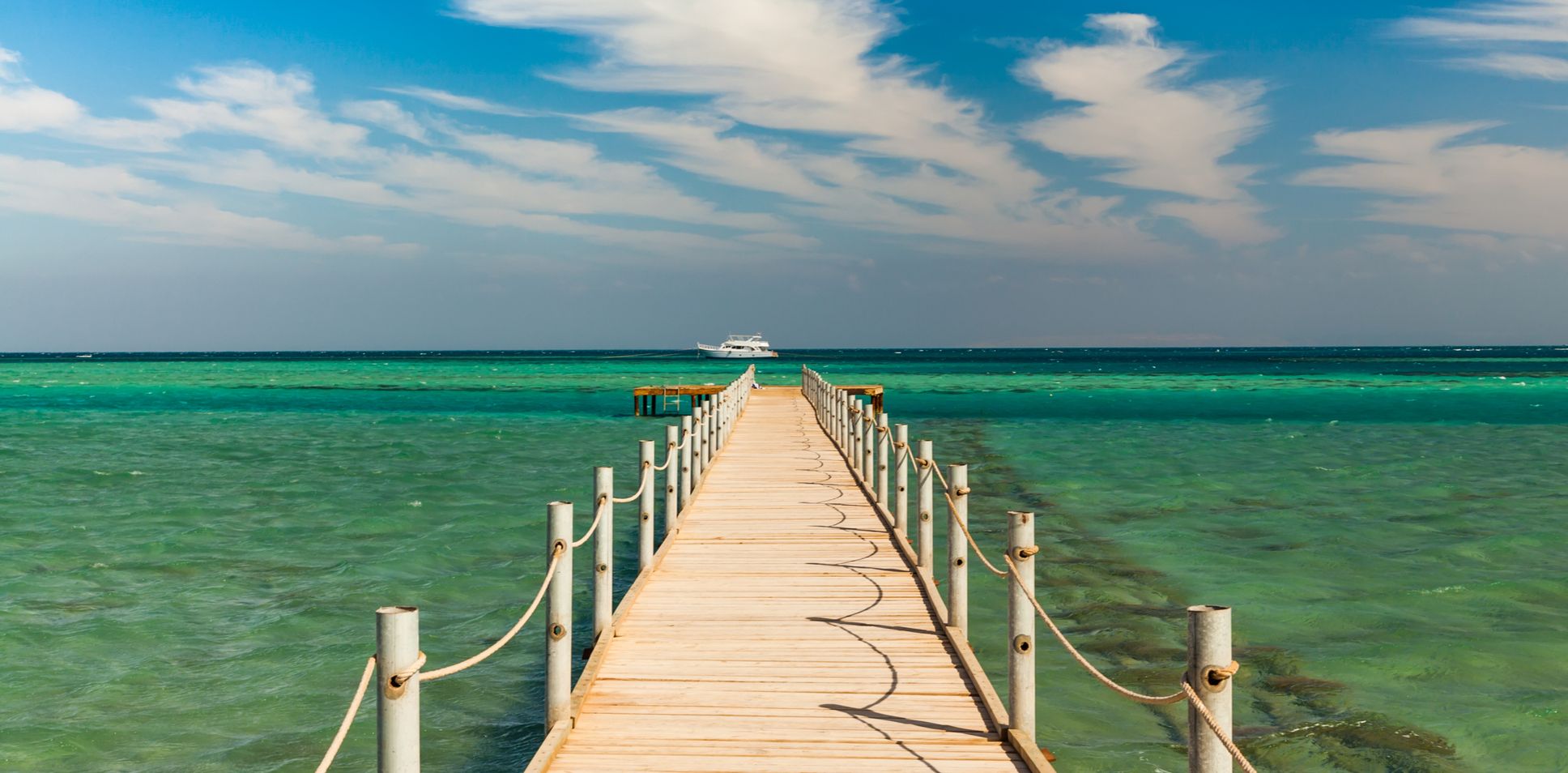
There is a reason the region keeps returning to cruise planners’ thoughts even during periods of disruption. Aqaba gives you Jordan in a compact, high-value form, with Petra inland and marine life on the coast. Safaga is less pretty, but opens the door to Luxor, and the wider Red Sea matters strategically, because it links the Mediterranean and the Gulf and sits on some very desirable longer-haul positioning and world-cruise arcs.
You can see that in the way operators are still circling the region, even if cautiously. Aroya has said it plans a Red Sea return after its Mediterranean debut, and Celestyal has added Athens-to-Jeddah sailings for 2026 ahead of another Arabian Gulf winter season. That does not amount to a full Red Sea comeback in the old sense, with Petra-and-Luxor loops suddenly everywhere again. But it does suggest that cruise companies have not written the region off. They're still trying to find a workable way back in.
Aqaba cruise port: why Jordan still has real pull (just not at the moment)
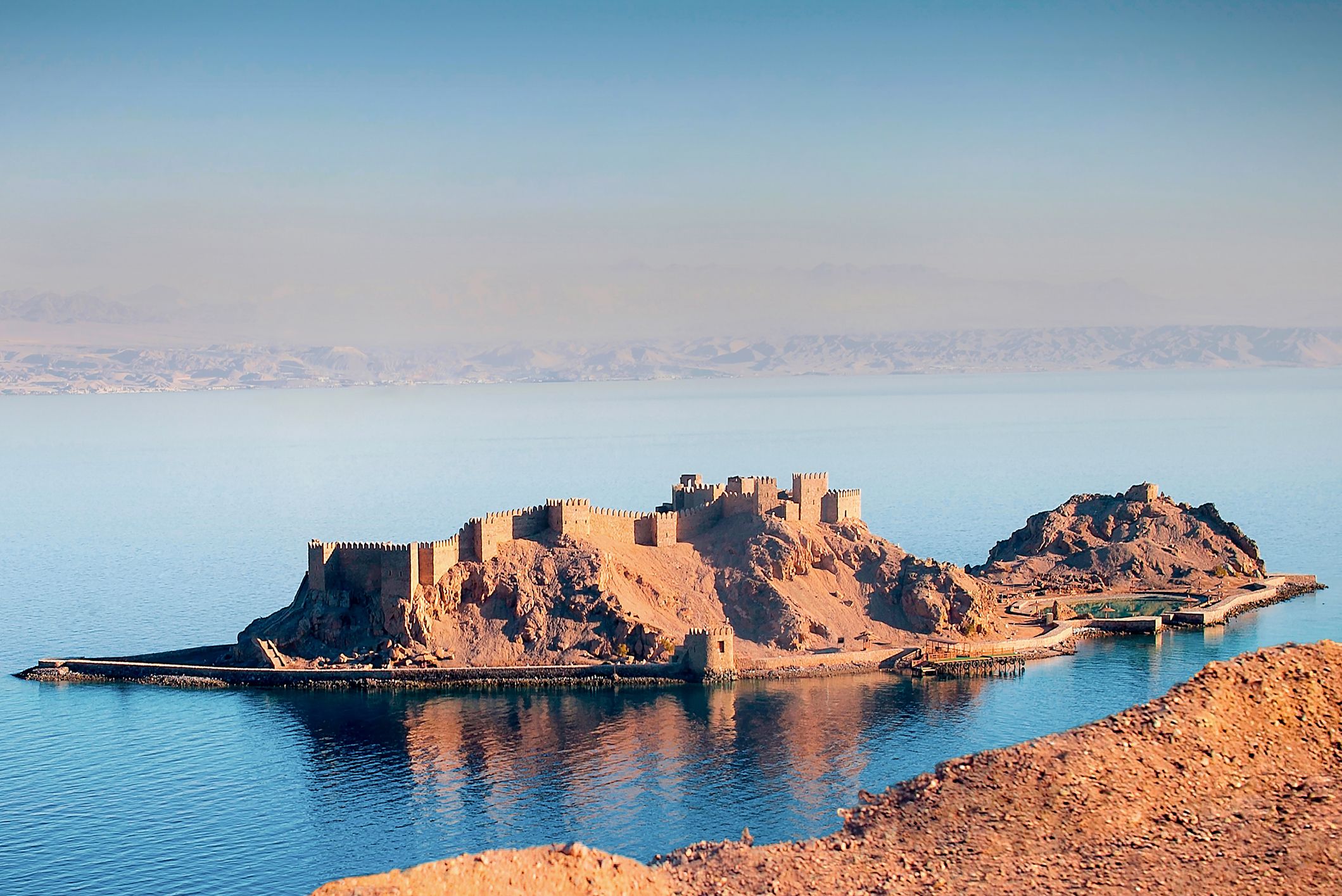

If you strip away the current anxiety and look only at the destination, Aqaba remains a very appealing stop. This is a beach town with water sports and historical flair, marine life, diving and a more sustainable Red Sea identity. The real headline though, is of course, Petra. UNESCO calls it one of the world’s richest and largest archaeological sites, set in a dominating red sandstone landscape and sustained historically by sophisticated water management. That is exactly the sort of inland prize cruise itineraries love, because it gives even a short port call some serious cultural heft. Aqaba also has the advantage of Wadi Rum and the marine reserve nearby, which means it can offer both “ancient wonder” and “quiet Red Sea” rather than forcing everybody into one canonical excursion.
But the problem is not Aqaba. The problem is confidence around Jordan right now. As of 6 May 2026, the Foreign, Commonwealth & Development Office (FCDO) advises against all but essential travel to all areas of Jordan outside the 3km zone along the Syria border, where it advises against all travel altogether. The same advisory says regional escalation poses significant security risks, notes that the Iranian regime has stated its intention to target U.S.- and Israeli-linked locations, and warns that missiles travelling through Jordanian airspace have previously been intercepted with debris falling in urban areas. That is not the sort of language that's likely to help mainstream cruising rediscover its nerve.
Safaga cruise port: why the Egypt side is different


Safaga has never exactly relied on charm. Even MSC’s own port page describes it as a village on the Red Sea coast whose economy is driven by nearby phosphate mines, before sensibly steering attention back to Luxor. This is one of those cruise ports that exists because something astonishing is inland. In this case, that something is Ancient Thebes: Karnak, Luxor Temple, the Valley of the Kings, the Valley of the Queens, and a city that UNESCO describes as one of the richest and most important in ancient Egypt. Safaga is not really the holiday fantasy but it is the gateway to one.
That may sound slightly unromantic, but it also means Safaga’s appeal is unusually durable. Luxor is not a trending destination. It is a foundational cultural stop. Luxor is essentially an open-air museum of temples, tombs and ancient royal history. So if cruise lines can get ships comfortably into the northern Red Sea again, the passenger proposition at Safaga remains very easy to understand. Nobody needs to be persuaded that Karnak is worth a bus ride.
Egypt’s current travel picture is also more nuanced than Jordan’s. As of 6 May 2026, the FCDO warns of heightened regional tension and says escalation could lead to travel disruption and other unanticipated impacts, but it does not advise against travel to Egypt as a whole. The specific “do not travel” and “all but essential travel” warnings cover places like North Sinai, the Egypt-Libya border, eastern Ismailiyah and certain desert or border regions, while Luxor is explicitly listed as an exception within the Western Desert advisory. In plain English, Egypt is not being treated by the UK in the same blanket-cautious way as Jordan is right now.
What the Iran conflict means for Red Sea cruises right now
Here is where the wider regional picture gets awkward. In early 2026, there was a brief sense that parts of the maritime industry might start inching back toward normality. Reuters reported on 3 February that Maersk and Hapag-Lloyd planned to resume some Red Sea transits with naval escorts from mid-February after a Gaza ceasefire had raised hopes of a more stable operating environment. Then, by 27 February, Maersk was already rerouting some sailings around the Cape again because of “unforeseen constraints” in the Red Sea region. By 1 March, after U.S. and Israeli strikes on Iran and the closure of the Strait of Hormuz, Reuters reported that Maersk, Hapag-Lloyd and CMA CGM were rerouting vessels around Africa and away from the Suez Canal and Bab el-Mandeb once more. Confidence, in other words, turned out to be extremely breakable.
As of this week, the Iran conflict is still the part nobody serious can ignore. Reuters reported on 5 May that Iran had set up a new mechanism to manage vessel transit through the Strait of Hormuz, warning the U.S. Navy to stay out and requiring commercial vessels to coordinate passage with its military. On 6 May, Reuters reported that the strait had been virtually shut since the conflict that began on 28 February, that a fragile ceasefire is holding, and that negotiations are continuing but have not yet produced a settlement. Even though Hormuz and Aqaba are not the same body of water, cruise passengers tend not to make fine-grained maritime-security distinctions while choosing a holiday. The broader Middle East mood matters enormously.
The complication is that the northern Red Sea itself is not currently a closed war zone. The wider Middle East maritime region is at critical threat level, but equally there have been no confirmed attacks or disruptions in the northern Red Sea and Suez Canal, that Suez transits continue normally, the main issues there are sporadic electronic interference and elevated vigilance. That is a crucial distinction. Operationally, the northern Red Sea is not the same as saying “nothing can sail here.” Psychologically, though, the region remains extremely difficult to sell.
So when are Egypt and Jordan likely to feel cruiseable again?
Egypt will probably feel cruiseable again first. Or, to be more precise, it already looks more plausibly cruiseable on paper than Jordan does, because the travel advisories are less restrictive. The maritime picture is not ideal, but the northern Red Sea and Suez are functioning, and Egypt’s official UK advice has not crossed into blanket caution territory. If cruise lines decide to test the water with selective returns, Egypt is the much easier ask.
Jordan is trickier, not because Aqaba or Petra have become less appealing, but because the current advisory language is much harder to wave away. A destination can be objectively compelling and still commercially difficult if official travel advice tells people to reconsider all but essential travel and to keep departure plans under review. For a small number of very confident, well-informed travellers, Jordan may still feel manageable. For the broad mainstream cruise market, it does not yet feel like the sort of place lines can slot back into brochures with a sunny shrug.
That leaves the Red Sea return looking less like a triumphant relaunch and more like a staggered, selective re-entry. The first signs are likely to be niche or premium: longer world-cruise sectors, carefully chosen repositioning voyages, regional deployments that stay within the broader Arabia orbit, and destination pages quietly staying live while everyone waits to see whether geopolitics will calm down enough to justify confidence. That may not be the most exciting answer, but it's probably the most honest one.