There’s a version of the British Isles cruise that moves briskly between capitals, castles and places selling shortbread in increasingly authoritative tins. Then there’s the island route, where the ship keeps heading north or west until familiar geography begins to loosen its grip.
Lerwick, Kirkwall, Stornoway, Portree, Tobermory and St Mary’s are all within the British Isles, but none feels like a smaller substitute for somewhere on the mainland. Shetland and Orkney retain centuries of Norse influence. Gaelic remains part of everyday life in the Outer Hebrides and Skye. Mull’s harbour faces waters busy with fishing boats, dolphins and sea eagles, while the Isles of Scilly sit off Cornwall with Bronze Age remains, subtropical planting and a climate apparently negotiated separately.
Cruising is particularly important to Scotland’s northern islands. VisitScotland identifies Kirkwall and Lerwick among the country’s five marquee cruise ports, while Orkney expected 178 calls and around 170,000 passengers during its 2025 season, making it the UK’s busiest transit cruise port. These are no longer obscure stops glimpsed by passengers with unusually adventurous travel agents.
The attraction of this route isn’t that every harbour offers another checklist of major sights. It’s the opposite. Each island has its own language, weather, food, history and firm opinion about the correct weight of knitwear for July.
Lerwick cruise port: Norse history, fishing boats and serious knitwear
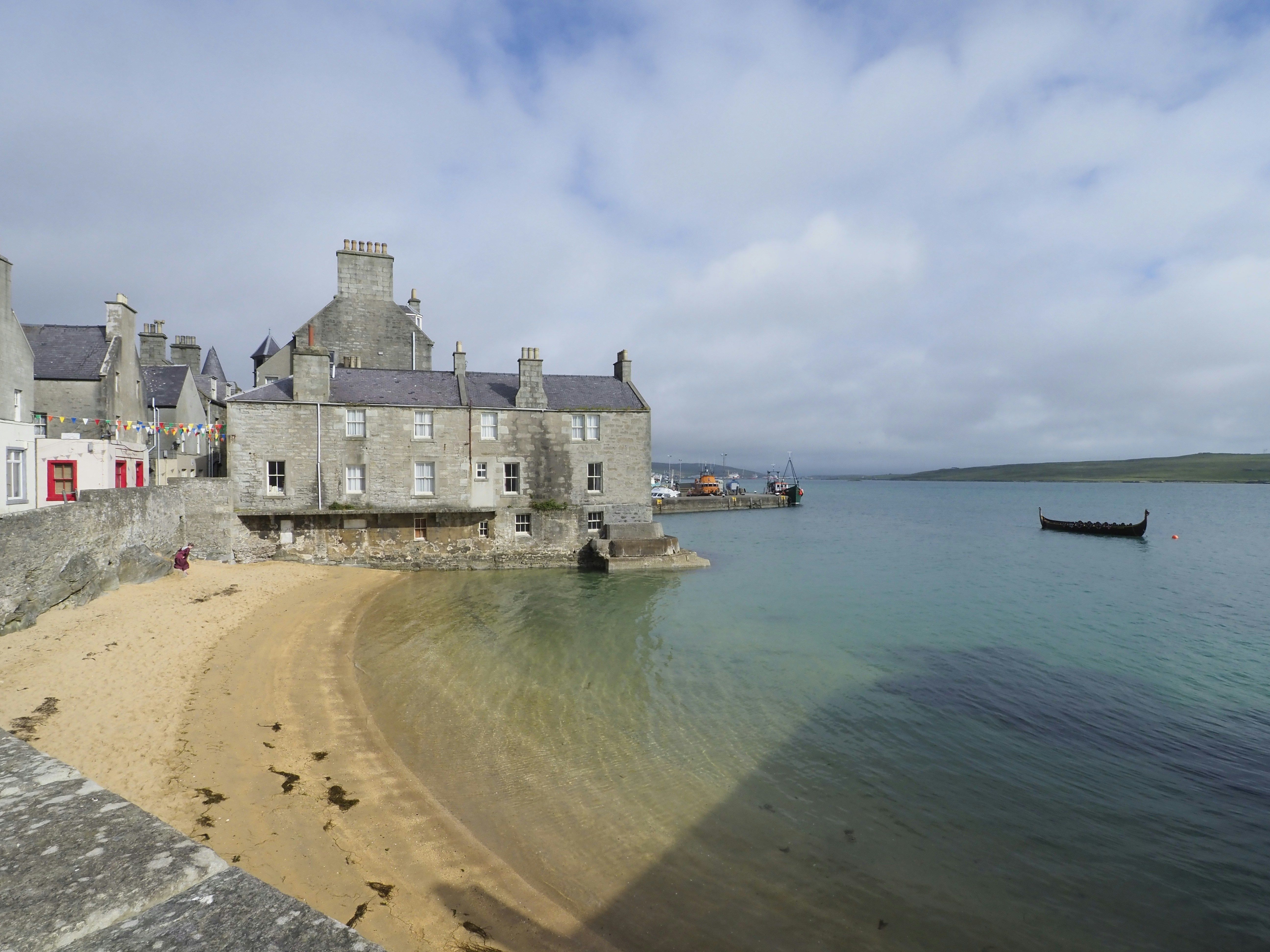
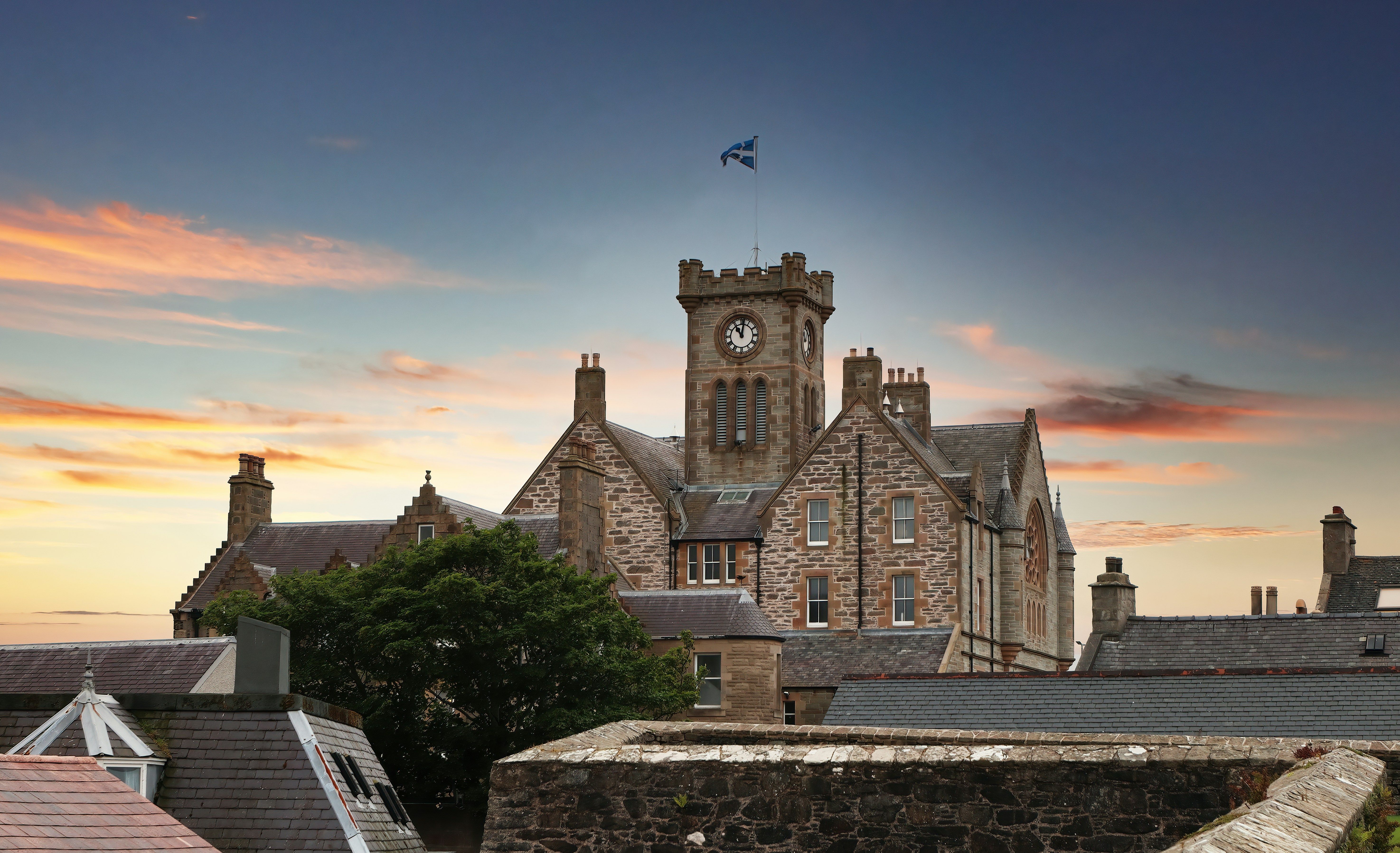
Approaching Lerwick by sea feels entirely appropriate. Shetland’s capital curves around the harbour, its grey stone buildings looking practical enough to have been designed by people who’d checked the wind forecast first.
Depending on the ship, passengers either berth at Mair’s Pier or Holmsgarth, or arrive by tender at a landing stage in the town centre. A complimentary shuttle links the main cruise berths with central Lerwick, while tender passengers are deposited close to the waterfront. This is one of those gratifying ports where your first sight ashore isn’t an industrial estate containing a hopeful gazebo.
Commercial Street has been Lerwick’s main shopping street since the early 18th century. Behind it, narrow lanes climb towards Hillhead and the Victorian town hall, creating a compact walking route through shops, cafés and stone houses. The shopping includes local crafts, music and traditional knitwear, so anyone who boarded the ship believing they owned enough wool is about to have that theory properly tested.
Shetland was under Norse rule for almost 600 years after Viking settlement began around AD 850, and the influence remains visible in place names, dialect, archaeology and seasonal traditions. It’s less a decorative historical layer than part of the islands’ cultural wiring.
The best introduction is Shetland Museum and Archives, housed beside the surviving historic dock at Hay’s Dock. Its collections cover fishing, merchant shipping, crofting, archaeology and textiles, including Fair Isle patterns and Shetland lace. The textile collection is recognised as being of national significance, which gives you a more defensible reason for inspecting another jumper than “the colours were nice”.
With a longer call, head beyond Lerwick to Jarlshof. The site contains traces of settlement spanning roughly 4,000 years, from Neolithic and Bronze Age communities through Iron Age buildings, Viking longhouses and later medieval occupation. It’s one of the rare excursions where the guide can move forward several centuries simply by walking across a field.
Lerwick itself, however, deserves more than the customary hour assigned before boarding a coach. Walk the waterfront, explore the lanes, visit the museum and have lunch somewhere the fishing fleet remains part of the view. Shetland makes far more sense when the sea isn’t treated merely as the surface your ship happened to cross.
Kirkwall cruise port: Viking earls and Neolithic Orkney

Orkney has accumulated history with a degree of enthusiasm that now presents a scheduling problem. A single port day might include a medieval cathedral, ruined palaces, Viking stories, prehistoric villages, stone circles and Second World War remains. Attempting all of them is possible only if your preferred method of cultural engagement is glimpsing things through coach glass while holding a headset.
Kirkwall’s centre is built around St Magnus Cathedral, founded in the 12th century by Earl Rognvald in honour of his uncle, the Norse saint Magnus. Beside it stand the remains of the Bishop’s and Earl’s palaces, monuments to several generations of powerful men expressing themselves through increasingly substantial masonry.
The cathedral, palaces, museum, harbour and old streets make Kirkwall a complete port day in their own right. That’s worth remembering when several thousand fellow passengers have simultaneously developed an interest in Neolithic archaeology.
The West Mainland holds Orkney’s most famous ancient sites. The Heart of Neolithic Orkney World Heritage landscape includes Skara Brae, the Ring of Brodgar, the Stones of Stenness and Maeshowe, set among lochs and low, open farmland. These aren’t isolated monuments placed conveniently beside a visitor centre. Together, they reveal a prehistoric landscape whose settlements, ceremonial sites and tombs remain connected across thousands of years.
Orkney’s later Norse identity is just as persistent. Scandinavian place names appear throughout the islands, and local heritage material describes Norse ancestry and the stories of the Orkneyinga Saga as central to modern Orcadian culture. It’s entirely possible to spend the morning discussing people who lived five millennia ago and the afternoon following the political difficulties of Viking earls, which makes contemporary news feel pleasantly manageable.
For a first visit, choose between a proper exploration of Kirkwall and a focused trip into the West Mainland, ideally leaving enough time for both the cathedral and one coherent archaeological route. The stones have survived several thousand years. They can probably wait until your next call rather than being experienced at a light jog.
Stornoway cruise port: Gaelic culture, standing stones and Harris Tweed
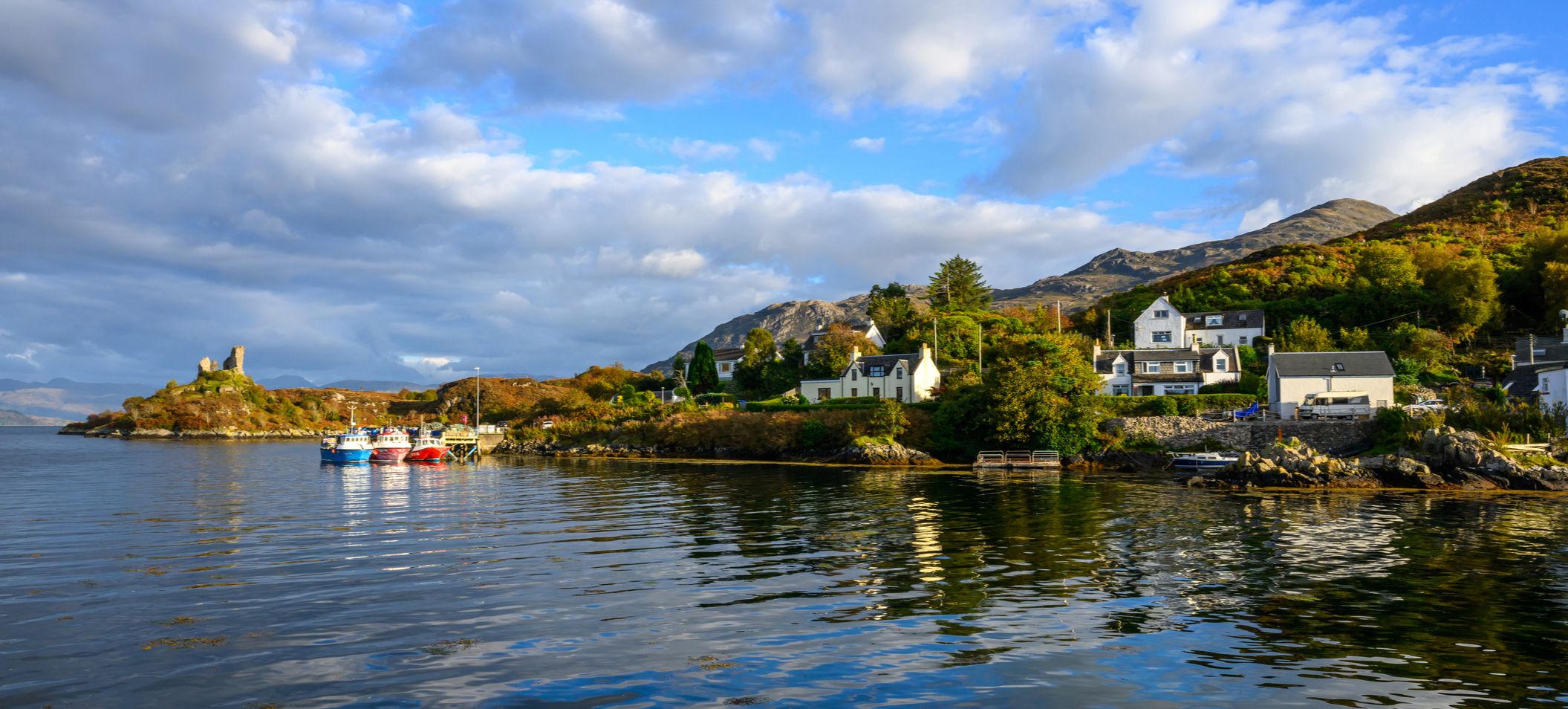
Stornoway is the main town of the Outer Hebrides, but arriving here doesn’t feel like reaching an island capital in the conventional sense. Beyond the harbour lie crofts, peatland, Atlantic beaches and settlements where Gaelic remains part of ordinary conversation rather than something applied to a road sign for atmosphere.
The Outer Hebrides are Scotland’s principal Gaelic stronghold, and the language can still be heard in cafés, churches, homes and on ferries. Crofting has also helped shape both the landscape and the identity of the islands, tying community life to small-scale agriculture, shared land and weather that rarely feels like a neutral participant.
Begin in Stornoway itself. Across the harbour, Lews Castle stands in extensive wooded grounds and houses Museum nan Eilean, whose displays explore the history and culture of the Western Isles. The museum includes Lewis Chessmen and material relating to island archaeology, language and everyday life, while admission is free.
The town’s independent shops provide the first encounter with Harris Tweed. Genuine cloth must be handwoven by islanders at their homes in the Outer Hebrides and carries the Orb certification mark. The fabric’s continued production supports a network of weavers, mills, designers and shops across Lewis and Harris. Buying a cap therefore counts as engagement with a living cultural tradition, which is extremely useful when explaining the purchase to someone who has seen your existing collection of caps.
The great excursion from Stornoway is west to the Calanais Standing Stones. The main stone circle and its avenues form part of a wider prehistoric landscape on Lewis, with additional monuments scattered nearby. A new visitor centre entered a preview season in 2026, so passengers should check current access and opening arrangements before sailing.
There’s an important practical detail for Sunday calls. Lewis and Harris still observe a notably quiet Sabbath, and most shops, cafés, filling stations and visitor attractions close, with no public bus service. Hotels continue to serve food and drink, but an independent Sunday itinerary requires more preparation than turning up in town and assuming commerce will eventually present itself.
This isn’t an inconvenience to be treated as an eccentric obstacle to sightseeing. It’s part of the social and religious character of the islands. Stornoway is most rewarding when approached as a living community rather than a service station placed between the ship and the standing stones.
Portree cruise port: Skye scenery and living Gaelic culture
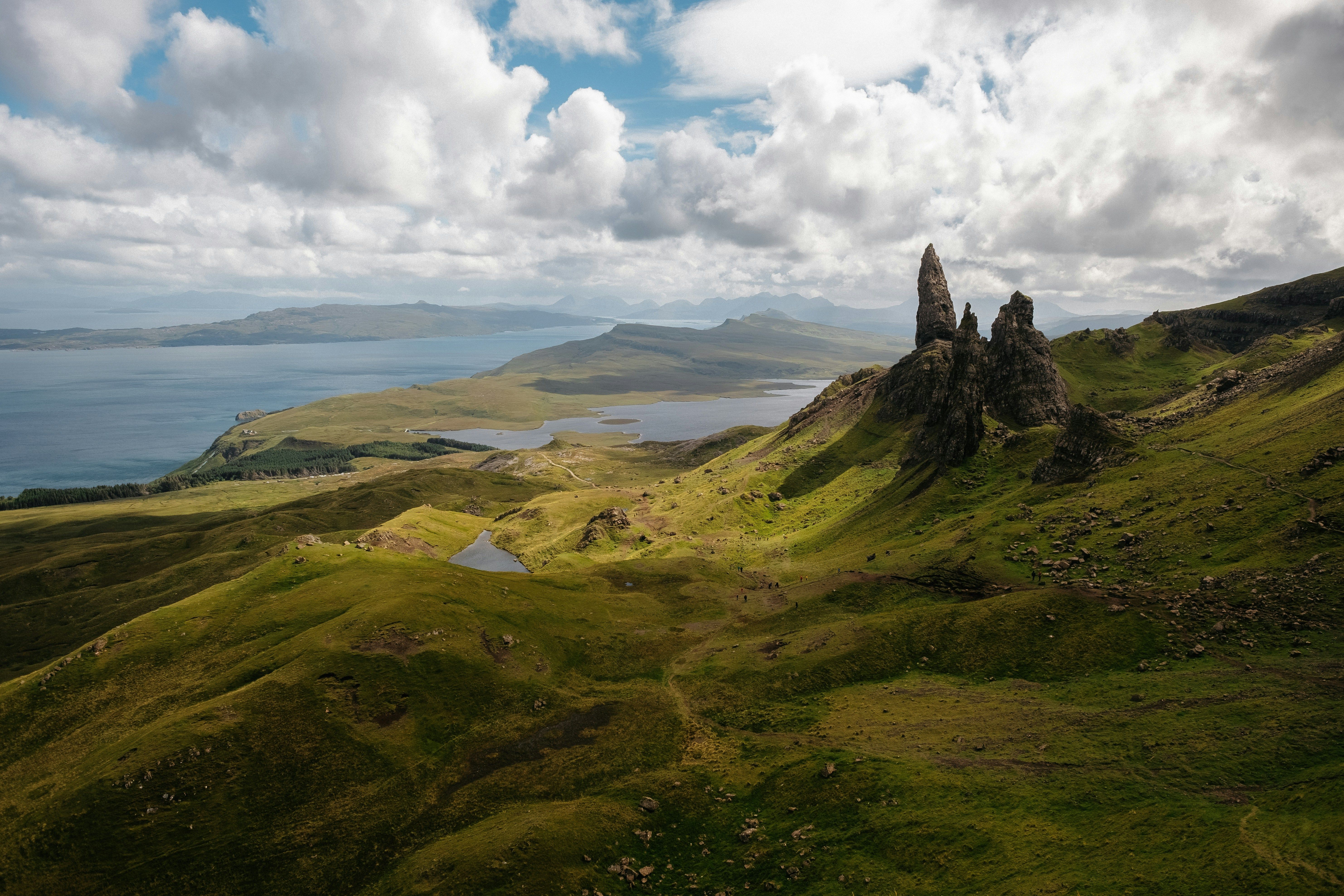
Cruise ships anchor in Portree Bay and tender passengers into the harbour, where a row of brightly painted buildings sits below the town. From the water, Portree appears to have commissioned a colour palette specifically for arrival photographs, though the climb from the quay soon restores a little Highland seriousness.
Portree developed as a fishing village around the beginning of the 19th century and is now Skye’s main town. Its harbour, shops and restaurants are easy to explore independently, but most passengers arrive with at least one famous island landscape already occupying a substantial part of their imagination.
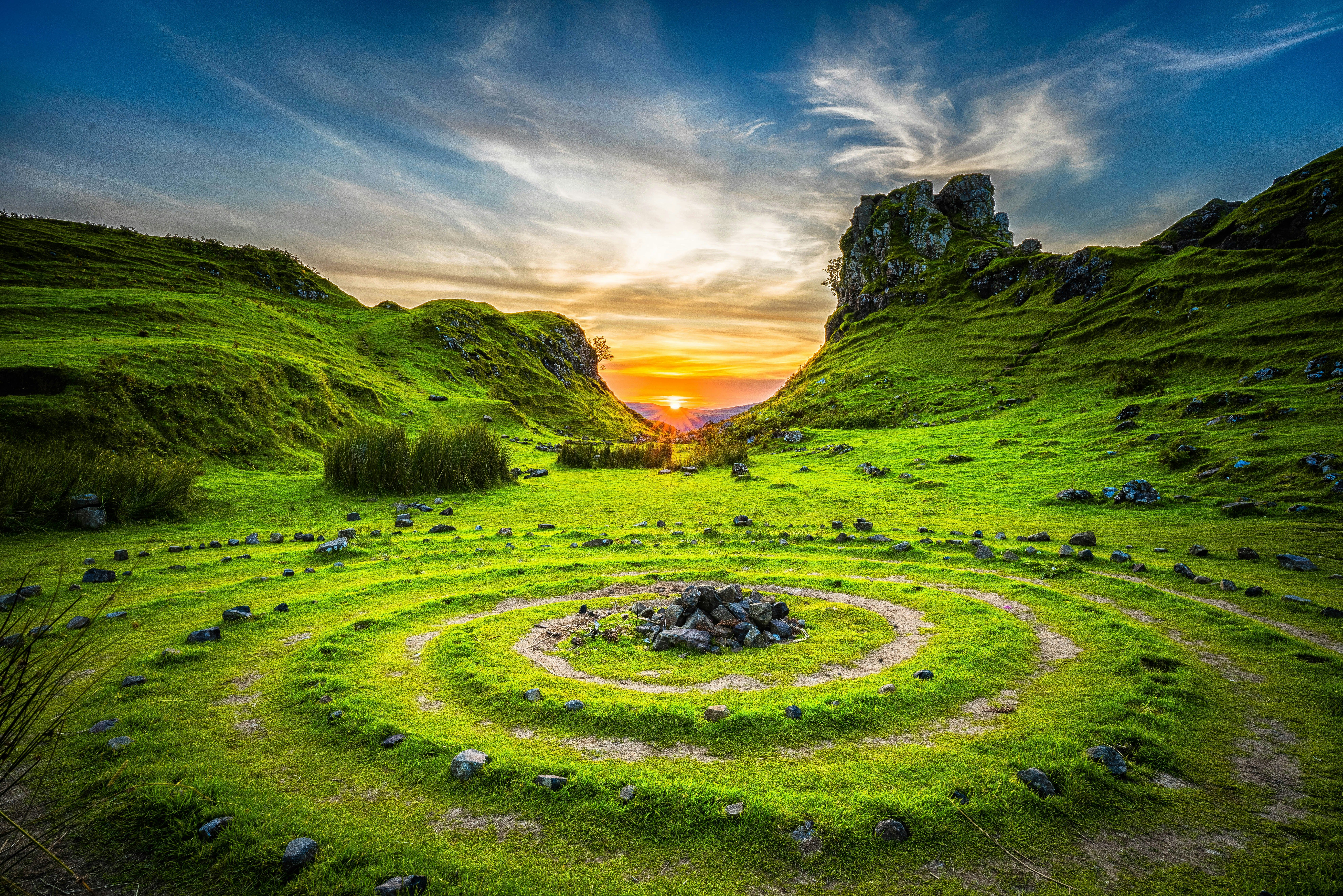
The trouble is that Skye’s headline sights are spread across a large island. The Old Man of Storr and Quiraing lie north on the Trotternish peninsula; Dunvegan Castle is to the west; the Fairy Pools and Talisker area pull you south-west. Cruise excursions departing from Portree regularly combine selections from these places, but trying to collect all of them in one day reduces Skye to a sequence of car parks featuring increasingly urgent photography.
Choose one part of the island and let it occupy the day properly. Trotternish offers the most immediately dramatic route, with cliffs, pinnacles and landslip formations rising above the coast. A western itinerary can pair Dunvegan with villages, sea lochs and views towards the Outer Hebrides. A southern route offers mountain scenery and whisky, an arrangement Scotland has spent some time refining.
Skye’s identity goes well beyond dramatic geology and businesses containing the word “fairy”. Gaelic language, song and storytelling remain important to the island’s culture, celebrated through events and contemporary music as well as heritage organisations. The Skye Museum of Island Life, north of Portree at Kilmuir, preserves thatched croft buildings and objects connected to domestic work, farming and Gaelic island life.
Passengers staying in town can explore the harbour, browse local crafts and follow the coast for views back across the bay. It’s a gentler day than chasing the Quiraing, but it leaves enough time for seafood and removes the risk of spending your entire visit behind a campervan moving uphill at six miles an hour.
Tobermory cruise port: wildlife, whisky and Mull’s colourful harbour
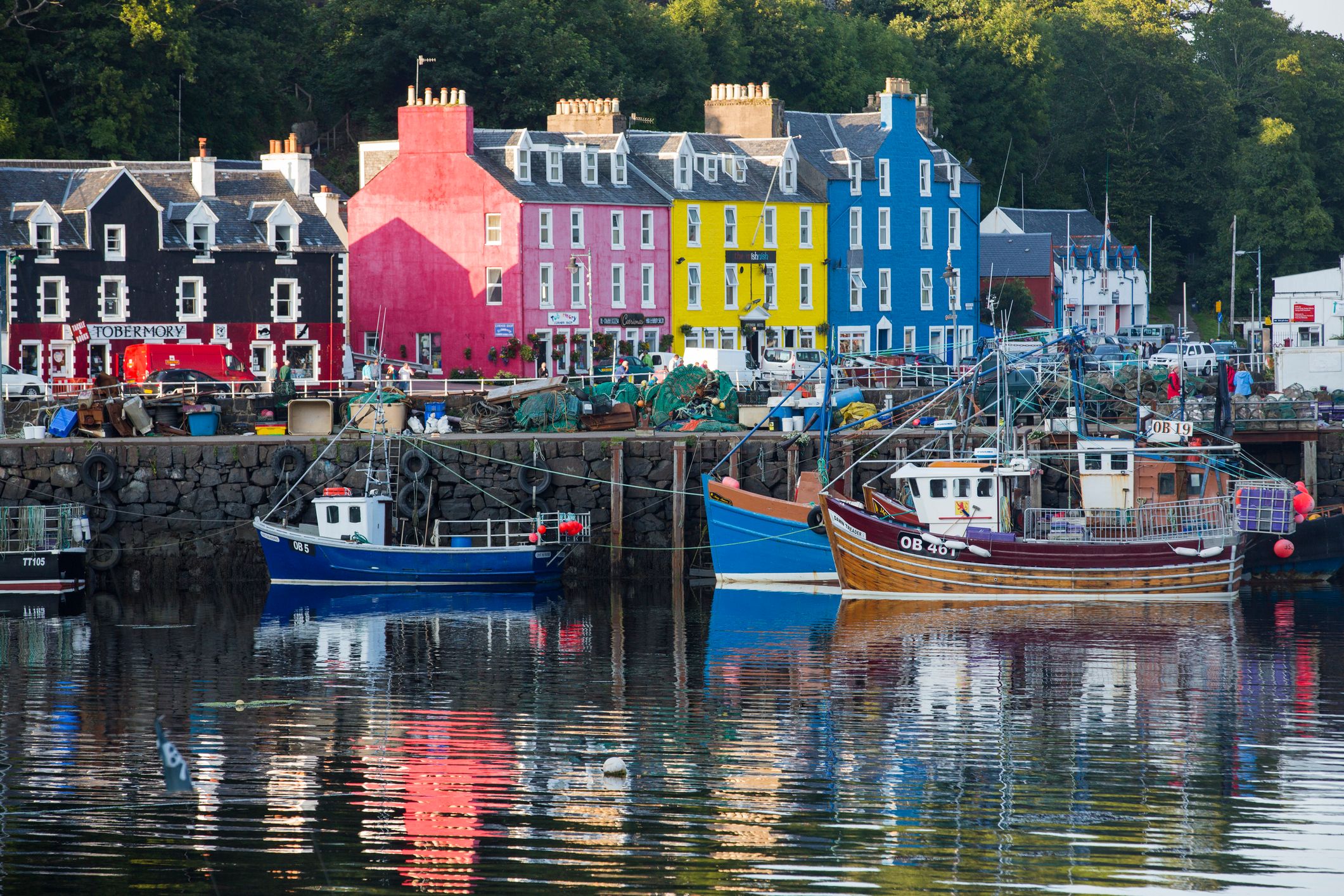
Tobermory is arranged around a sheltered horseshoe-shaped bay, with brightly painted houses lining the waterfront and wooded slopes rising behind them. Cruise ships anchor offshore and passengers arrive by tender at the harbour pontoon, landing in the middle of the town rather than somewhere requiring a shuttle bus and a renewed sense of purpose.
The town is Mull’s main settlement but remains small enough to explore slowly. Along the waterfront are independent shops, cafés, pubs, Mull Museum, an arts centre, a marine centre and Tobermory Distillery, established in 1798. It’s a formidable amount of activity for one curved street, particularly once whisky begins taking up part of the timetable.
Mull’s real scale becomes apparent on the water. Wildlife trips operate from Tobermory in search of seals, dolphins, porpoises, whales and seabirds, while white-tailed eagles can be seen around the island and its surrounding sea lochs. Sightings are never guaranteed, a position the wildlife maintains despite considerable pressure from brochure copywriters.
Longer boat excursions can head towards the Treshnish Isles or Staffa, whose basalt columns and sea cave make it one of the Inner Hebrides’ most distinctive landscapes. These trips depend on schedules, sea conditions and the length of the port call, so they’re best booked with the ship’s departure firmly in mind. Staffa tour operators run from Tobermory as well as several other points around Mull.
There’s no obligation to leave Tobermory. A day divided between the museum, harbour, seafood, a short coastal walk and the distillery is unusually well balanced, at least until the distillery introduces a second sample.
The temptation with Mull is to treat the town as a decorative entrance to the island’s wildlife and mountains. Tobermory is more interesting than that. It remains a working harbour, a departure point for local boats and a compact expression of an island whose economy has long depended on the water outside its front doors.
St Mary’s cruise port: beaches, archaeology and island hopping in Scilly
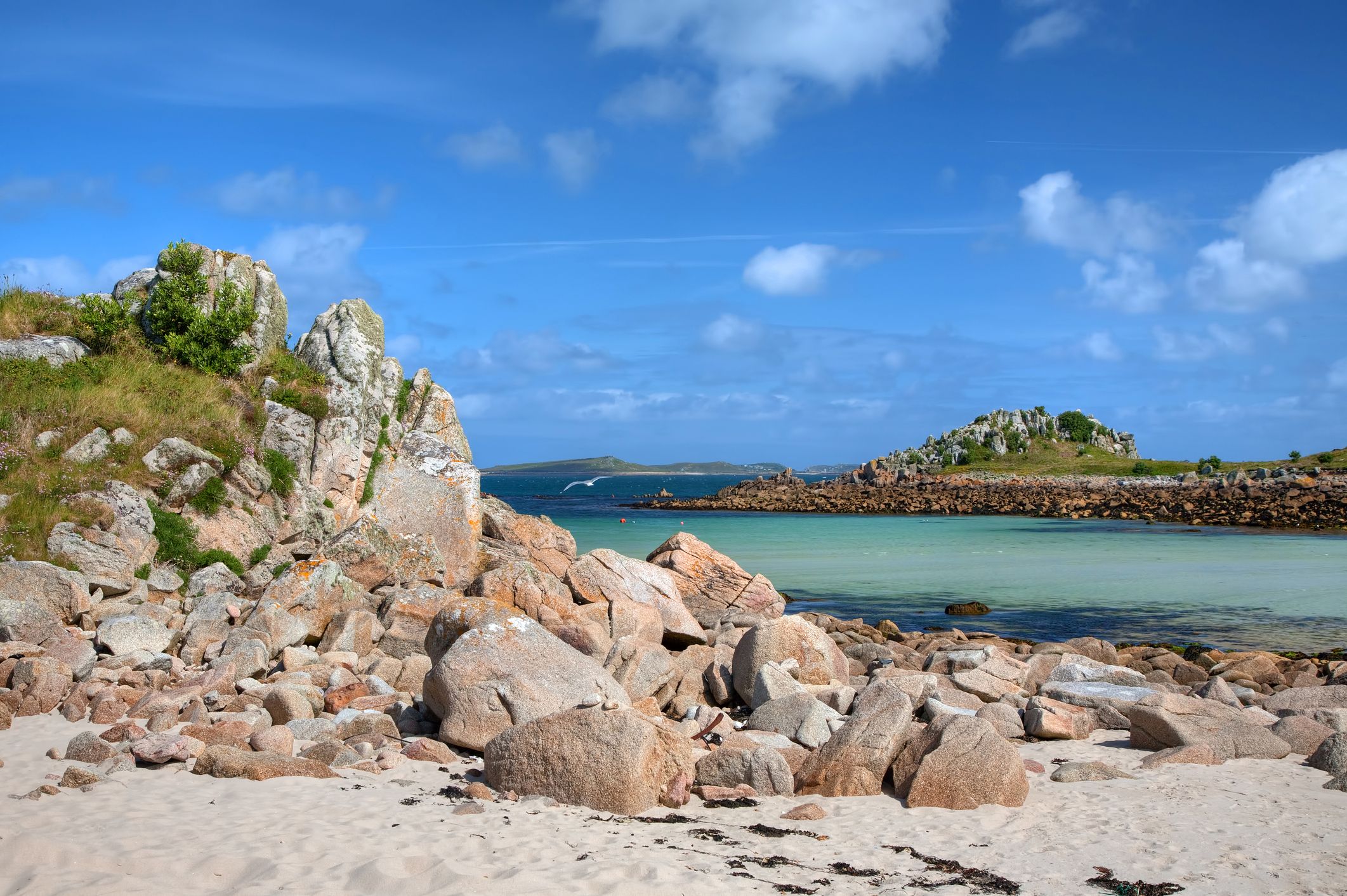
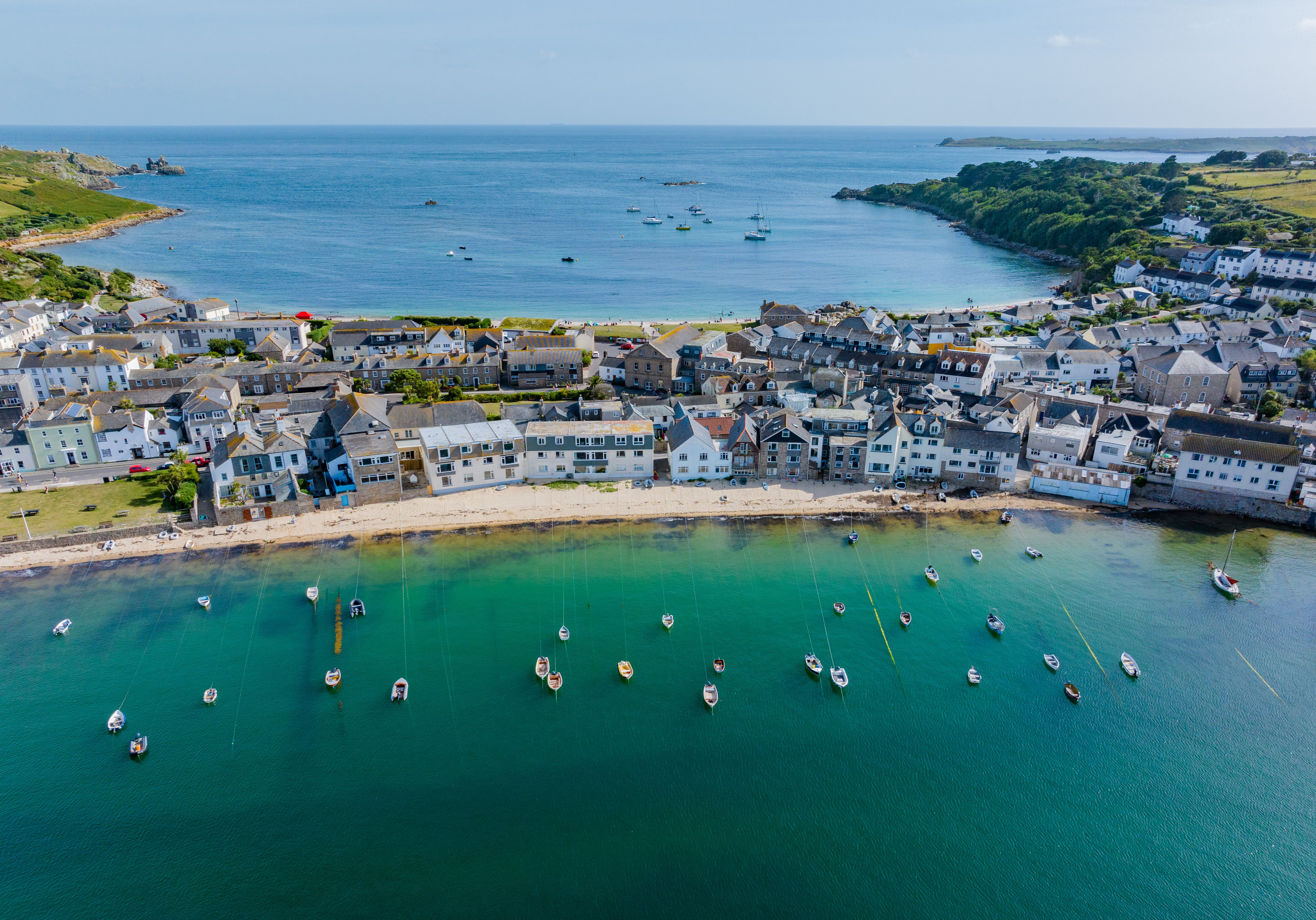
By the time the route reaches the Isles of Scilly, the landscape has changed again. Granite replaces the dark northern cliffs, turquoise water gathers around pale beaches and gardens contain plants that appear to have taken a serious wrong turn on the way to the Mediterranean.
Cruise ships usually anchor in St Mary’s Roads or on the eastern side of the island, with passengers brought ashore by tender to St Mary’s or, by arrangement, one of the off-islands. Arrival is therefore weather-dependent, but when conditions cooperate the tender journey becomes part of the experience, threading between low islands and small boats.
St Mary’s is the largest island in the archipelago, though it covers only a little over six square miles and has a population of around 1,800. Hugh Town occupies a narrow strip between two beaches, making it possible to walk from one side of the island to the other in roughly the time usually required to find the correct exit from a major cruise terminal.
From Hugh Town, walk around the Garrison, where fortifications overlook the harbour and surrounding islands, or continue towards Peninnis Head for granite outcrops and open sea views. St Mary’s also contains galleries, studios, beaches and a remarkable concentration of archaeological remains. Bronze Age burial chambers survive at sites including Porth Hellick, Bant’s Carn and Innisidgen, while later settlements and fortifications chart several thousand years of occupation.
The alternative is to leave the largest island almost immediately. Local boats connect St Mary’s with Tresco, St Martin’s, Bryher and the other inhabited islands, with daily excursions also reaching uninhabited places when conditions allow. Tresco’s Abbey Garden contains thousands of exotic plants, while other islands offer beaches, wildlife, archaeological sites and settlements small enough for the arrival of a boat to constitute a meaningful event.
Island hopping requires discipline on a cruise call. The last return boat has a level of authority that no amount of pleading, waving or producing your cruise card is likely to diminish. Staying on St Mary’s offers plenty for a full day and considerably fewer opportunities to watch your ship depart from another island.
Scilly feels culturally distinct from both Cornwall and the Scottish islands farther north. Its history has been shaped by fishing, flower growing, shipwrecks, maritime defence and a landscape that once contained more joined land before rising seas divided it into today’s archipelago. The result is British, but only after a number of local amendments.
Why Britain’s island ports deserve the itinerary
A cruise through these islands dismantles the idea of Britain as one compact culture surrounded by water. In Lerwick and Kirkwall, the North Sea points towards Scandinavia as much as Scotland. Stornoway and Portree belong to a Gaelic Atlantic world. Tobermory is shaped by the Inner Hebrides and the marine life around them. St Mary’s looks south-west from a scatter of islands whose scale encourages boats, walking and a healthy respect for the weather.
The landmarks are excellent, but they aren’t the whole point. What stays with you is hearing Gaelic spoken in a Stornoway shop, watching fishing boats return to Lerwick, finding Norse names across an Orkney map or discovering that an apparently unnecessary wool jumper has become completely reasonable by the third island.
London, Edinburgh and Dublin will survive your absence. The question is whether your luggage will survive the knitwear.