The EU’s new Entry/Exit System (EES) is here to make things a touch more complicated.
If you’re a non-EU traveller (UK, US, Canadian, Australian, and friends) calling at multiple Schengen ports, EES matters because it changes how your entry and exit are recorded, and it adds a new moment of queueing to your holiday. Not every day. Not at every port. But at the points where you actually enter or leave the Schengen Area.
What EES actually is (and what it’s for)

EES is an automated border system for non-EU nationals travelling for a short stay. It records your identity and travel document details, plus biometric data (fingerprints and a facial image), and logs the date and place of entry and exit. It also records refusals of entry.
The point, from the EU’s perspective, is straightforward: better tracking of the 90 days in any 180 rule, fewer overstays, and less identity fraud, with more automated border control over time.
It’s being rolled out gradually. The European Commission says the gradual introduction began 12 October 2025 over a six-month period, and reporting around launch described full implementation as expected by April 2026.
Where EES applies, in plain cruise language
EES is tied to the Schengen Area’s external borders and applies across the 29 countries listed in UK government guidance (including non-EU Schengen associates like Norway, Iceland, Liechtenstein and Switzerland). It does not apply to Ireland or Cyprus, because they’re not in Schengen.
So, yes, you can cruise a very European-sounding itinerary and still have ports where EES isn’t part of the plot.
The cruise question everyone asks: will I have to do this at every port?
Usually, no. EES is about entering and exiting Schengen, not about how many charming harbours you collect along the way.
The tricky bit is that cruises don’t all follow the same route, legally or operationally. Whether you personally have an EES “moment” depends on where your cruise starts and ends, and whether you join or leave the ship within Schengen. ABTA and the UK government’s Travel Aware guidance both put it like this: if your sailing starts and finishes outside Schengen (a UK round trip is the obvious example), you’ll generally be exempt from EES checks for Schengen day calls that are part of the itinerary.
On the other hand, if you board a cruise within Schengen, you’ll need to complete EES checks at your initial port of entry to the Schengen Area. And if you disembark within Schengen and then travel onward by other means, you’ll need EES checks when leaving the ship.
And if you’re doing a classic fly-cruise, things are simpler, you’ll complete EES when you first arrive in Schengen, usually at the airport.
What happens on the day
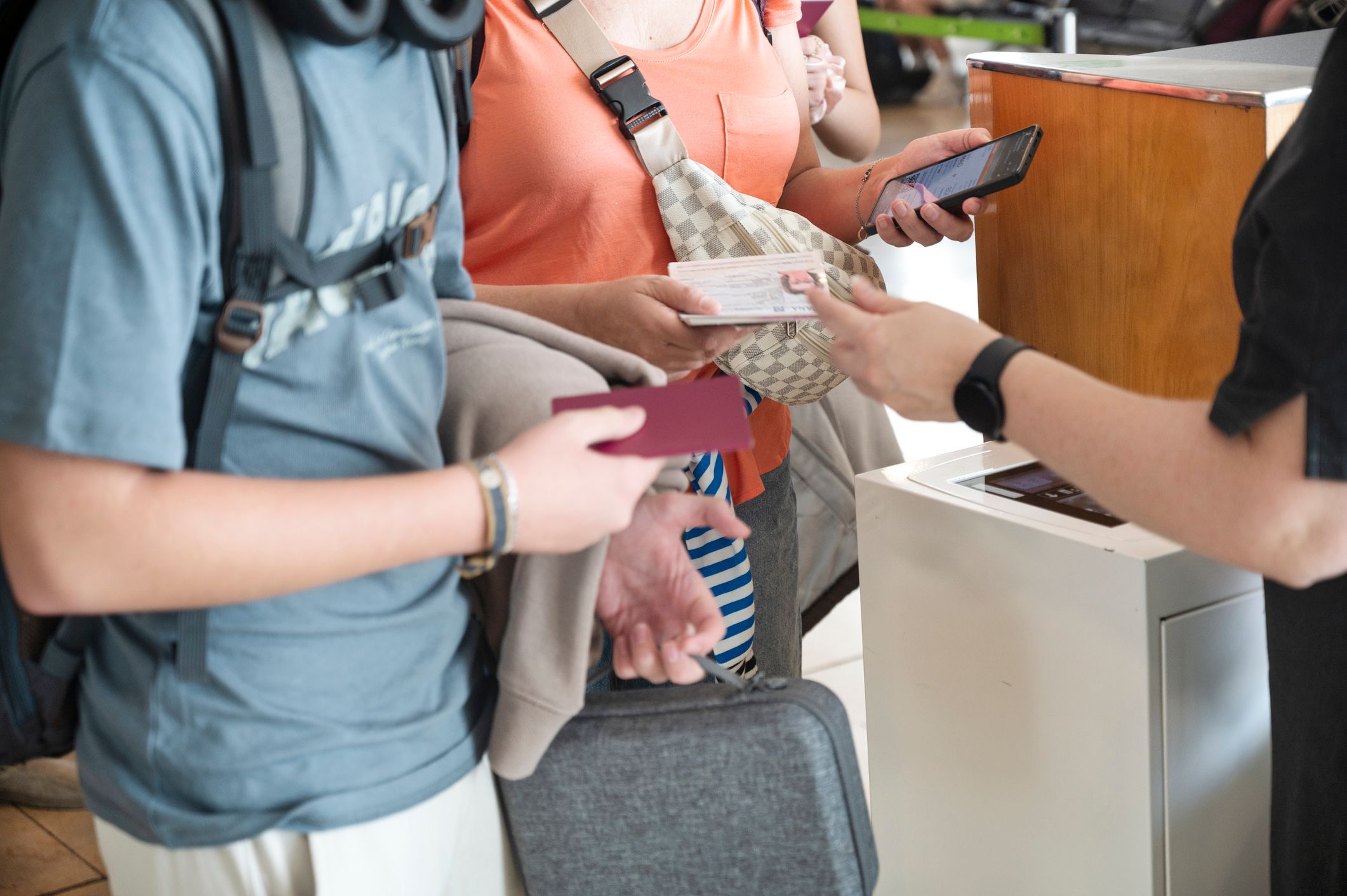
First, the reassuring part: you don’t need to do anything in advance, and there’s no fee to register for EES.
Now the practical part. On your first post-EES visit, you’ll create a digital record at the border. That means your passport is scanned and your biometrics are captured. The UK government describes dedicated booths for fingerprints and a photo.
Depending on the border point, you might do some of this at a self-service kiosk before you reach an officer, or it might be done at the desk. France’s interior ministry describes pre-registration devices in two forms: fixed kiosks and mobile tablets used by staff, designed to speed things up but optional to use.
You’ll also meet the small theatre of modern travel: you may be asked to remove glasses, hats, masks, and anything else that makes you look like you’re auditioning for “mysterious passenger #3.”
If you’re travelling with children, the detail people always miss is fingerprints. French guidance states minors under 12 aren’t fingerprinted, though they still have facial image capture. (Your baby will not be asked to place four fingers on a scanner, which is good, because babies are famously cooperative.)
Once you’ve registered, future entries are meant to be quicker. UK guidance says your EES record is valid for three years (or until your passport expires) and on subsequent trips you’ll generally provide either a fingerprint or photo at entry and exit. One more reality check: during phased implementation, passports may still be manually stamped at some border points alongside EES.
How this plays out on a cruise calling multiple Schengen ports
Here’s the most common “what will it feel like” version for cruisers:
If you’re entering Schengen as part of a fly-cruise, your EES moment is likely on arrival at the airport where you first enter Schengen. After that, your ship can hop between Schengen ports without you repeatedly re-enrolling like it’s a loyalty scheme you never asked for. Your next EES moment is when you leave Schengen, usually at the airport or port at the end of your trip.
If you’re on a sailing that starts and ends outside Schengen, official UK travel guidance and ABTA both indicate you’ll generally be exempt from EES for Schengen day calls that are part of the itinerary, but you should still expect the ship and local authorities to do the usual identity checks at the gangway. Follow your operator’s instructions, because procedures can vary by port and by how far the rollout has reached.
Practical advice that'll save your port day

The best thing you can do is assume your first Schengen entry day might run slightly slower than you’d like, especially in busy periods. UK guidance explicitly warns each passenger may take a few extra minutes and queues may be longer.
So if your cruise starts in a Schengen port and you’ve got an excursion booked ten minutes after your arrival slot, you’re not “efficient”. You’re optimistic in a way that will briefly test your faith in mankind.
Also, keep one eye on the 90/180 rule if you’re doing back-to-back trips. EES is designed to track it cleanly, and the UK government is very clear that frequent travellers need to stay within the limit.
Finally, if you have residence rights in the EU under the Withdrawal Agreement, Travel Aware notes you’re exempt from EES if you can produce the correct residence document, so don’t bury it in the bottom of a bag with loose mints and regret.
One last thing: EES is not ETIAS
EES happens at the border and is about recording entry and exit with biometrics. ETIAS is a separate travel authorisation expected later (the UK government currently points to 2026). If someone tries to sell you an ETIAS today, the UK government says that’s fraudulent.
If you tell me your typical reader profile (mostly UK passport holders, or mixed nationalities) and a sample itinerary (for example Southampton–Spain–France–Italy–Southampton, or Barcelona embark with multiple Schengen calls), I can add a short “what this means for your exact cruise” section in the same tone.